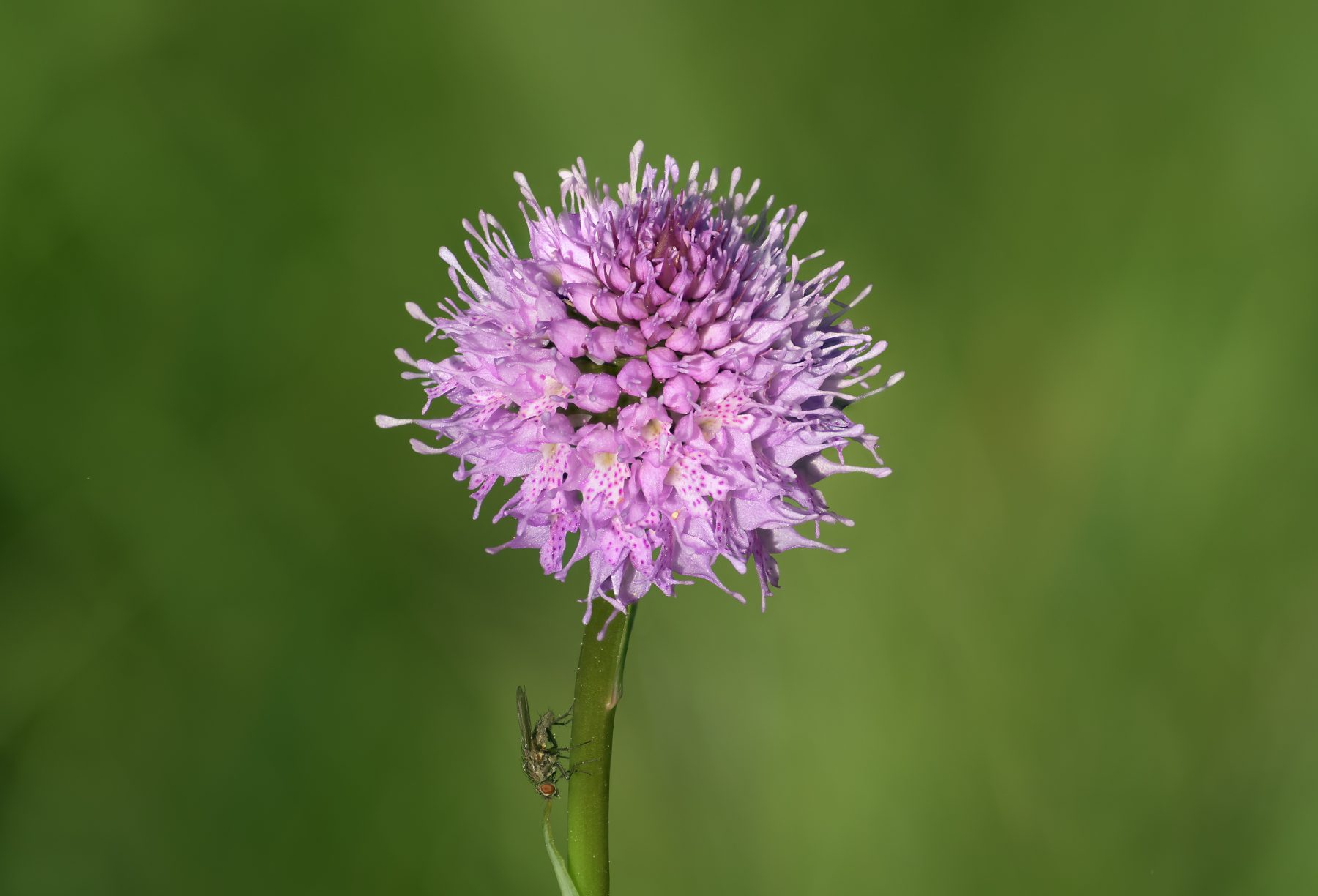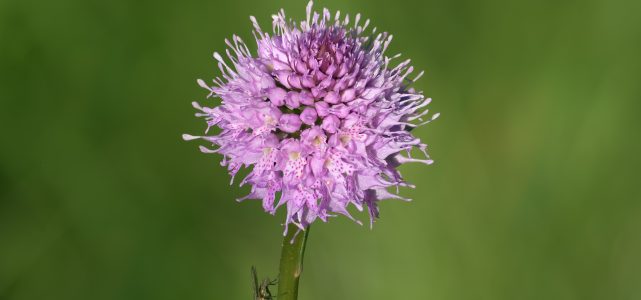
| Etymology: | Globosa means globular referring to the shape of the inflorescence |
| Distribution: | European alpine regions (Pyrenees, Alps, Apennines, Carpathians, Dinaric Alps), Crimea, Caucasus |
| Distribution in Hungary: | Northern Medium Mountains (Mátra, Bükk and Zemplén) |
| Flowering time | late-V. – late-VII. |
| Flowering time in Hungary: | late-V. – late VI. |
| Similar species: | Traunsteinera sphaerica |
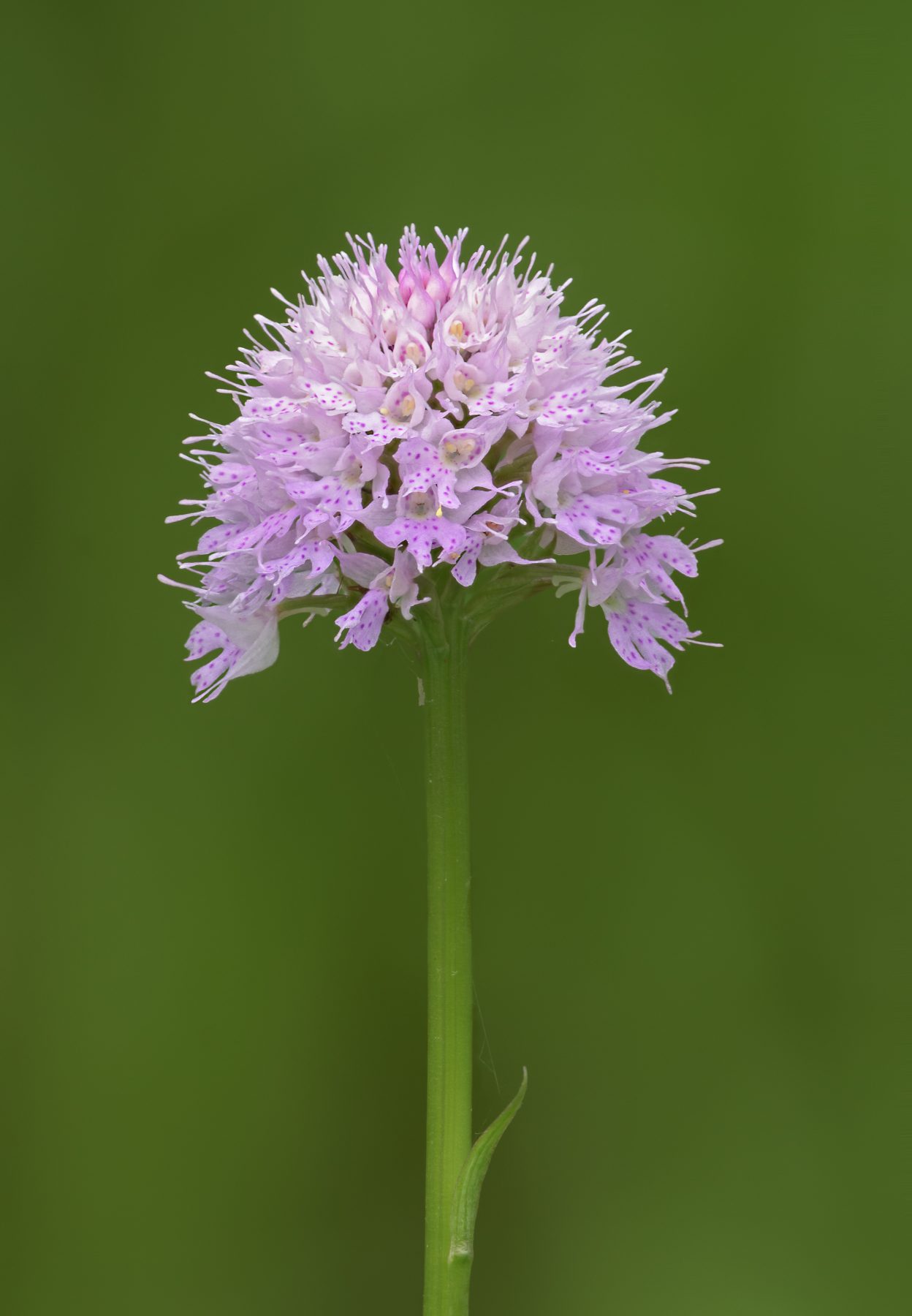
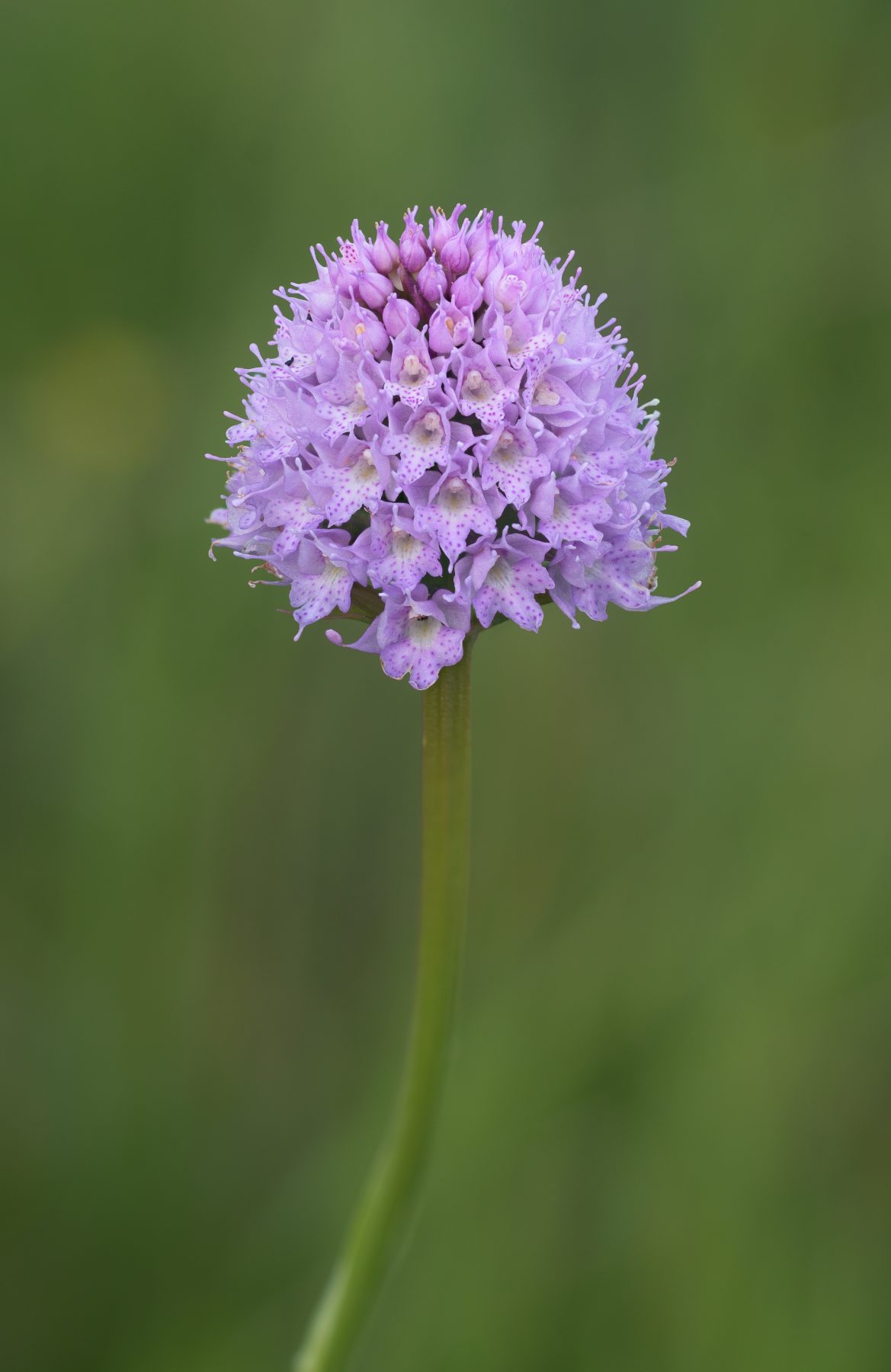
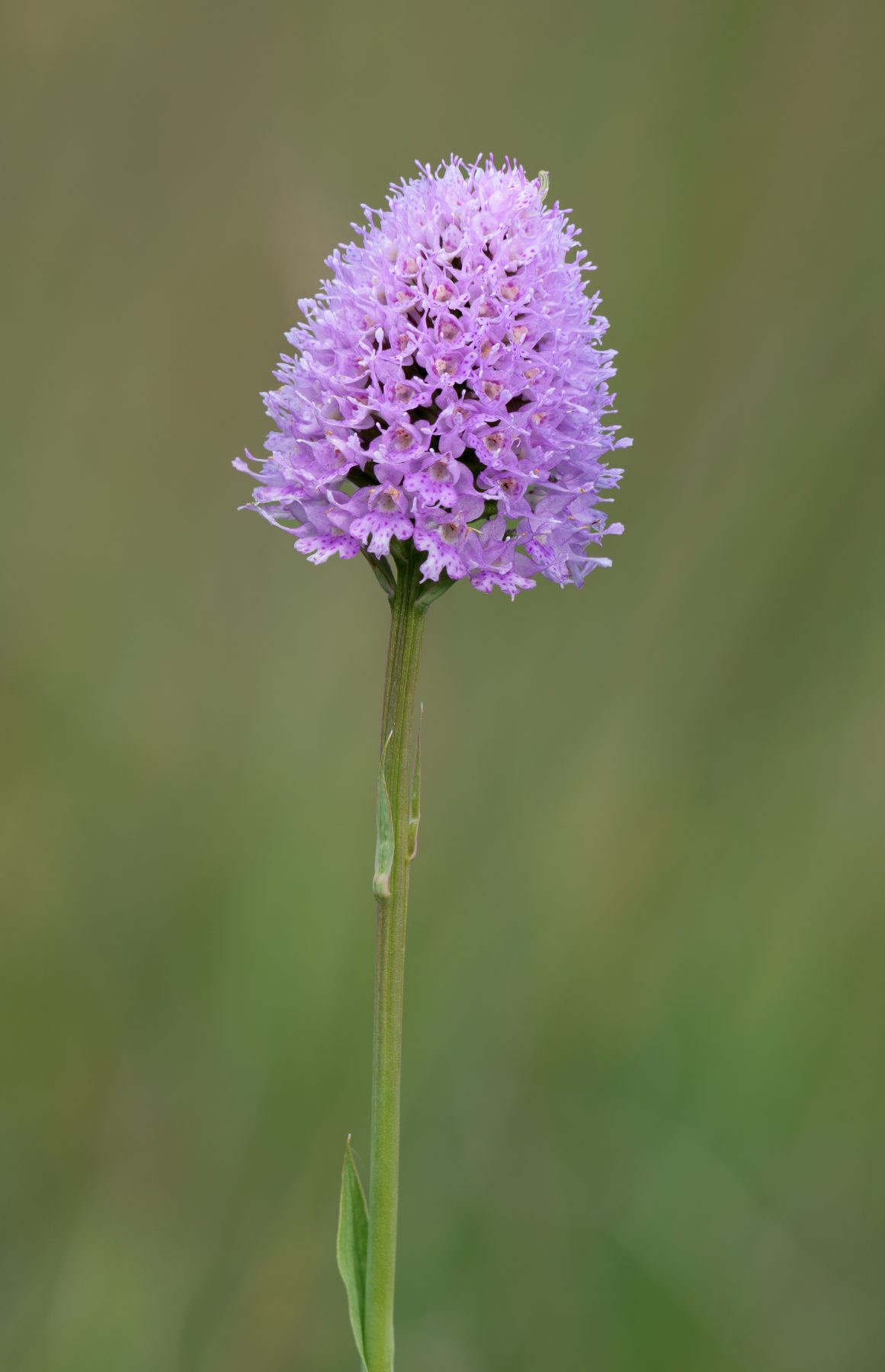
From a distance, our plant looks like a slender, colourful Neotinea tridentata, with an light pinkish-lilac inflorescence that is initially pyramid-shaped when flowering begins but gradually becomes more hemispherical. If we are not absolutely determined to compare it to an orchid, it is also easy to mistake it for field scabious (Knautia arvensis), a member of the teasel family. This human misidentification is by no means accidental, as some theories suggest that the species actually mimics members of the teasel family—namely field scabious, mentioned above, as well as scabious species (Scabiosa)—while other studies identify red clover (Trifolium pratense) as the model species. The idea is to make plant identification a little more difficult for certain targeted insects, including butterflies, beetles, hymenopterans and dipterans. As a result, these foolish creatures, believing the orchid to be another nectar-producing flower, innocently search its flowers (more specifically, their spurs) for the promised heavenly manna, pollinating the plant in the process. The orchid, meanwhile, graciously accepts their services but offers absolutely nothing in return. This sort of trickery—that is, deception—is by no means unique to T. globosa; many orchids resort to similarly dubious tactics, guided by the hand of evolution.
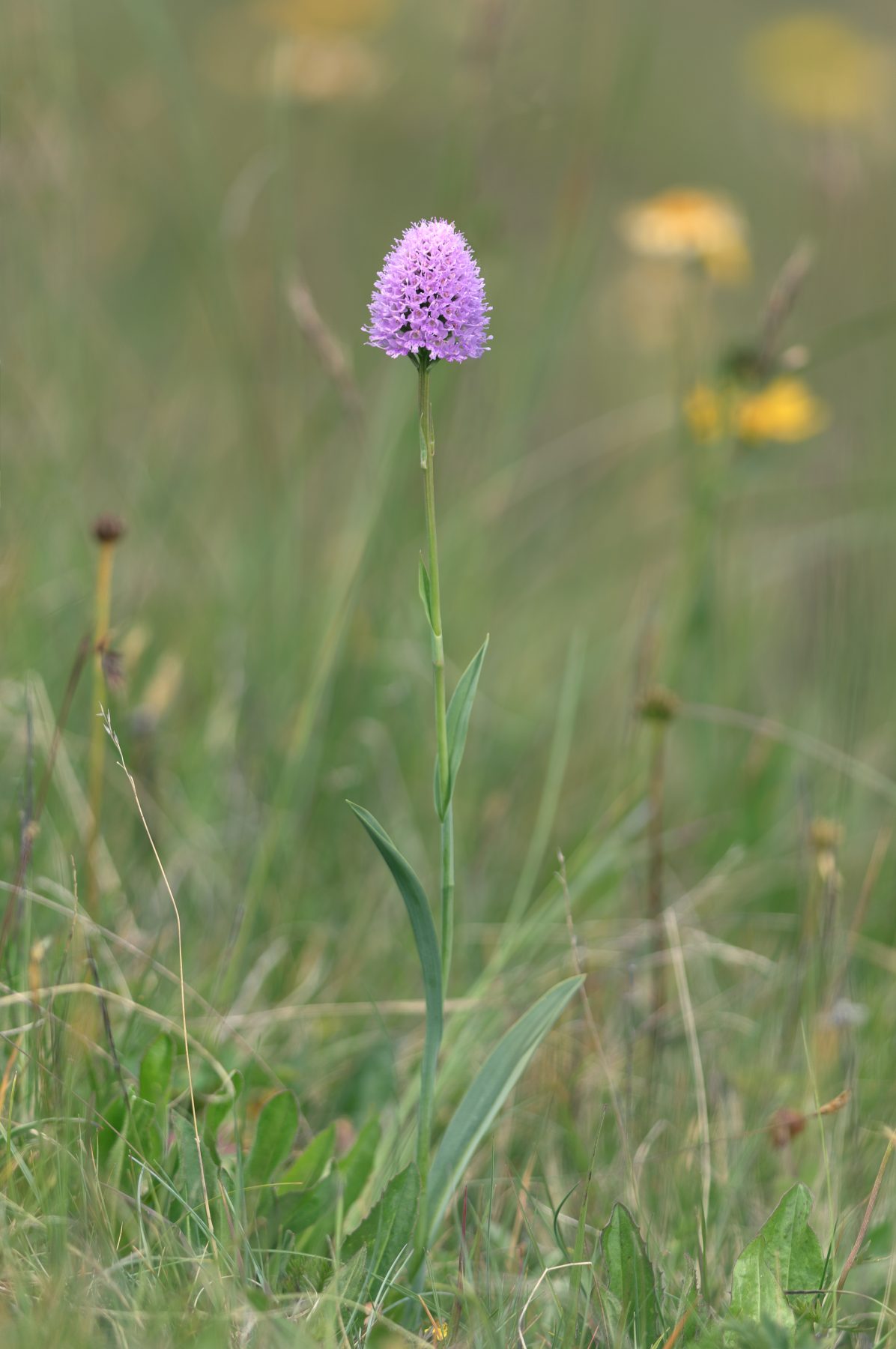
We should be lenient towards such shenanigans, as they are one of the driving forces behind reproduction. In Hungary, however, the globular orchid is rather deficient in this respect. The Atlas of the Orchids of Hungary (2011), for example, estimates the total population at around 1,200 plants, scattered across a handful of montane meadows, Nardus grasslands and hayfields in the Mátra, Bükk and Zemplén Mountains. The situation is better abroad. Wherever we go hiking in the European mountains—from the Pyrenees to the Carpathians, or even in the Dinaric Alps and the Apennines—we stand a good chance of coming across its beautiful, slender stems growing here and there across the vast hay meadows, grasslands and montane pastures. Unlike most European orchids, its foliage consists not of a basal rosette but of several bluish-green leaves with rounded tips, distributed fairly evenly along the stem. In my own case, this probably explains why, despite having been fortunate enough to encounter it several times in both the Mátra and Bükk Mountains back home, I have never managed to take a truly decent photograph of it. Consequently, the rather modest gallery below contains exclusively specimens photographed abroad.
Across Europe, the species is threatened by reforestation; succession resulting from the decline of grazing and mowing; overgrazing; excessive nutrient accumulation in the soil; and increasing human pressure in the Alps, where trampling and landscape alteration—through the construction of ski lifts, buildings and transport routes—take their toll. In Hungary, the main culprits among these factors are the abandonment of mowing and reforestation. And, with the climate growing warmer, the species is presumably feeling increasingly uncomfortable even in the dozen or so mountain habitats it still occupies here. In Hungary, it is strictly protected, with a conservation value of HUF 100,000.
Back to the genus Traunsteinera ↶