| Etymology: | Bifolia means two-leaved, referring to the basal rosette, fornicata means vaulted, referring to the shape of the anther |
| Distribution: | Across the whole Europe |
| Distribution in Hungary: | Transdanubian and Northern Medium Mountains, Transdanubian Hills, Őrség and Vend region, Little Hungarian Plain, Eastern part of Transtisza |
| Flowering time | mid-V. – late-VI. (-mid-VII.) |
| Flowering time in Hungary: | mid-V. – mid VI. |
| Similar species: | P. chlorantha |
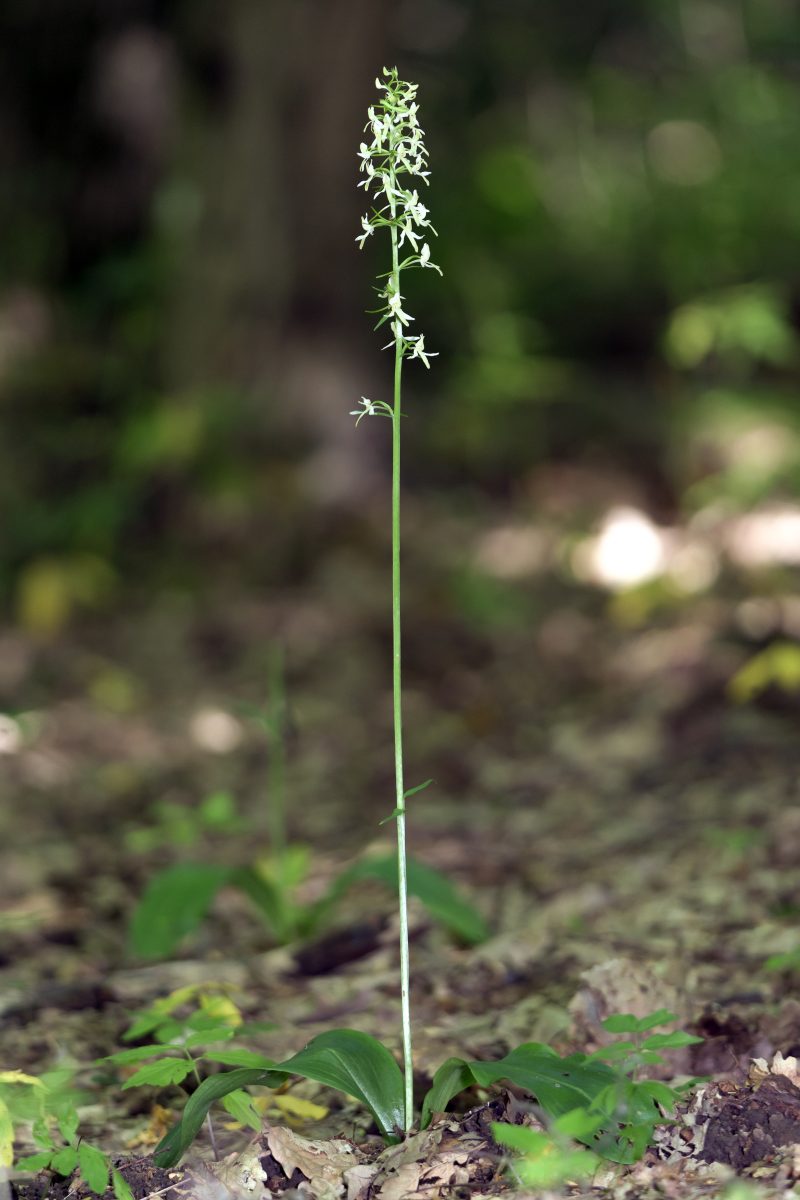
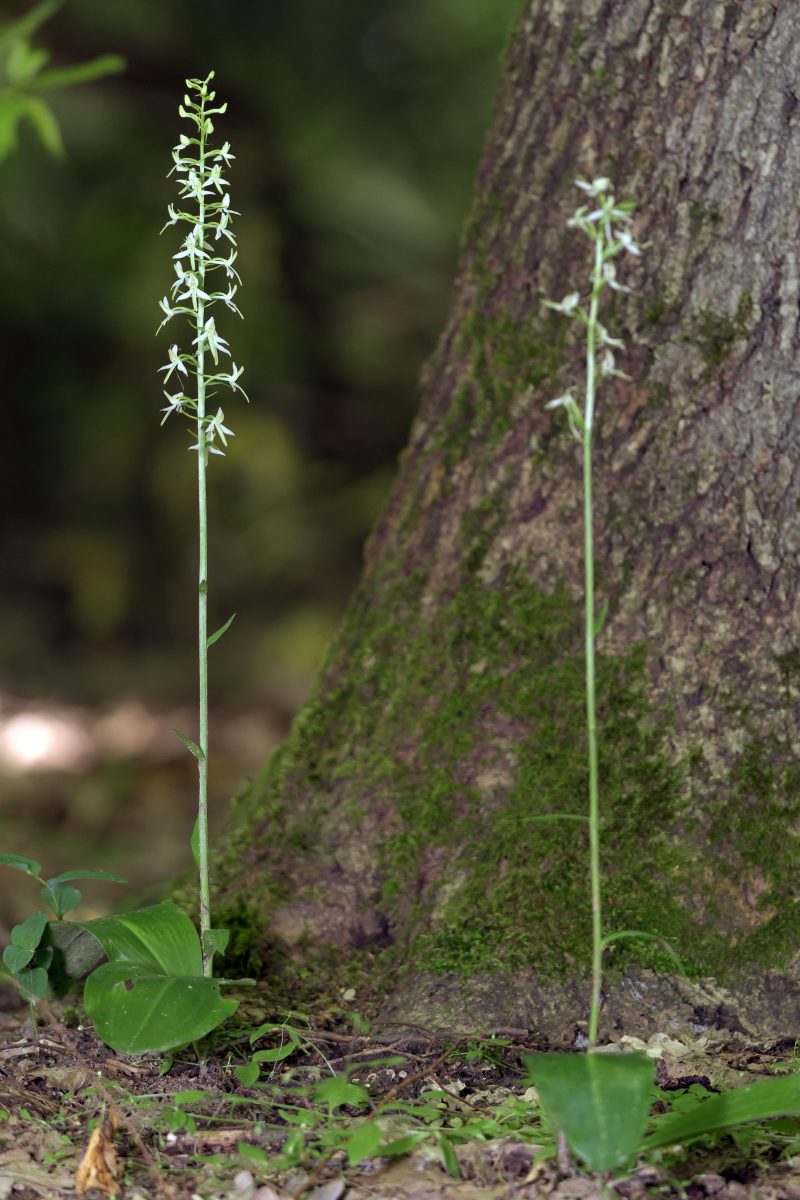
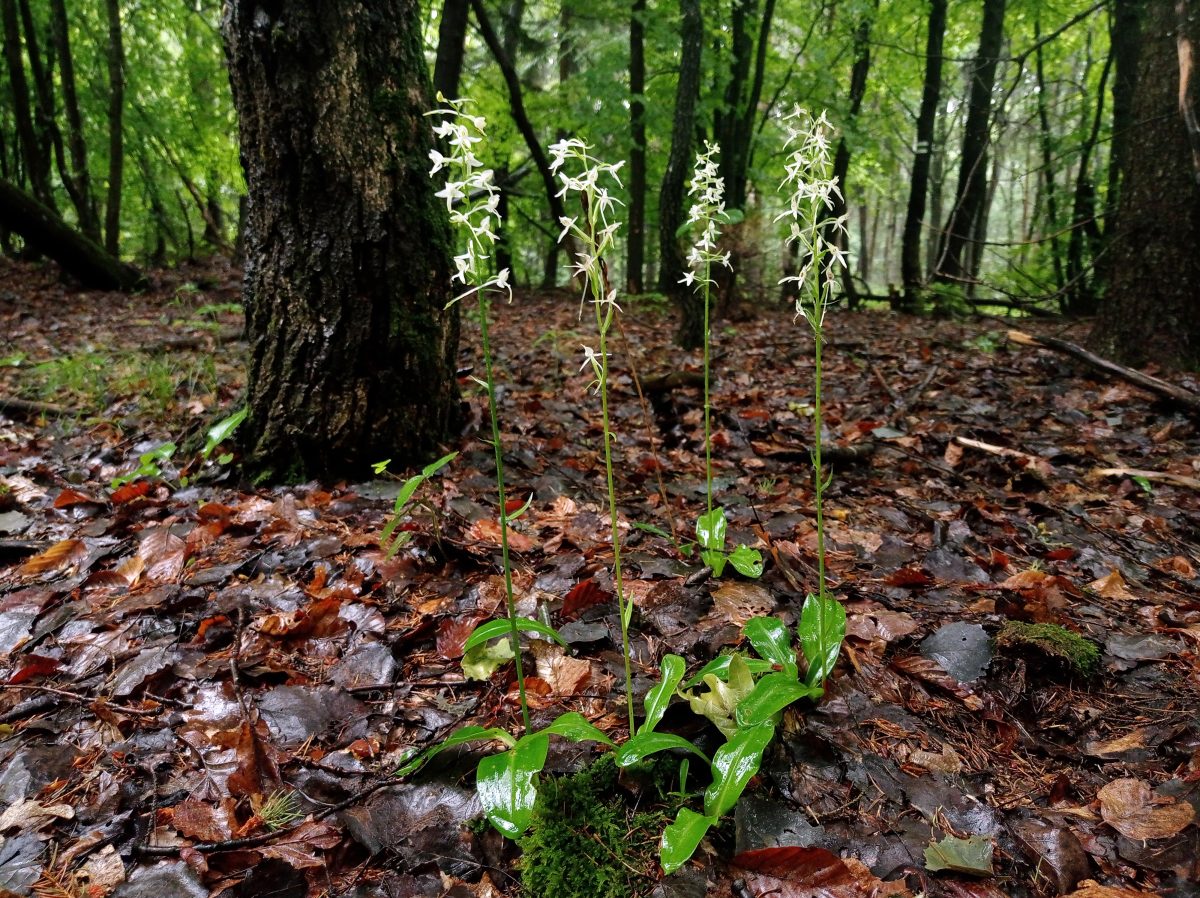
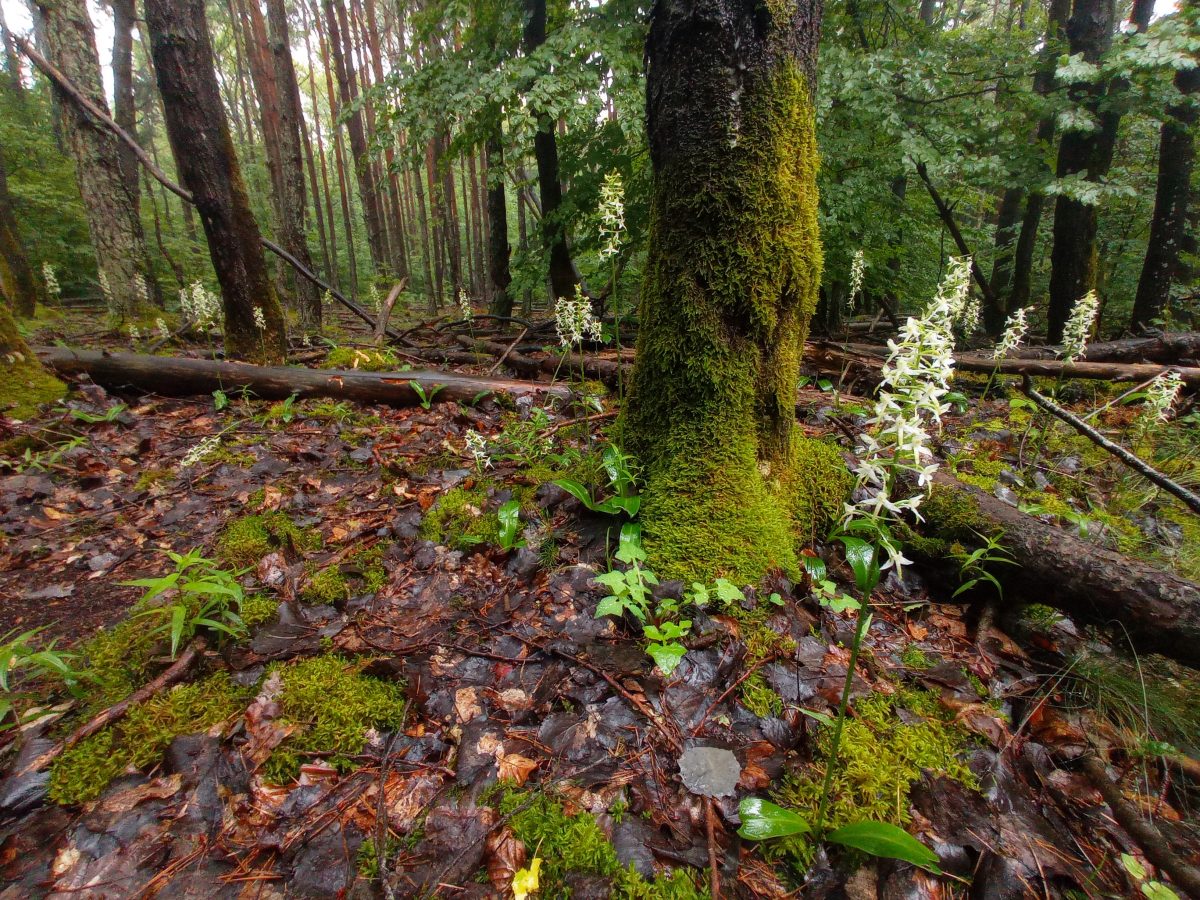
The Lesser Butterfly Orchid (Platanthera bifolia) really is quite common in the forests of Hungary’s hills and mountains. In fact, its almost luminous, elongated flower spikes can be spotted from just about any hiking trail in virtually any type of woodland, whether it be a dense beech forest, an oak-hornbeam woodland, a pine forest, or a more open karst scrub woodland, rocky forest, riparian woodland, dry oak forest, and so on. But this orchid is no vampire: it actually enjoys plenty of sunlight, too, and is perfectly at home in meadows, marshy grasslands and heathlands. Indeed, it is also a common sunbathing resident of Europe’s alpine meadows.
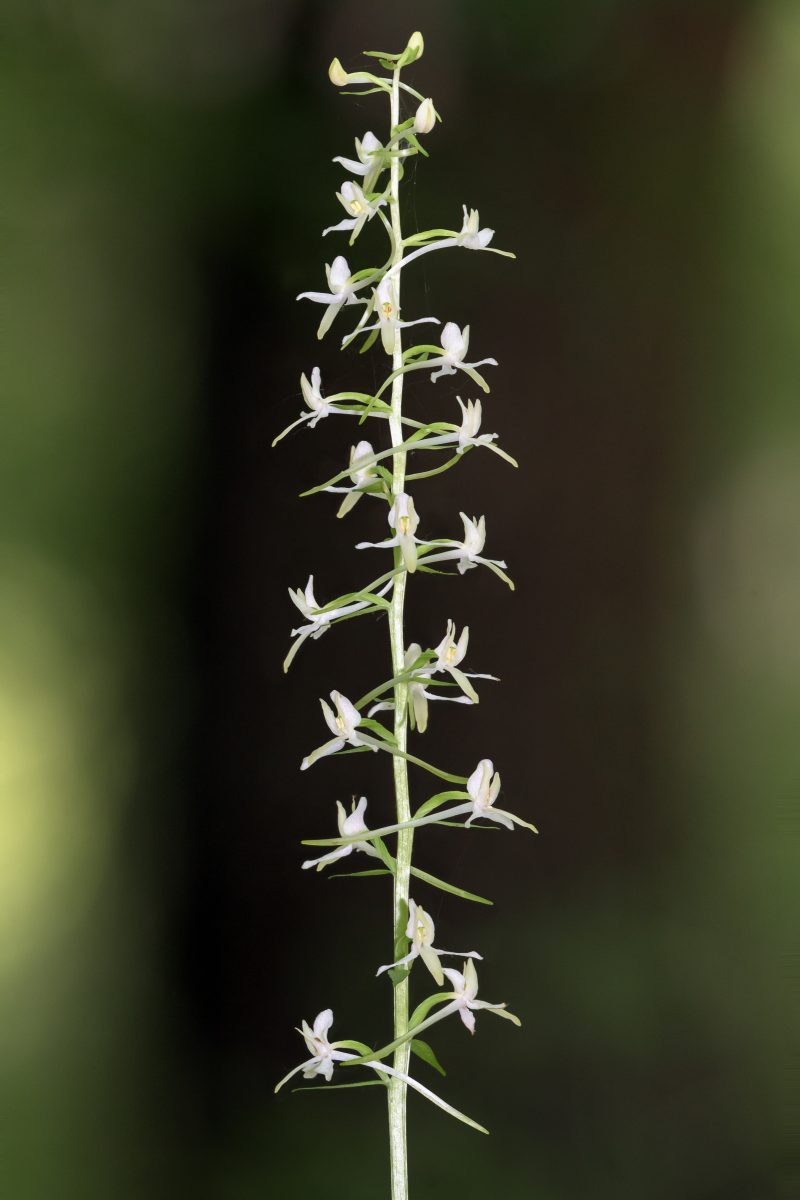
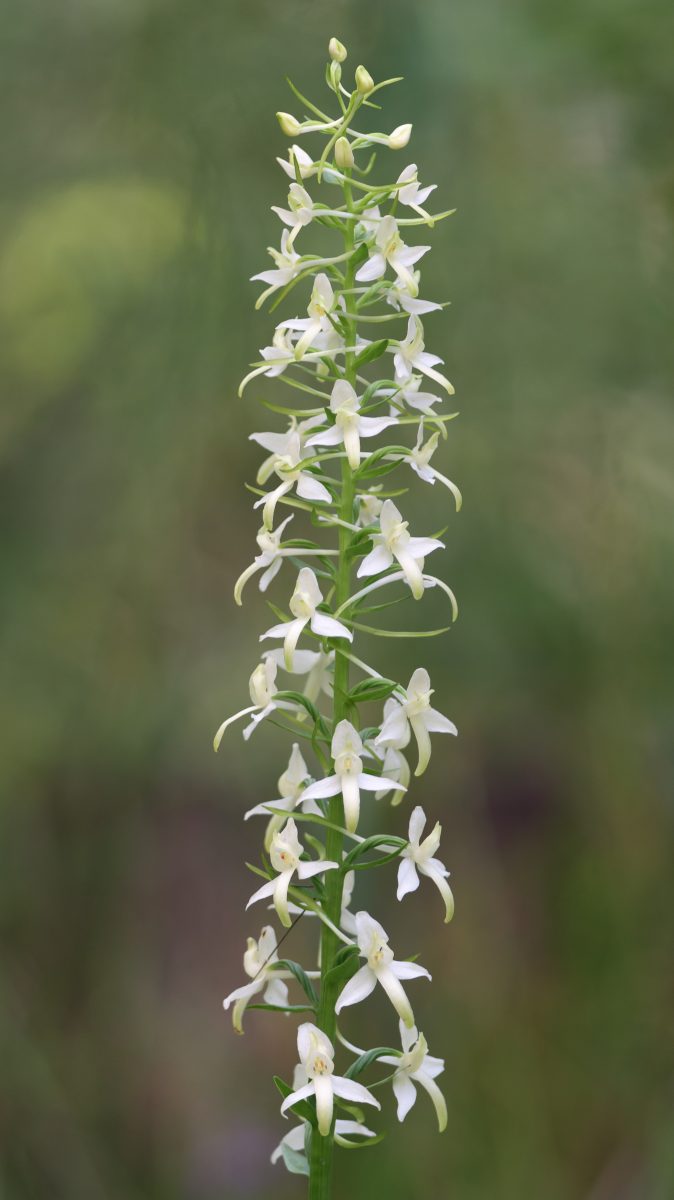
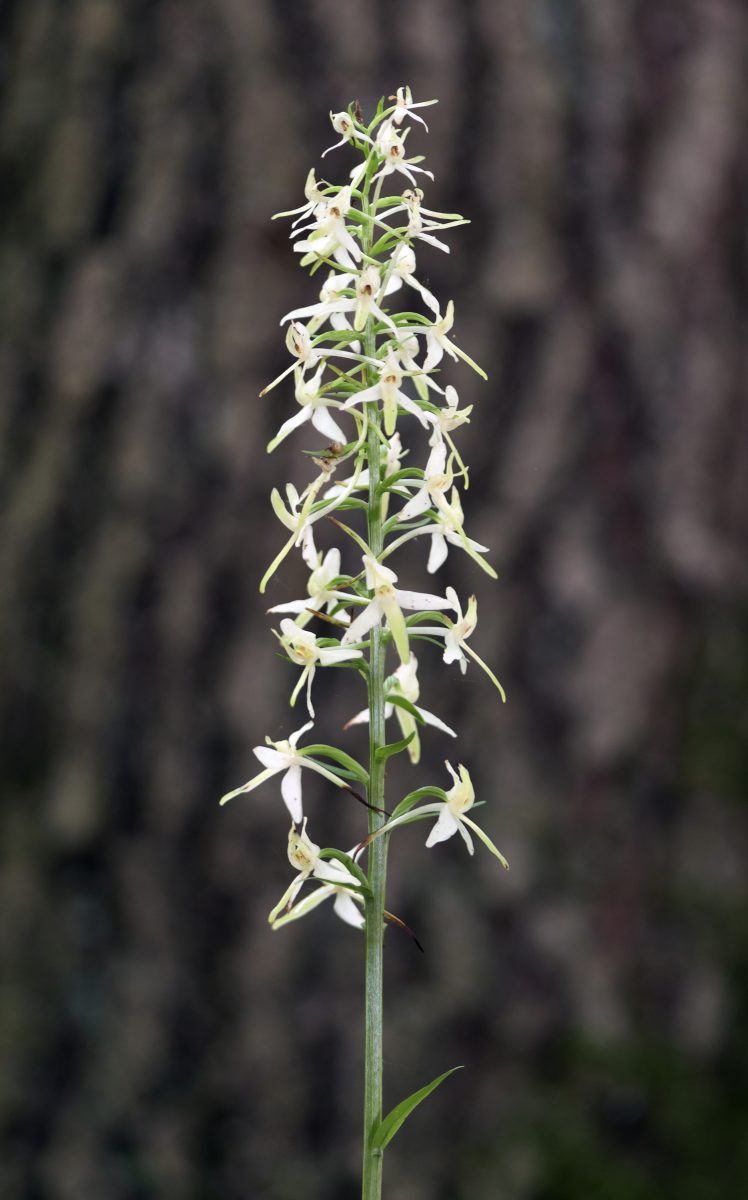
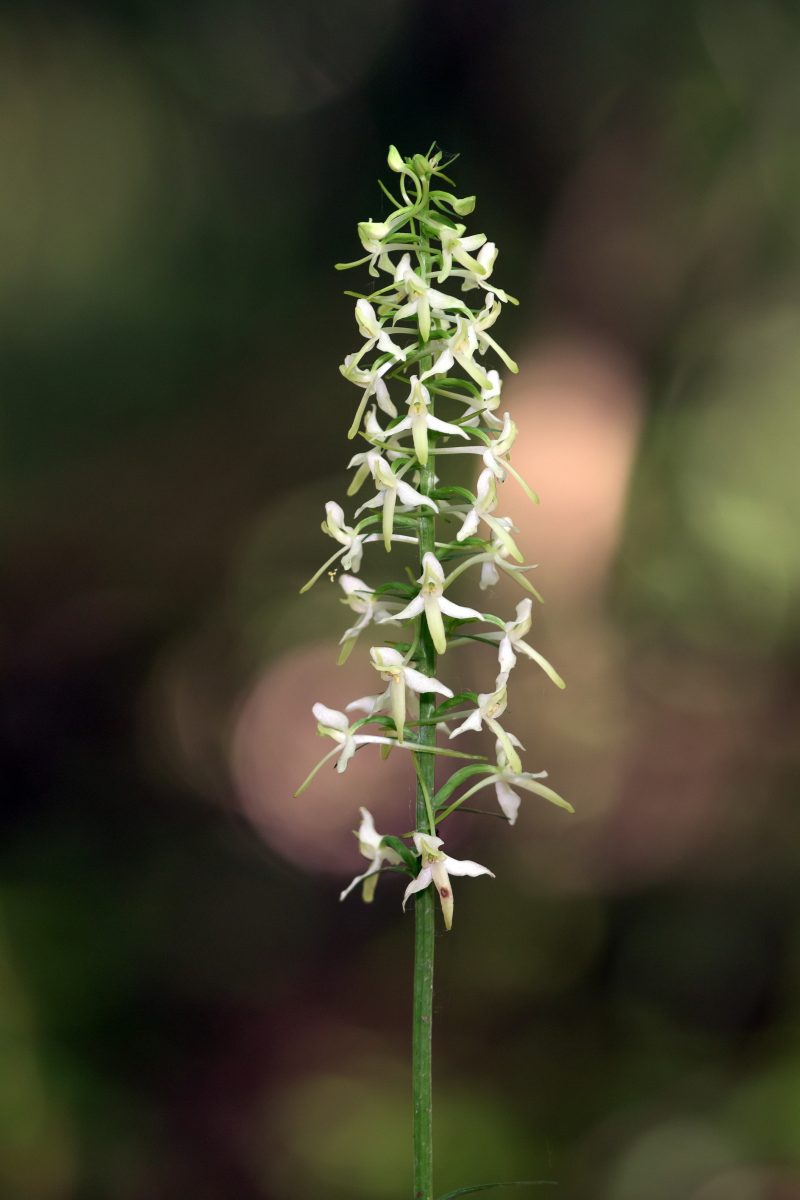
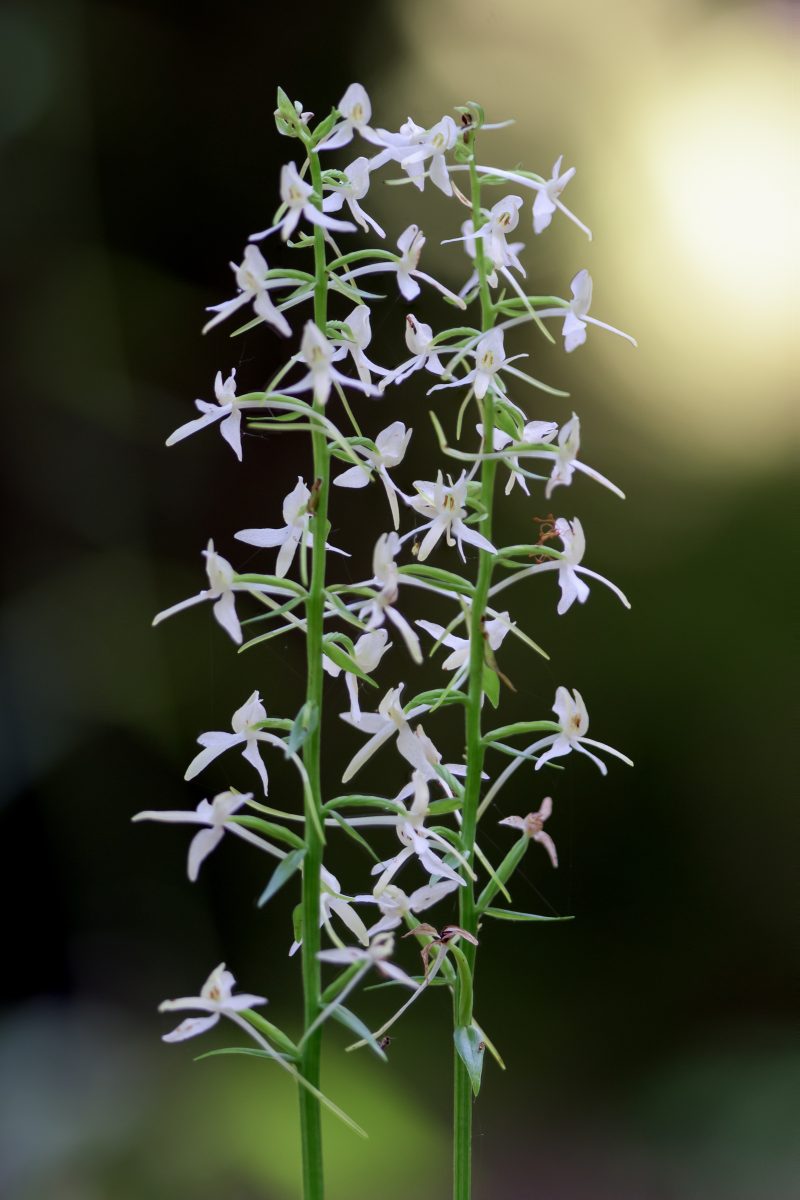
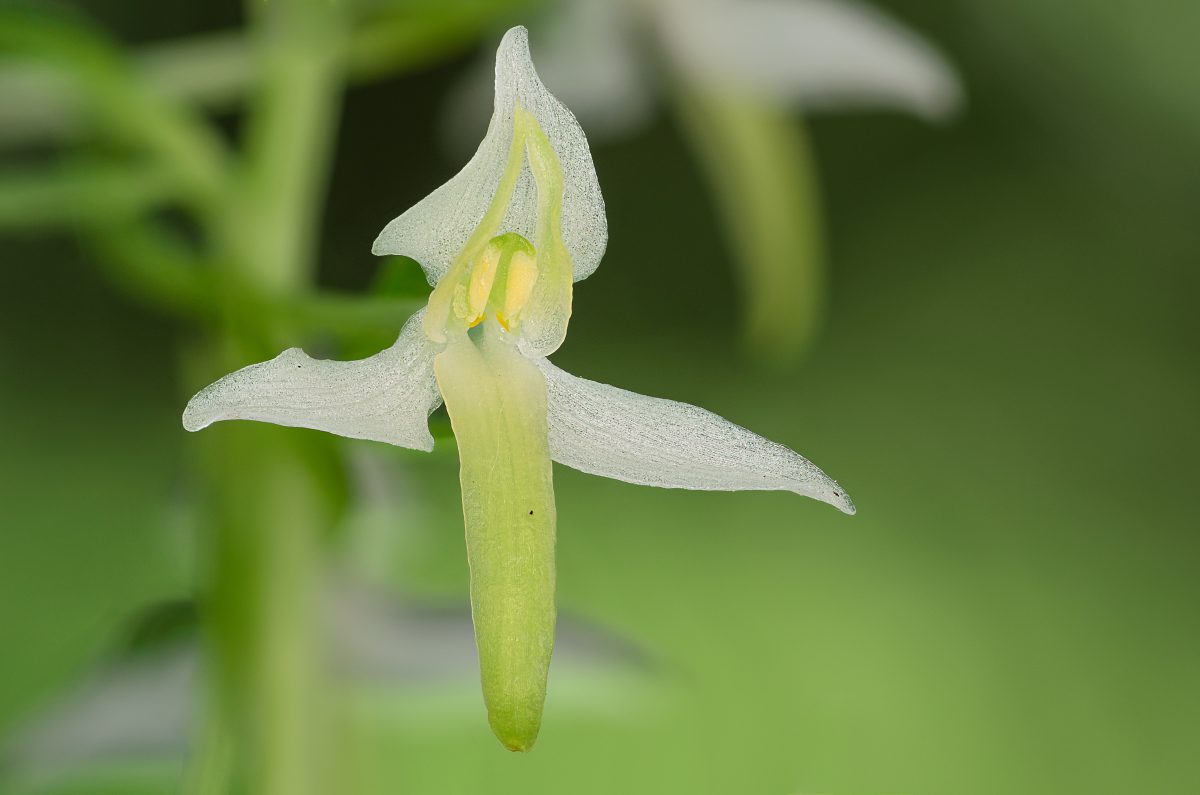
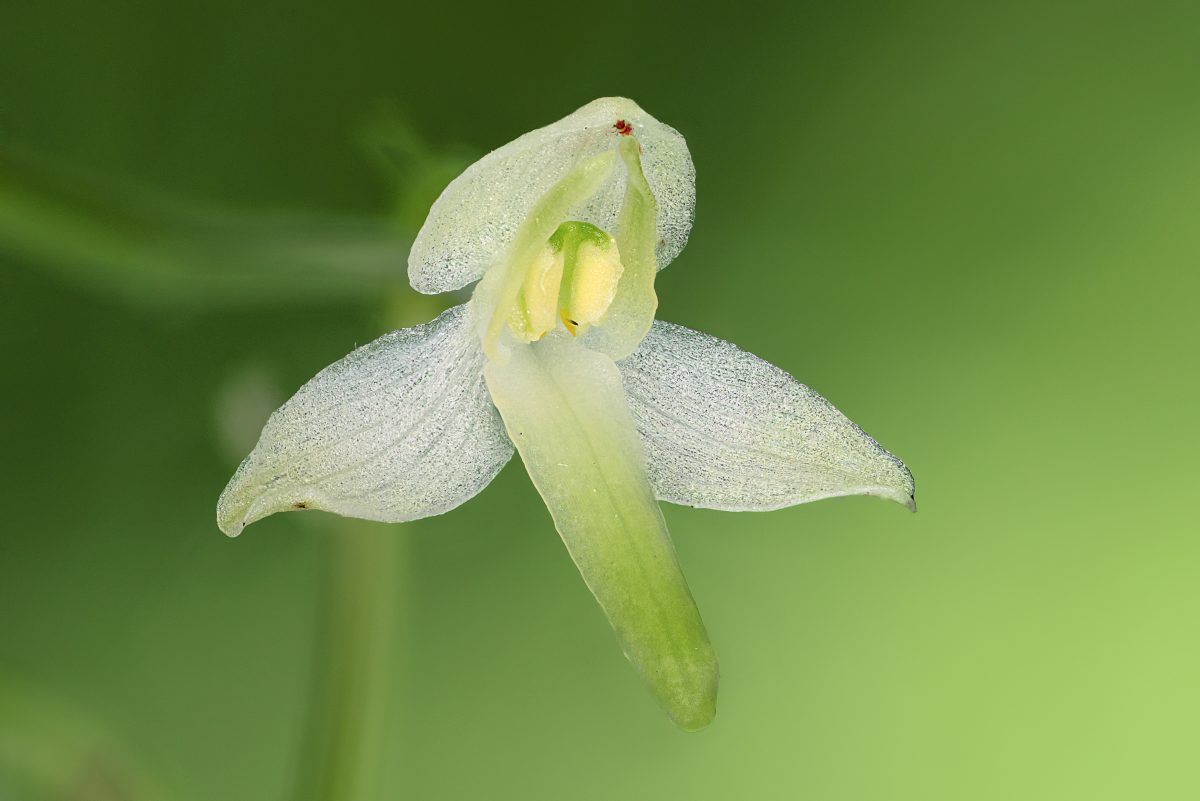
So there’s no need to employ any sophisticated orchid-detecting gadgets or specially trained (domestic) animals to track it down. Not least because it is a rather conspicuous plant, capable of growing impressively tall — some specimens could even give the equally imposing Lady Orchid (Orchis purpurea) a run for its money. Its long, characteristically veined stem is topped by a spike of numerous delicate, graceful, whitish-greenish flowers. The perianth is elongated and whitish, while the slender labellum, resembling a tongue sticking out, gradually becomes greener from base to tip. The petals and the central dorsal sepal form a small, triangular roof over the column, protecting the all-important reproductive organs. The anthers stand parallel to one another, while the stigma lurks behind them, just above the entrance to the exceptionally long and slender spur.
And the spur is not merely there for decoration. It offers nectar to the orchid’s pollinators, hawkmoths and owlet moths, whose proboscises are long enough to reach in and steal the precious liquid. Meanwhile, completely absorbed in their little feast, they also carry out the essential task of pollination. The adhesive disc, which lacks a bursicle, attaches the pollen package to the head of the insect as it rummages around inside the spur. When the insect visits the next flower, it presses the pollen against the stigmatic surface. It is a beautifully perfected mechanism, helped along by the intense, sweet fragrance of the nectar, which can travel considerable distances. Humans can detect it too, provided they approach the plant with their noses open for business — especially at night, since the orchid’s pollinators are nocturnal creatures themselves.
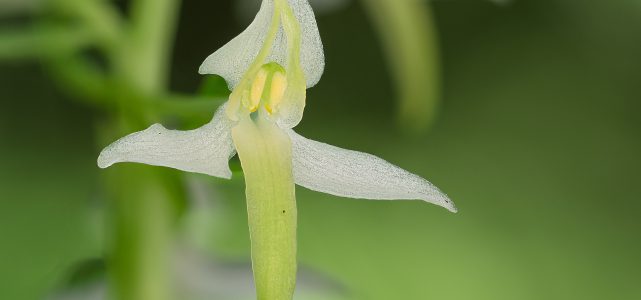
In Hungary, the species can be confused with the Greater Butterfly Orchid (Platanthera chlorantha), as the two are practically identical in their overall appearance and flower at roughly the same time. To distinguish them reliably, we need to examine the flowers at very close range, paying particular attention to the relative positions of the two anthers. In the Lesser Butterfly Orchid, they are parallel and positioned close together, whereas in its “greenish” relative they diverge at an angle and are set somewhat farther apart. And I won’t even try your patience by mentioning that the two species also produce a hybrid, known as Platanthera × hybrida, which occurs in Hungary as well. In this one, the anthers are sort of parallel… and sort of not.
What I will use to tease orchid enthusiasts accustomed to their familiar names and well-established taxonomic arrangements, however, is the increasingly apparent possibility that what we have traditionally regarded as a single Lesser Butterfly Orchid species in Hungary (and elsewhere) may, according to some botanists, actually comprise two distinct species. In 2011, the taxon Platanthera fornicata was described. It represents a taller, more robust version of P. bifolia, with a looser inflorescence and, importantly, lateral sepals that spread horizontally. In the “true” P. bifolia, these tend to droop downwards instead. Whether this distinction is genuinely justified is not for me to decide. In any case, the specimens I have encountered in Hungary seem to fit the description of P. fornicata rather better. At the same time, the gallery below also includes a macro photograph of a flower that could well belong to the P. bifolia camp in the strict sense — and, to make matters even more interesting, I photographed it right next to a distinctly fornicata-like specimen! The 2021 Hungarian orchid identification guide (Molnár & Csábi) still recognises only the Lesser Butterfly Orchid, whereas Miklós Óvári, in his 2023 work on the orchids of Zala County, already includes P. fornicata and concludes that only this latter taxon occurs in the county. Which raises an intriguing question: does the genuine P. bifolia officially occur in Hungary at all…?
The Hungarian specimens of the Lesser Butterfly Orchid group, understood in its broader sense, are undoubtedly completely indifferent to such pointless intellectual exercises, which seem to be an exclusively human pastime. Thank you very much, they are doing just fine. And since they are a common sight in our forests, there is little reason to fear that their numbers will suffer any dramatic decline. Of course, that does not mean they are entirely free from danger. Late frosts, prolonged dry spells, excessively high populations of wild herbivores and drastic forest clearance are all things they would undoubtedly prefer to do without.
The species’ official conservation value in Hungary is a mere HUF 5,000.
Back to the genus Platanthera ↶