| Etymology: | After its large speculum possessing the whole lip |
| Distribution: | Mediterranean coastal regions from Portugal to Turkey |
| Flowering time: | mid-II. to late-IV. |
| Taxnonomy: | O. speculum group |
| Similar species: | O. lusitanica |
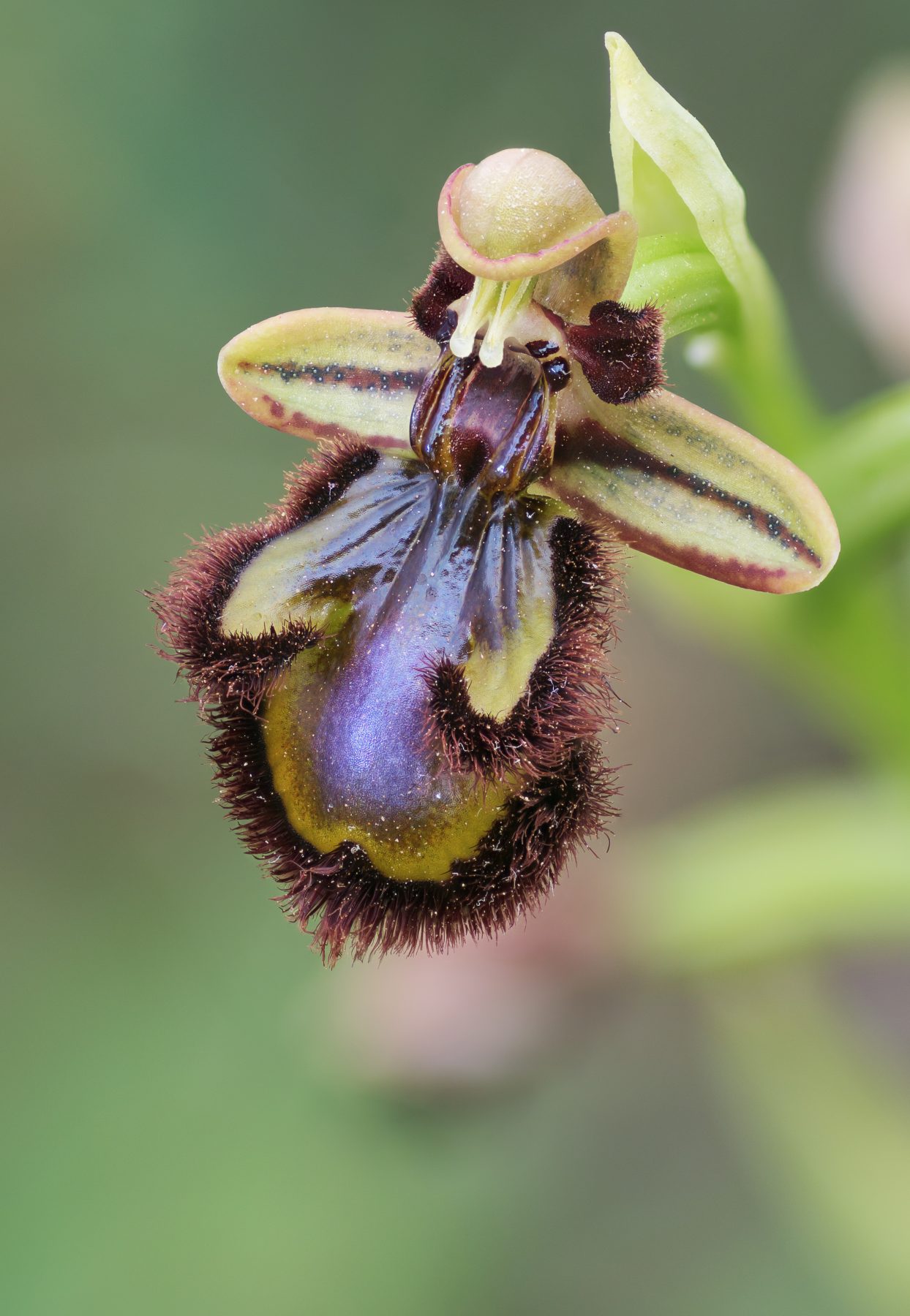
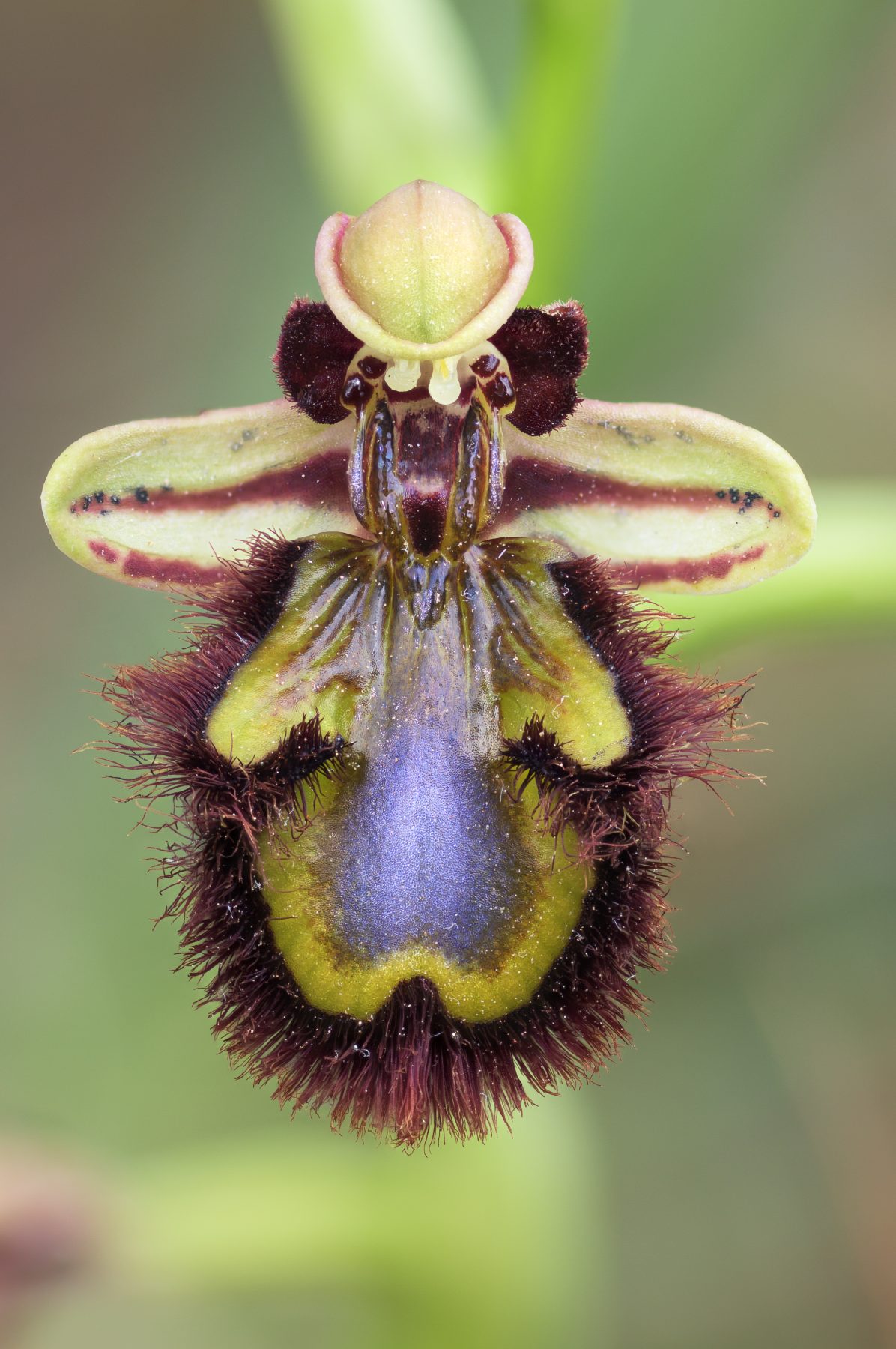
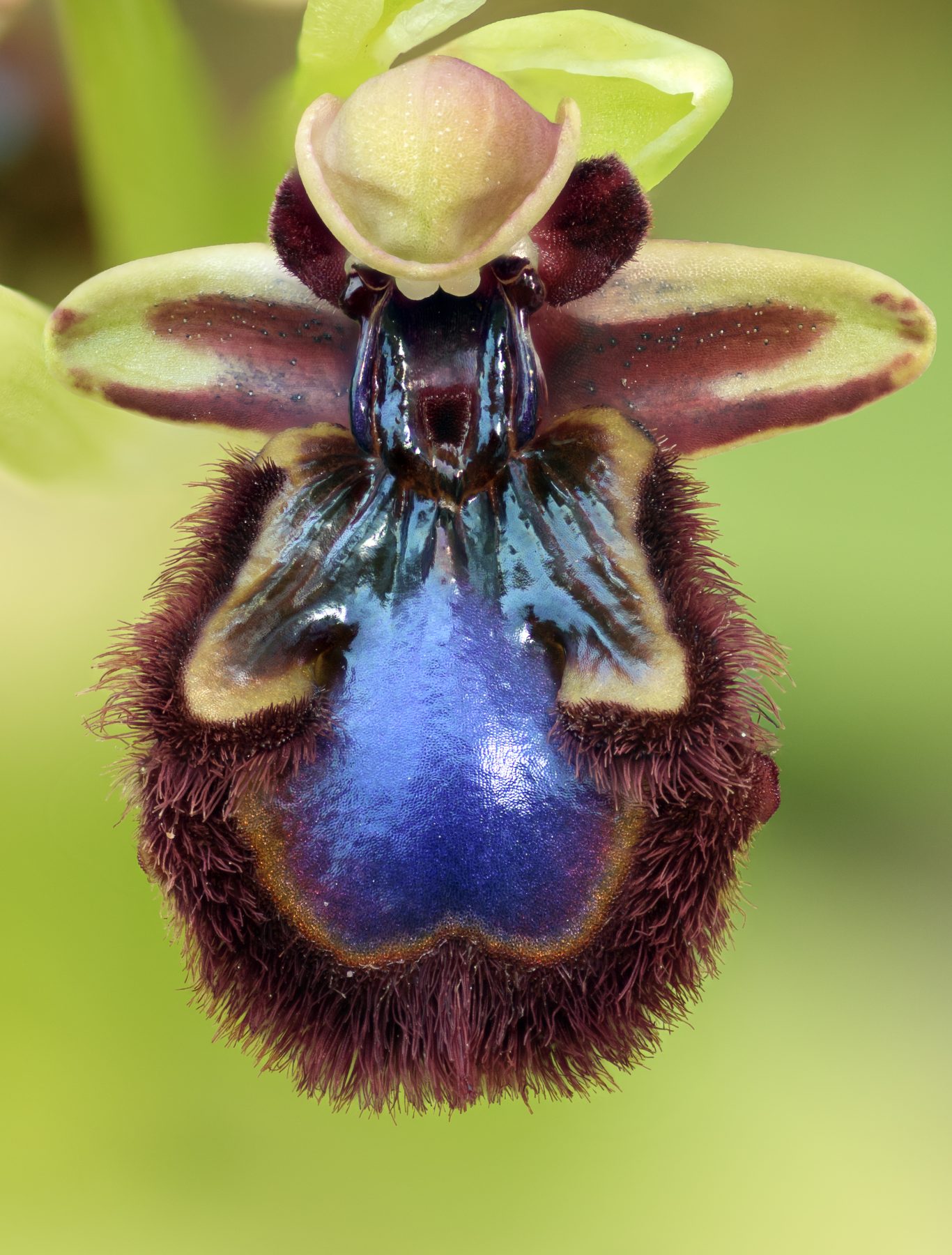
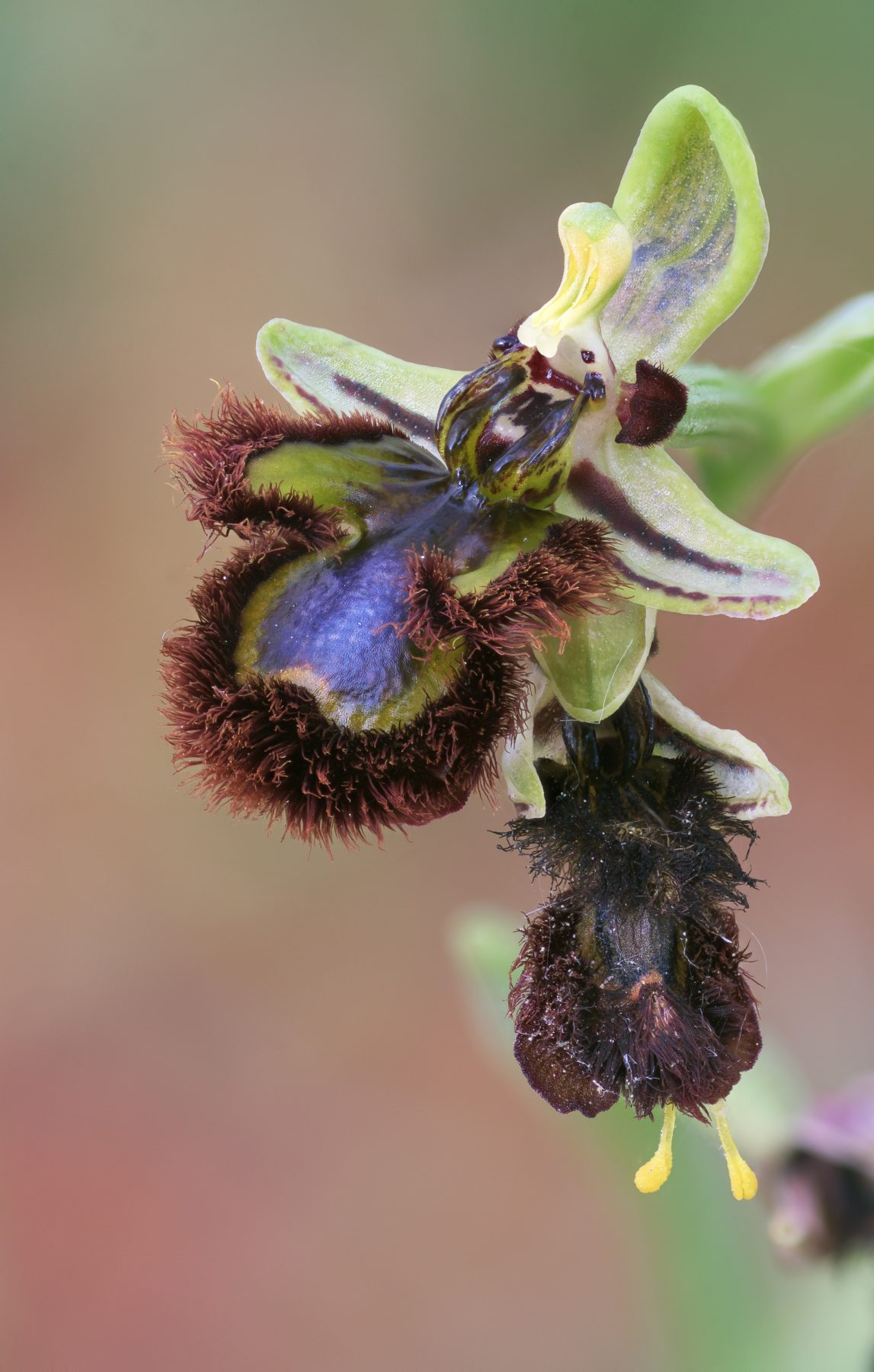
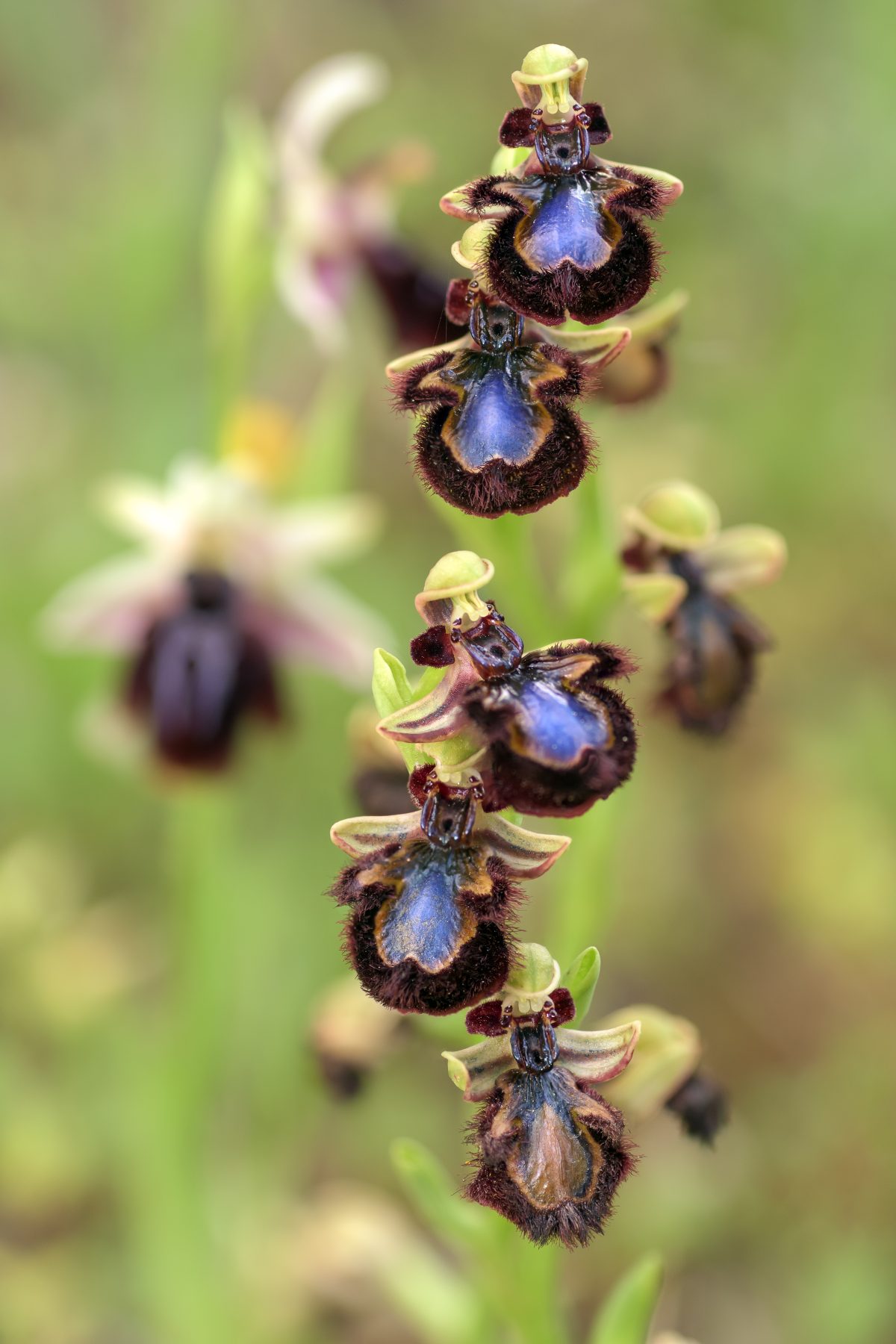
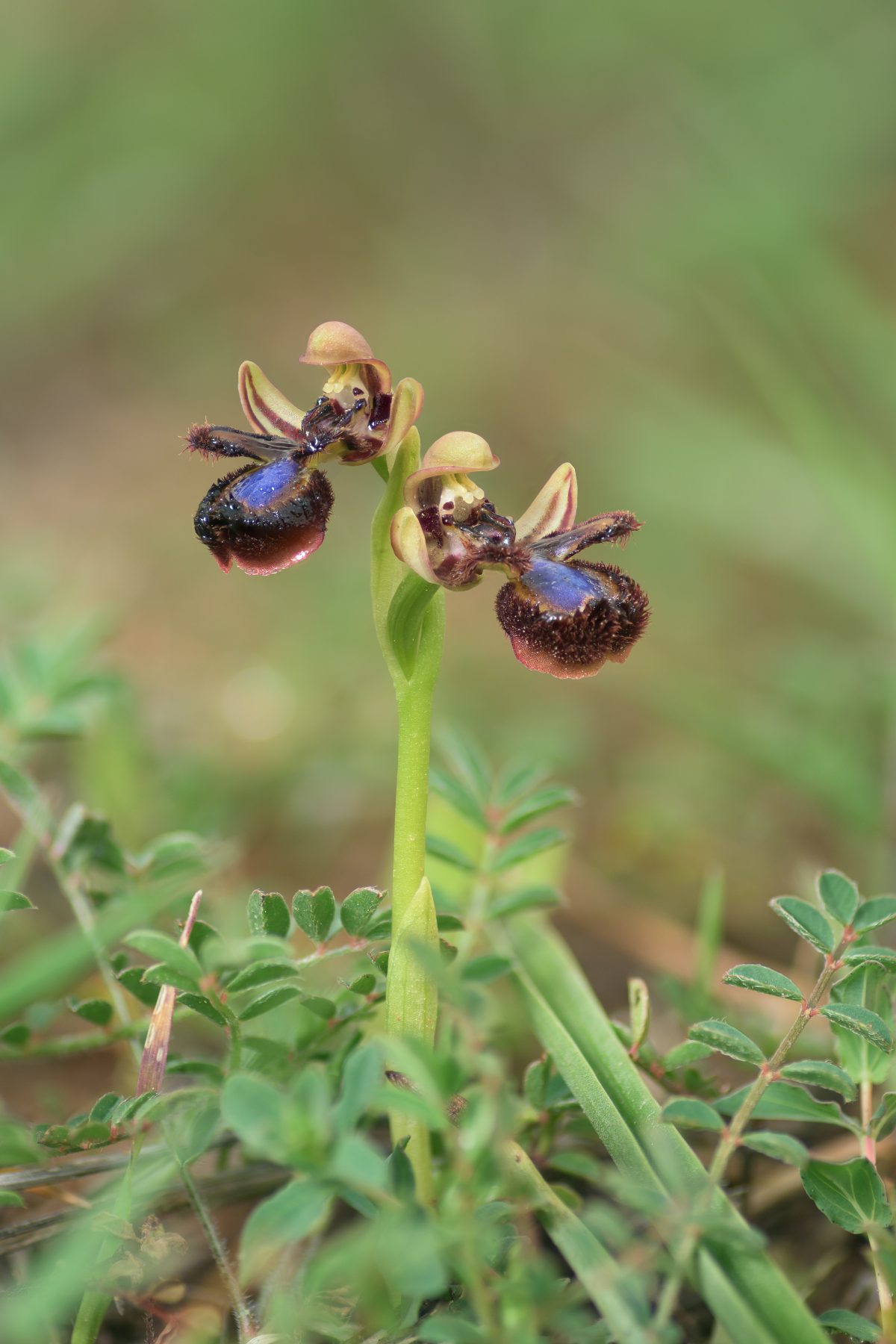
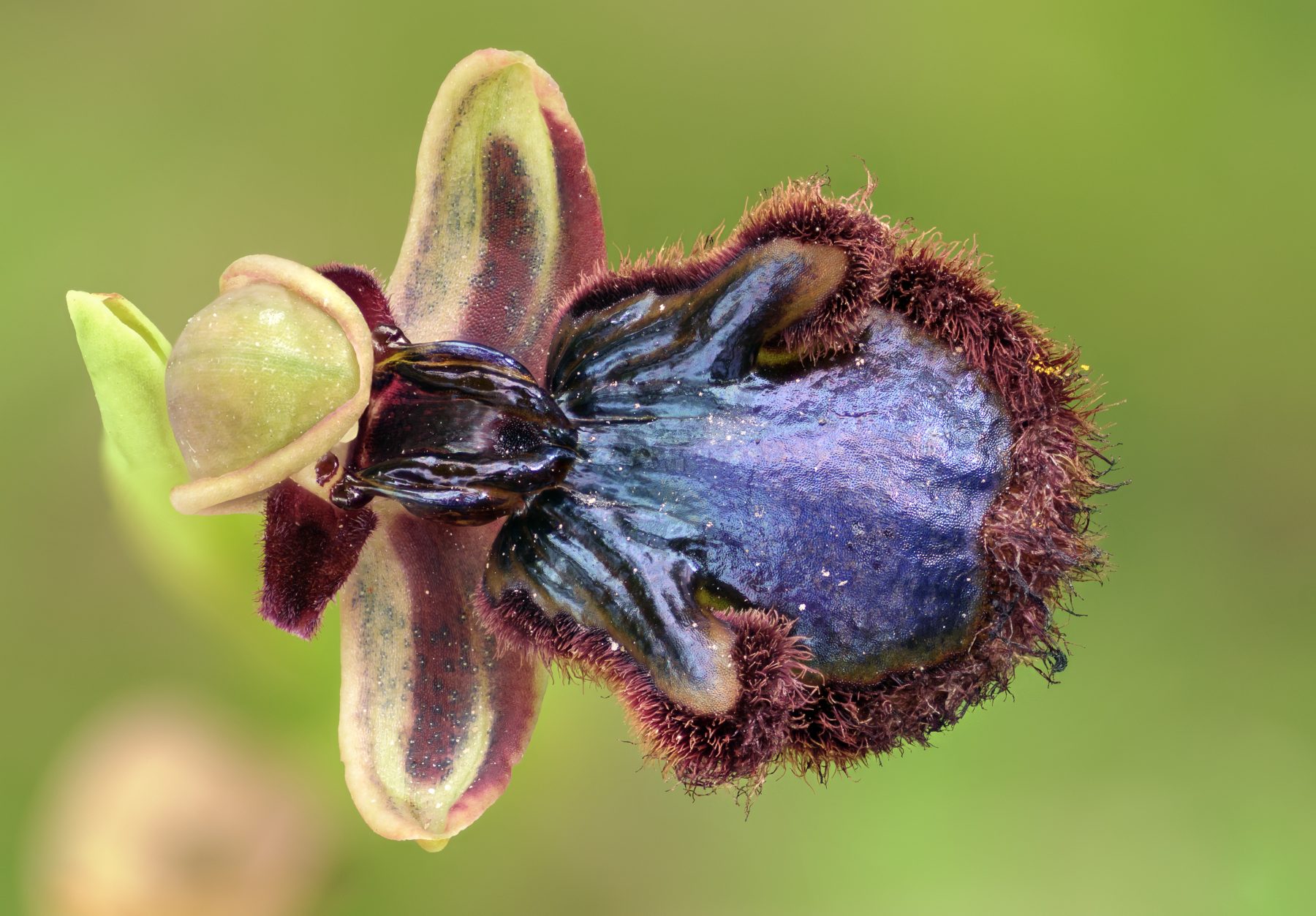
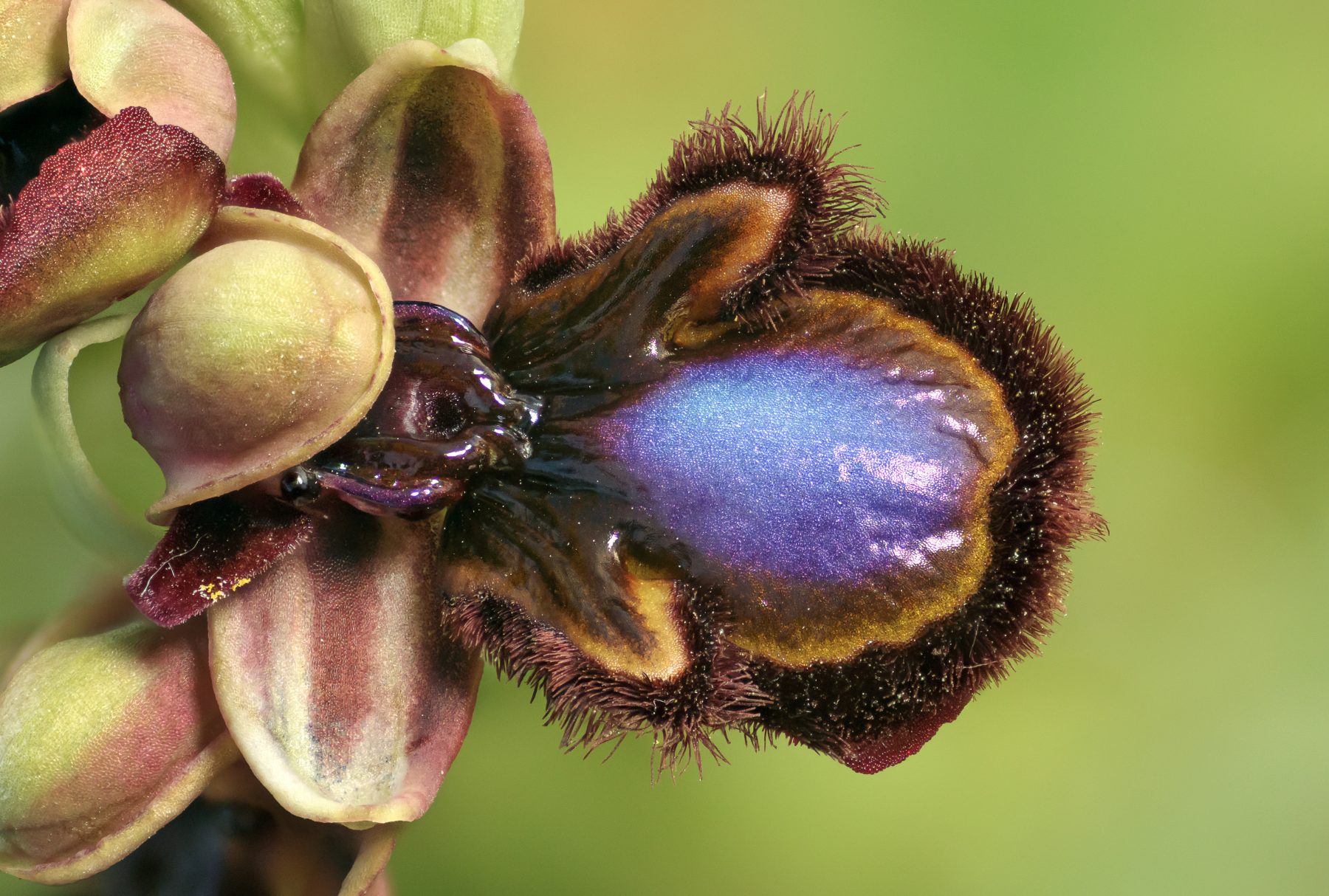
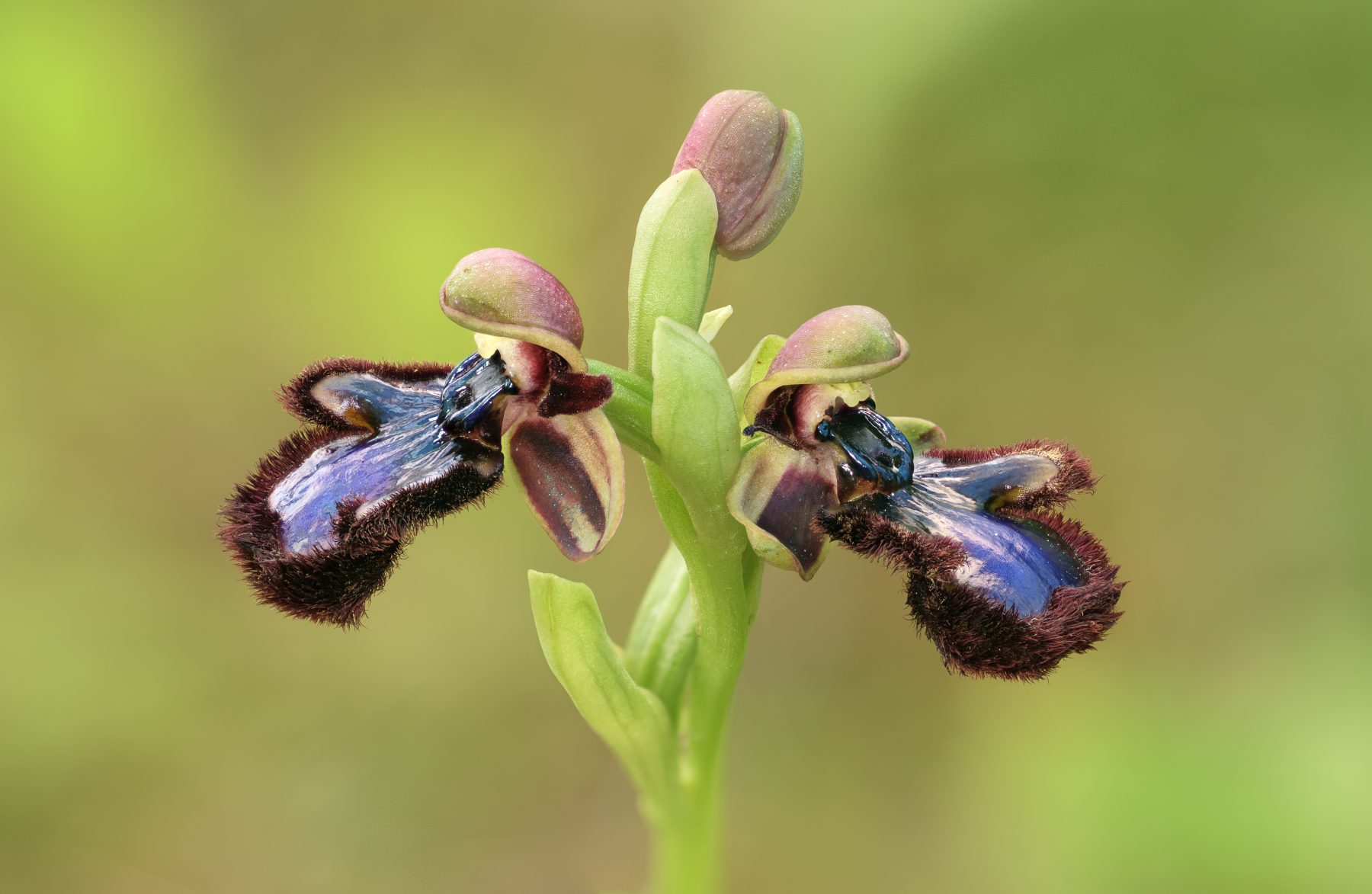
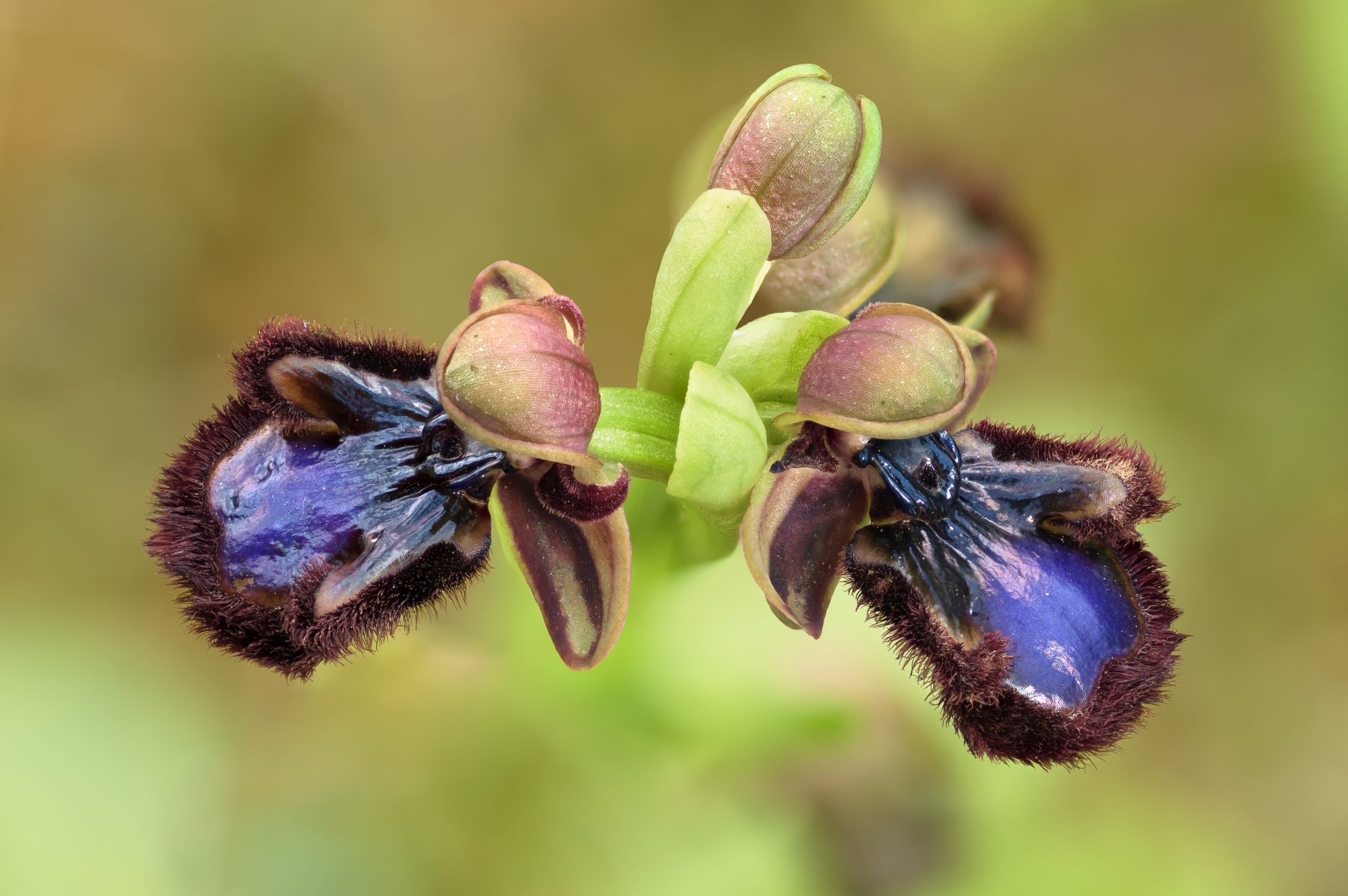
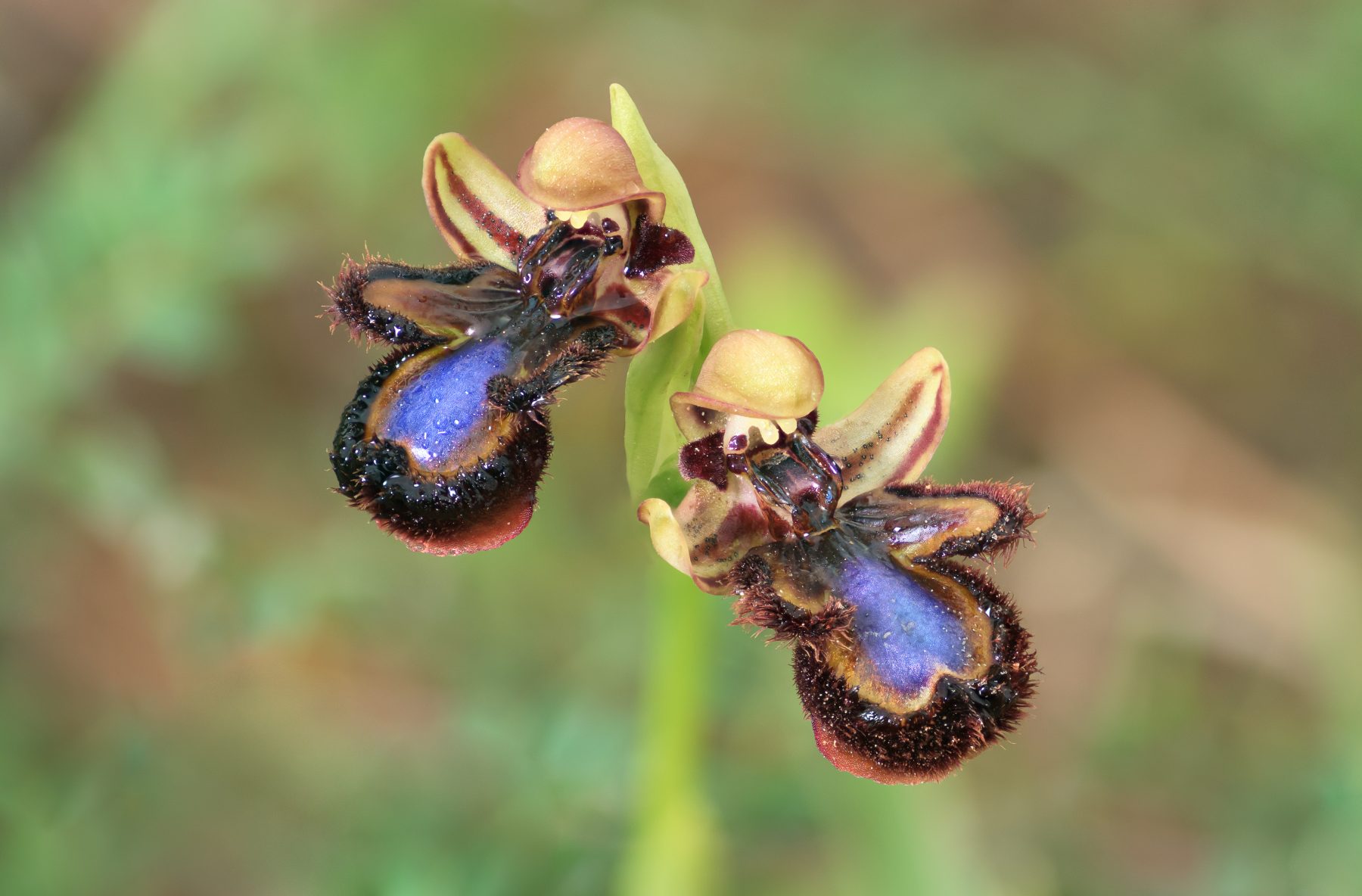
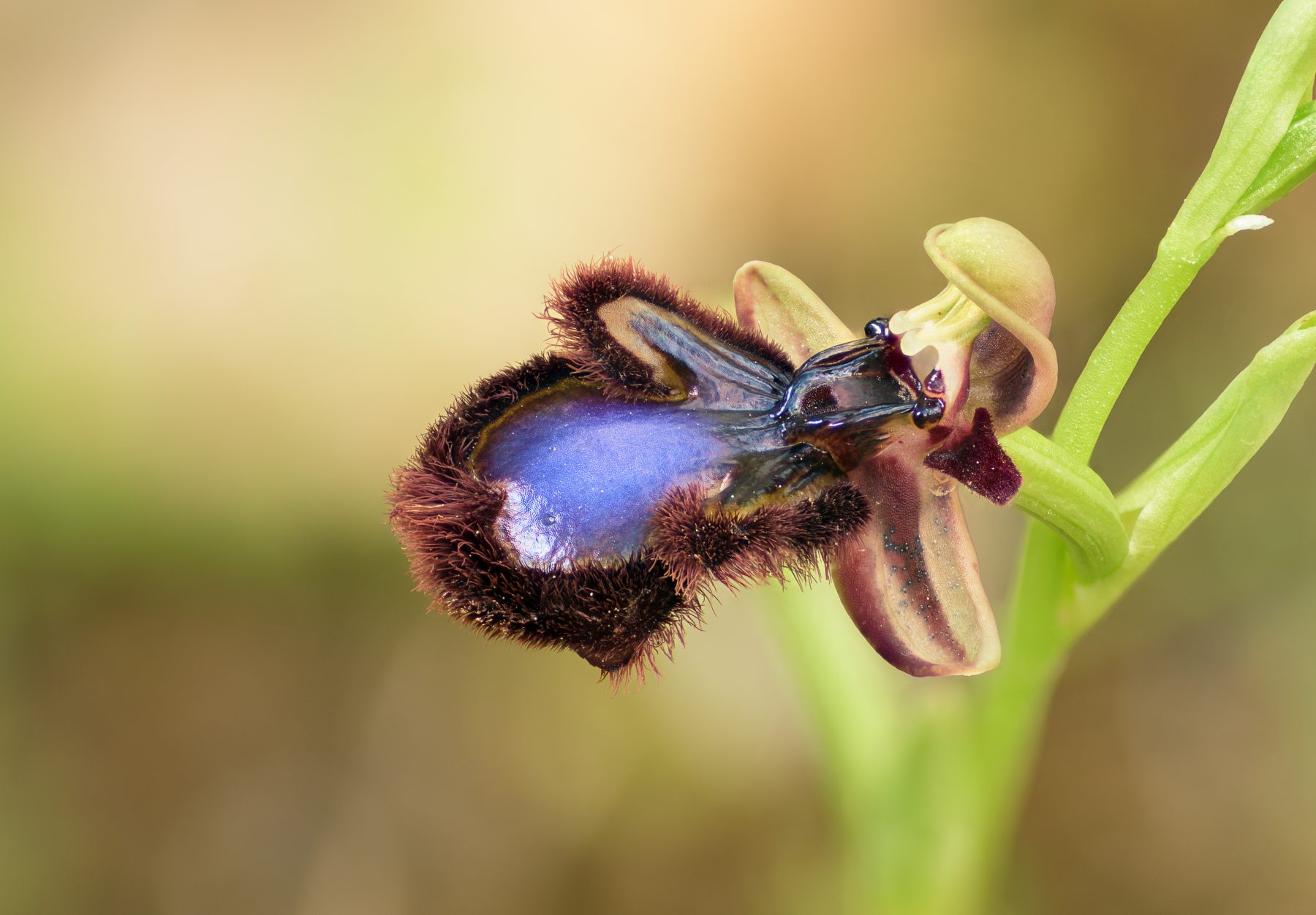
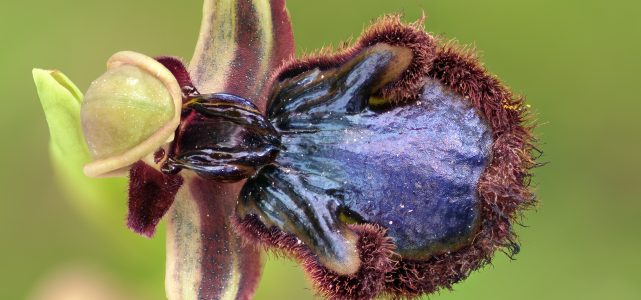
Few orchid species showcase the remarkable ability of bee orchids to imitate female insects for pollination as spectacularly as Ophrys speculum. More precisely, two species take this mimicry even further, pushing it to the extreme: Ophrys regis-ferdinandii and Ophrys lusitanica, both close relatives of O. speculum. The densely covered, brownish hairs along the lip margin, the glossy, iridescent blue speculum (mirror) occupying almost the entire lip, and the stigmatic cavity, which resembles the head and thorax of an insect, give these flowers such an animal-like appearance that it is hardly surprising that hymenopterans fall for the trick, too—specifically, a species of scoliid wasp, Dasyscolia ciliata. We, on the other hand, do not need to fall for anything. Our only “task” is to enjoy (and protect!) these tiny, bluish, hairy abdomens barely peeking above the grass.
For Hungarians, at least, this requires a bit of travelling, as the species is a true Mediterranean orchid. It rarely ventures into more temperate climatic zones or far inland, but can be found all along the Mediterranean coast and throughout its islands, from Portugal to Turkey. The closest populations to us occur on the Istrian Peninsula, but the species is very rare there. Greece (the Peloponnese), central Italy, Sardinia, and the southern coast of France are therefore much better destinations. And you need to hurry, too, because this orchid belongs to the early wave of flowering Ophrys: by mid-spring, most specimens have already finished flowering. Interestingly, it is very rare on Crete and completely absent from Cyprus. In contrast, it is fairly common across most Mediterranean coastal regions, often occurring in great abundance in pioneer habitats, disturbed areas, or rocky sites with shallow soil that are still in the very earliest stages of ecological succession.
The appearance of the species is not entirely uniform across its vast range. Western specimens, found roughly as far east as Italy, have a lighter blue speculum covering a somewhat smaller area and bordered by a wider yellow margin. Their lateral lip lobes are also lighter and more yellowish. By contrast, eastern Mediterranean specimens have a deep blue, shimmering mirror, with the yellow border either absent or considerably narrower, while the “arms” (lip lobes) are dark, brownish-grey. These differences have evidently inspired the taxonomic splitters, too: Devillers and Terschuren (2004) described the eastern form as a separate species, Ophrys eos. This is somewhat contradicts the biological species concept advocated by Hannes Paulus and with his findings, according to which the eastern mirror bee orchids differ in that they are pollinated by Dasyscolia ciliata subsp. araratensis, one of the subspecies of the wasp. Consequently, they could arguably be distinguished at most at subspecies level. I, too, fail to see a convincing justification for treating O. eos as a separate species, although history has certainly seen species split over even smaller morphological differences…
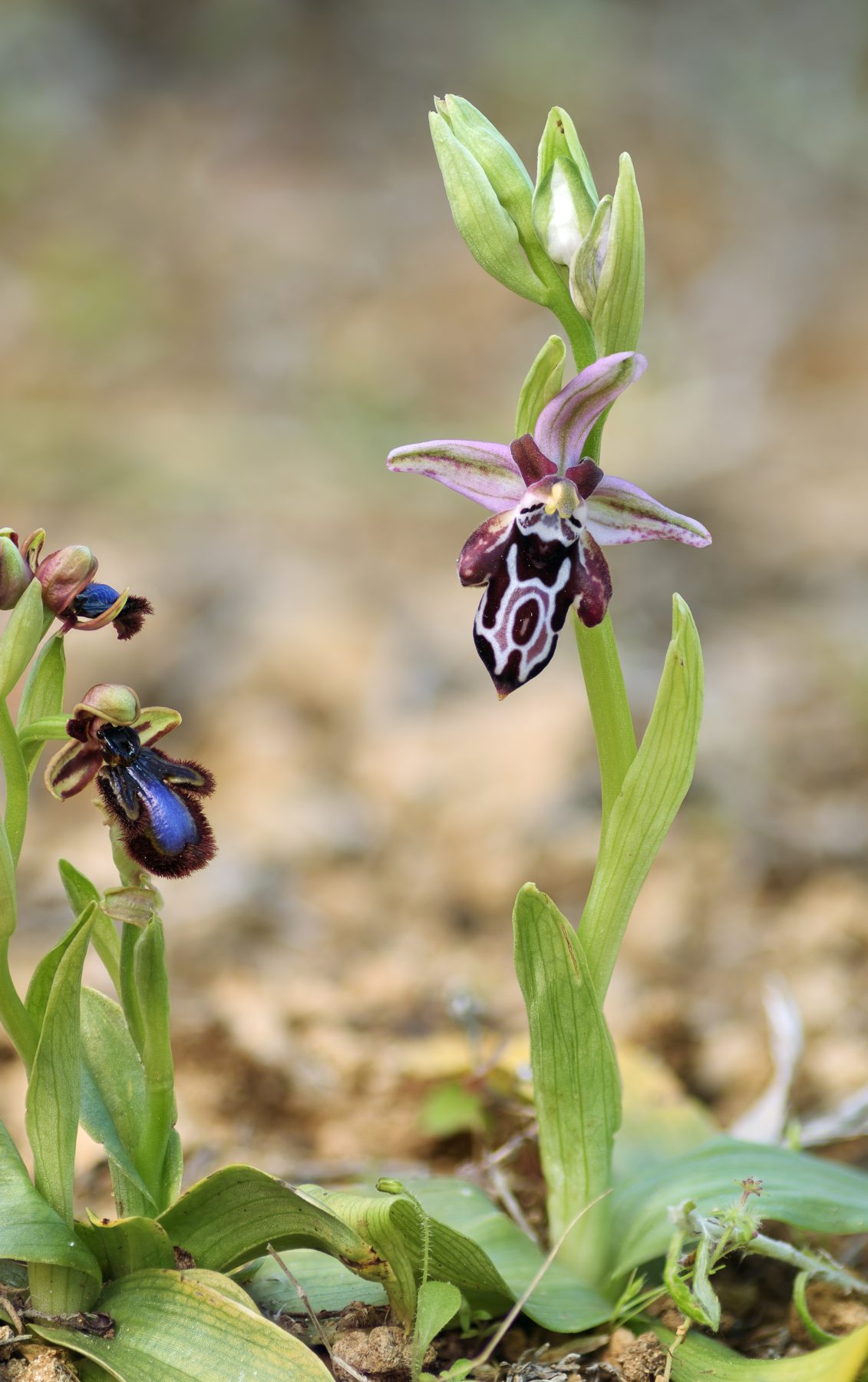
There is only one way to make Ophrys speculum even more bizarre and fascinating: let it hybridise with other Ophrys species. Whatever species fate (or, rather, the insect) brings it together with, the result is invariably astonishing. On occasion, it even crosses with members of the fusca group (Pseudophrys), which takes things straight into extraterrestrial territory. So far, I have personally encountered only the cross with O. regis-ferdinandii on Rhodes (see the gallery below!) and I also came across a population of Ophrys argolica at the southern tip of the Peloponnese that had been thoroughly corrupted by O. speculum viciously! The result of this botanical free-for-all was a huge number of hybrids, enough to deserve an entire gallery of their own.