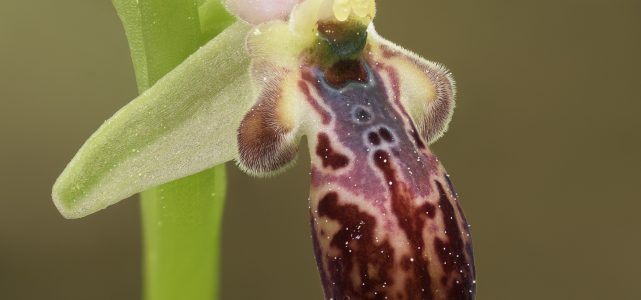
| Etymology: | After the name of the ancient state Isauria in the Turkish Taurus Mountains |
| Distribution: | Turkish endemism (Antalya, Mersin) |
| Flowering time: | V. |
| Taxnonomy: | O. oestrifera group |
| Similar species: | O. hygrophila |
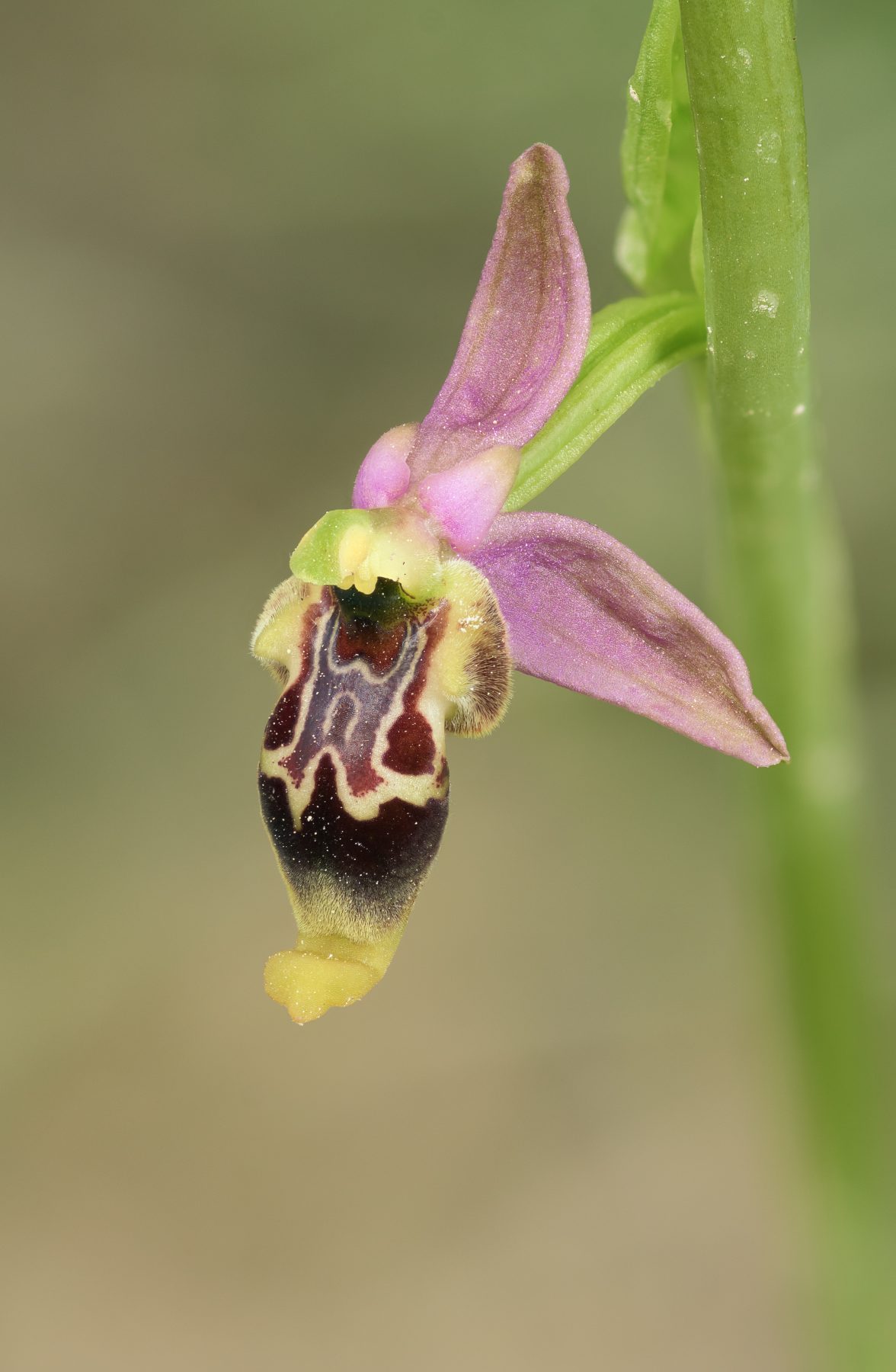
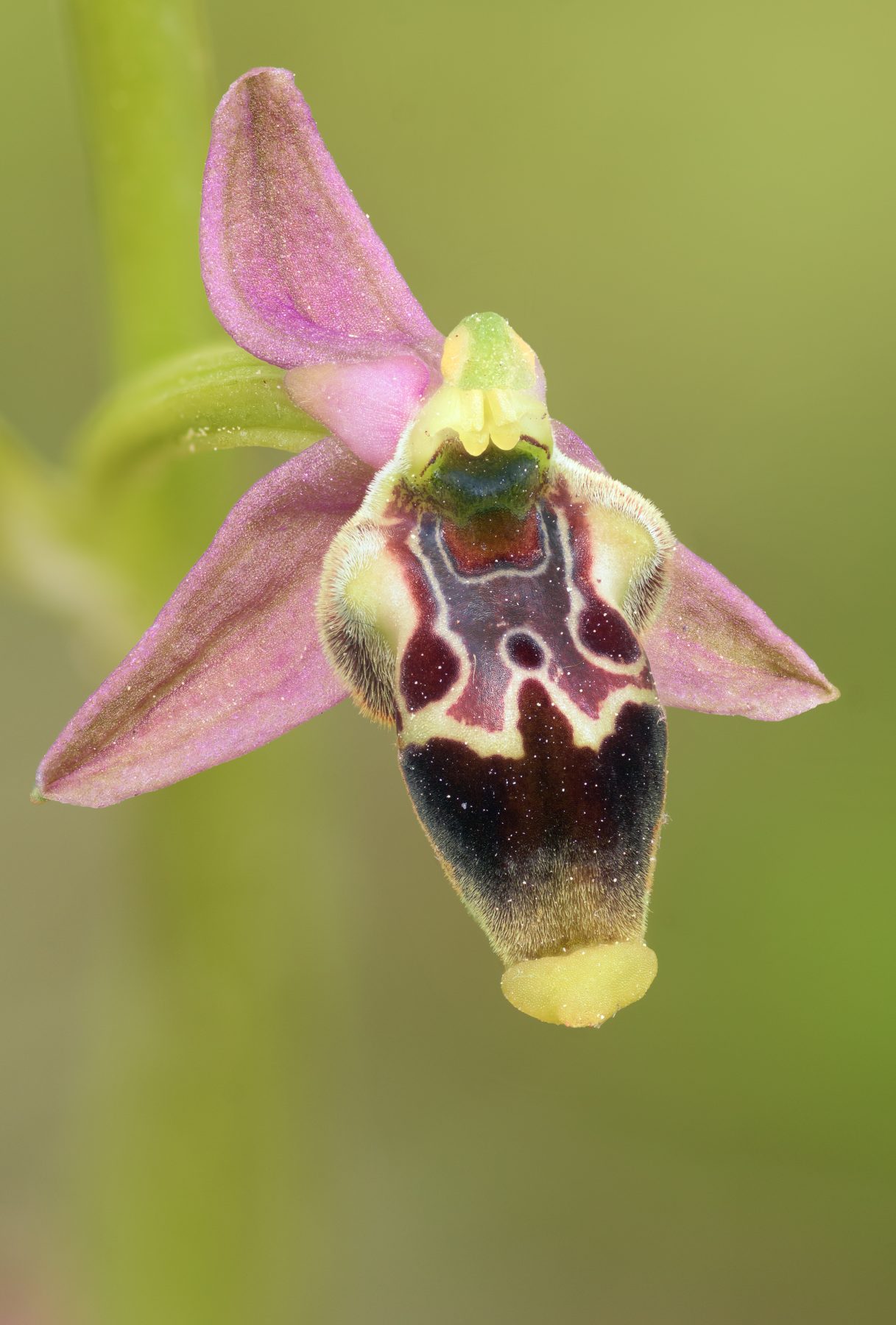
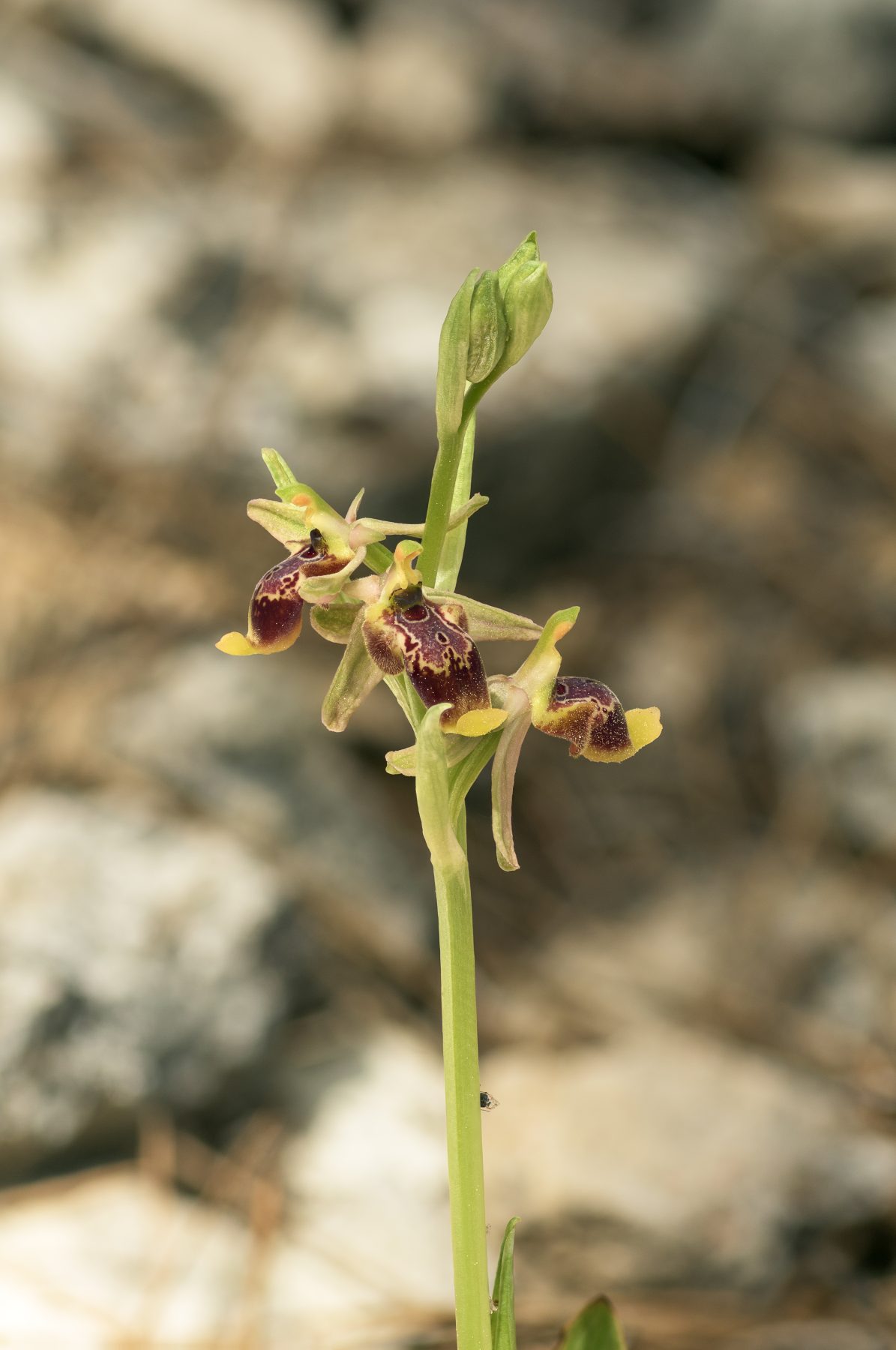
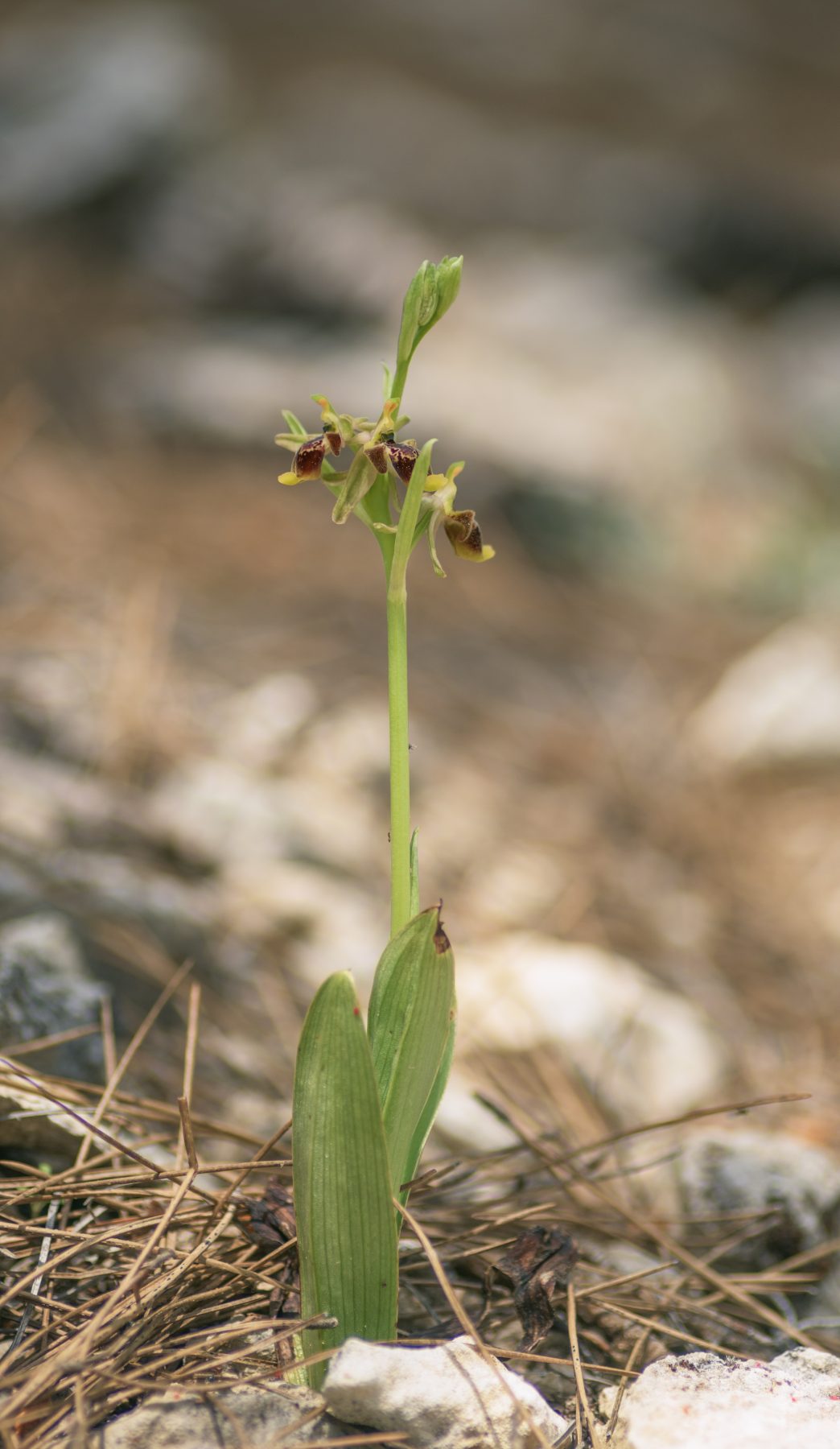
This extraordinarily proportioned little bee orchid was not named after the Brazilian slave girl from the famous soap opera (although I would argue that the plant itself would be a much more deserving candidate for a fundraising campaign—which is a true story about some fans gathering money for the release of a fictional character). Rather, its name refers to Isauria, an ancient state that once occupied the northern side of the vast Taurus Mountains, which run roughly parallel to Turkey’s Mediterranean coast. The species itself is endemic to the Taurus range, where it is known from only a handful of scattered localities, mainly in the provinces of Antalya and Mersin. It tends to grow in relatively open pine woodland and is never particularly abundant.
Centuries of relentless salep harvesting in Turkey have pushed the majority of the country’s orchids perilously close to extinction, and Ophrys isaura was one of the species for which the alarm bells were rung particularly loudly. Around the turn of the millennium, its entire population was estimated at only a few hundred plants, restricted to a handful of sites. Things have improved somewhat since then. In May 2023, we came across strong populations at quite a few localities ourselves — and, more often than not, not in cemeteries! Even so, it is certainly nowhere near common enough to pose any danger of taking over the Mediterranean mountains of Turkey like some sort of particularly aggressive weed.
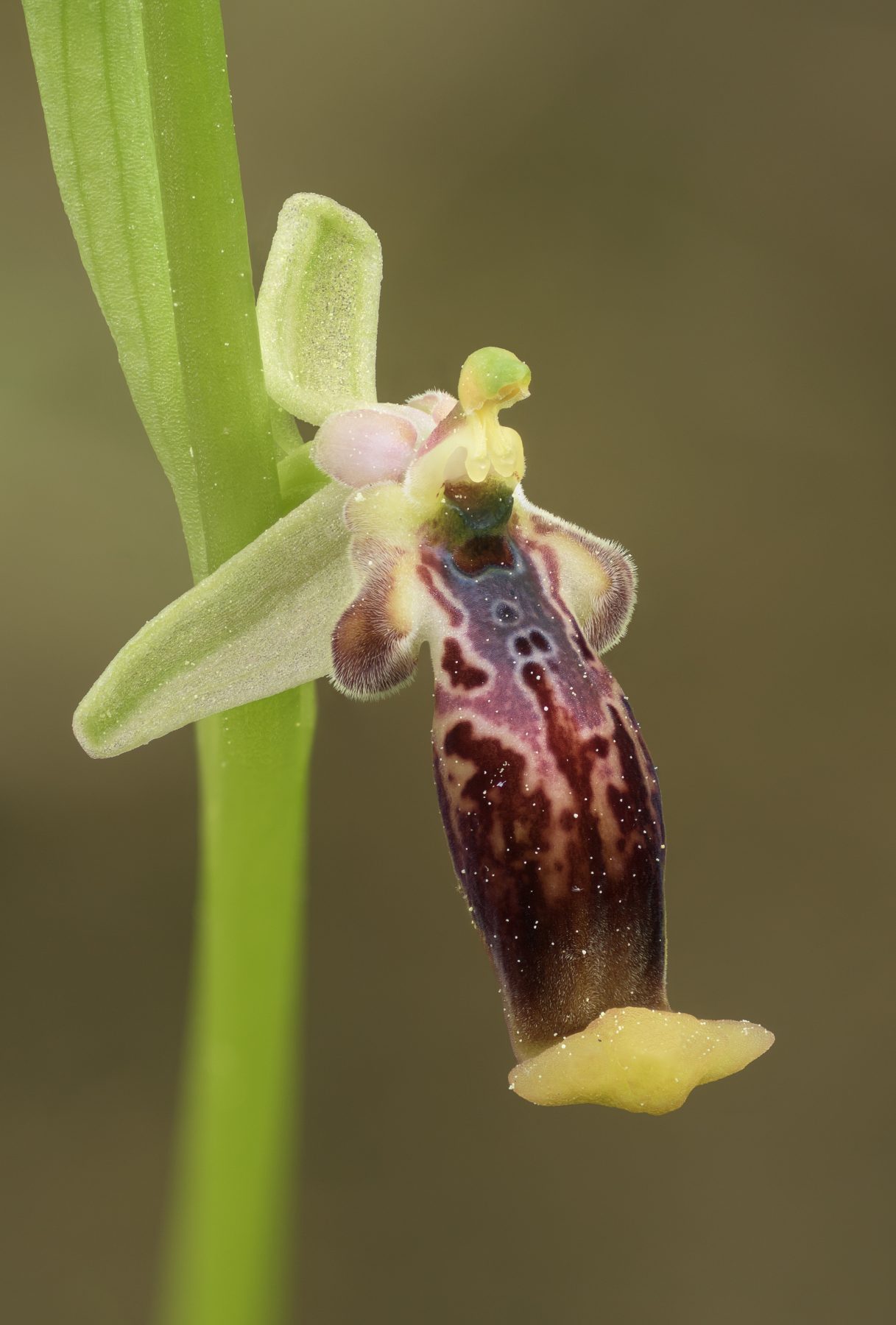
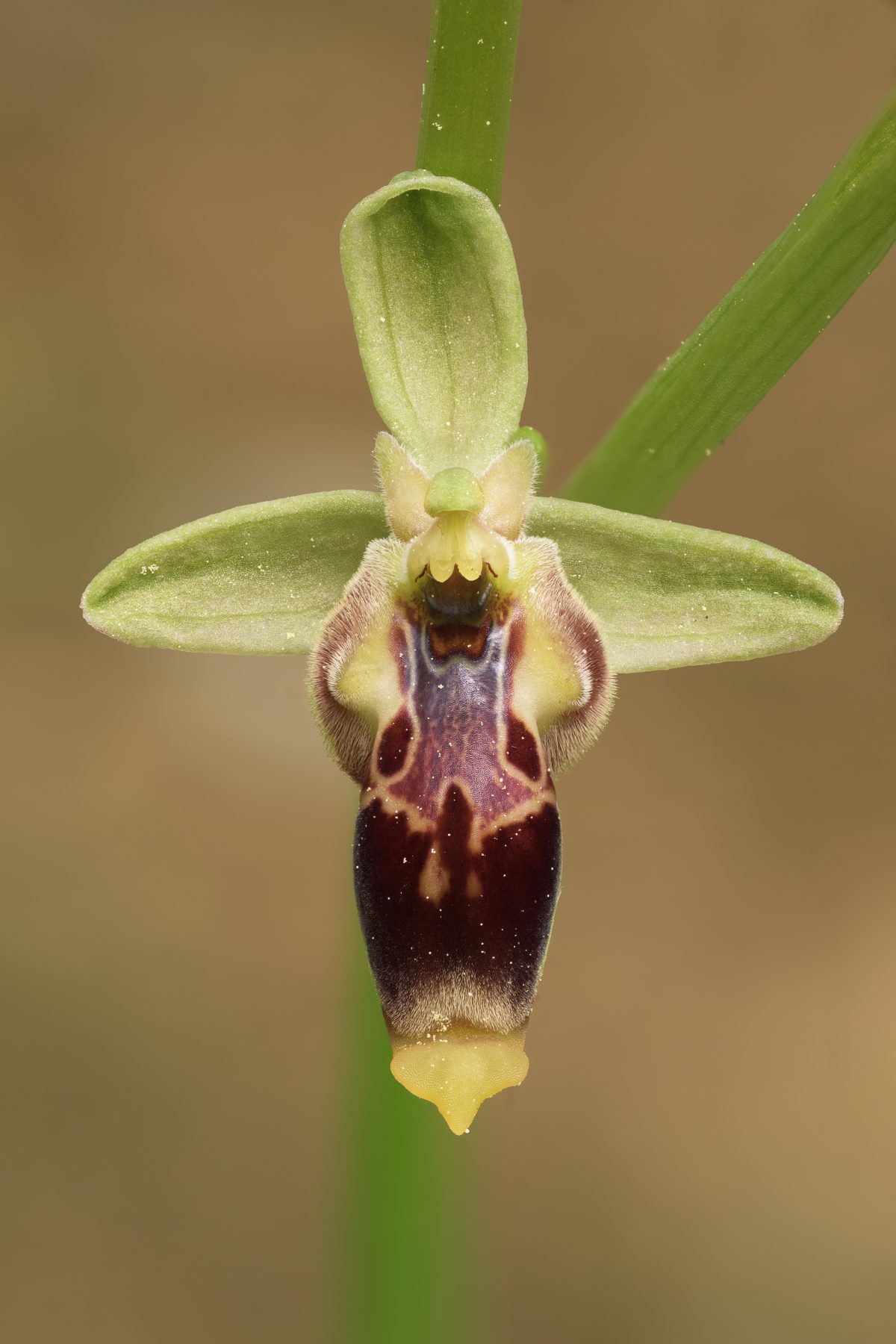
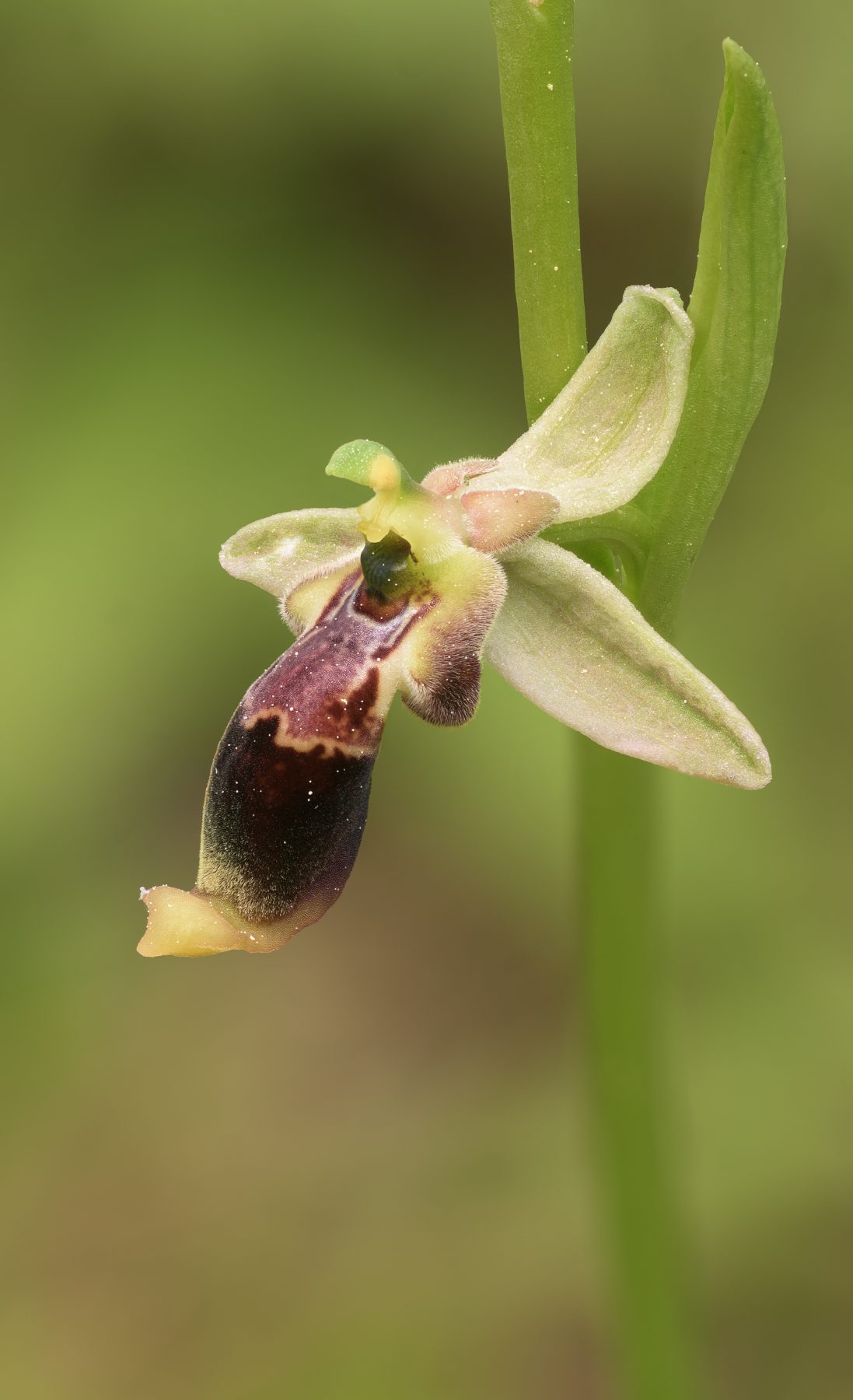
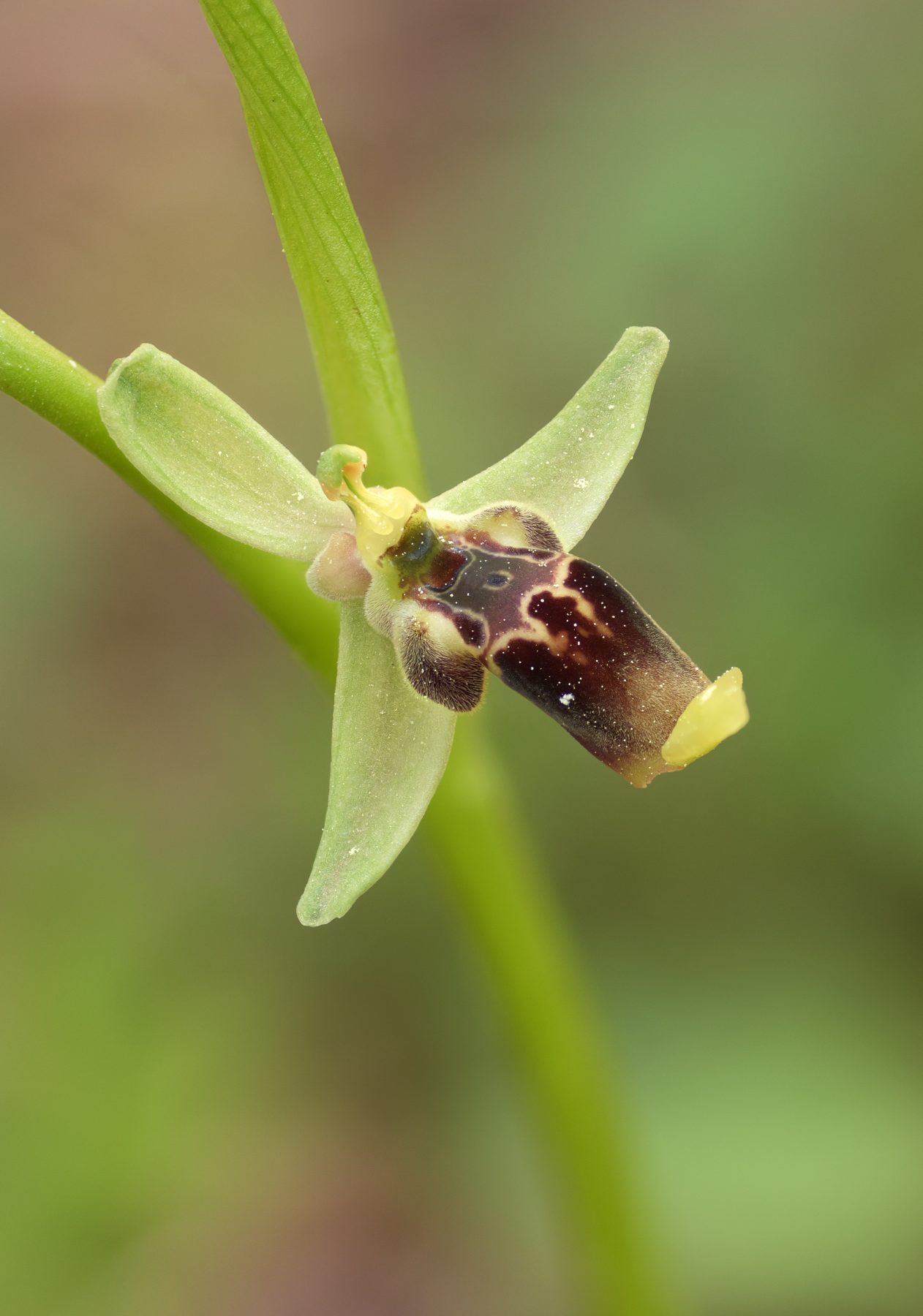
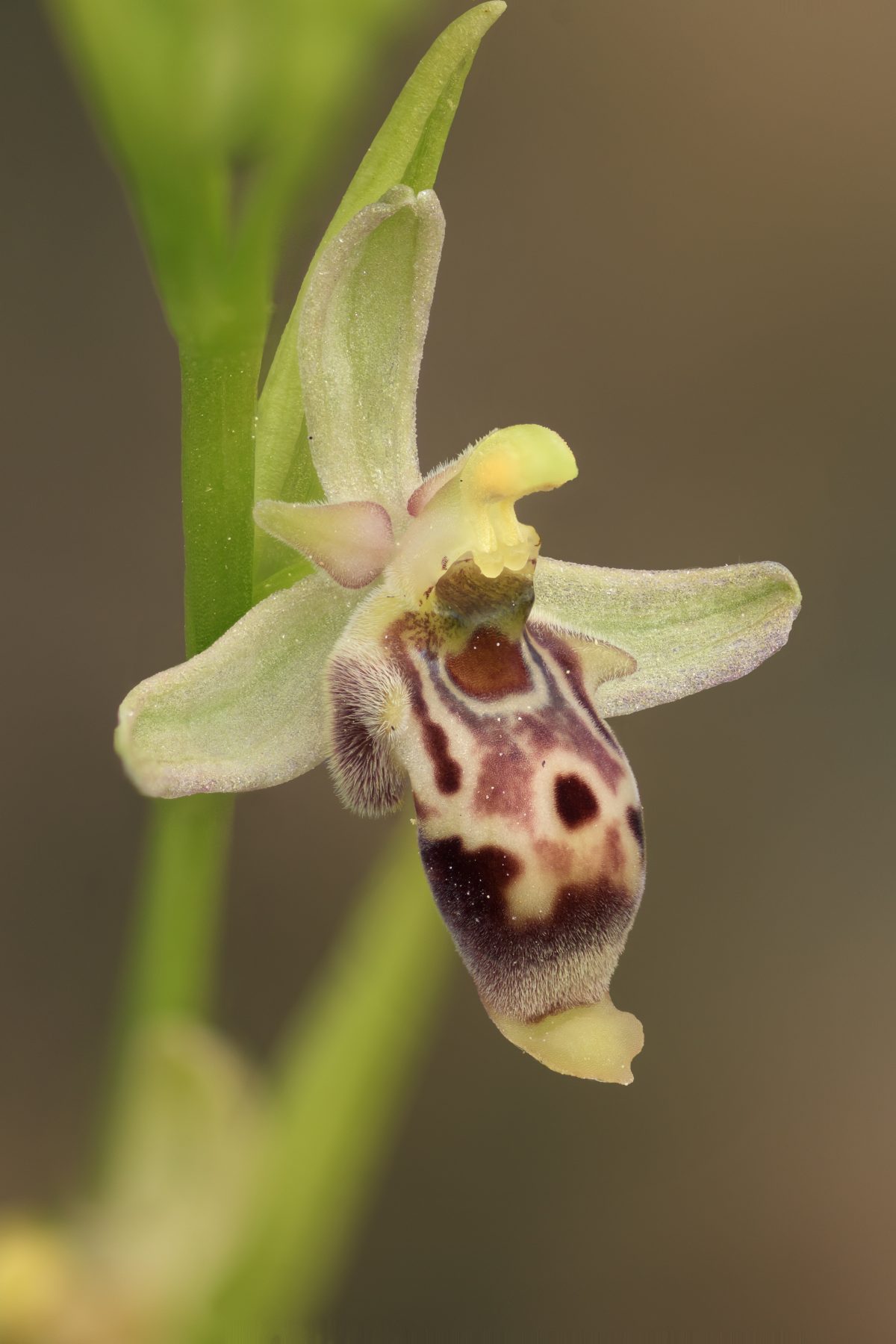
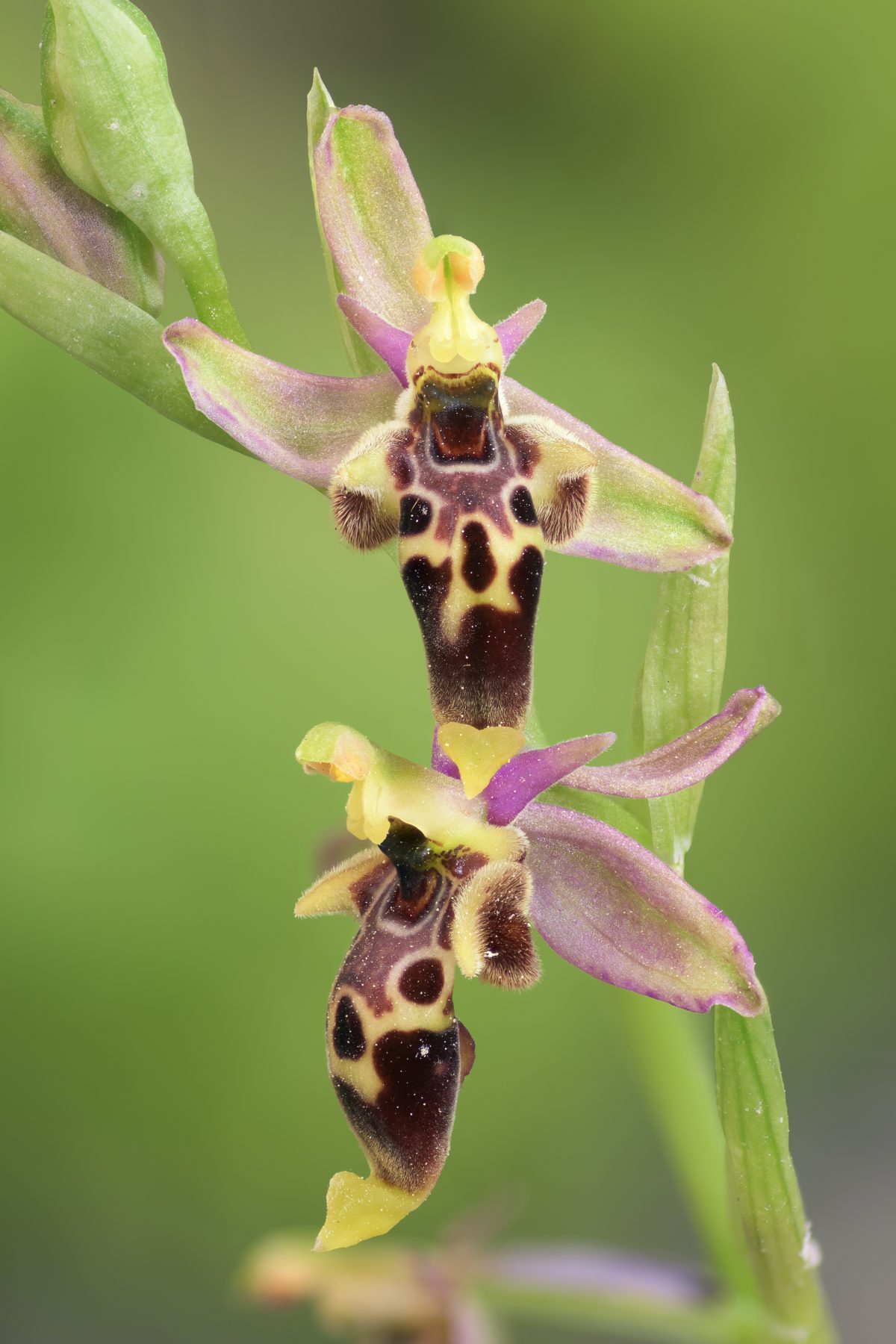
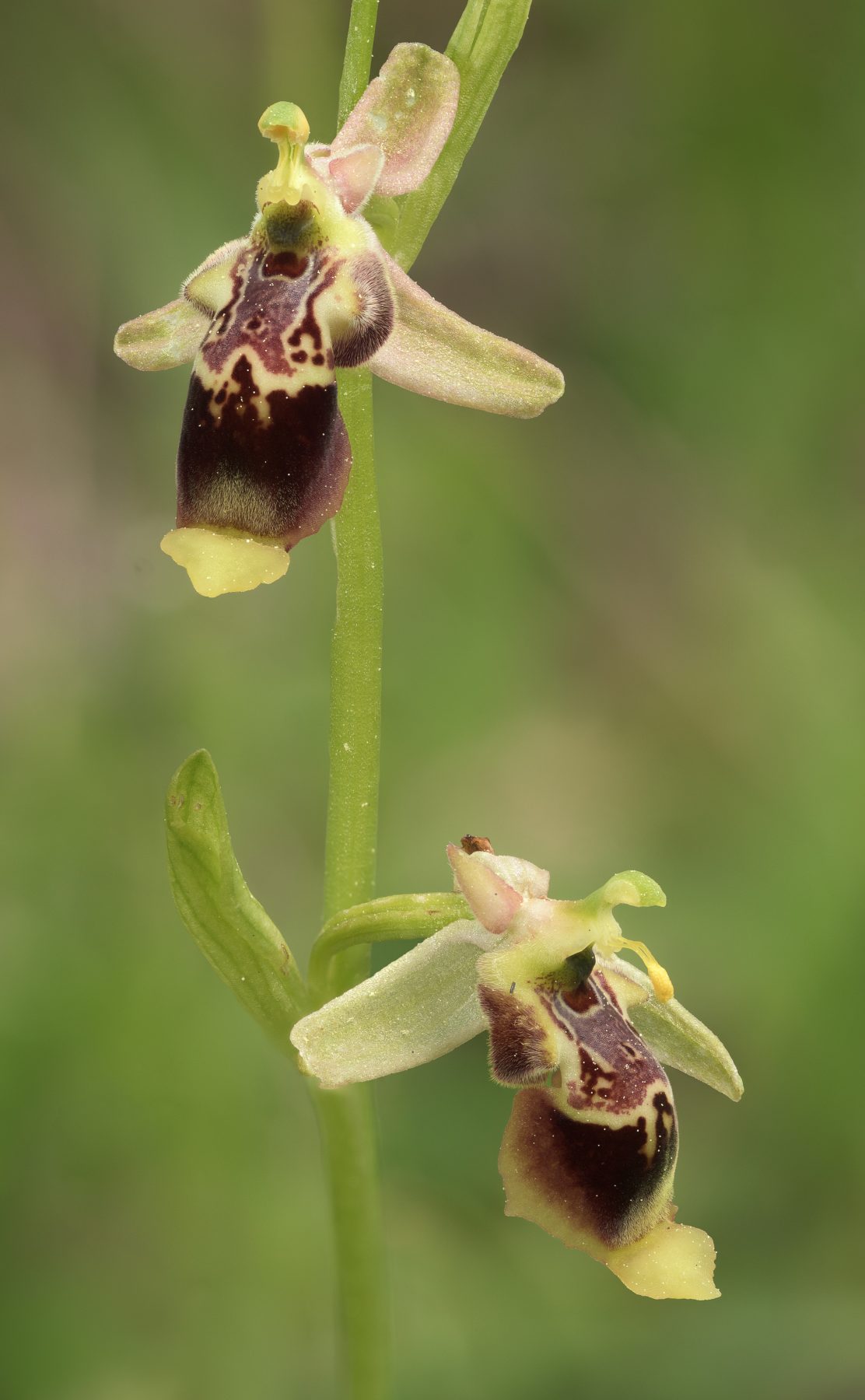
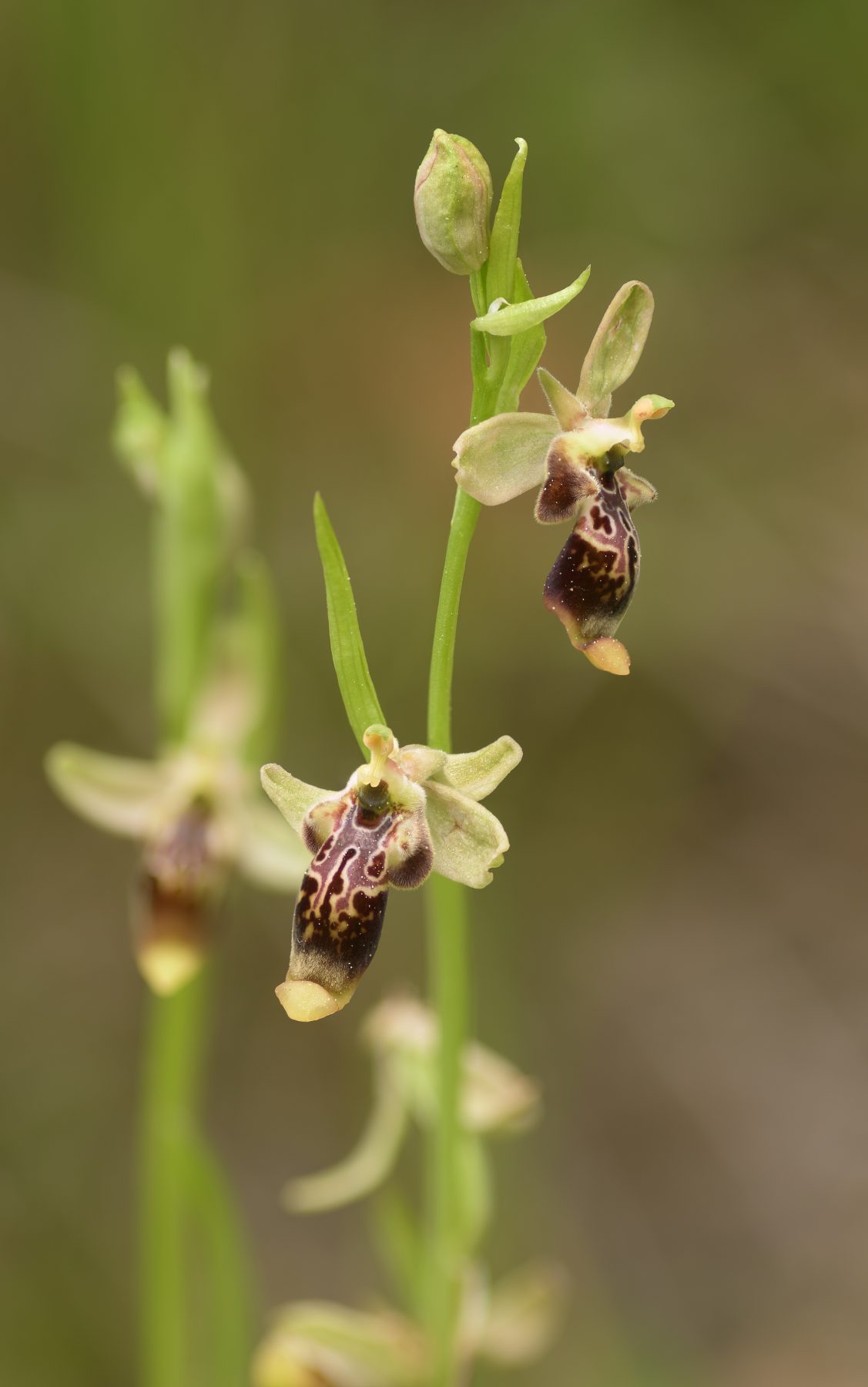
The flower itself is absolutely spectacular, and surely ranks among the most gloriously bizarre-looking Ophrys species. Some individuals genuinely look like a drunken caricature of Ophrys oestrifera: an elongated, cylindrical lip, an enormous paw-like lip appendage, a tiny basal field, bulging, diffuse pseudo-eyes, small, rounded petals, and an irregular lip pattern that often looks as though someone has taken a wet paintbrush to it. The plants from Mersin are also slightly different from those in Antalya and, aesthetically at least, look rather more conventional. Their lips and the markings on them are more regular and more reminiscent of O. oestrifera, the basal field — the “mouth” — is larger, and the sepals and petals tend to be more colourful as well. Naturally, this sort of variation did not escape the attention of taxonomists. Kreutz went one step further and described the plants around Gülnar as Ophrys akcaliensis. Personally, I am not convinced that treating it as a separate species is justified, particularly since we encountered intermediate plants in the field. So, as for the actual identity of the akcaliensis individuals shown in the gallery below — assuming there is a meaningful separate identity to be had here in the first place, and that it even matters at this level of taxonomic hair-splitting — I certainly wouldn’t bet my finger on it…