
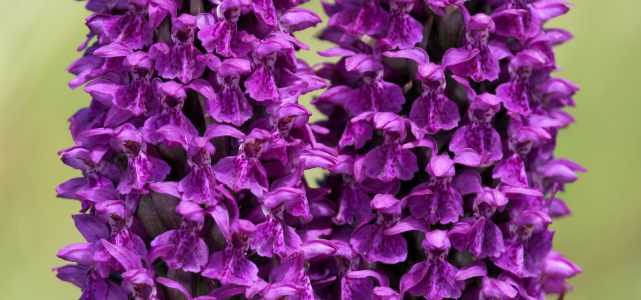
| Etymology: | Purpureus means purple, lilac, referring to the color of the inflorescence, the suffix -ella indicates the smaller dimensions of the species |
| Distribution: | Great Britain (Northern England, Wales, Scotland, Northern Ireland, Ireland), Denmark, norway |
| Flowering time: | late-V. to mid-VII. |
| Taxnonomy: | D. praetermissa group |
| Similar species: | D. praetermissa, D. majalis |
I had been wanting for ages to somehow squeeze Dactylorhiza purpurella into one of my more or less frequent trips to England for family reasons, because this deep-purple brute, occasionally sporting an astonishingly elongated inflorescence, had already become my favourite “sight unseen” among the already rather grandiose bunch of marsh orchids. The only problem is that the period suitable for seeing it runs exclusively from late May to July, and some serious travelling is required because the species conspicuously avoids the southern and south-eastern parts of Great Britain; if we head north-west from, say, London, Wales is the first area that comes into consideration. Further north, in northern England (roughly north of Manchester), it becomes increasingly common in wet meadows and pastures, bogs, all sorts of mining remnants, floodplains, roadsides and hollows among coastal dunes. Its true homeland, however, is Scotland, where it can almost be accused of being downright common, with populations sometimes carpeting its habitats.
In the end, I aimed for the “nearest” possible spot when, in May 2026, we visited Wales with my sister’s family living there, and, combining the pleasant with the useful, naturally couldn’t resist paying a visit to the sand dunes of Anglesey. On arriving at the site, the fact that we almost managed to park on top of a D. purpurella plant in the car park itself was already a bit of a giveaway, but once inside the slacks between the dunes, we found ourselves facing a veritable whirlwind of orchids. Alongside the sheer multitude of purpurella, there were masses of early marsh orchids (Dactylorhiza incarnata), including the brick-red-shaded form (var. coccinea), as well as the occasional heath spotted-orchid (Dactylorhiza maculata), scattered here and there. Unfortunately, no hybrids took the bait, even though the mixing was reaching fever pitch; as the gallery below clearly shows, it was hardly difficult to compose a single photograph featuring a purpurella and an incarnata side by side. In any case, the sheer abundance was astonishing, even if the plants themselves left something to be desired in terms of size, since presumably because of the dry conditions and the wind—which is common here anyway due to the proximity of the sea—almost every plant remained rather dwarfish.
Fortunately, only almost every plant, because there were a few long-spiked, slender, truly dashing warriors among them. The star of the day turned out to be a double-stemmed twin golem blessed with large, fleshy leaves, which my sister and I spotted simultaneously from quite a distance. This monstrous specimen, with its almost spadix-like inflorescences appearing dark purple cattail from afar, has even been given a name of its own. According to Kreutz’s 2024 book, such well-fed individuals deserve the designation var. crassifolia. My family members were equally impressed by the sight and quickly gathered around the distinguished creature for a selfie.
Purpurella inherited the deep-purple colour palette of the broad-leaved marsh-orchid (Dactylorhiza majalis)—and according to the more conservative approach (which happens to be particularly characteristic of the English), it can even be regarded as a subspecies of the latter. The labellum of each flower is diamond-shaped and only slightly lobed, with the central lobe usually barely perceptible. The labellum is decorated with deep crimson or dark-purple, boldly contrasting markings—thickly drawn spots, loops, blotches and all sorts of other scribbles. The somewhat similar Dactylorhiza praetermissa, which is restricted to southern England (in Great Britain), has paler purple flowers; its labellum is more rounded, while the central lobe is more clearly defined and pointed. Its markings are thinner, and the entrance to the spur is narrow relative to the size of the labellum (purpurella has a remarkably wide entrance into the spur). The inflorescence itself is more pointed, whereas the purpurella’s is blunter and has a more rounded apex. One could very simply say that purpurella is the marsh-orchid of the north, while praetermissa is the one of the south, and this distinction is even preserved in their English names: northern marsh orchid and southern marsh orchid. But praetermissa, although not in huge numbers, does extend as far north as northern England and Wales, and in the areas where the two overlap it is quite capable of hybridising with purpurella. From that point onwards, good luck with the identification…
Distinguishing it from the broad-leaved marsh-orchid can be brought to a very quick conclusion by noting that the leaves of Dactylorhiza majalis are always heavily spotted, whereas D. purpurella has unspotted leaves.
Back to the genus Dactylorhiza ↶
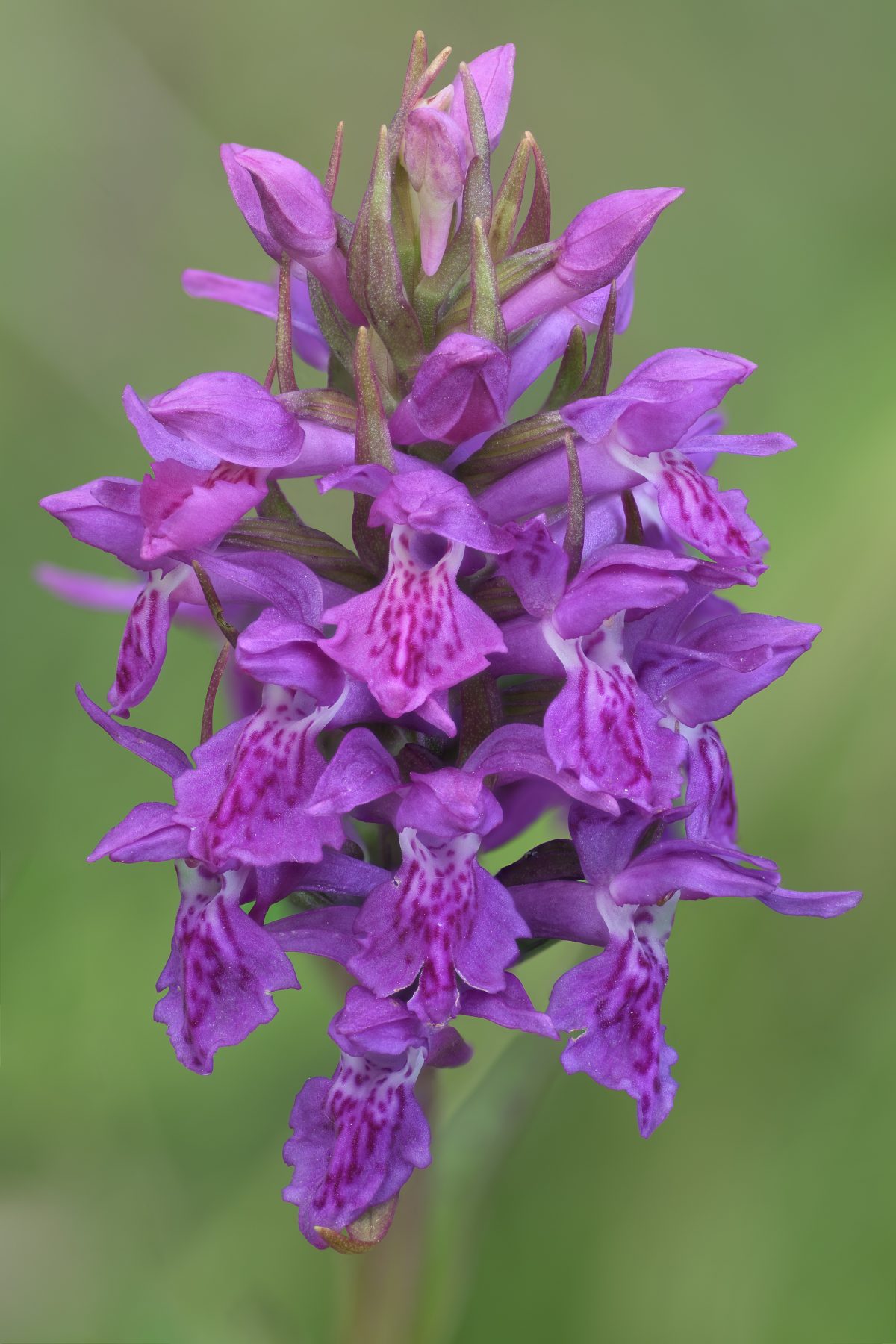
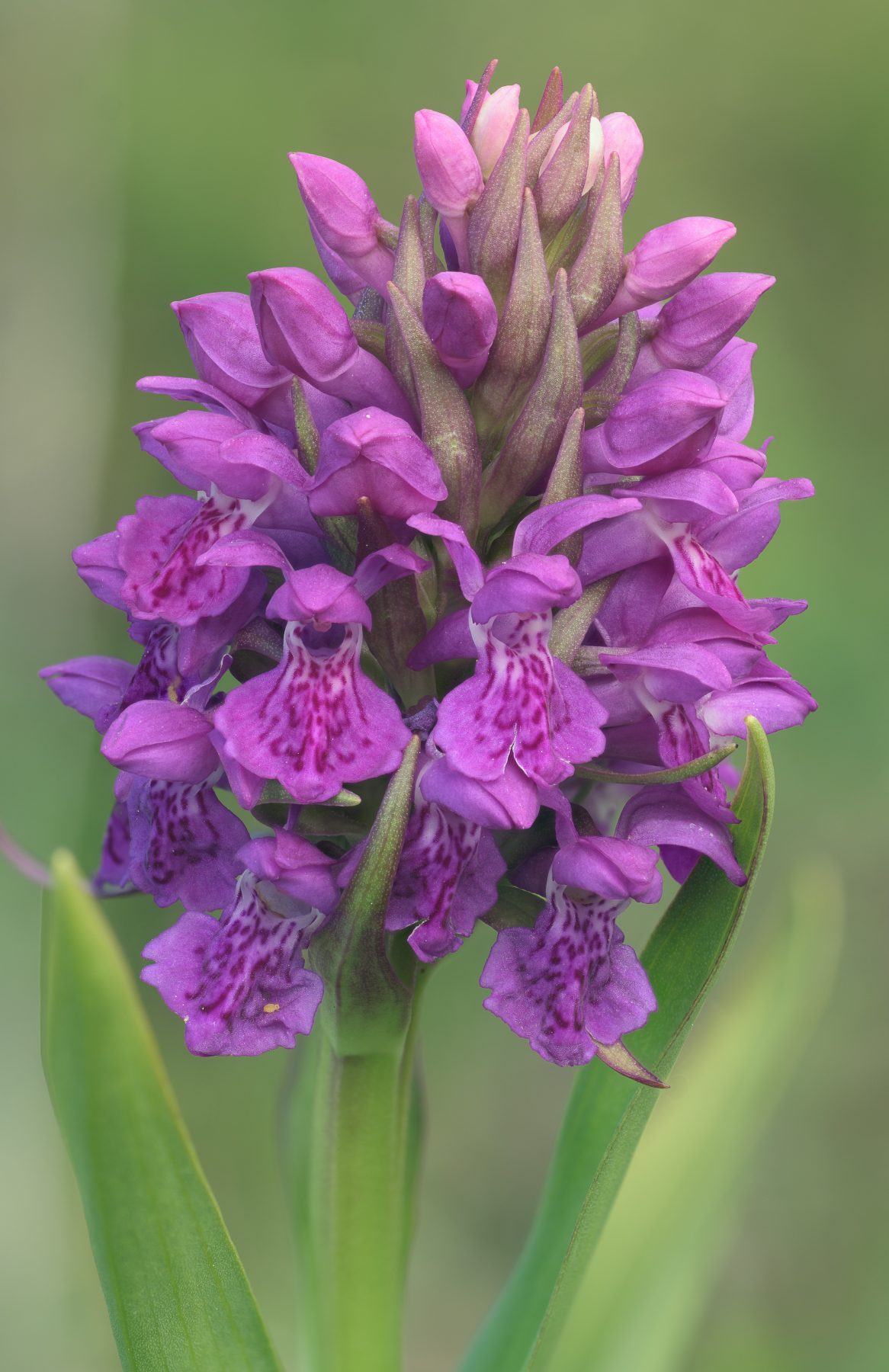
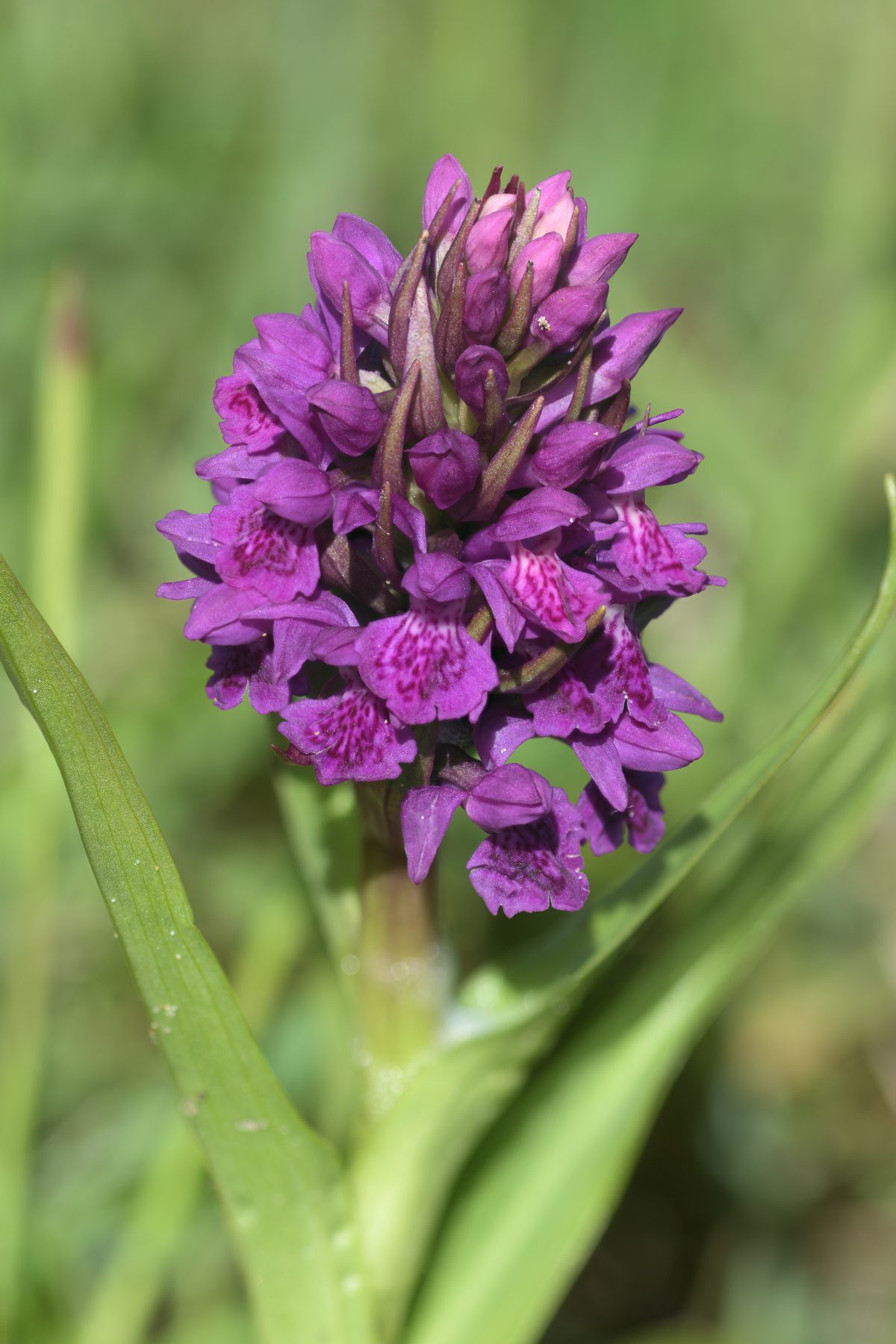
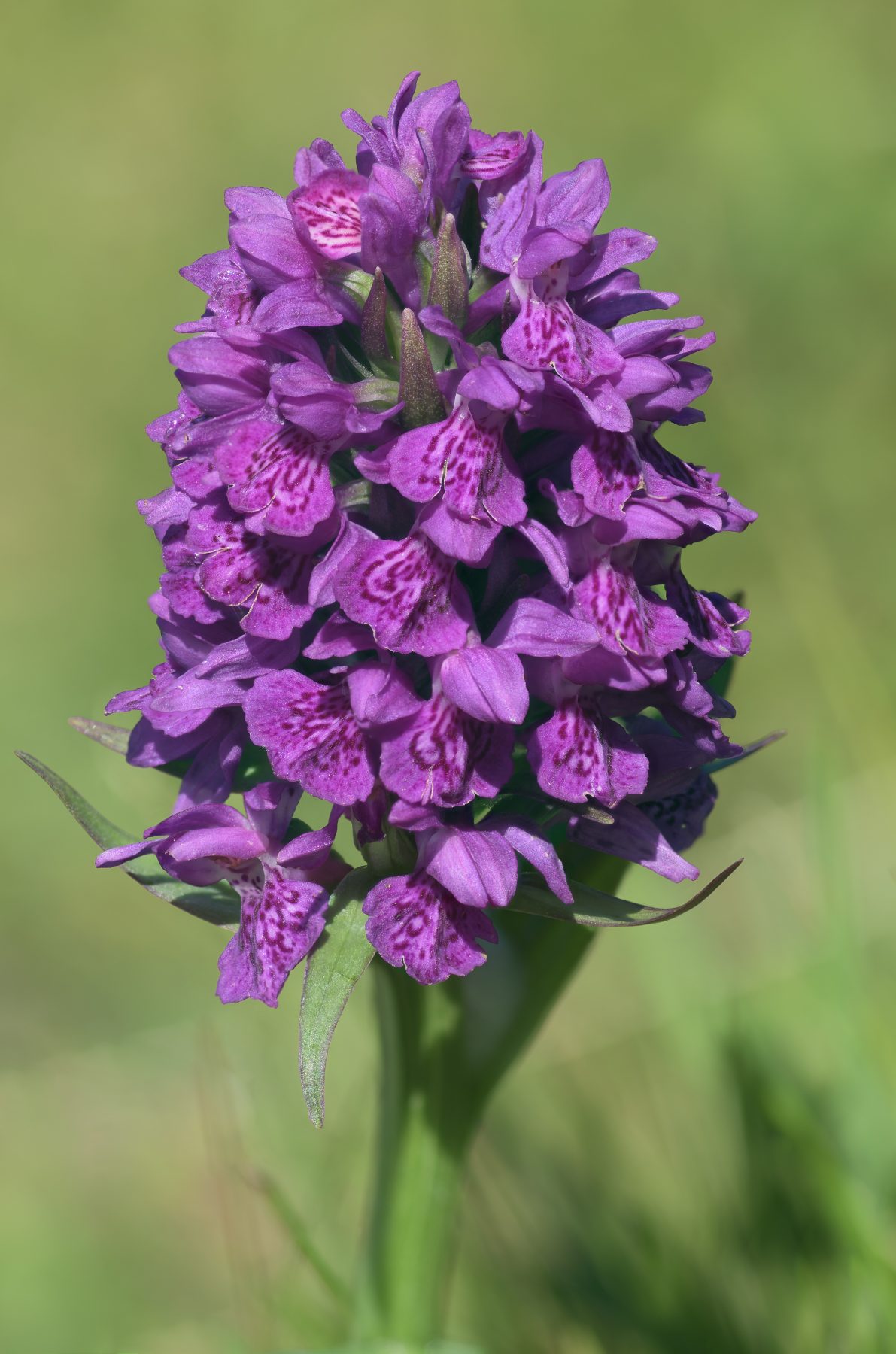
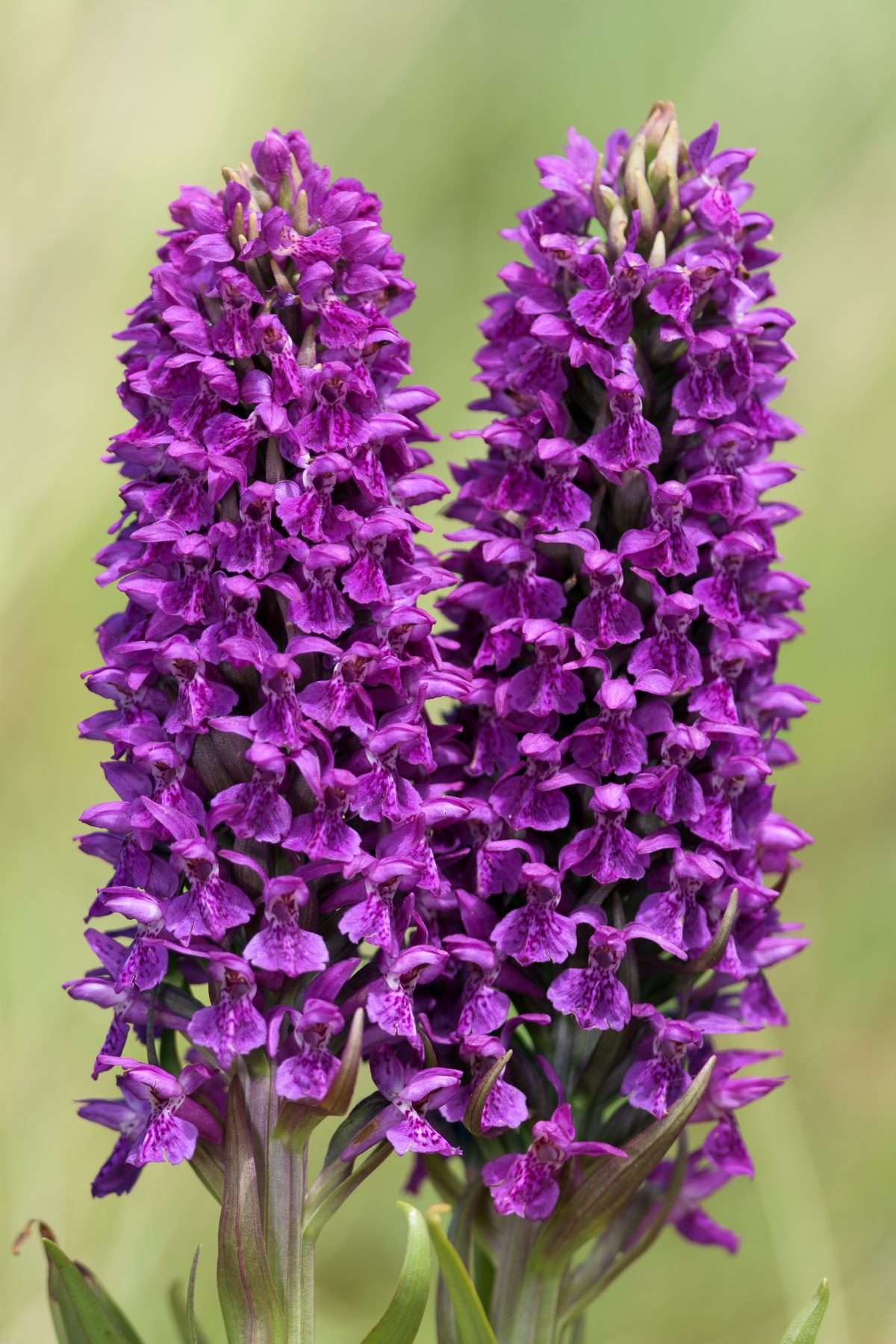
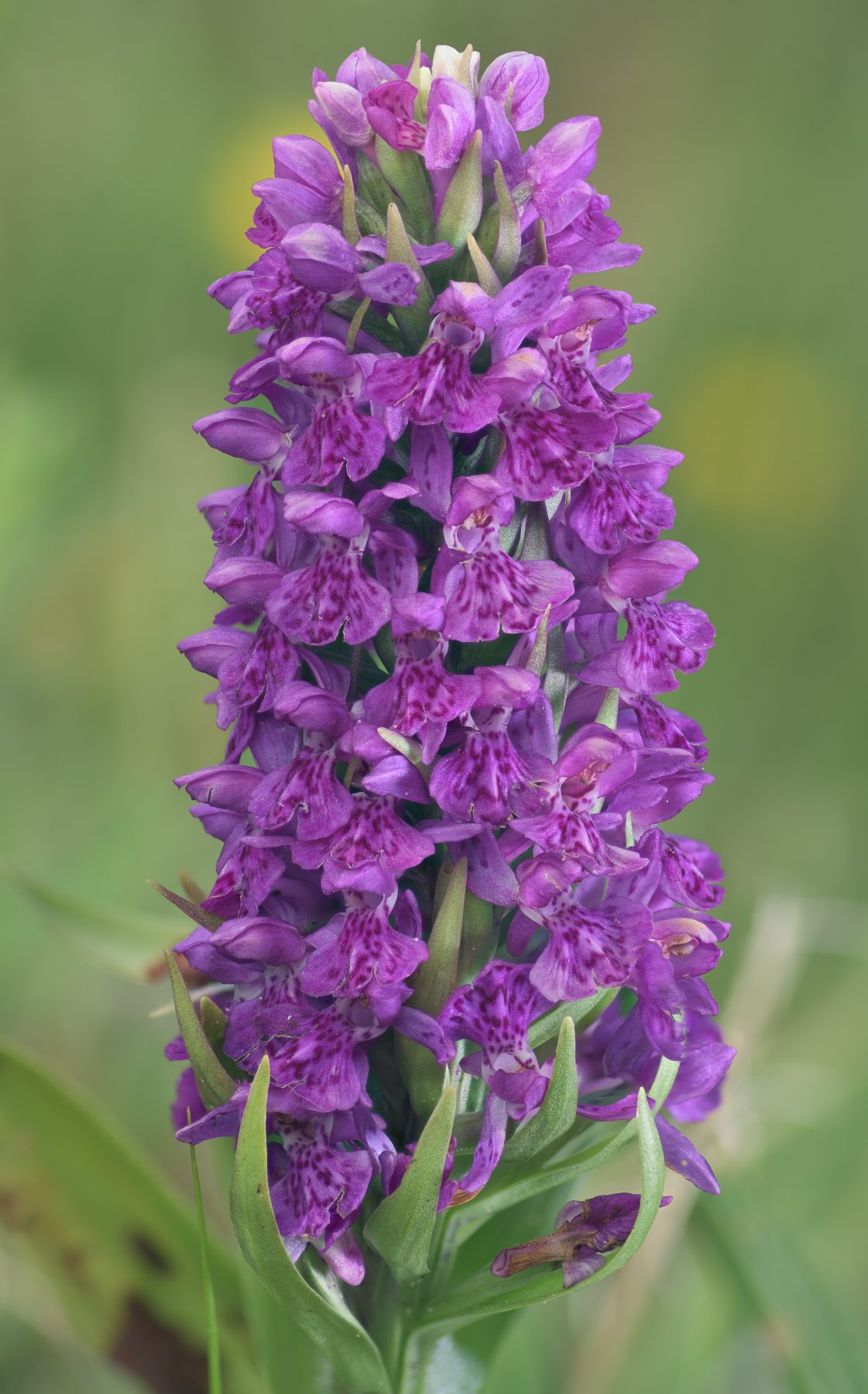
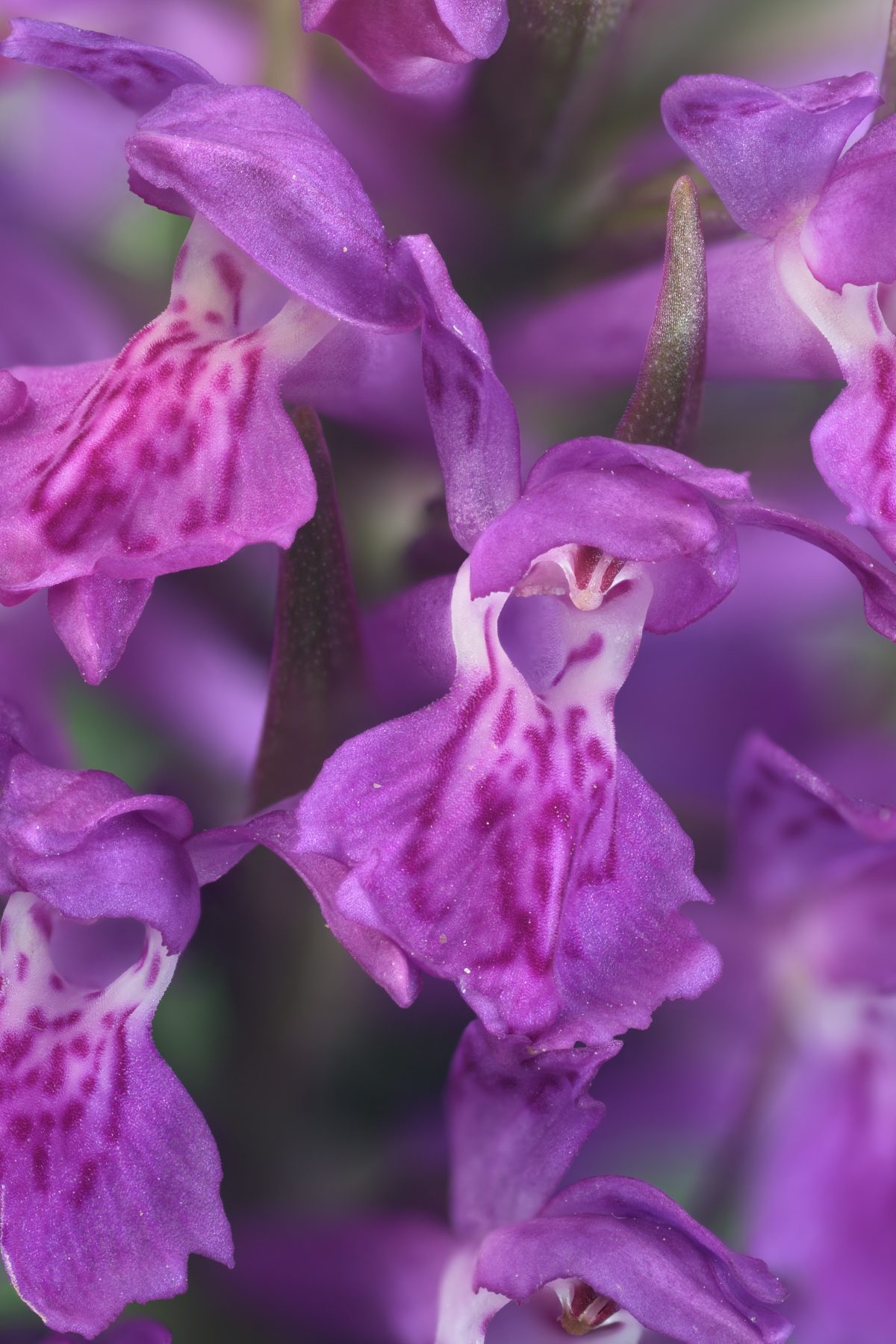
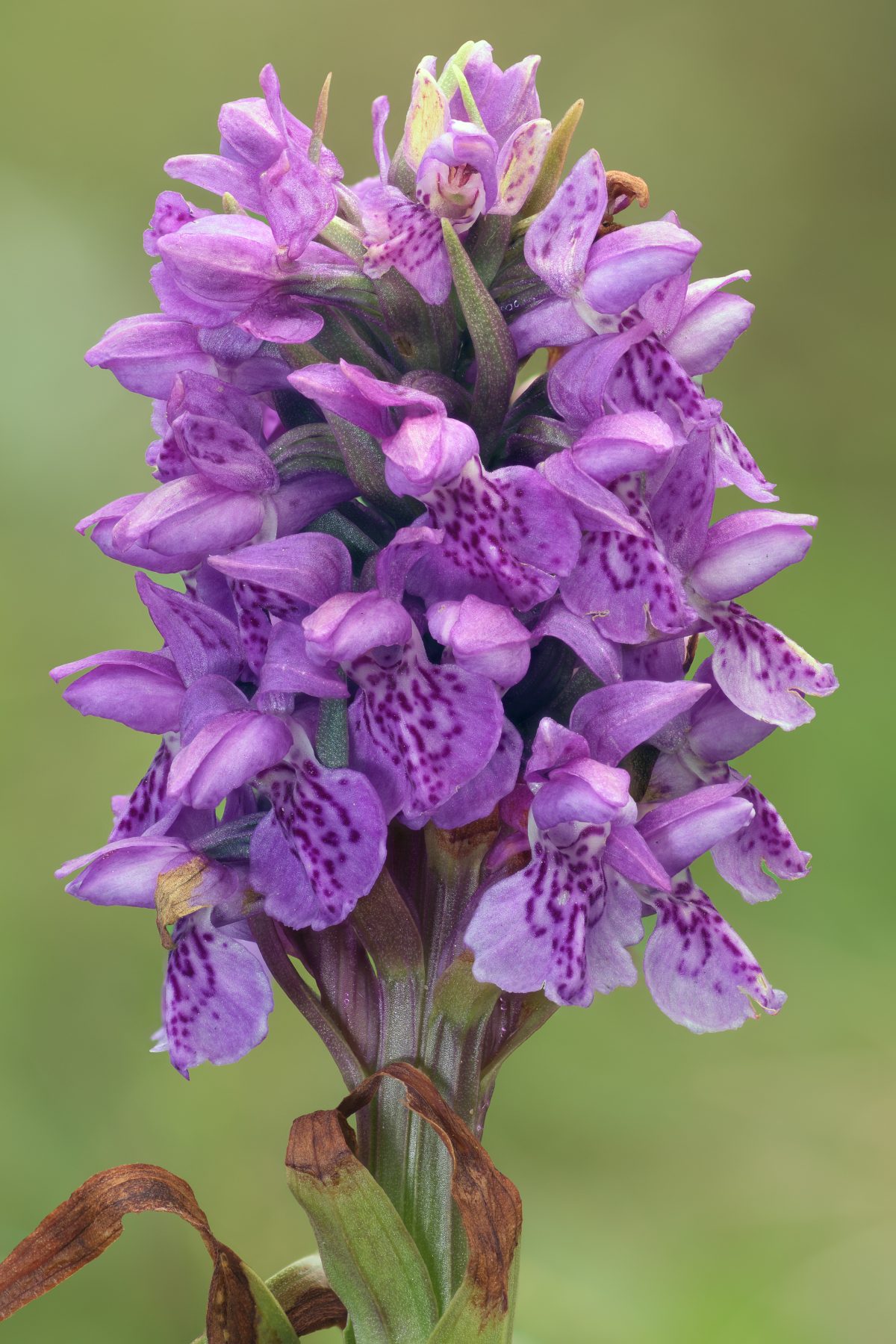
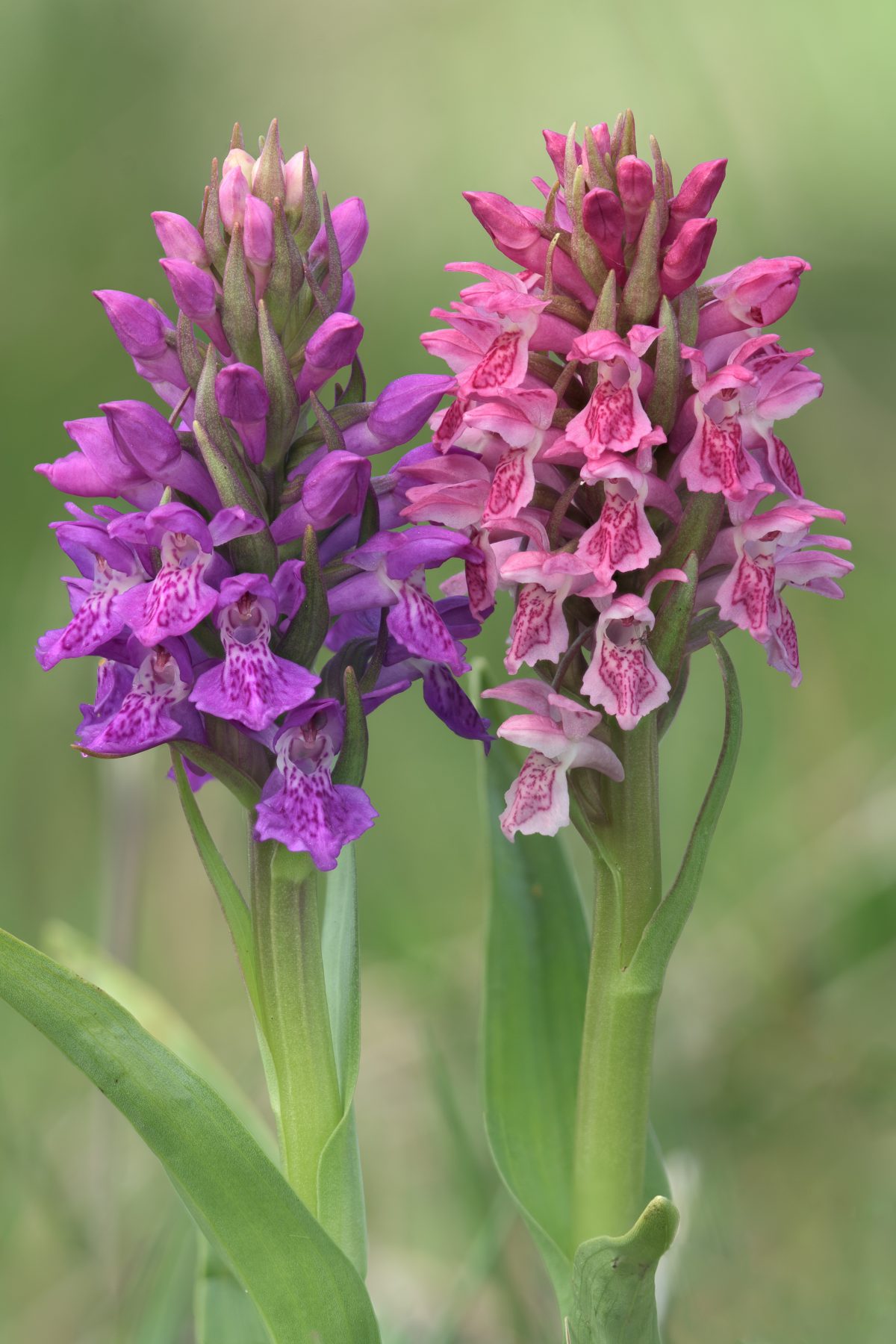
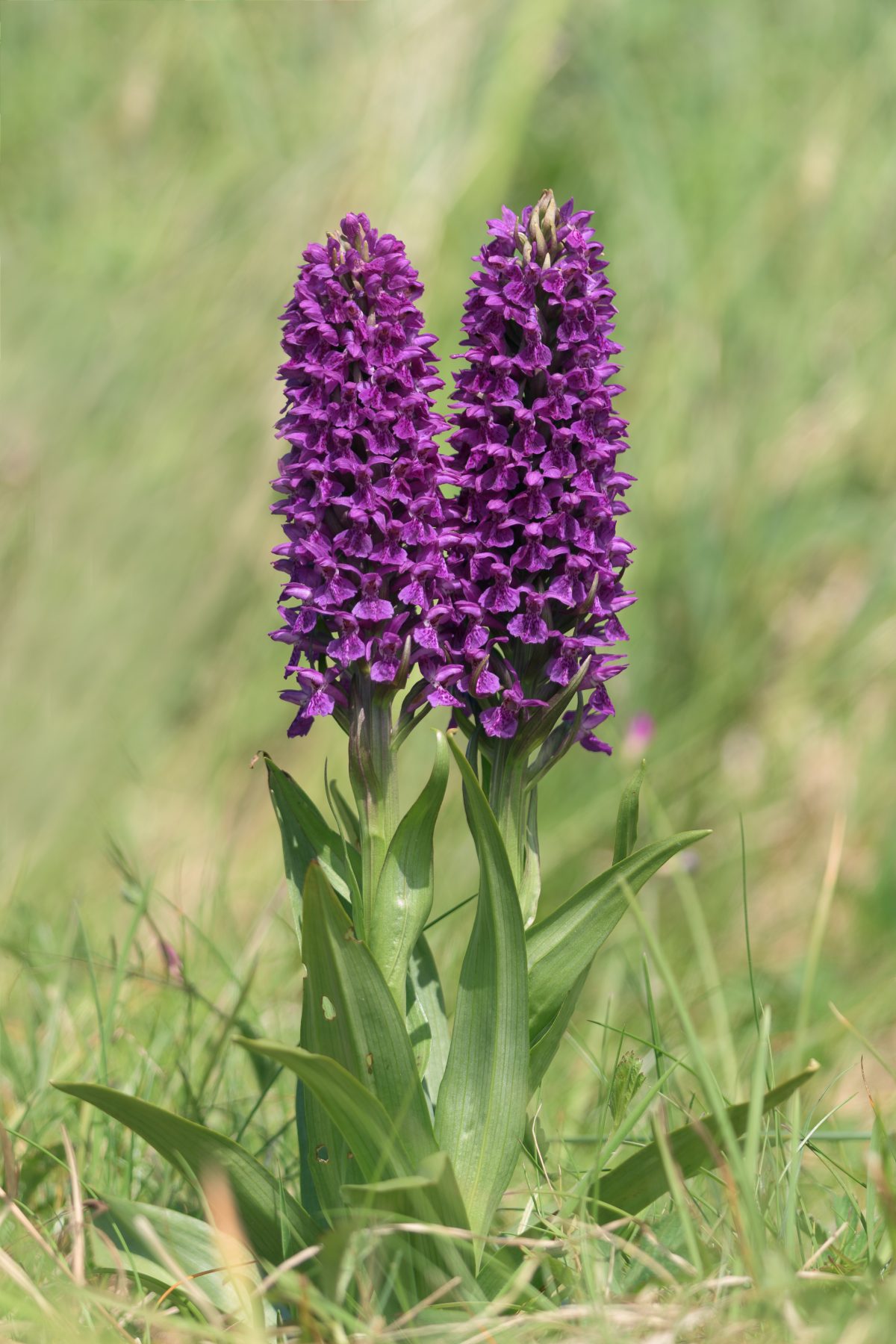
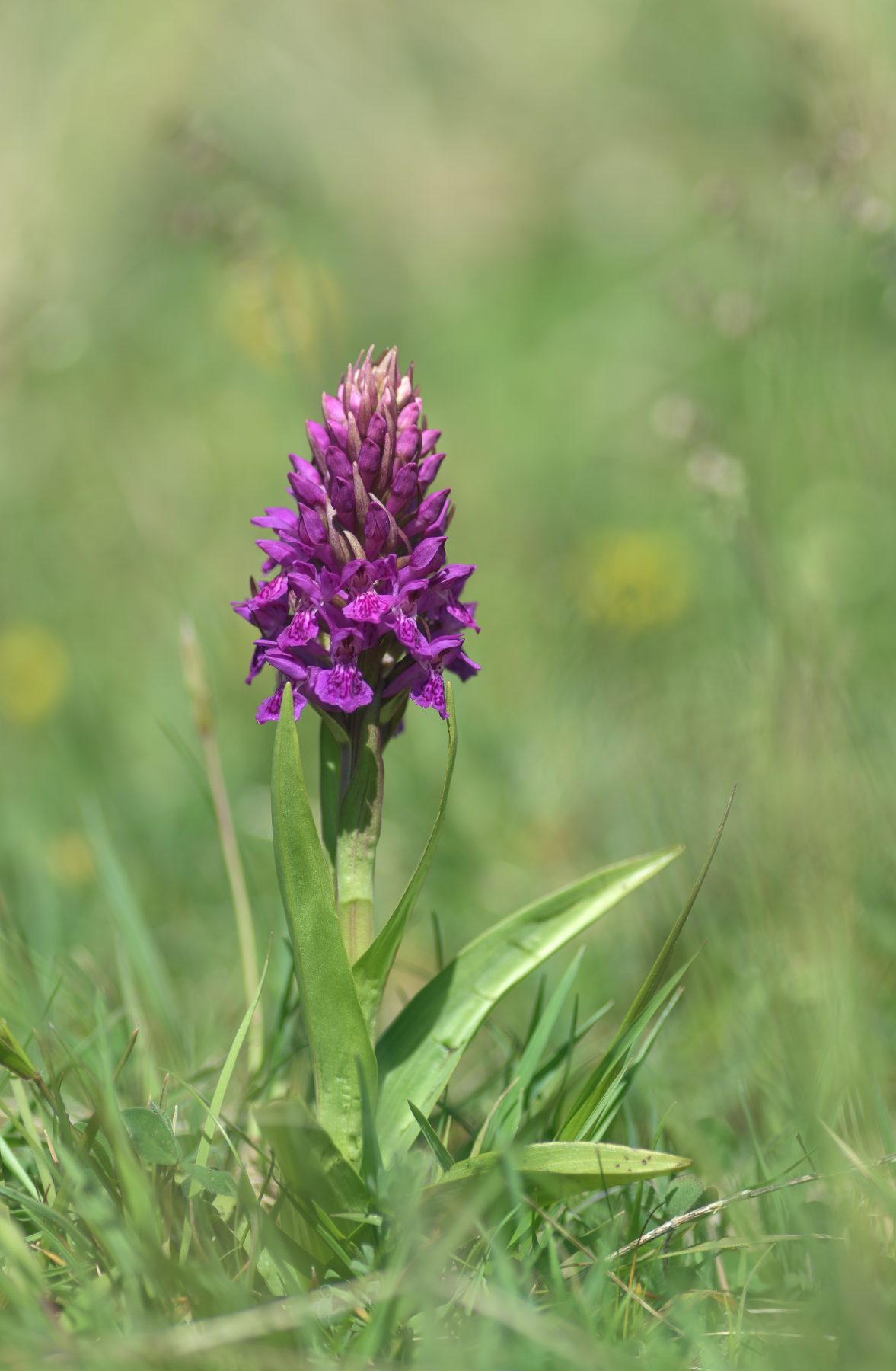
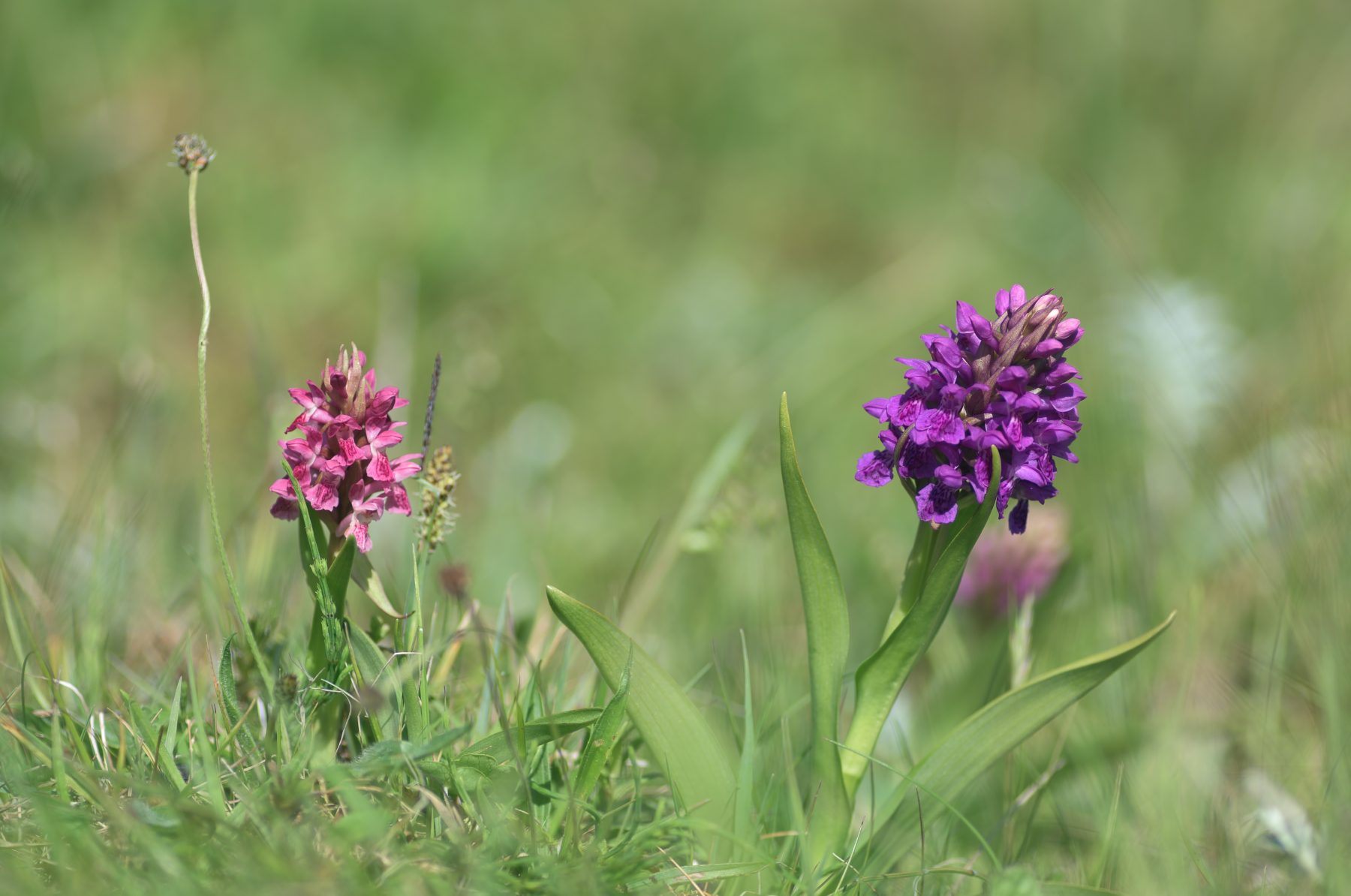
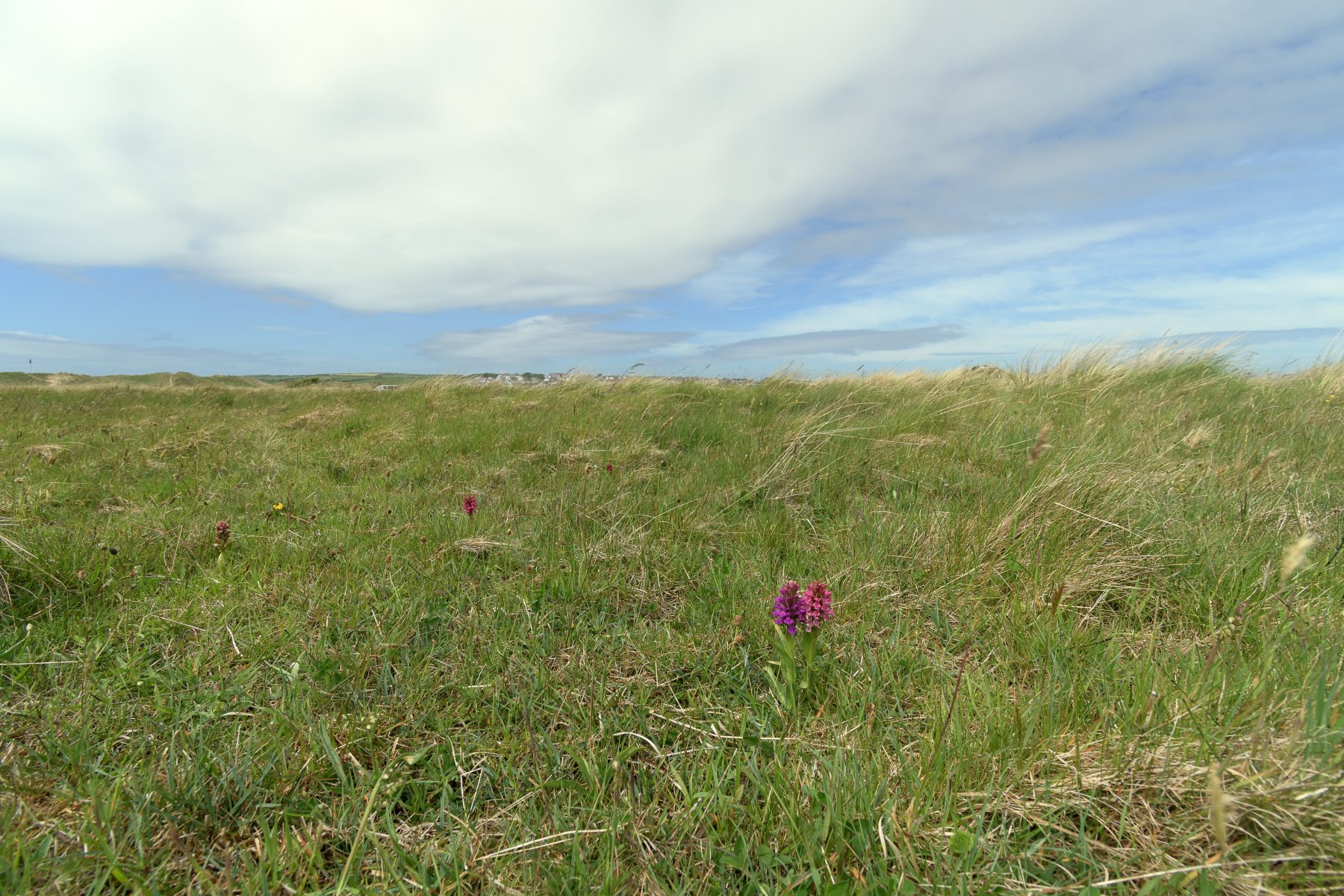


Dactylorhiza swarm in the dune slacks of Anglesey, Wales