| Etymology: | From the ancient name of the Cretan Heraklion, Candia, where the species was first collected in 1936 |
| Distribution: | Southern Italy (Basilicata, Puglia), Greek Islands (Crete, Rhodes, Kos, Samos), the southwestern coastal region of Turkey |
| Flowering time: | early IV. to late-V. |
| Taxnonomy: | O. candica group |
| Similar species: | O. lyciensis, O. lacaena, O. calliantha, O. cytherea |
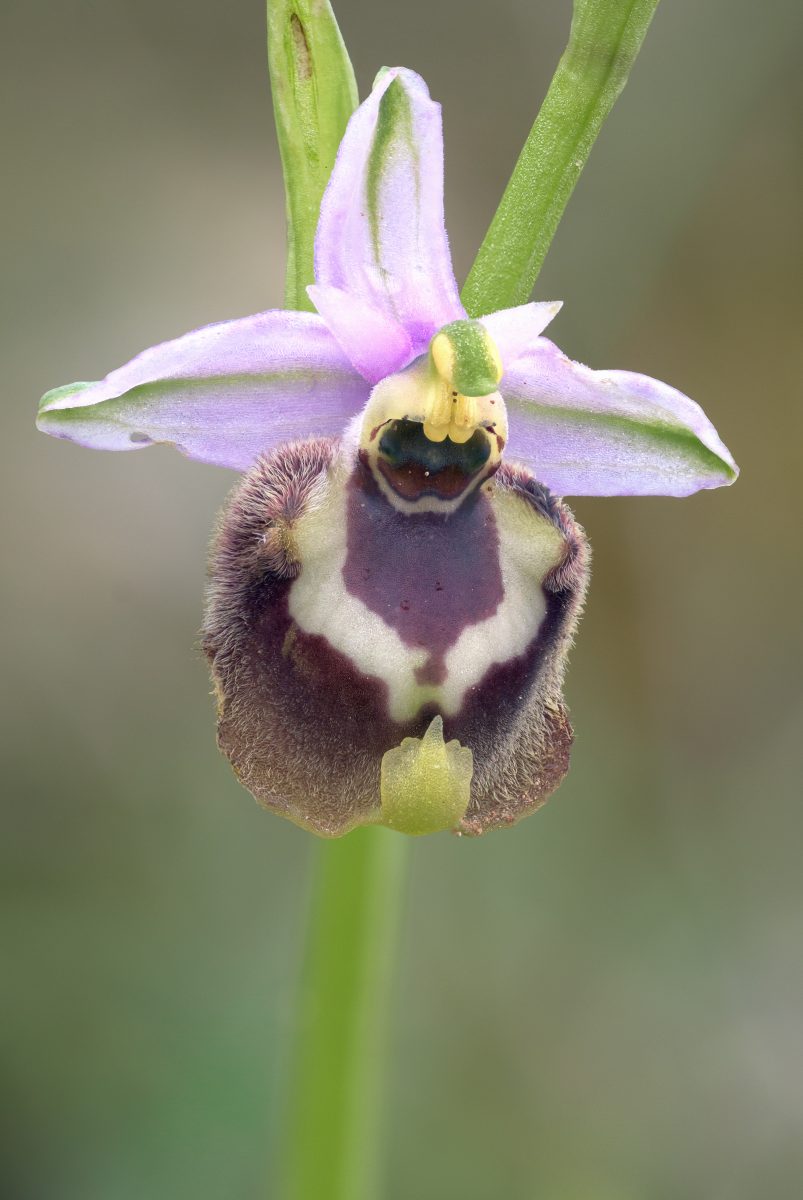
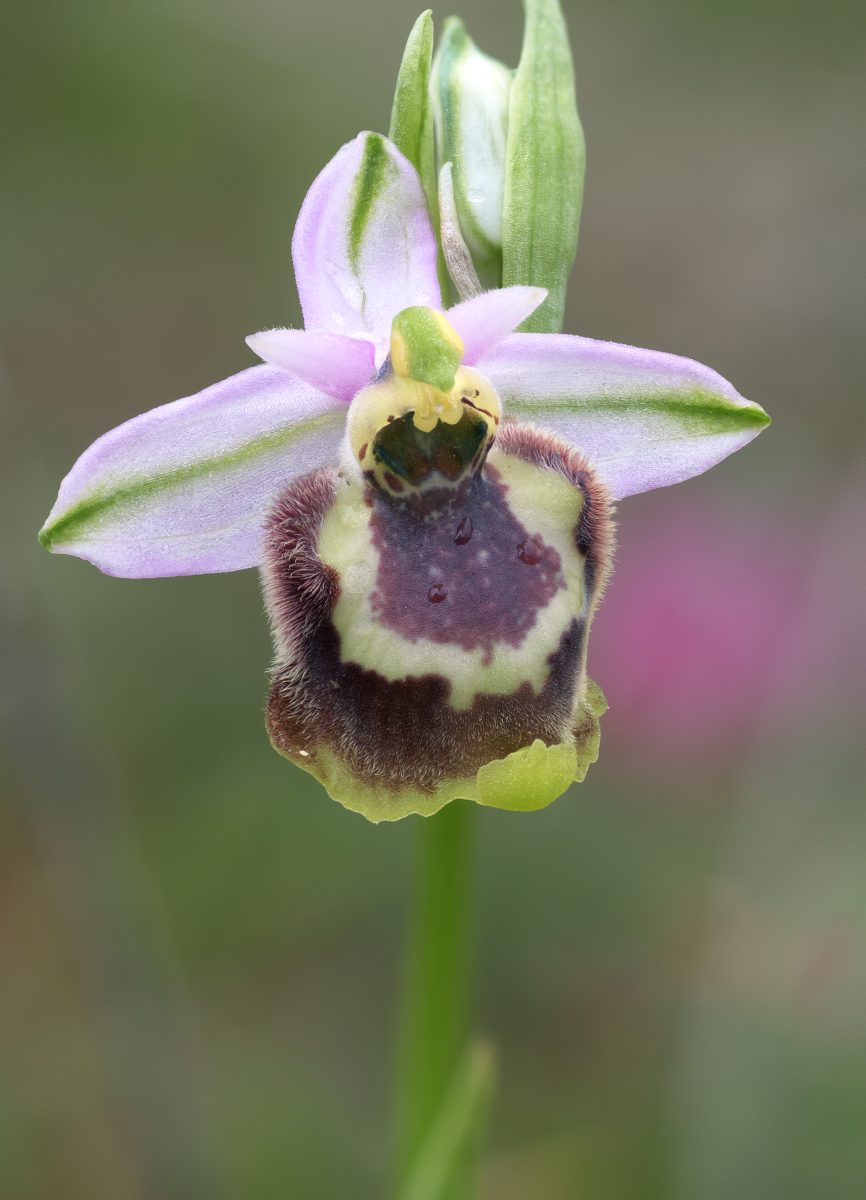
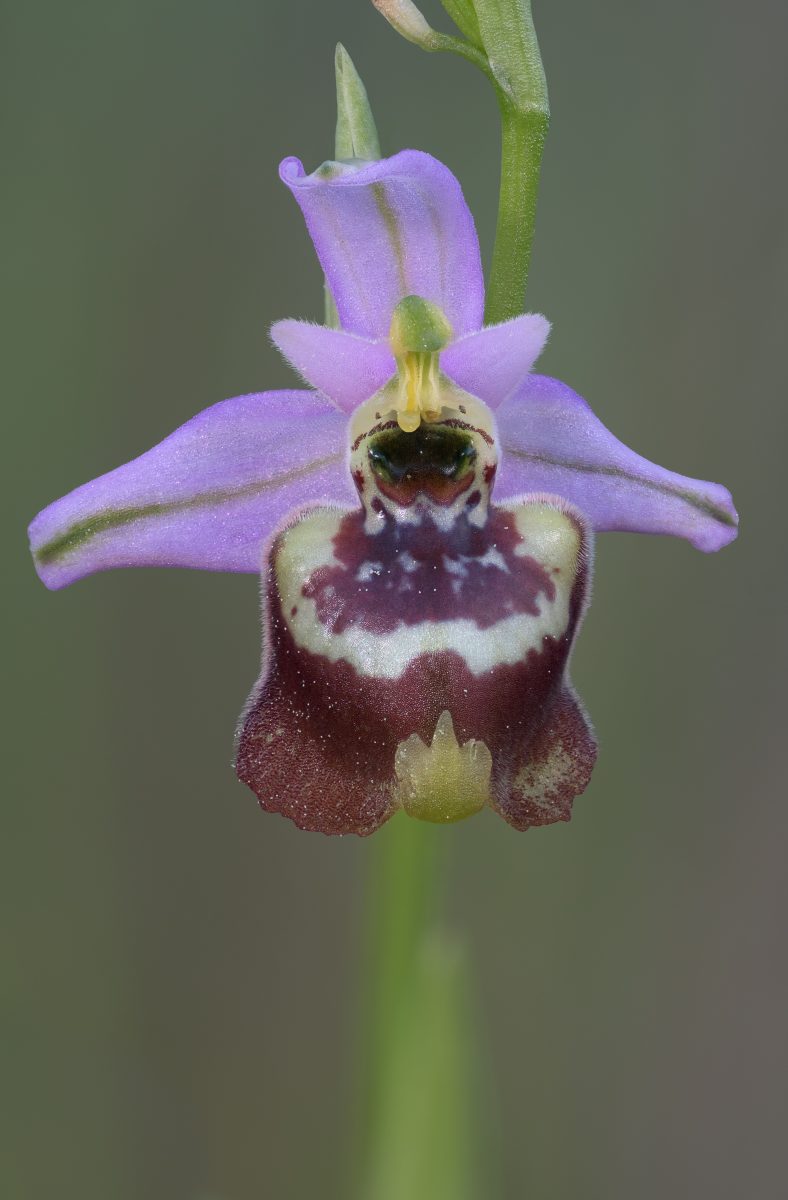
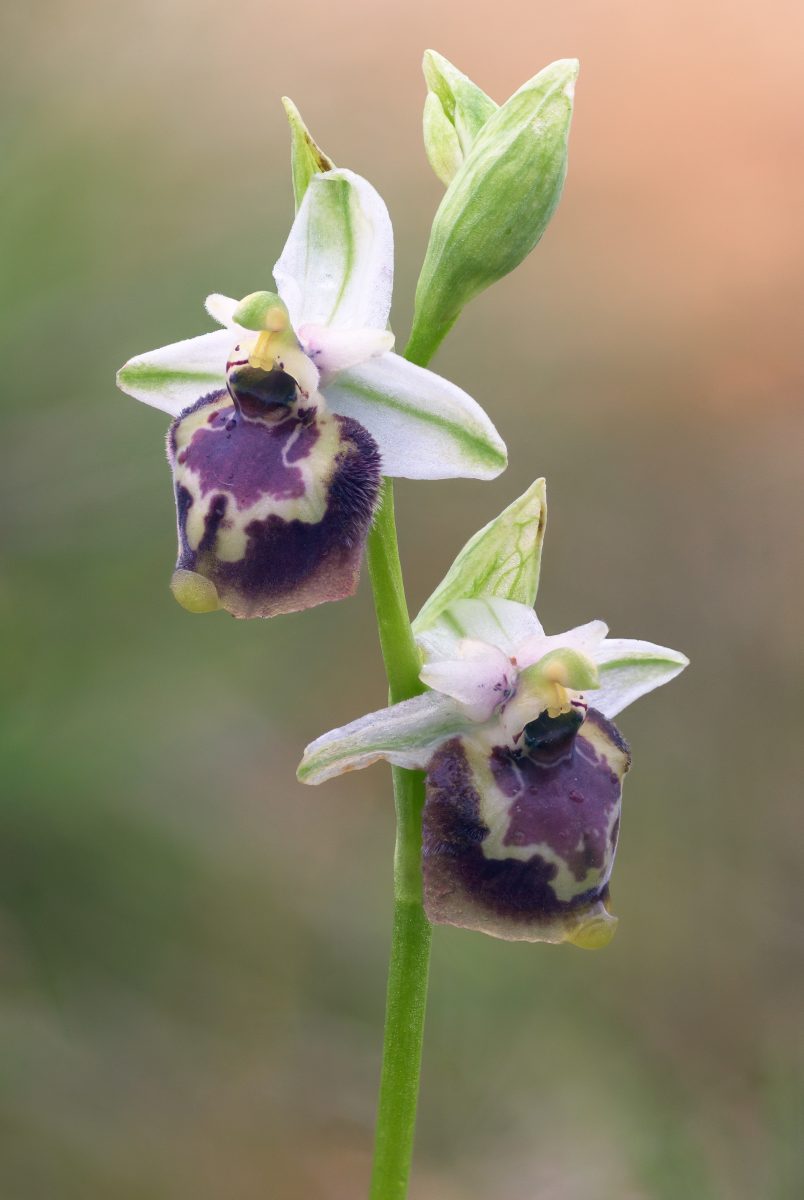
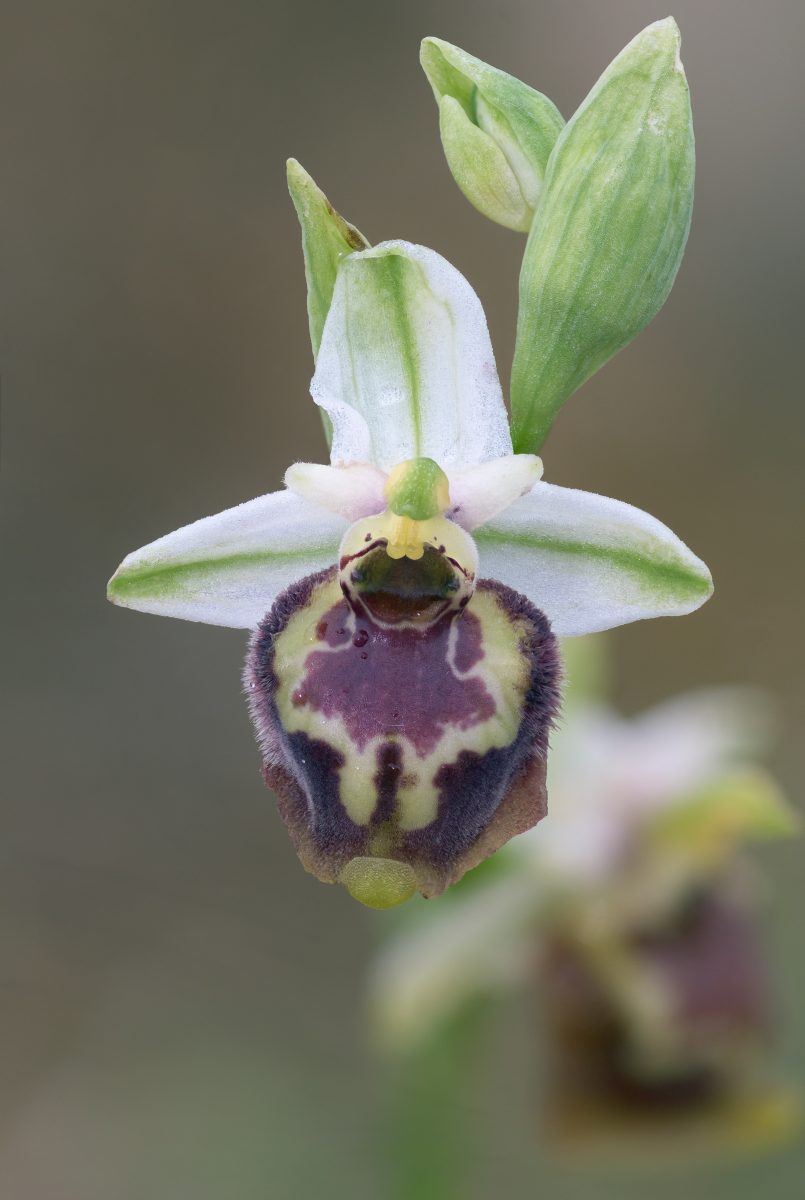
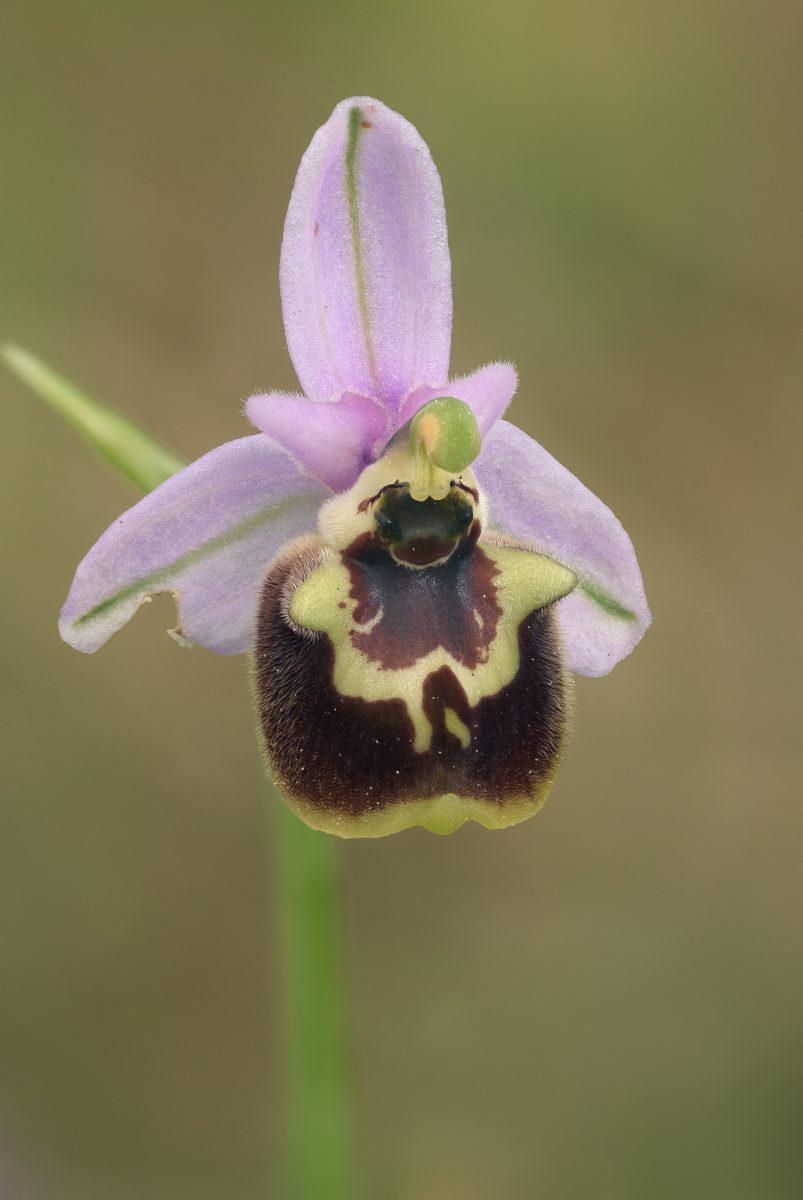
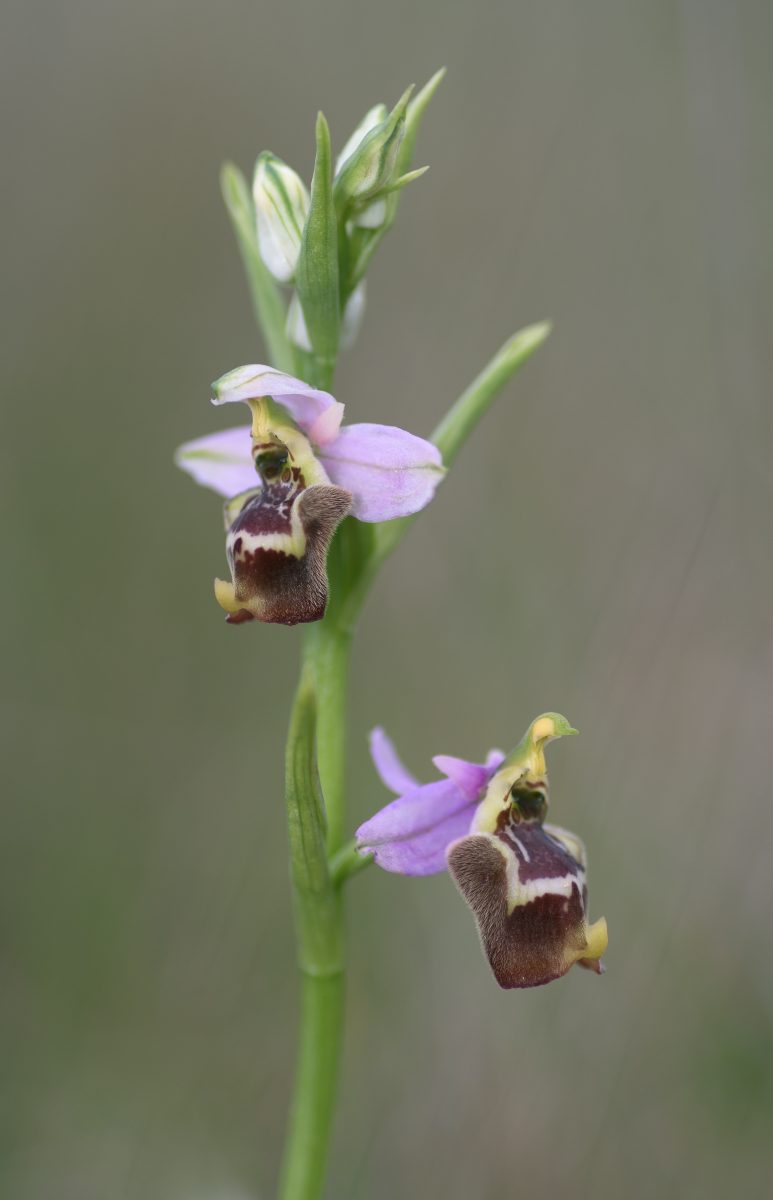
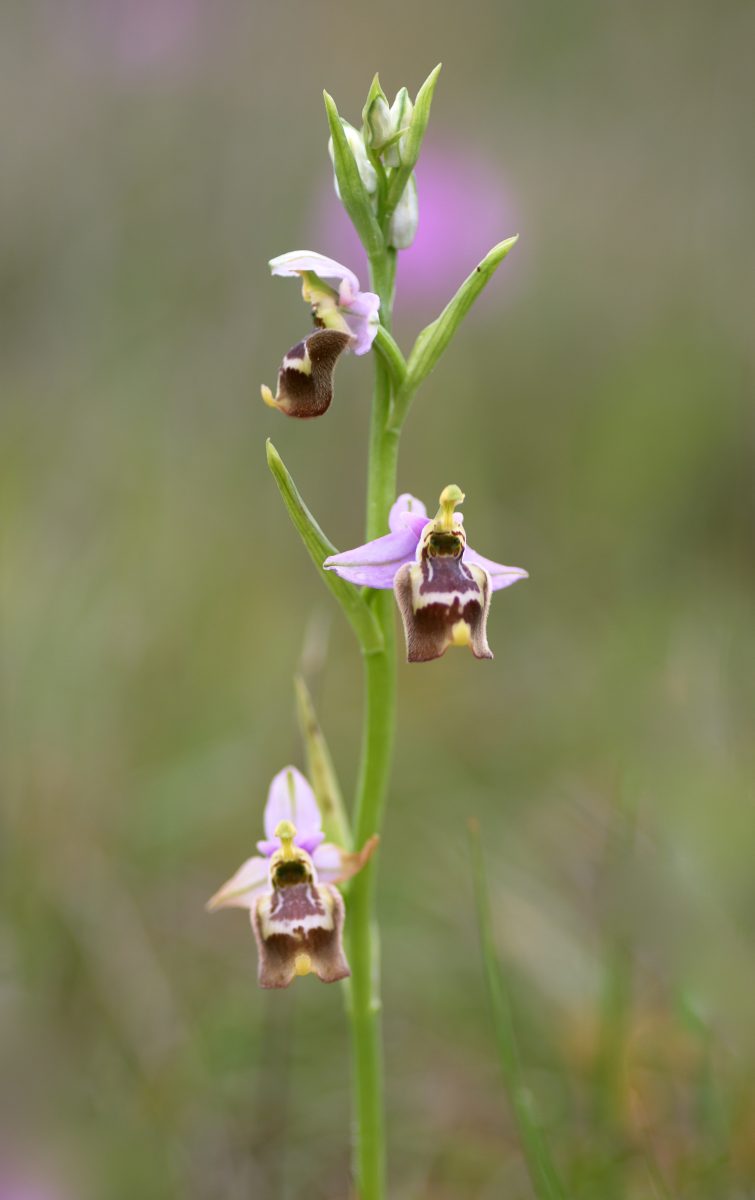
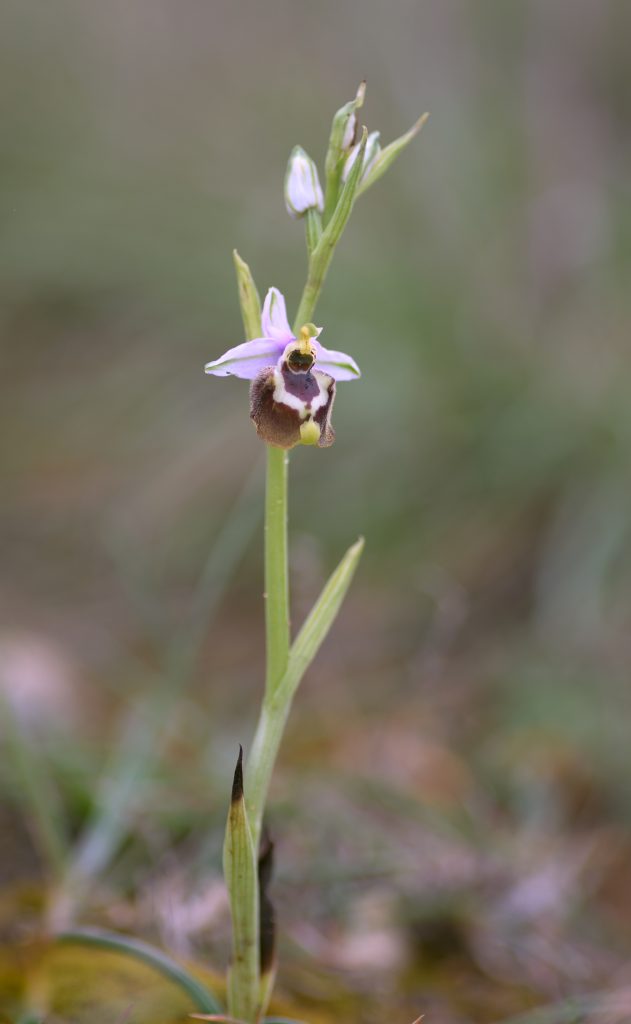
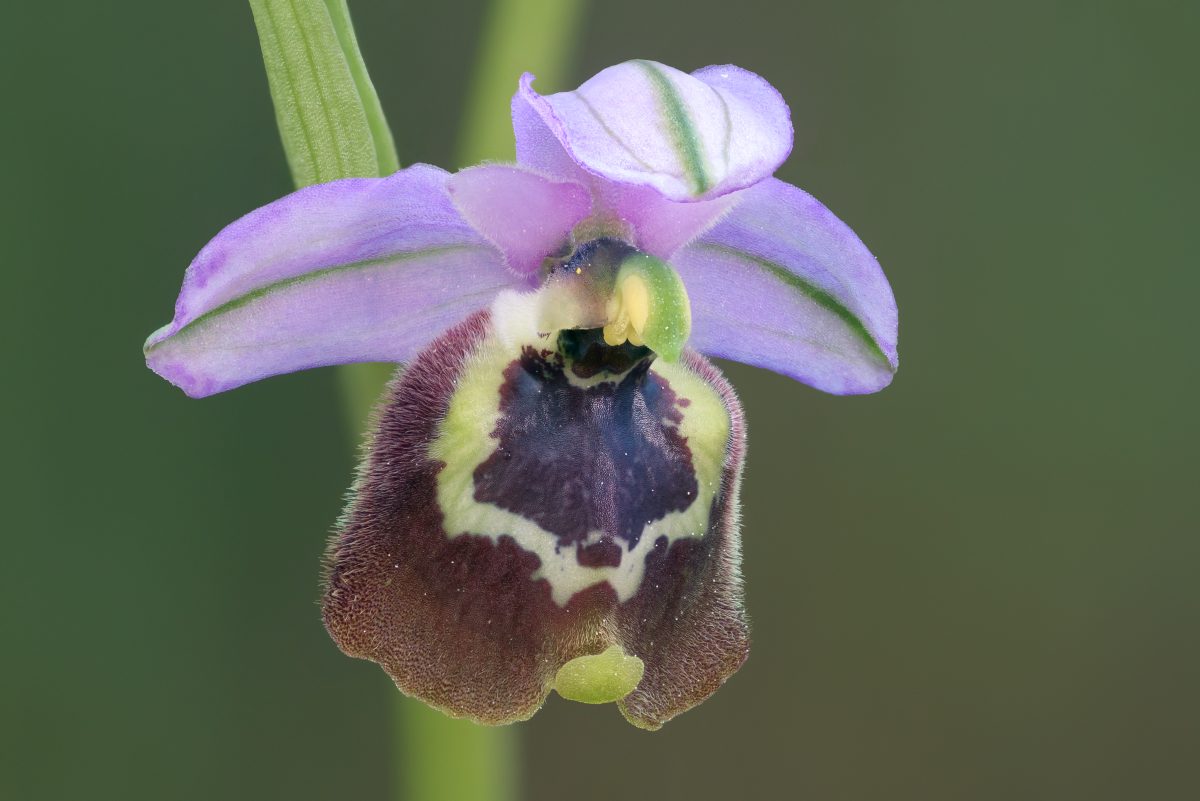
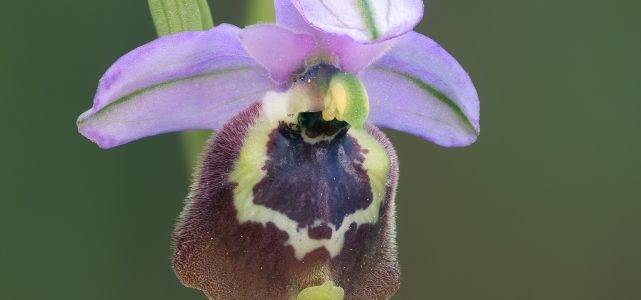
Ophrys candica is one of the most easily recognizable members of the fuciflora complex (i.e. the holosericea complex), because no other basic configuration among its bumblebee-orchid relatives features such a shield-like, marbled lip pattern. It looks as though the “usual”, navel-like structure had liquefied and transformed into this magnificent, brownish-purple breastplate edged with a thick white border. Add to that the tiny basal field, which is often split into two (more rarely, several) separate parts, and our orchid’s grin takes on an outright bizarre character (sometimes looking uncannily like Hide the Pain Harold). The usually large, three-lobed lip appendage only adds to this visual collision, but somehow that just makes the whole plant even more deliciously irresistible.
Anyone who, after seeing these pictures, feels an overwhelming urge to drop everything and rush off to look for this species in Mediterranean phrygana, more open pine forests and light woodland, or even nutrient-poor grasslands, has my full sympathy. I should warn you, though, that even in the Mediterranean, you can’t find “true” candica just anywhere. Its range is restricted to the spur of the Italian boot (where you can find some truly beautiful specimens even in coastal scrub grasslands, as we did in Lecce), a few Greek islands (Crete, Rhodes, Kos and Samos), and the southwestern coast of Turkey.
Those who take a broader view of the species concept would, of course, immediately add Sicily (although the candica form found there is now called Ophrys calliantha), the Peloponnese (where Ophrys lacaena, which tends in appearance towards the more conventional fuciflora type, takes its place), and the Greek island of Kythira (Ophrys cytherea, whose status as a distinct species is, naturally, debatable). Meanwhile, a branch of the group also occurs around Antalya in Turkey under the name Ophrys lyciensis. What’s more, mixed in among the typical candica plants, you can find individuals with somewhat smaller lips and more pronounced lateral lobes (horns). This variant is known as var. minoa (although, in splitter taxonomic treatments, it is naturally elevated to species rank).
Amid all this exuberant proliferation of species, one thing is particularly interesting: although O. candica has two pollinators, with the Italian plants being pollinated by Eucera ehippia and the Greek representatives by Eucera furfurea, this kind of selective pressure has not manifested itself in the taxonomy of the group. In other words, the eastern and western populations have not been split into two separate taxa. Or perhaps I’d better not give anyone any ideas…?