| Etymology: | From the name of the Hungarian locality, Bugac where the species was described |
| Distribution: | (in a way) Hungarian endemism |
| Distribution in Hungary | Danube-Tisza interfluve |
| Flowering time | late V.-VI. |
| Flowering time in Hungary: | late V.-VI. |
| Taxonomy: | E. helleborine group |
| Reproduction: | Obligate autogamy |
| Similar species: | E. helleborine, E. rhodanensis |
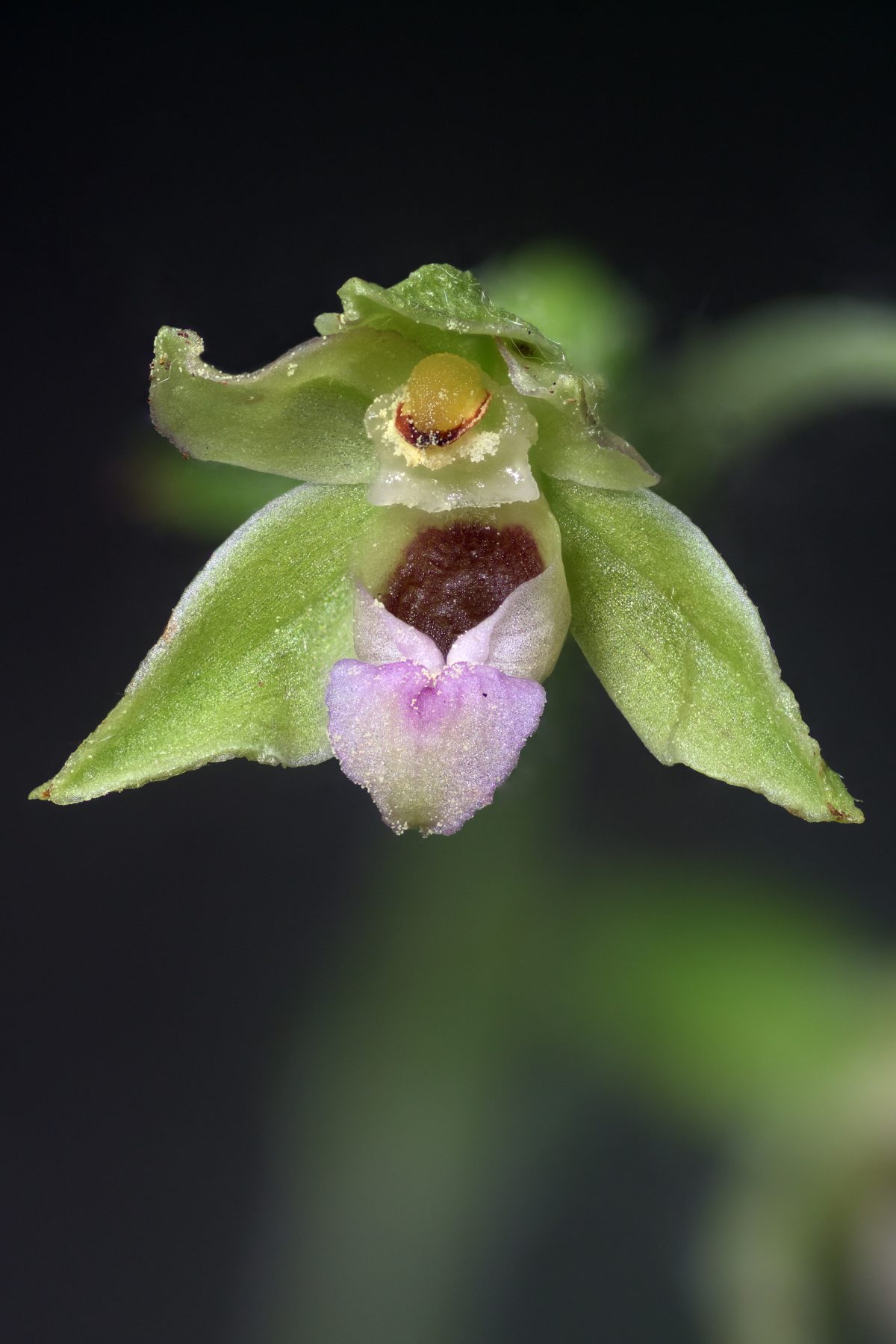
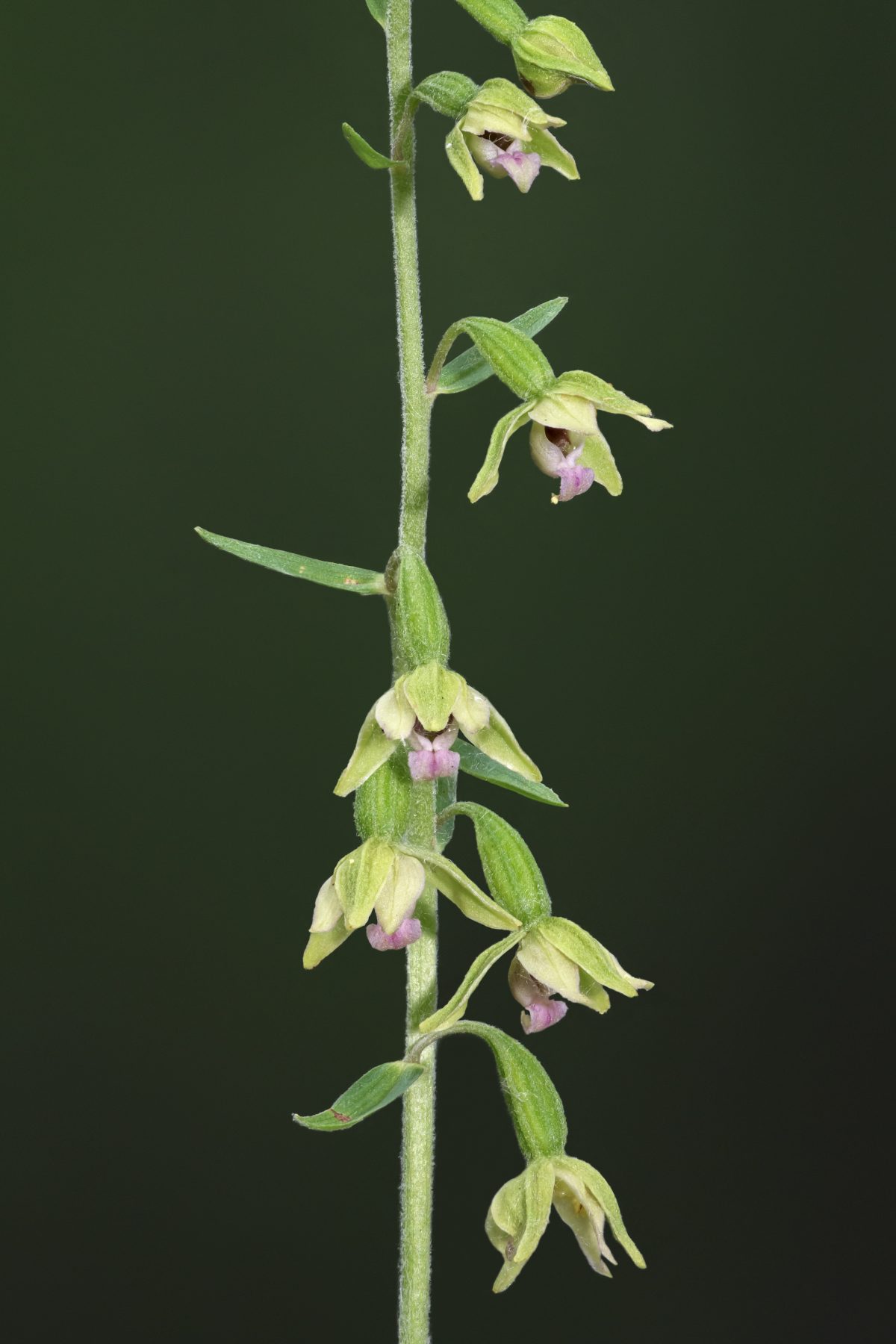
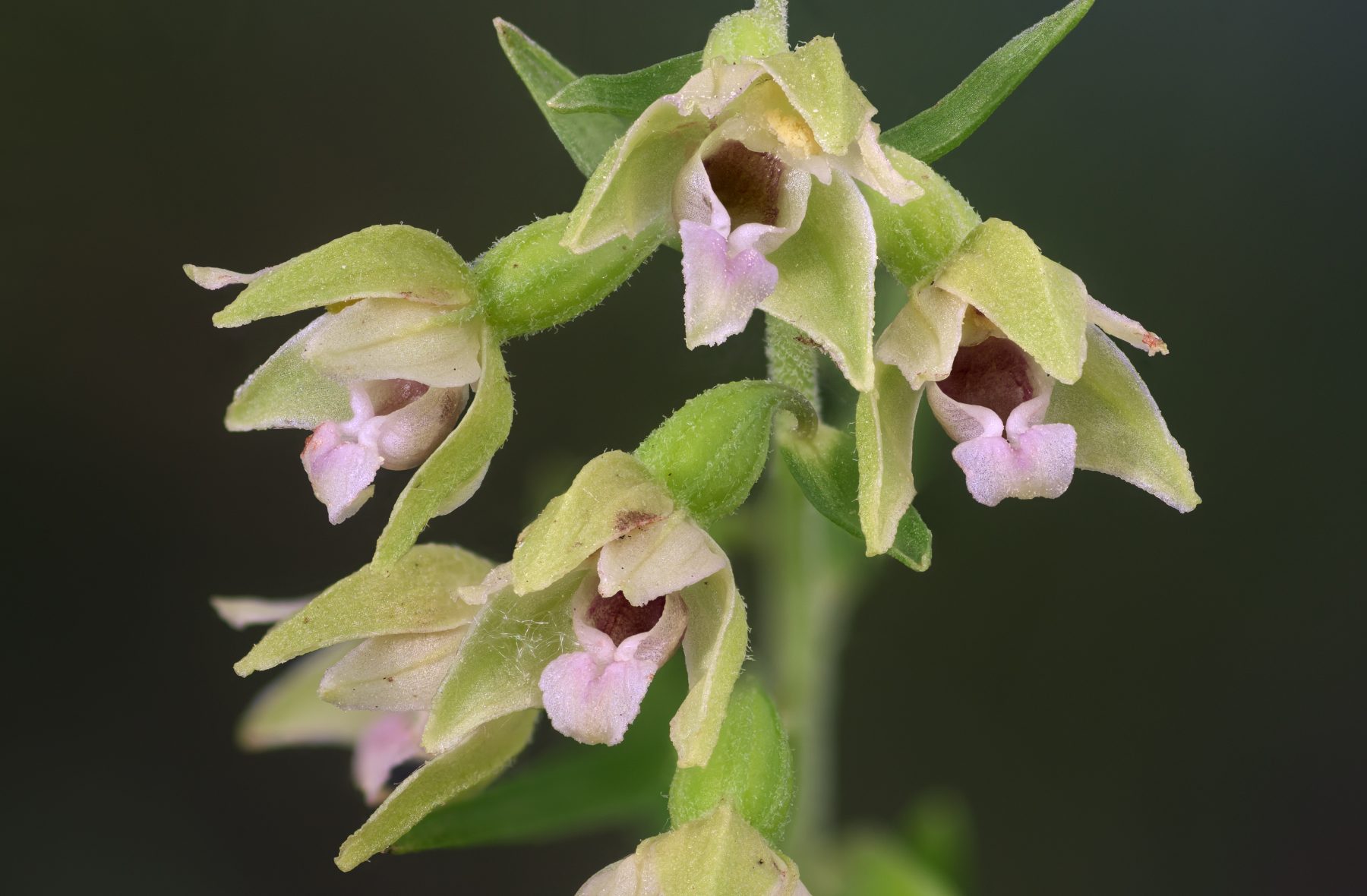
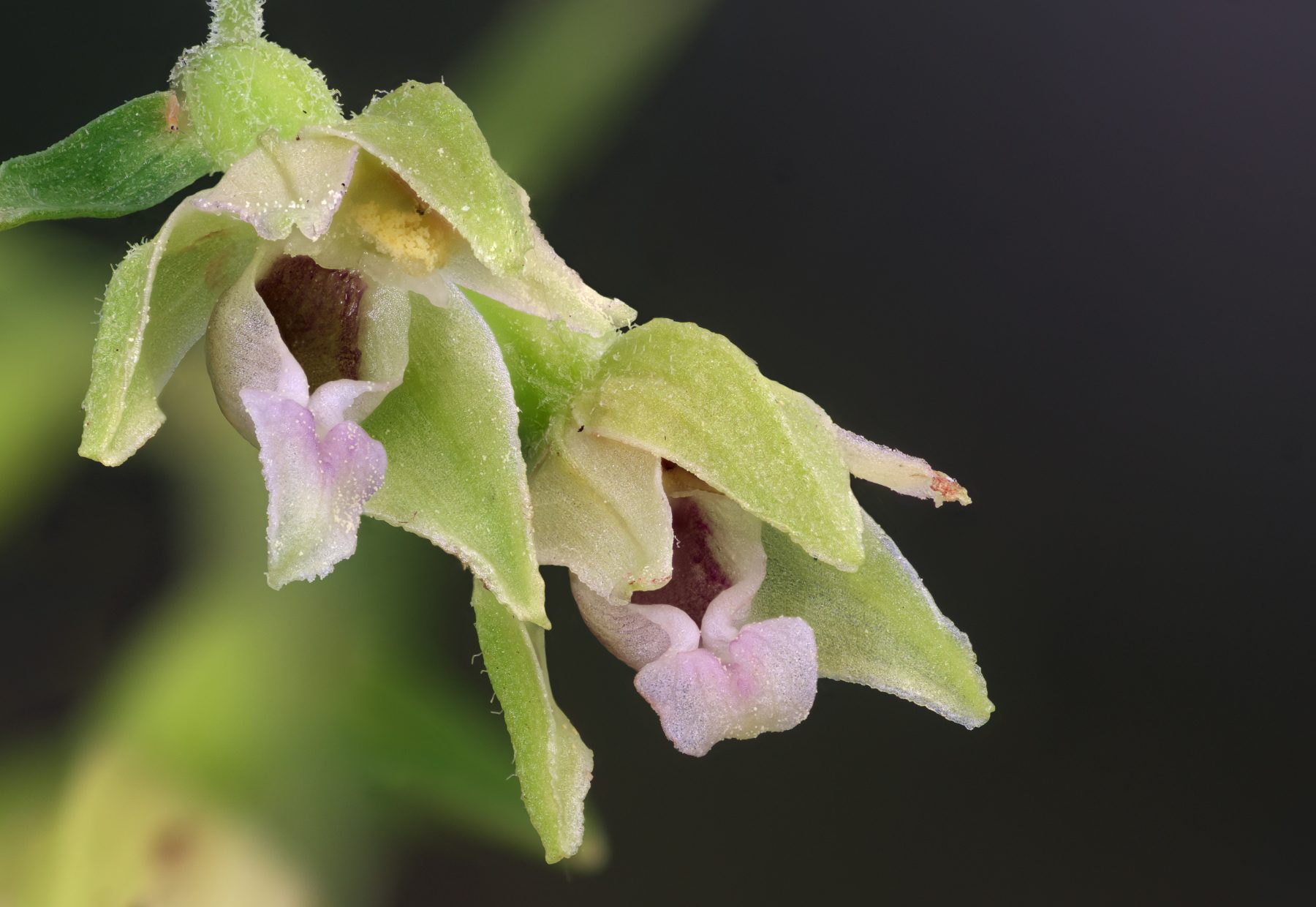
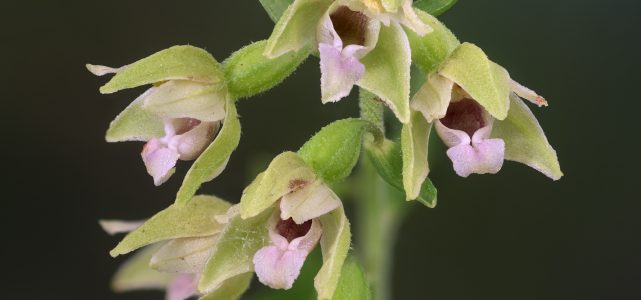
A helleborine species from near Bugac, a village in the middle part of Hungary, also found in France, Germany, Switzerland and Austria? Sounds peculiar enough—but it is not necessarily true. Or, at least, the truth of the statement depends very much on what we mean by Epipactis bugacensis. What is certain is that Austrian botanist Karl Robatsch described the species from the Kiskunság region of Hungary under this name in 1990. A few years later, however, he and his French colleague Alain Gévaudan came across a strikingly similar population in the Rhône Valley, which they described as Epipactis rhodanensis. Further populations were subsequently discovered in the other Western and Central European countries mentioned above. In the meantime, some botanists—including Wucherpfennig—have argued that rhodanensis should simply be treated as a subspecies of bugacensis. Despite the considerable geographical distance between their known populations, the close relationship between the two taxa is suggested not only by their morphological similarities, but also by their remarkably similar habitat preferences. Both favour riverine forests, oakwoods and poplar stands, either naturally established or planted on alluvial soils along watercourses or on sandy ridges. The flowers of both taxa are predominantly greenish. In bugacensis, the pinkish coloration on the epichile of the labellum usually extends all the way to its pointed tip, whereas in rhodanensis the pink patch tends to remain closer to the base. The mesochile of bugacensis is narrowly constricted, while the constriction is somewhat broader in rhodanensis. The callus on the epichile are also noticeably more prominent in the French taxon.
Recent genetic studies have only strengthened the case for treating the two as very closely related. Sramkó et al. (2019) found virtually no evolutionary distance between them, suggesting that they can essentially be regarded as a single species. Both appear to be descendants of broad-leaved helleborine (Epipactis helleborine) that have taken the evolutionary route towards self-pollination, or autogamy. Of course, splitter botanists do not let themselves misled by some mumbo jumbo molecular evidences and they continue to treat the two taxa separately, as Kreutz did in his 2024 book.
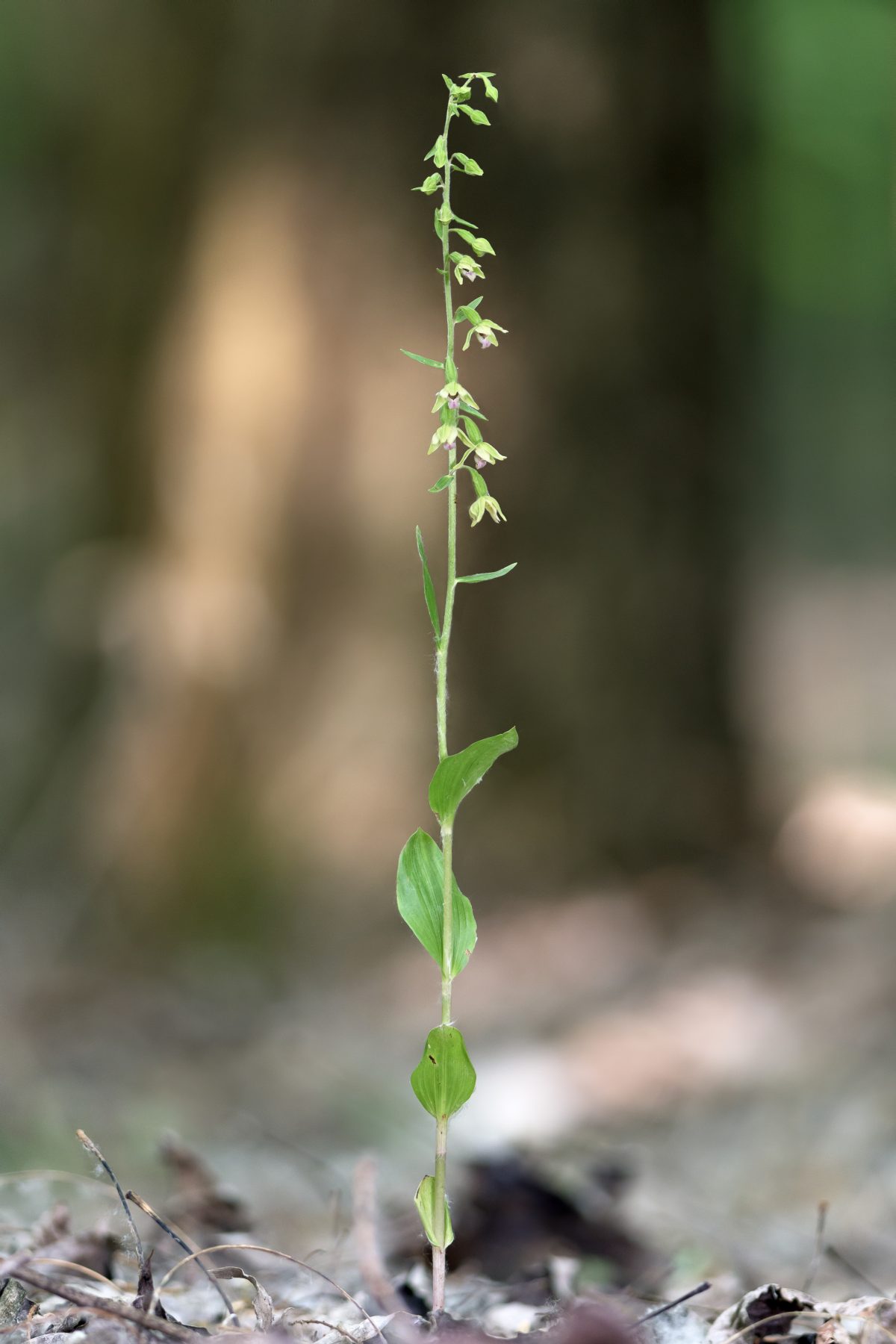
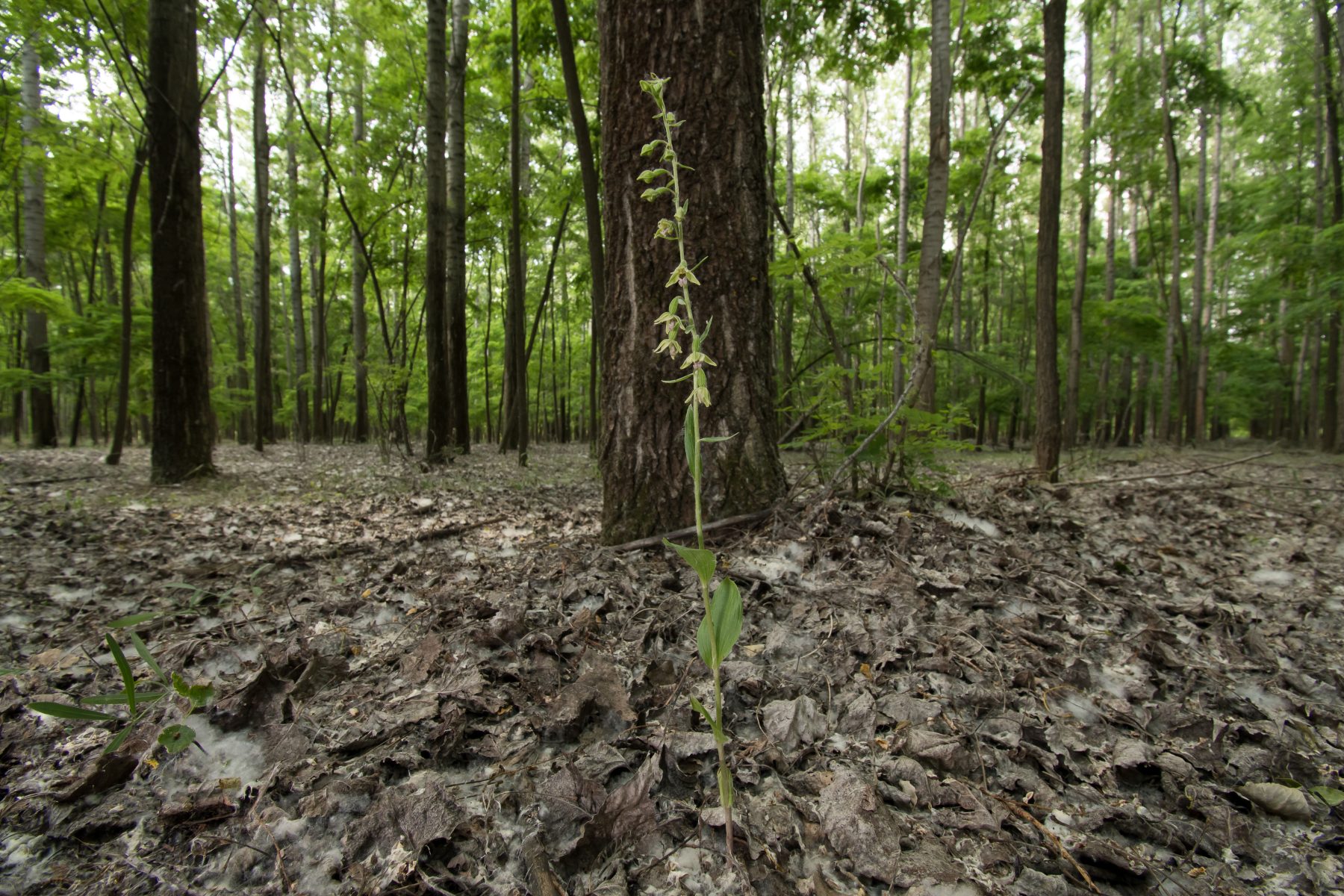
But let us leave rhodanensis aside and concentrate on the strictly defined bugacensis and its Hungarian story. Our species is among the earliest-flowering members of the genus in Hungary. Together with Epipactis microphylla and Epipactis atrorubens, it belongs to what might be called the first wave of the Hungarian Epipactis season. It can start flowering as early as the end of May, and by the end of June its flowering is usually over—just as the country’s helleborine season is beginning to get properly underway. This early flowering period already makes it rather difficult to confuse with most other Hungarian Epipactis species. The most likely candidate for a mix-up is E. helleborine, but a few basic features can help us out. The leaves of E. bugacensis are arranged almost in two ranks along the stem and tend to be more ovate, shorter and lighter green. Those of E. helleborine, by contrast, are dark green, distinctly veined, more elongated and more widely spaced around the stem. The structure of the gynostemium provides another useful distinction, reflecting the different pollination strategies of the two species. Examining this feature, however, requires either a magnifying glass or a good macro photograph that reveals, somewhat indecently, the flower’s intimate parts. As for pollinators, there is really not much to discuss in the case of bugacensis. The species has abandoned pollinator dependence altogether and relies exclusively on self-pollination—obligate autogamy. It has, so to speak, chosen this strategy to ensure reproductive success. The consequence is a rather poorly developed clinandrium and rostellum, allowing the loosening, relatively porous pollinia to fall readily onto the stigma. The viscidium, meanwhile, is perfectly present and accounted for, but is essentially non-functional.
E. bugacensis is not merely a near-Hungarian endemic; even within our small country it is remarkably choosy about where it grows. Its main stronghold is the sandy ridge between the Danube and the Tisza, where it occurs primarily in planted poplar stands, but it can also turn up in pine plantations and in oakwoods that have escaped more intensive human alteration. It frequently shares these habitats with Epipactis atrorubens and Cephalanthera rubra. Its northernmost known occurrences lie east of the Gödöllő Hills, although it has even made its way into Budapest. In 2017, for example, it was discovered there in a relatively natural sandy poplar stand. Like so many helleborines, E. bugacensis is likely to suffer from increasingly dry summers, while the clear-cutting of planted forests is hardly helping either. The species is strictly protected in Hungary, with a statutory conservation value of HUF 250,000.