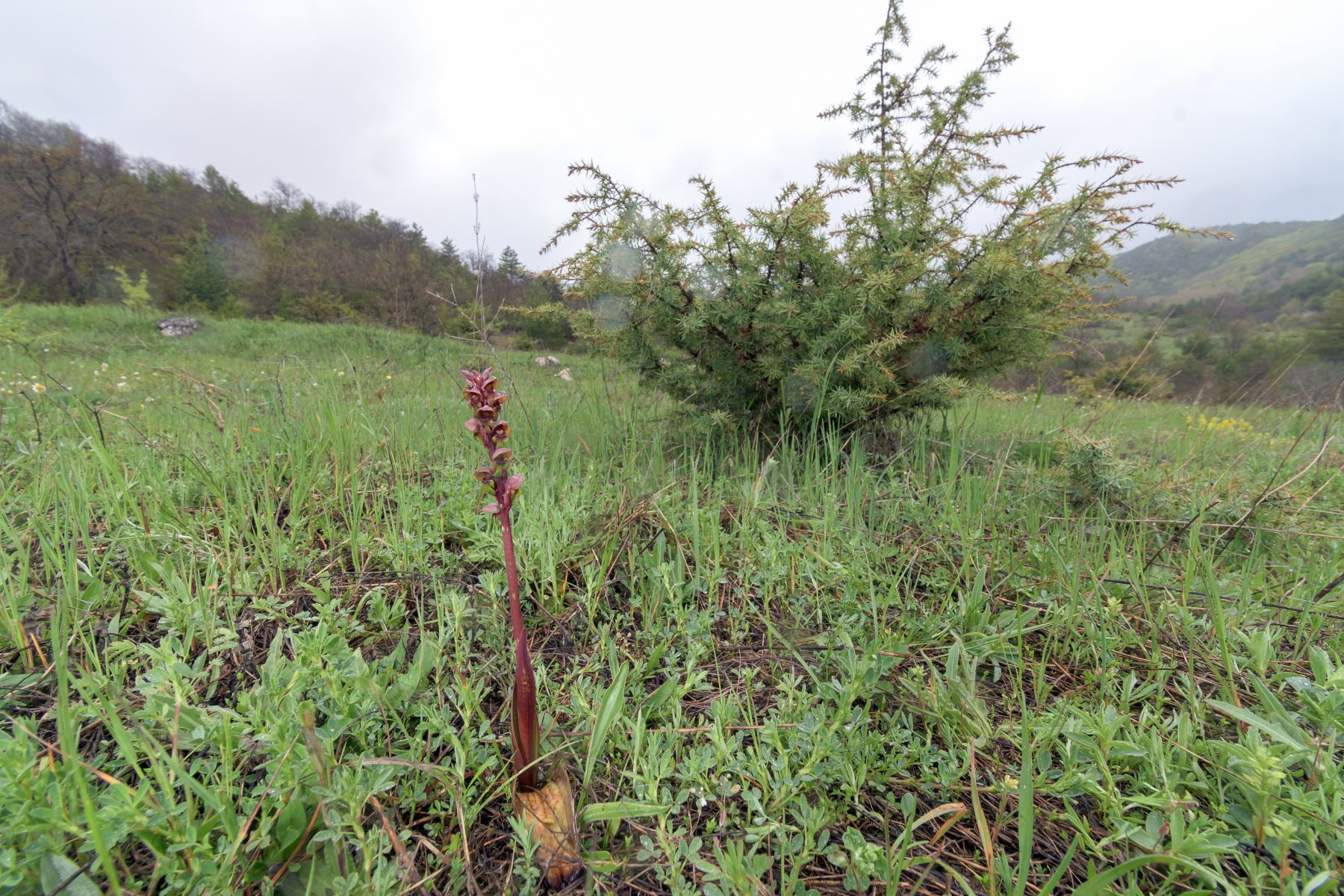
Turkey is rich in exotic eastern species, many of which reach the western limit of their distribution range in Asia Minor. The remarkable Steveniella satyrioides is a perfect example. Its main stronghold lies in the countries of the Caucasus region (Azerbaijan, Armenia, and Georgia), as well as northern Iran, southern Russia, and the Crimean Peninsula. Even within Turkey, it occurs only on the higher mountain meadows and forest clearings of the Pontic Mountains, as well as beneath hazelnut plantations near the Black Sea coast, and nowhere is it abundant. Moreover, its populations are gradually declining due to overgrazing and fertilization of the hazelnut groves. During our Turkish expedition in May 2026, we encountered it only as scattered individuals in habitats where other species—such as Neotinea tridentatata, various Ophrys species, or hybrids involving Orchis punctulata—appeared to thrive and had clearly established themselves.
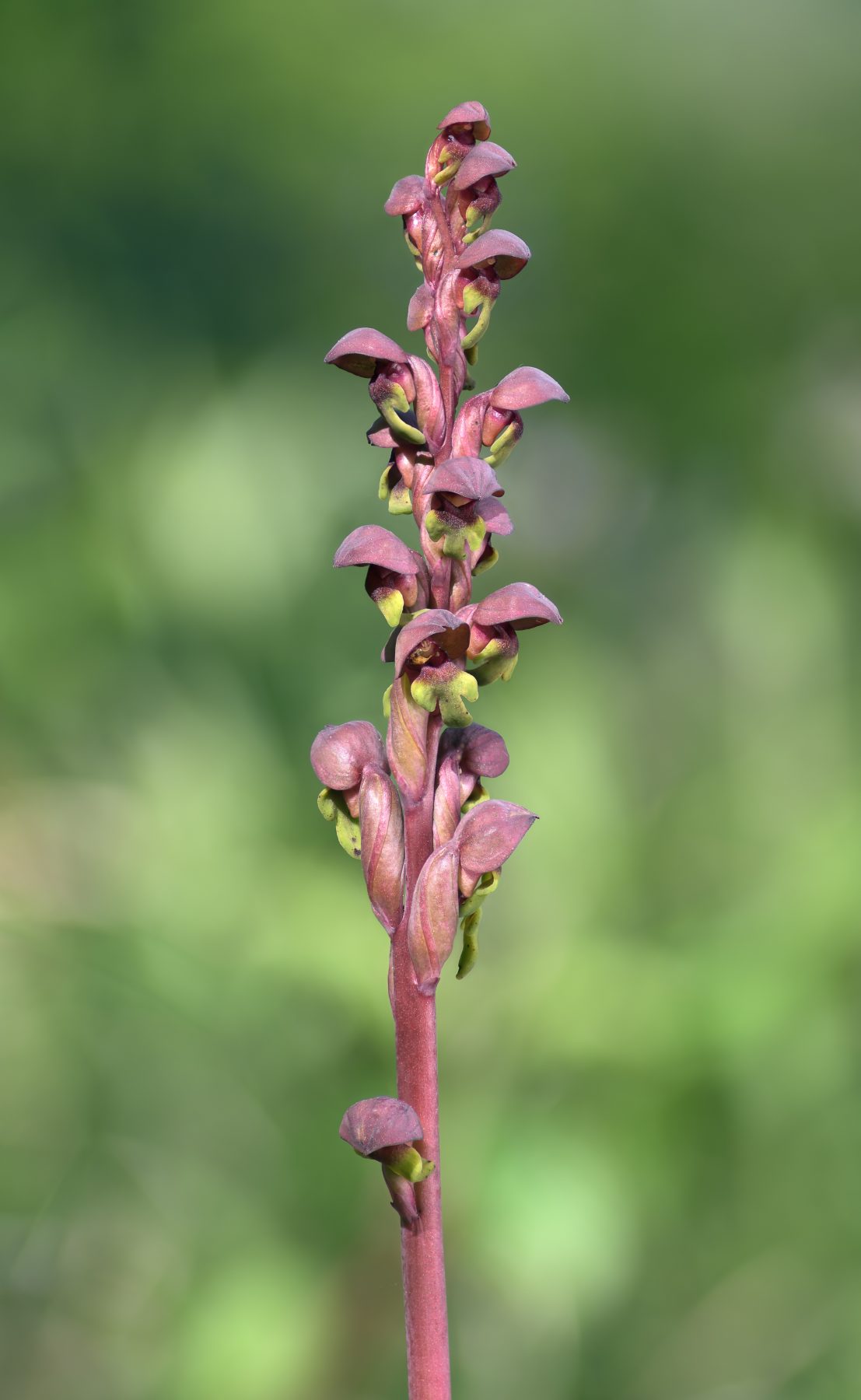
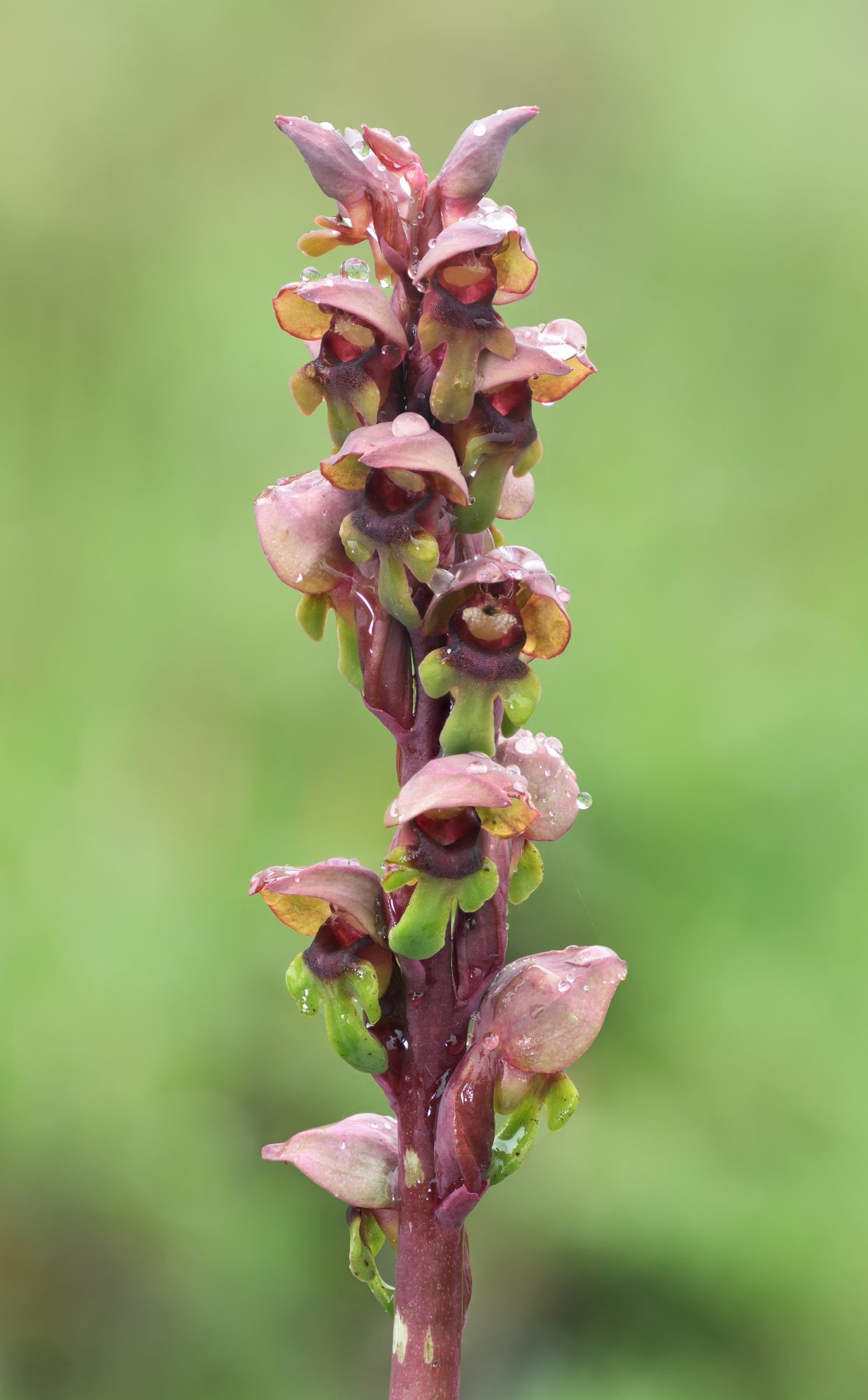
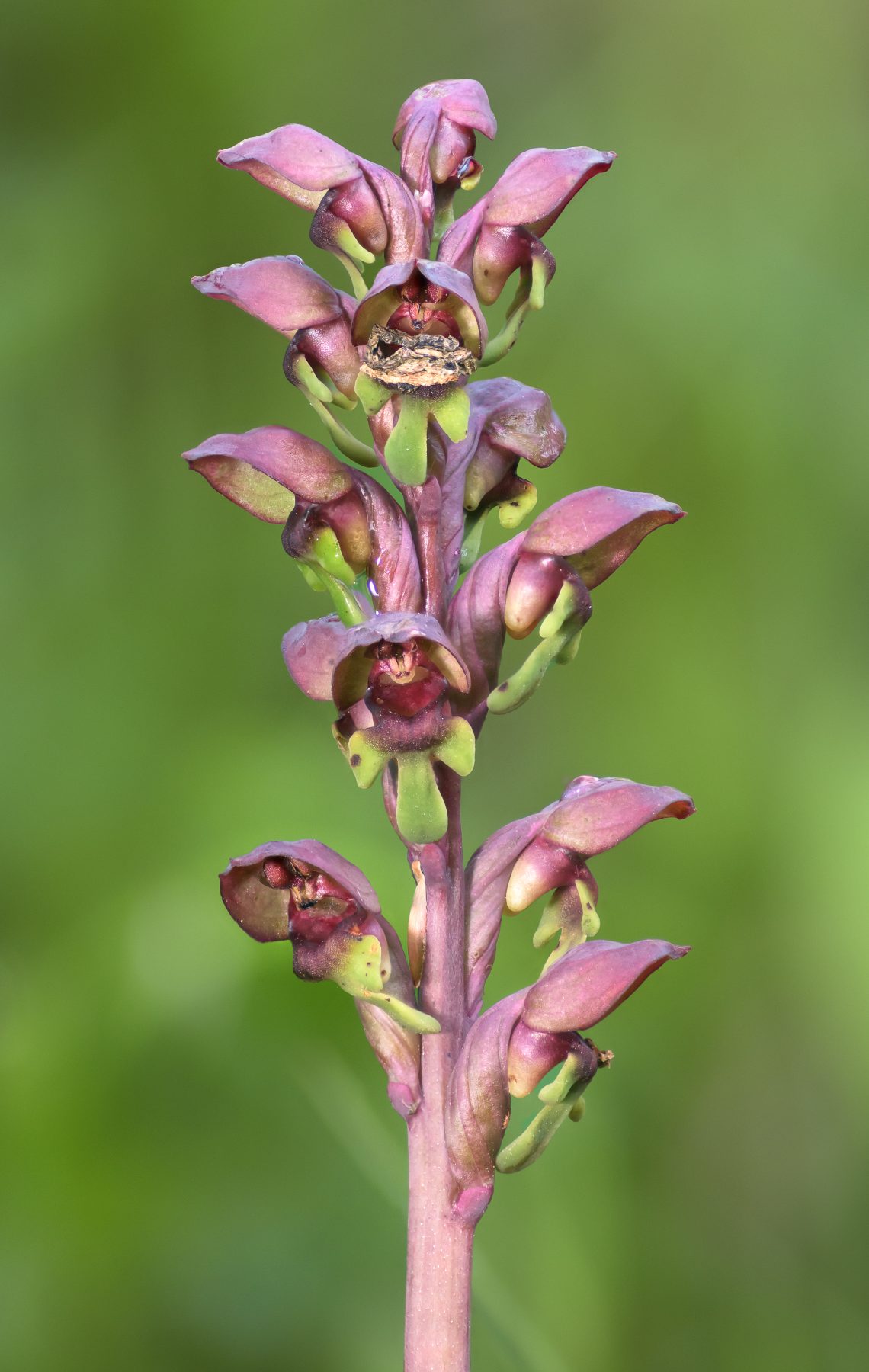
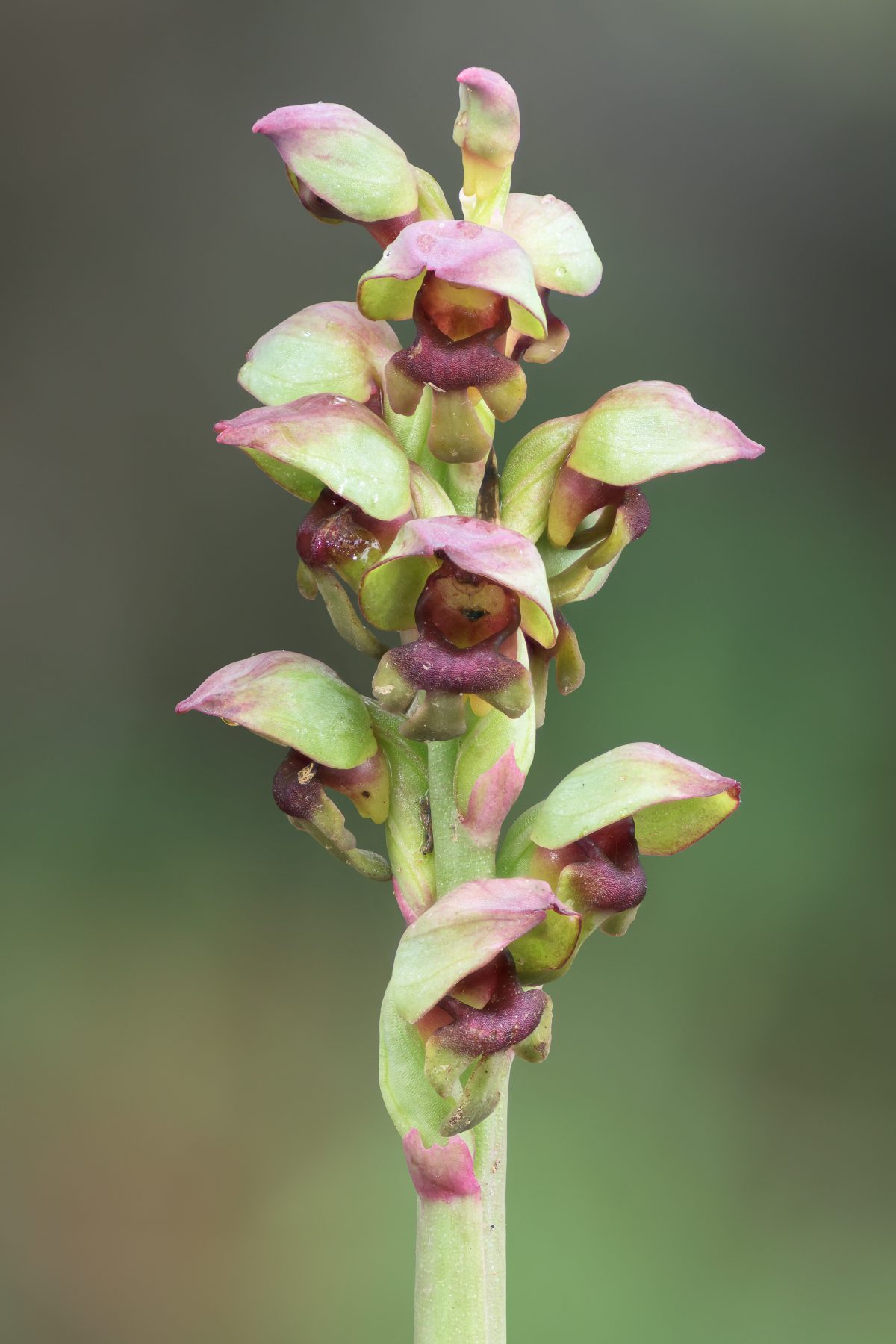
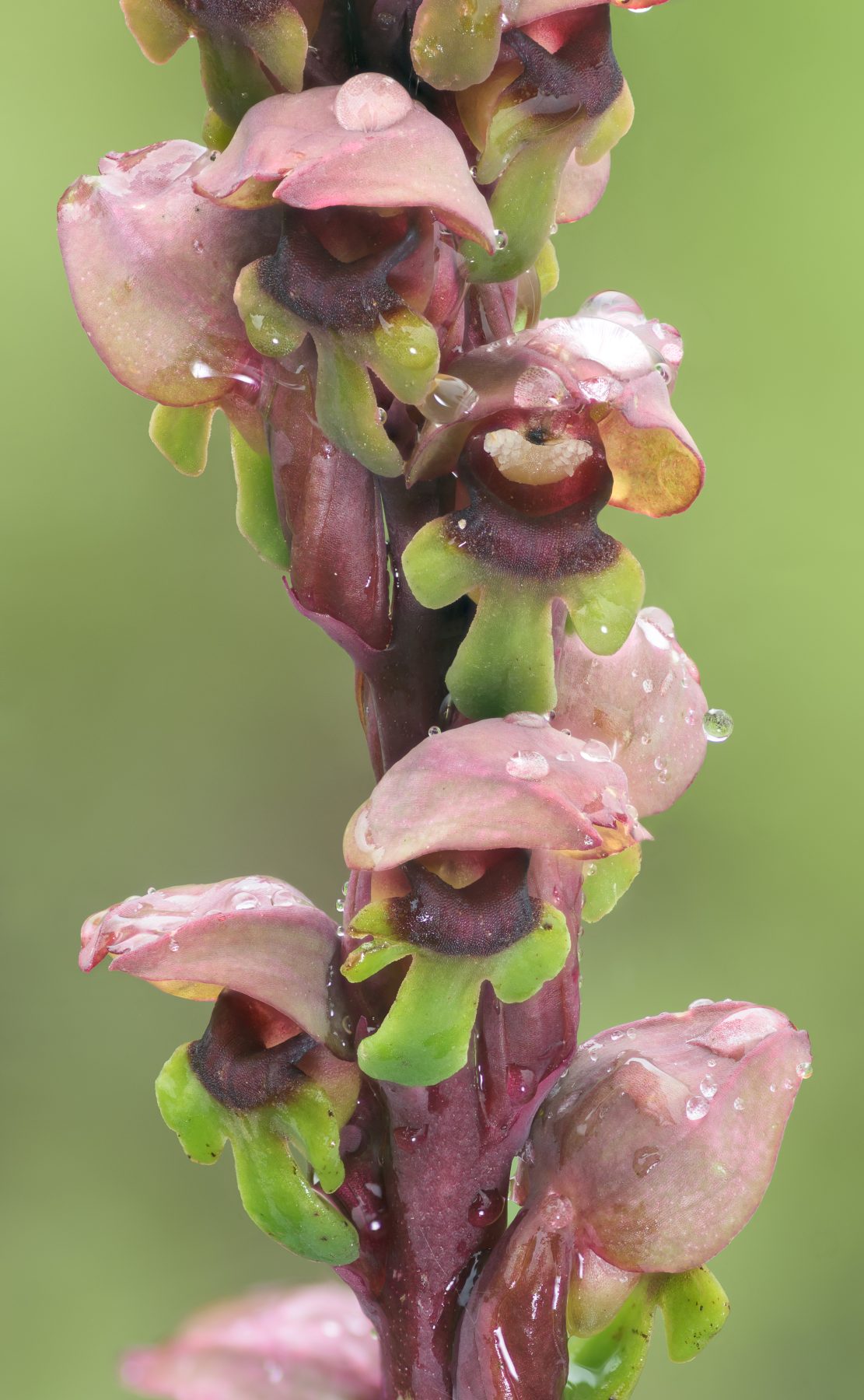
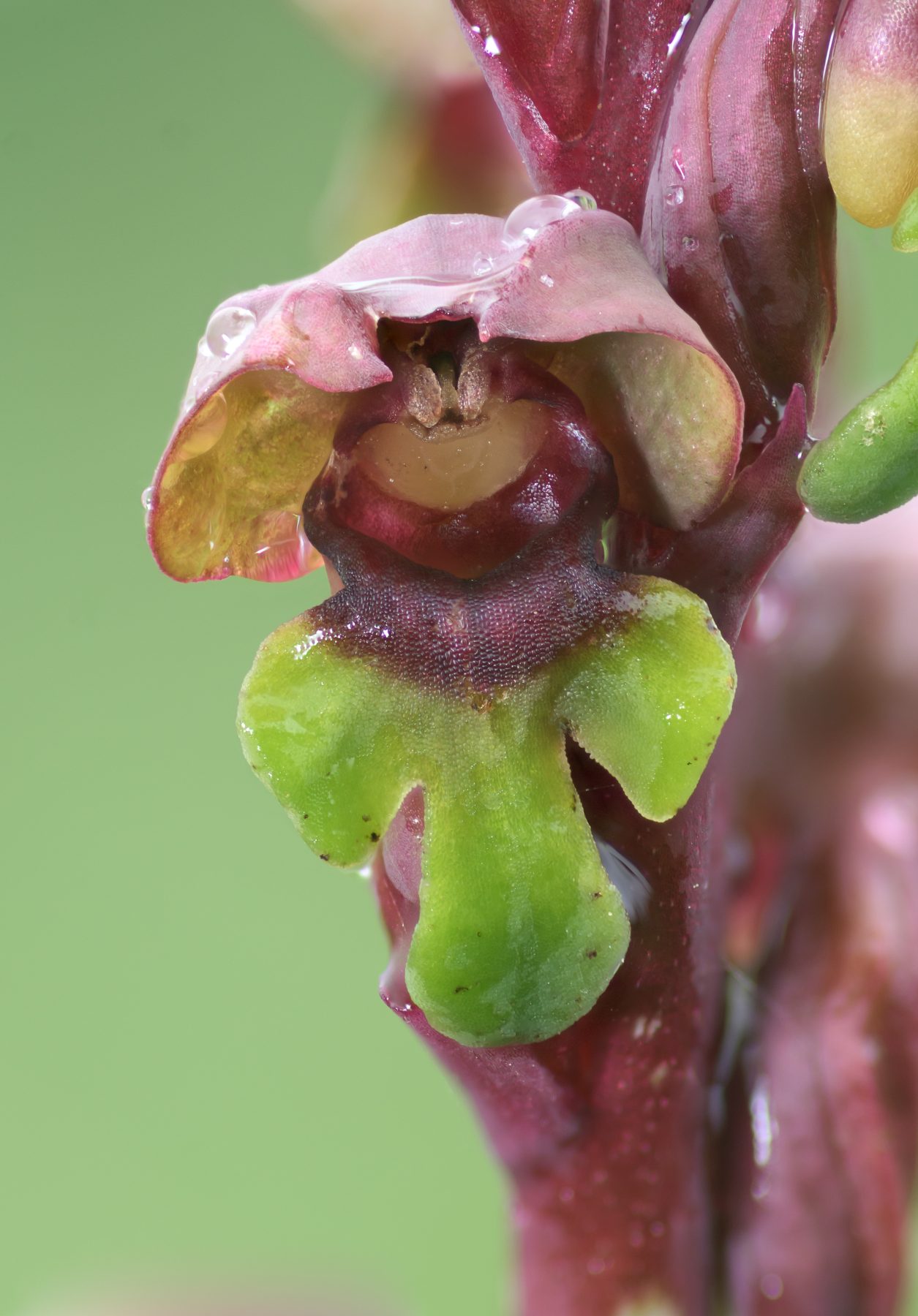
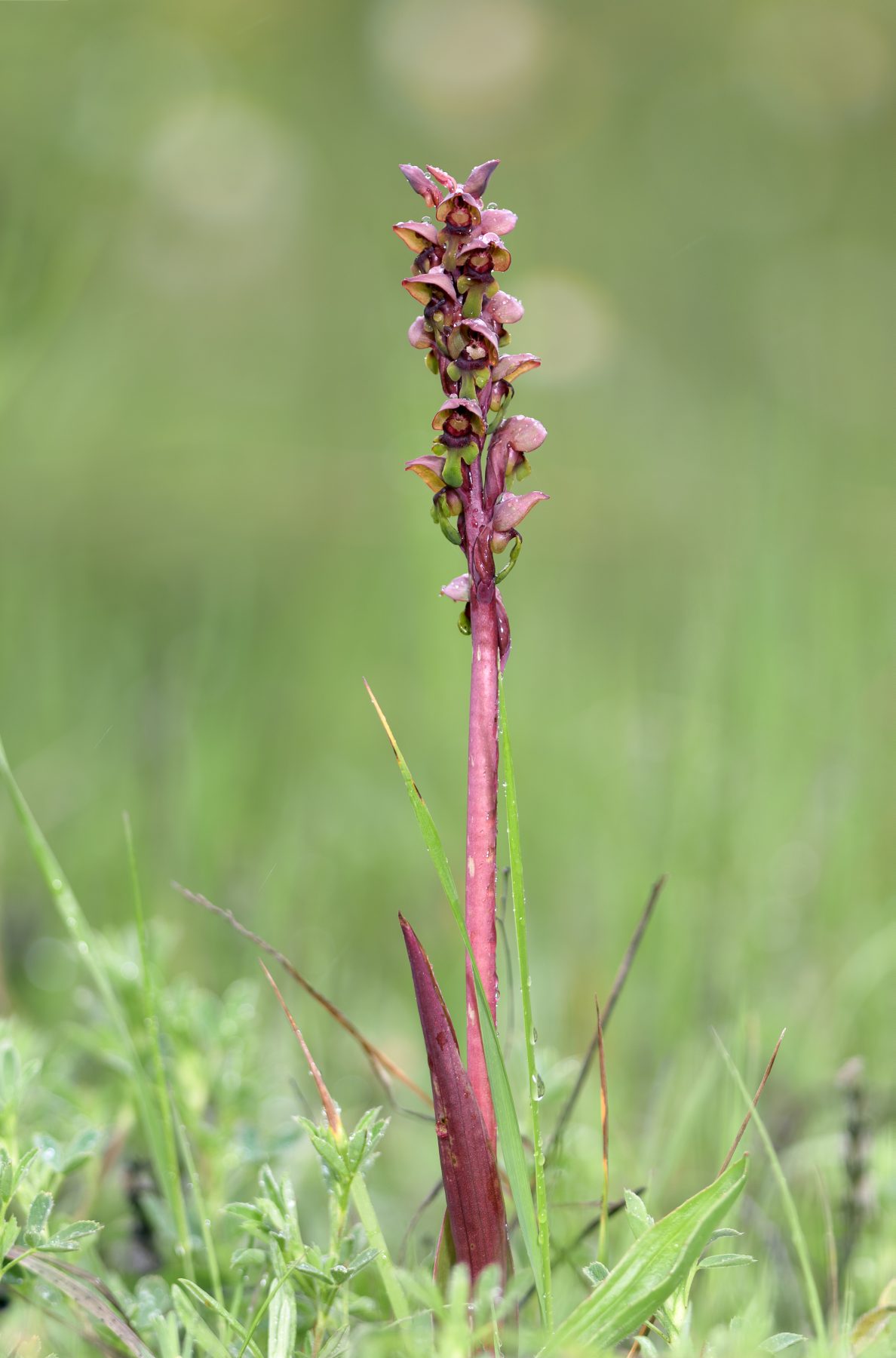
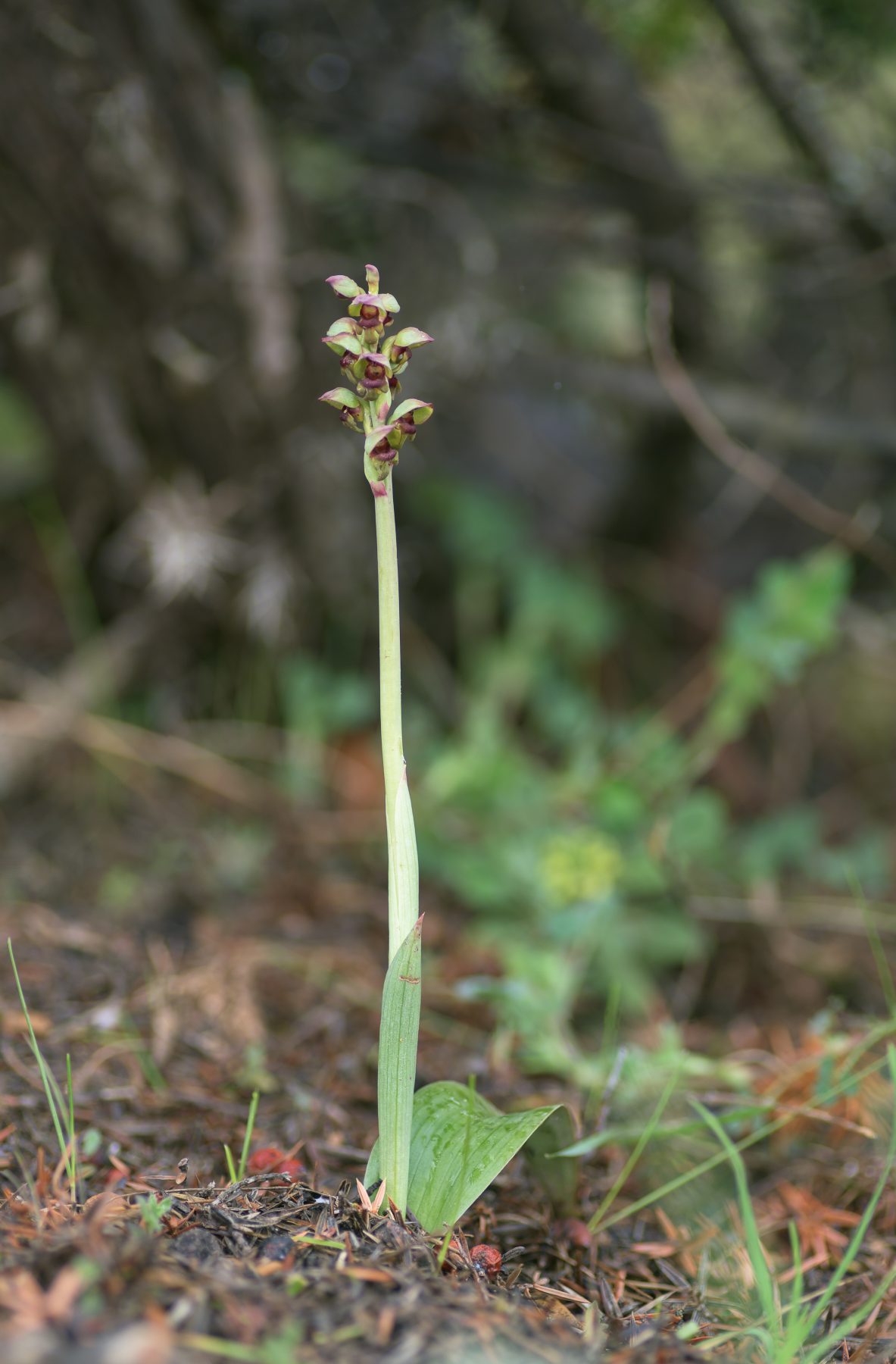
The plant can hardly be accused of being showy. From a distance, it resembles a small, dark reddish-brown stalk, bearing a single, rather inconspicuous basal leaf of the same deep burgundy hue (occasionally both the leaf and the entire plant show a greenish tint). At close range, however, the inflorescence is far more impressive, somewhat reminiscent of Anacamptis coriophora in both structure and appearance. In each flower, the outer and inner tepals curve together to form a closed hood, from which the three-lobed labellum protrudes. At its base and along its upper surface, the lip gleams with the same reddish-brown coloration as the rest of the plant, while the lobes themselves are vivid green with an almost neon-like brightness. This unique colour combination attracts wasps, its primary pollinators, despite the fact that the plant produces no nectar.
Even more remarkably, the flowers emit a scent that mimics either prey or a rival insect. Deceived by this signal, the wasps literally charge at the flowers and, becoming almost trapped beneath the sturdy hoods, aggressively bite and sting at them. In doing so, they eventually cause the pollinia to attach to their bodies, or deposit pollinia already carried from another flower onto the stigma, thereby achieving pollination.
Genetically, Steveniella is highly isolated from other orchid genera. Indeed, the genus itself contains only a single species and does not form hybrids. In the past, taxonomists attempted to squeeze it into various other genera: at different times it was classified among Himantoglossum, Orchis, Platanthera, and even Habenaria, the latter being a predominantly subtropical and tropical genus. Since the turn of the millennium, however, enthusiasm for such reclassifications has waned. Bateman et al. (2003) demonstrated beyond doubt that the species belongs in a distinct genus of its own, rendering further taxonomic reshuffling unnecessary. The species epithet satyrioides refers to the resemblance of its inflorescence to certain terrestrial African orchids belonging to the genus Satyrium.
Back to the genus Steveniella ↶