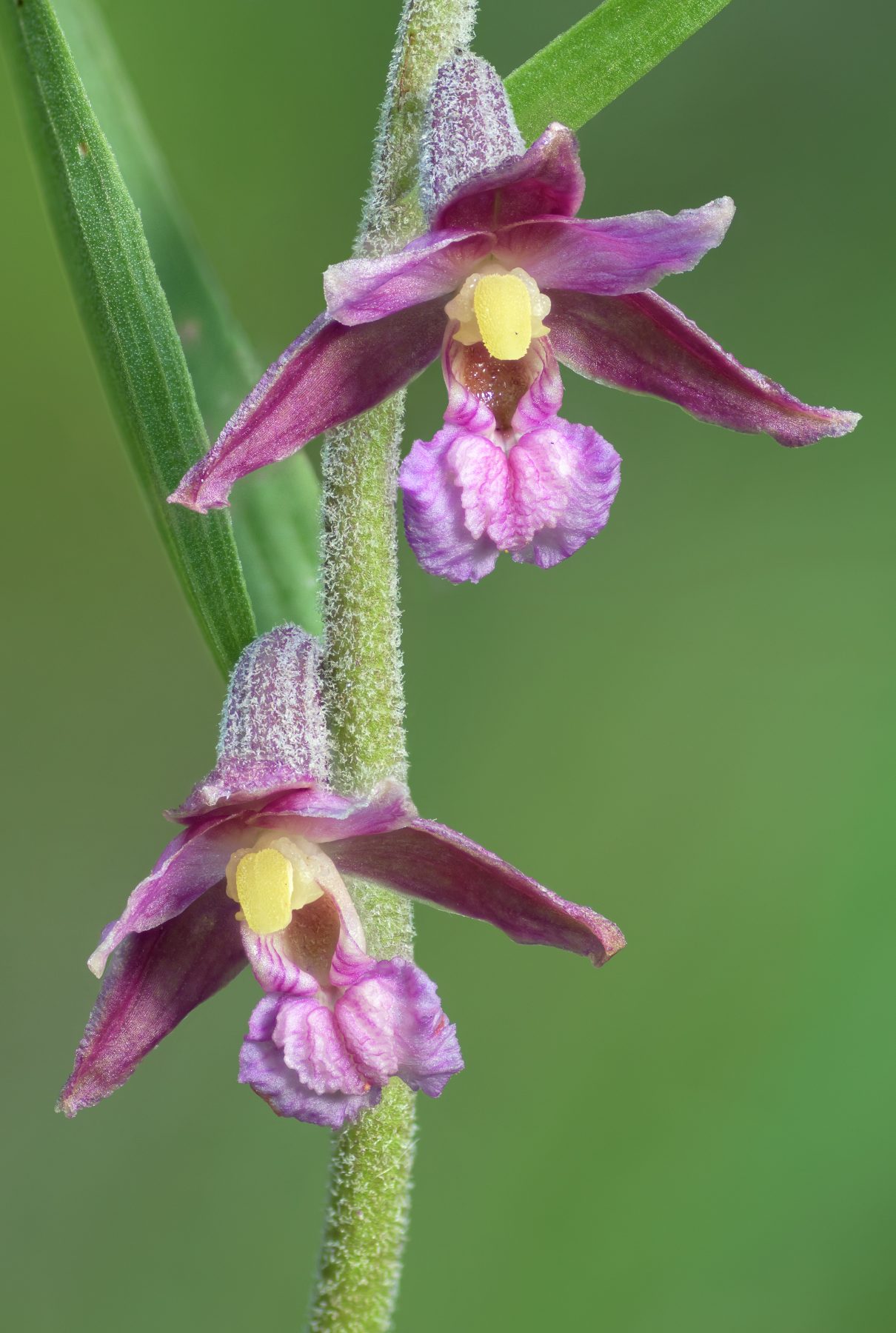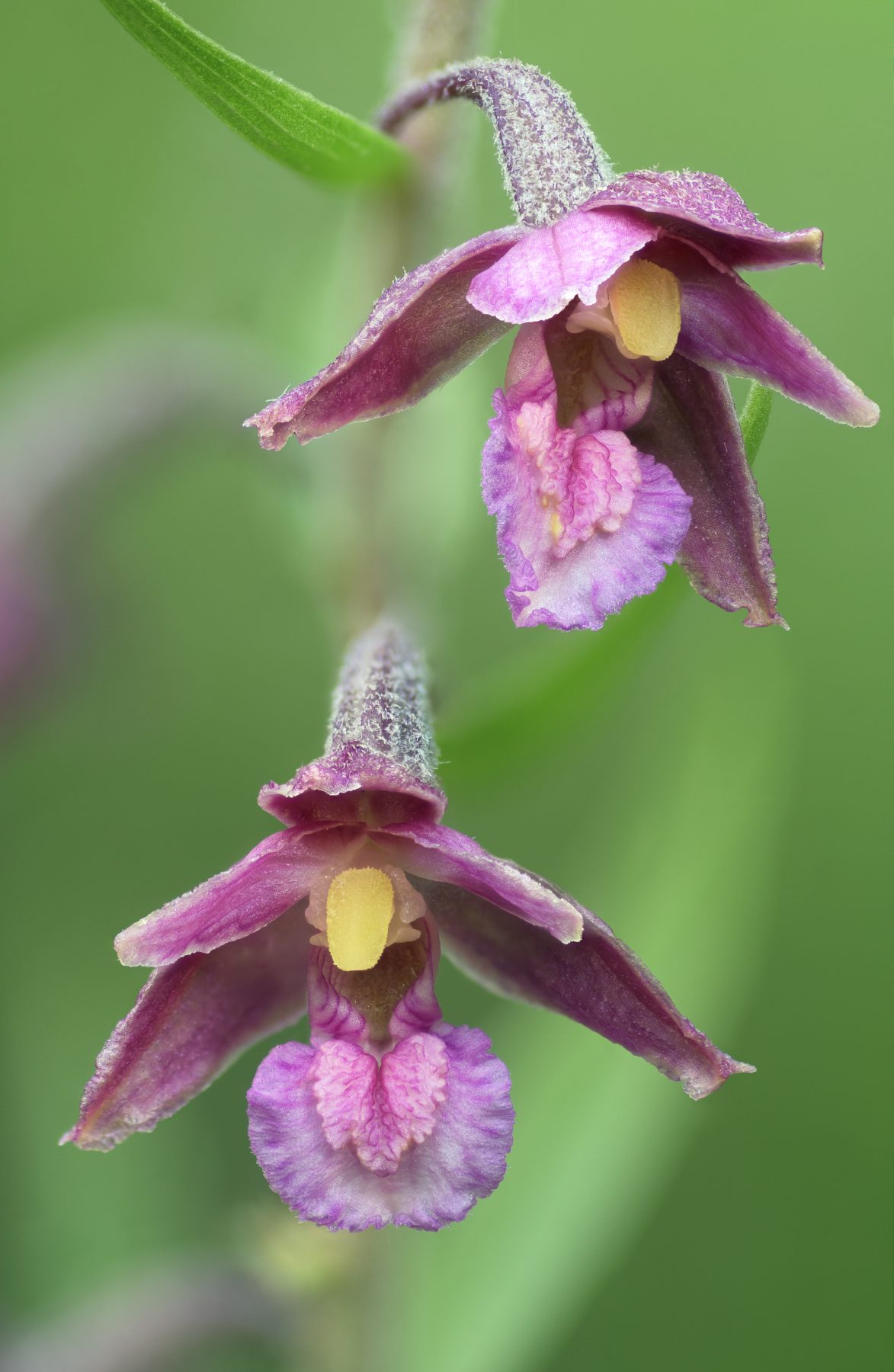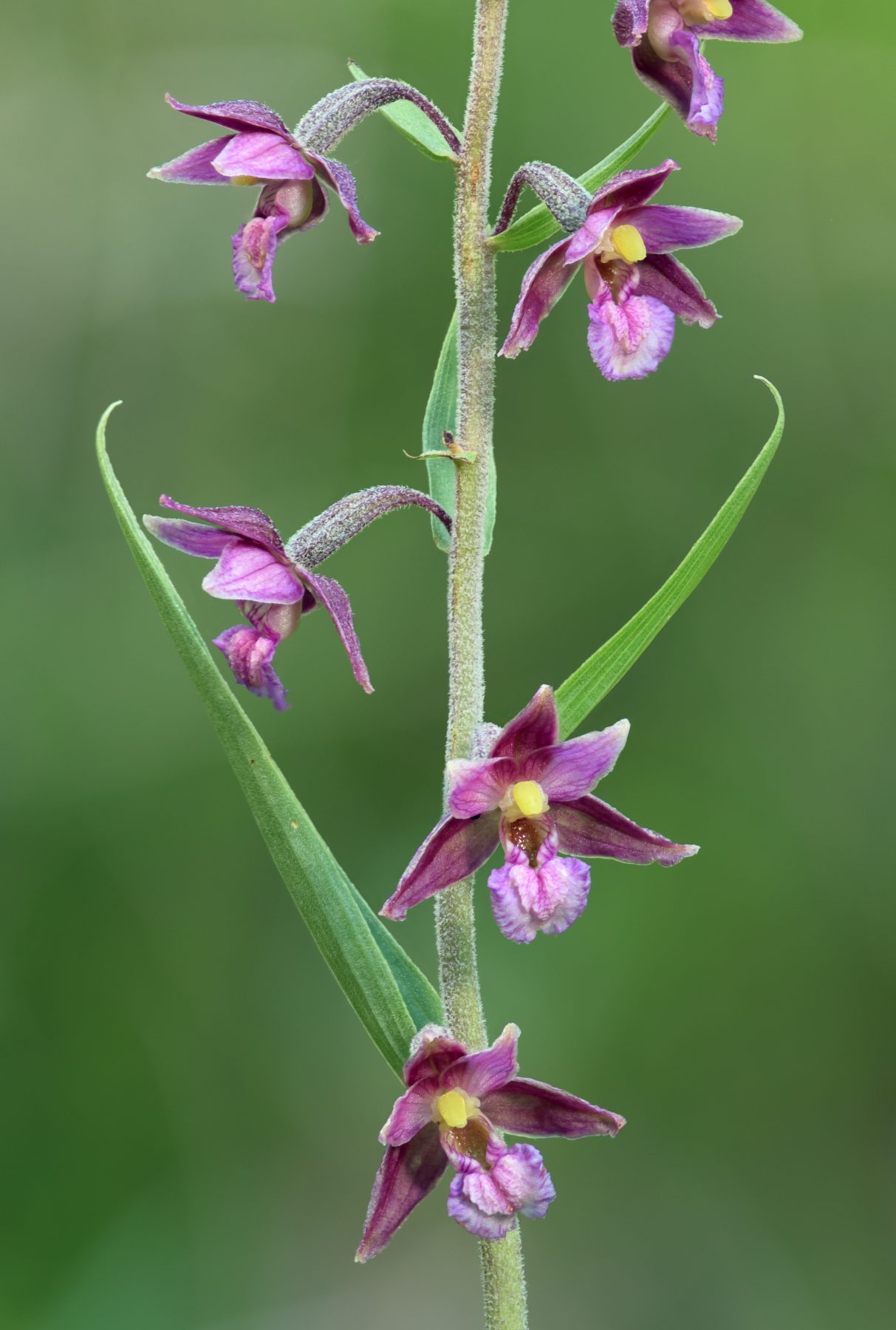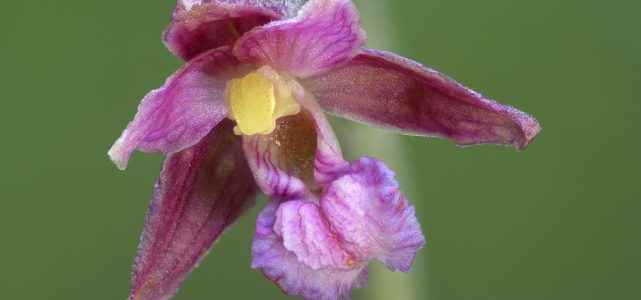
Epipactis × pupplingensis is a true wonder hybrid. We first came across photos of it online years ago, and from that moment on, we were determined to find it ourselves. Of course, wanting something and actually finding it are two very different things. It is an exceptionally rare hybrid throughout Europe (it has never been recorded in Hungary, for example), and even where it does occur, it does not necessarily emerge every year. A good example is an Austrian fen where we know from reliable sources that it has been recorded. Both parent species—the dark-red helleborine (Epipactis atrorubens) and the marsh helleborine (Epipactis palustris)—grow there in abundance and intermingle across a large area, yet despite three separate attempts, we never managed to find a single plant.
So we raised the stakes and headed for the hybrid’s locus classicus, where as many as half a dozen individuals may appear in a good year. The site lies in Bavaria, in the floodplain of the River Isar, known as the Pupplinger Au—so the origin of the hybrid’s name hardly needs any explanation. It is a vast basin covering several square kilometres, most of it occupied by swamp forest threaded with a labyrinth of winding trails. Truly a needle in a haystack. Fortunately, our Austrian and German orchidologist friends came to the rescue and pointed us in exactly the right direction, so at least we knew where to start looking in that proverbial haystack.
During the exceptionally dry summer of 2026, we found just a single plant—a minor miracle in itself. Severe drought had hit the region, and most plants, including both parent species, were merely struggling to survive; many had withered or simply dried up altogether. Yet this magnificent hybrid was flowering as if there were no tomorrow. By mid-July it had already opened several flowers, even though it usually blooms here towards the end of July and into August, and it showed not the slightest sign of suffering from the lack of moisture.
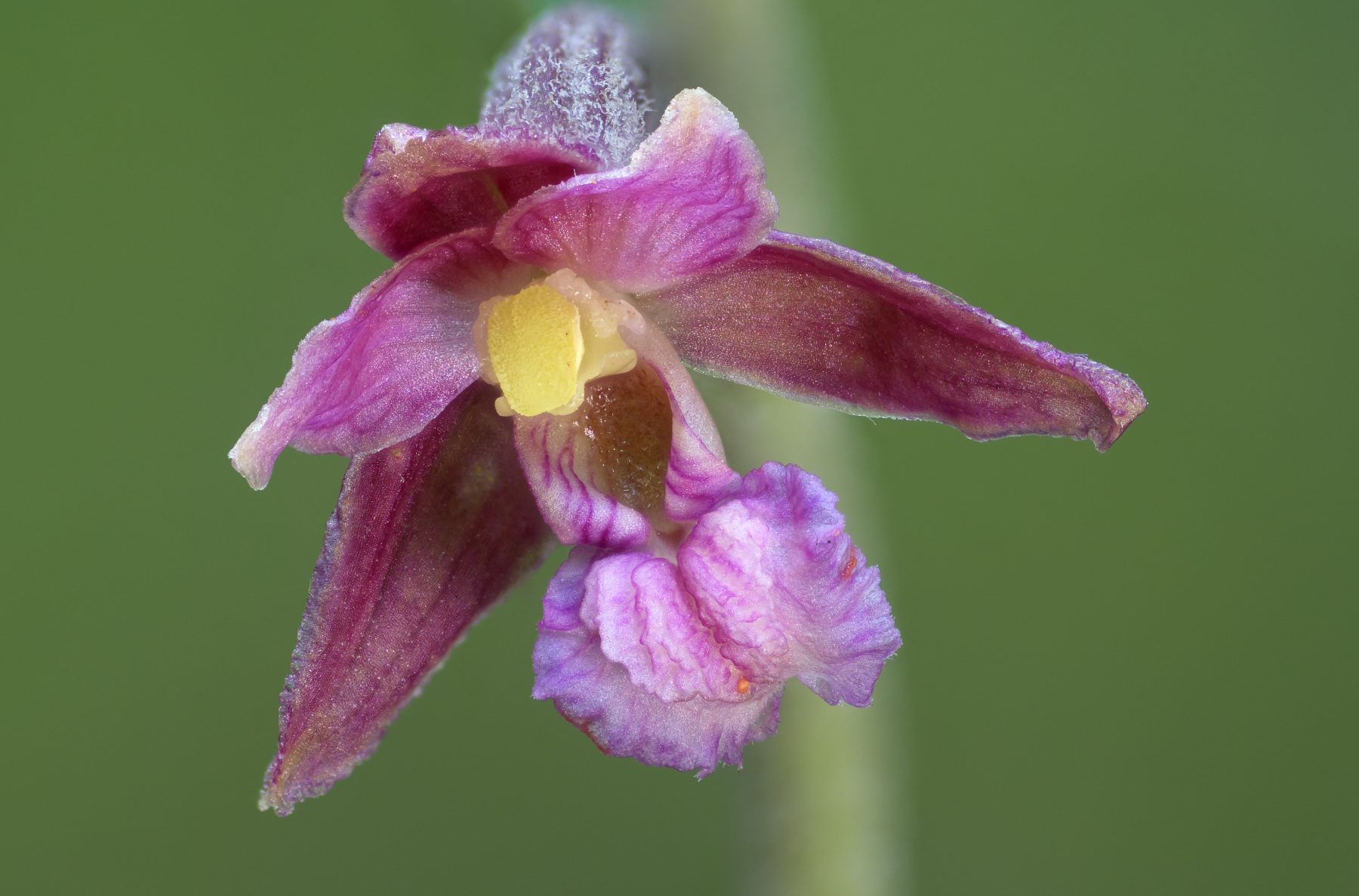
And then there were the flowers themselves. They combined the characteristics of both parents with remarkable elegance. My favourite feature was the exquisite pinkish-lilac, lace-like collar of bumps and ridges adorning the saucer-shaped epichile. The striped pattern on the inner wall of the hypochile, inherited from E. palustris, was also clearly retained. At the same time, the characteristic gap separating the hypochile and epichile in E. palustris was absent, replaced instead by a pronounced groove-like depression. Among all Epipactis hybrids, this is undoubtedly the finest, and even among orchid hybrids as a whole, it ranks as one of the most beautiful.
To my knowledge, the hybrid has been recorded from only four countries: Germany, France, Austria and, as of the summer of 2026, Estonia, where orchid enthusiast and photographer Rainer Kurbel discovered it. I would not expect it to start turning up all over Europe anytime soon. The main obstacle is the differing habitat preferences of its parents: E. atrorubens favours relatively dry habitats, whereas E. palustris is closely associated with fens and marshes. In Hungary, the best chance of finding it would probably be in the Danube–Tisza Interfluve, perhaps where a marshy meadow borders a juniper scrub or a poplar woodland. Come to think of it, that doesn’t sound entirely impossible…