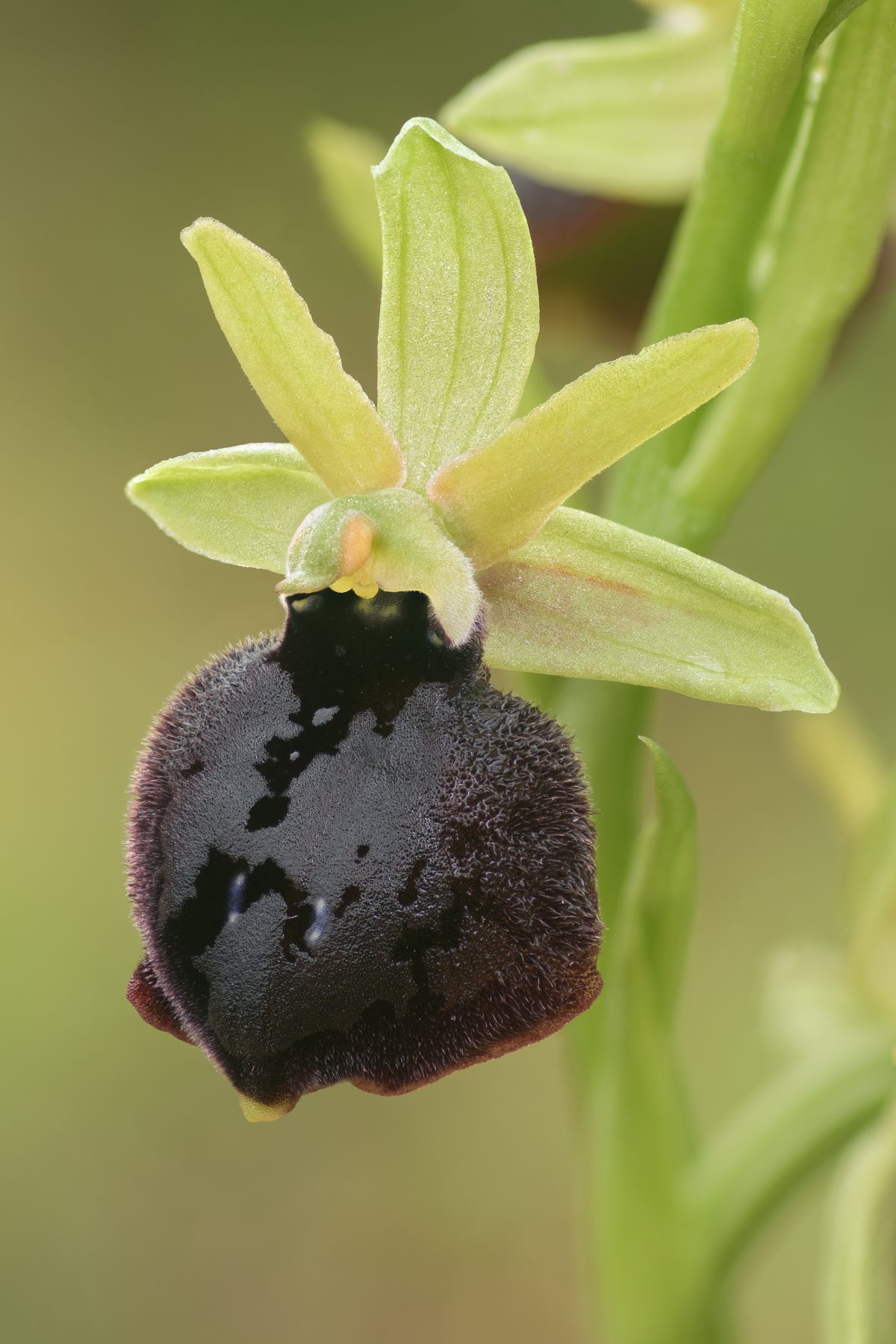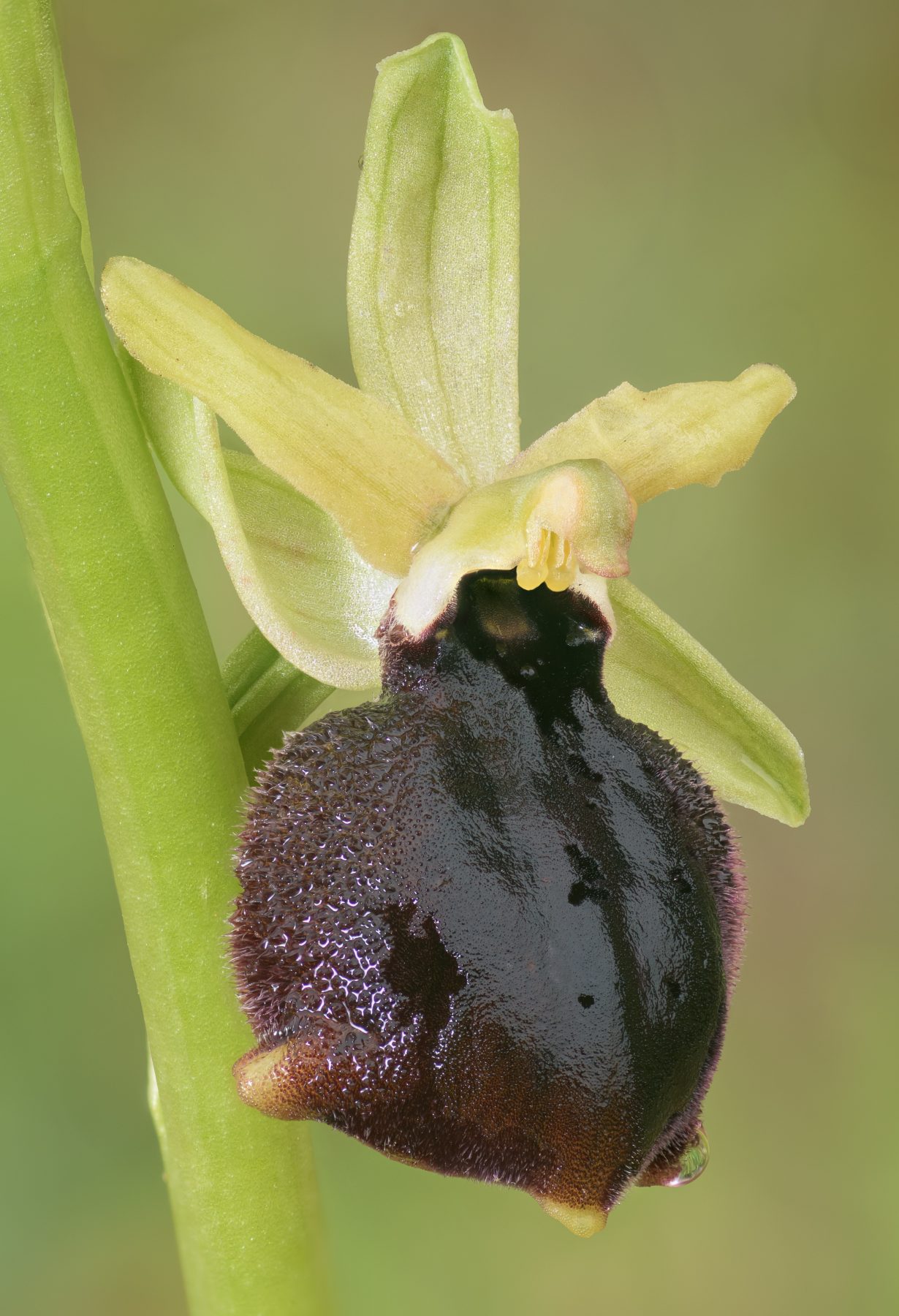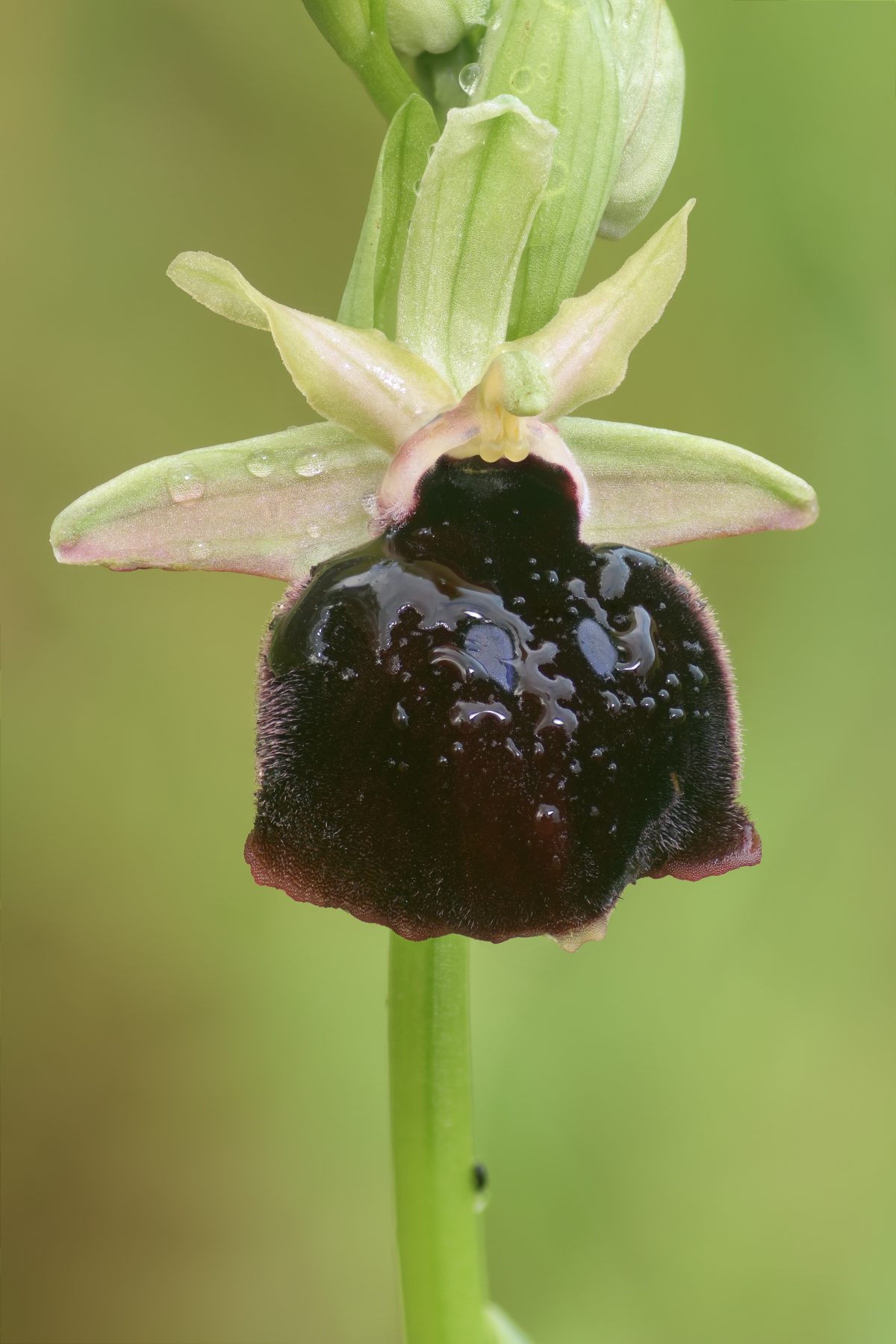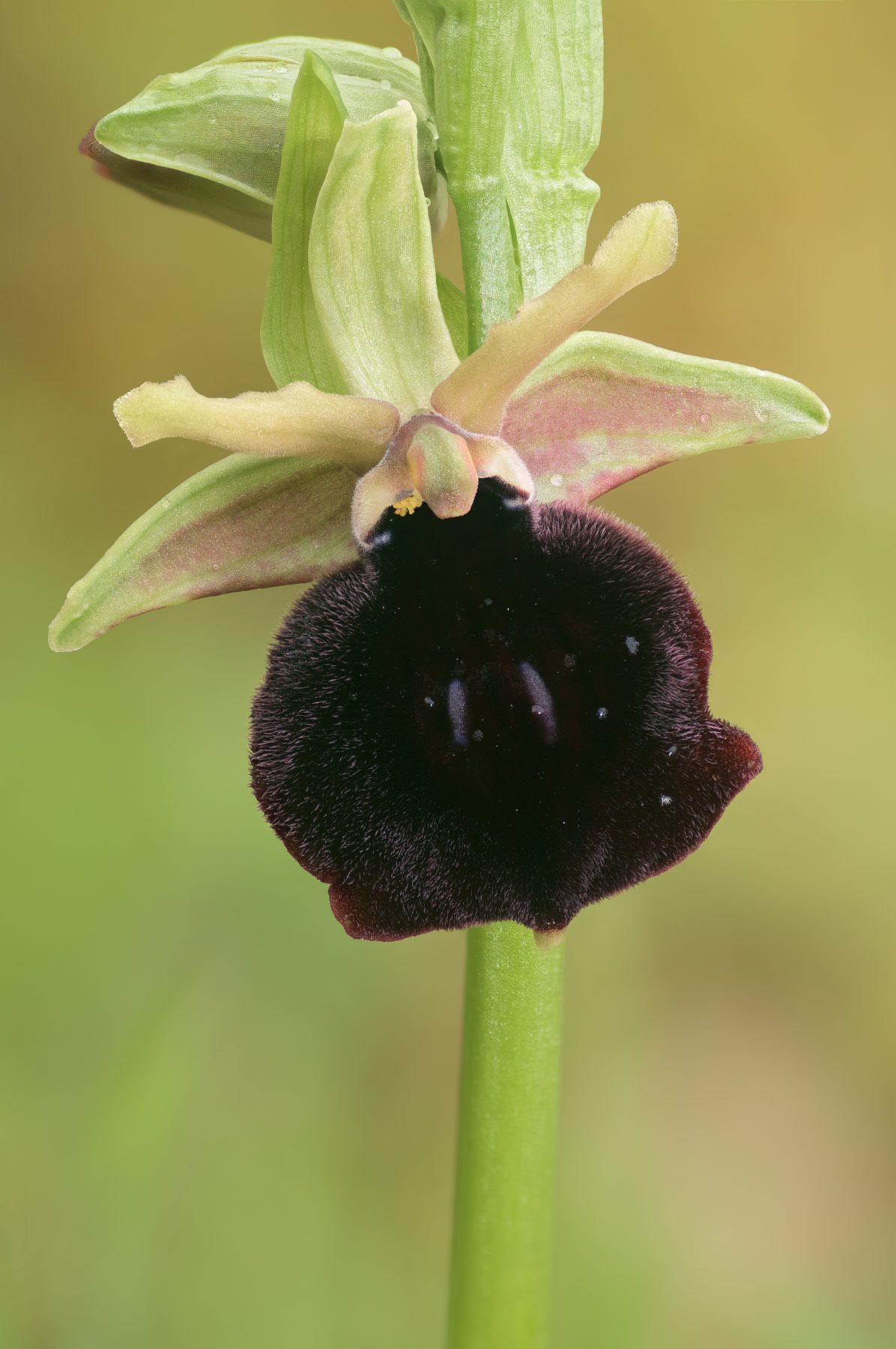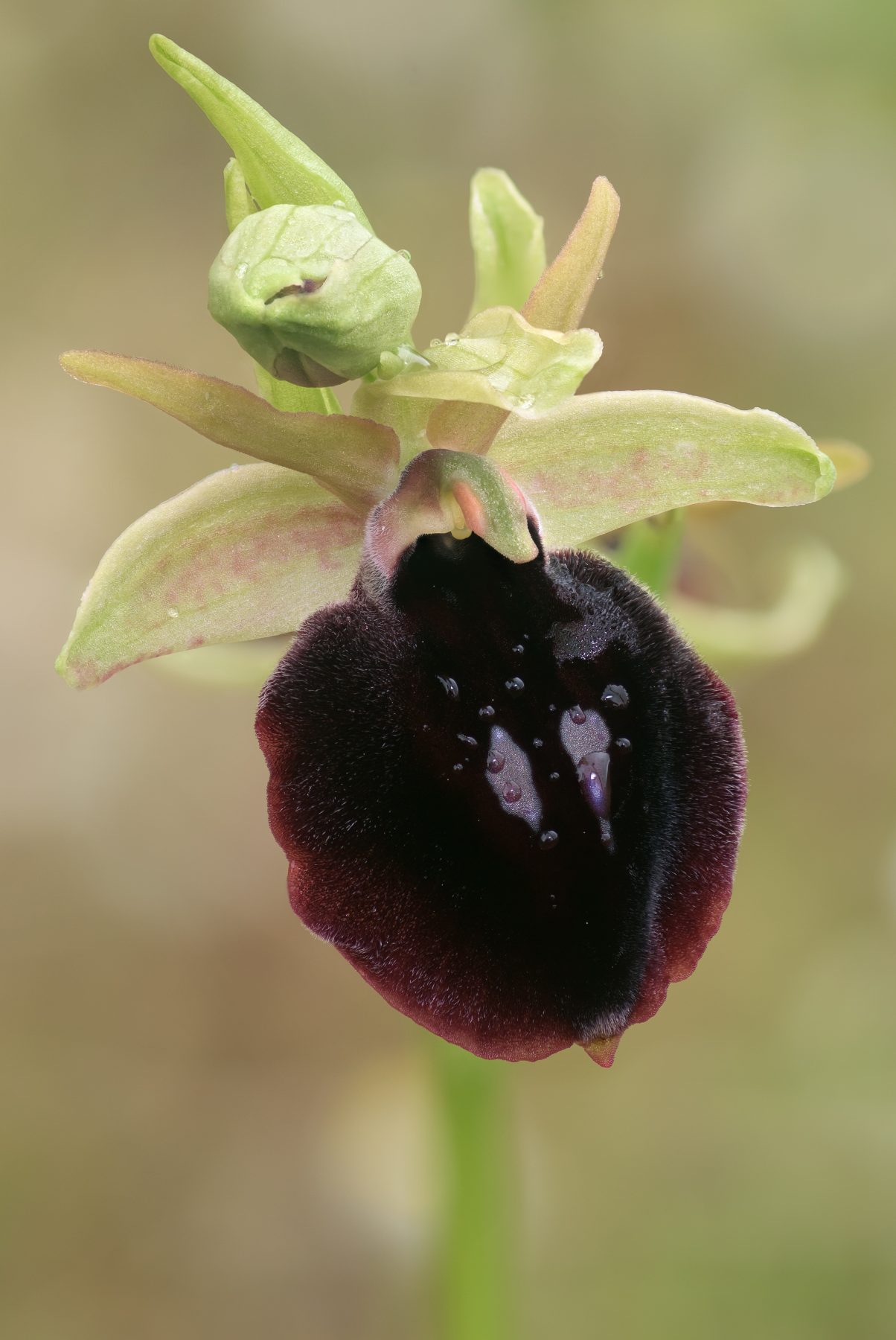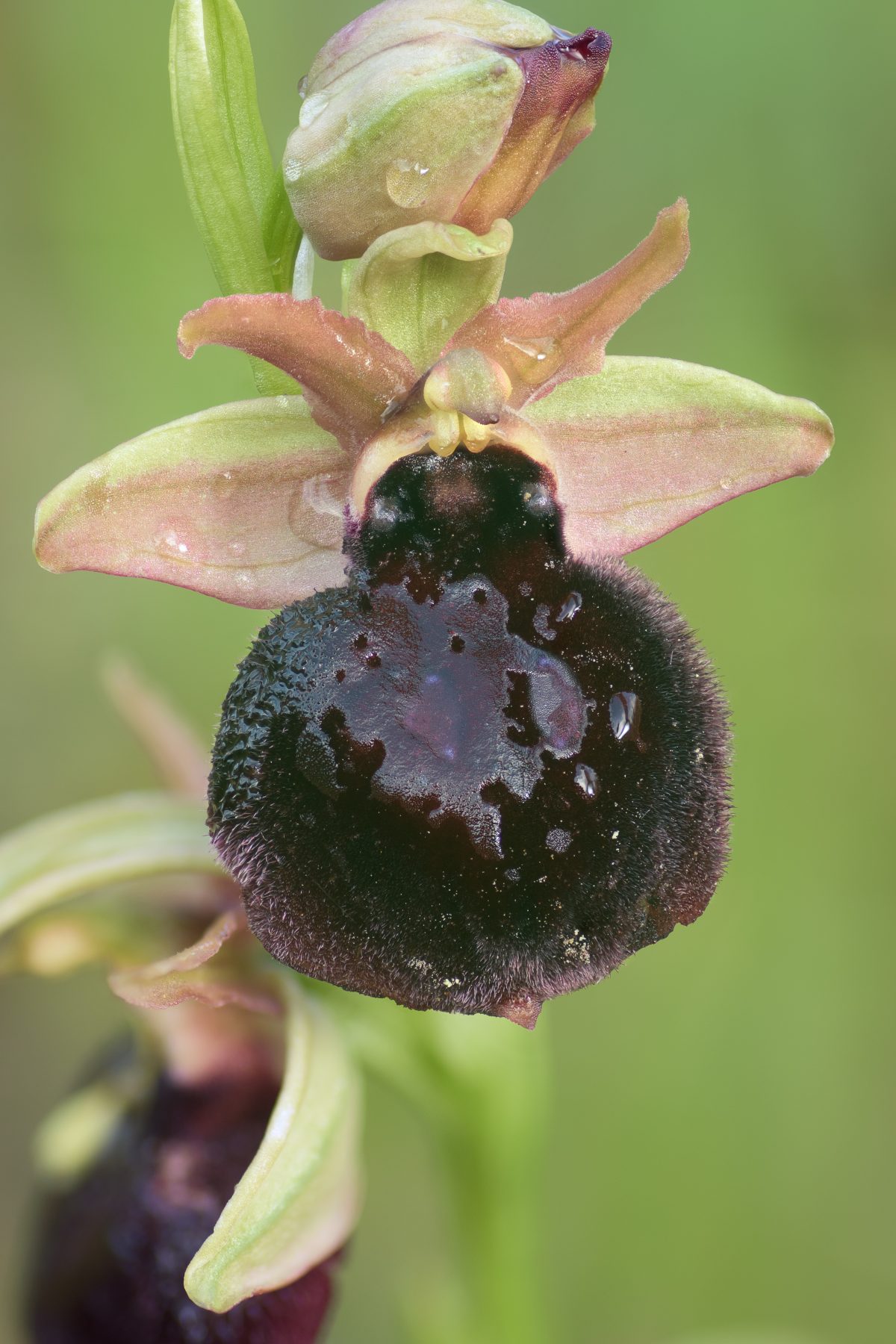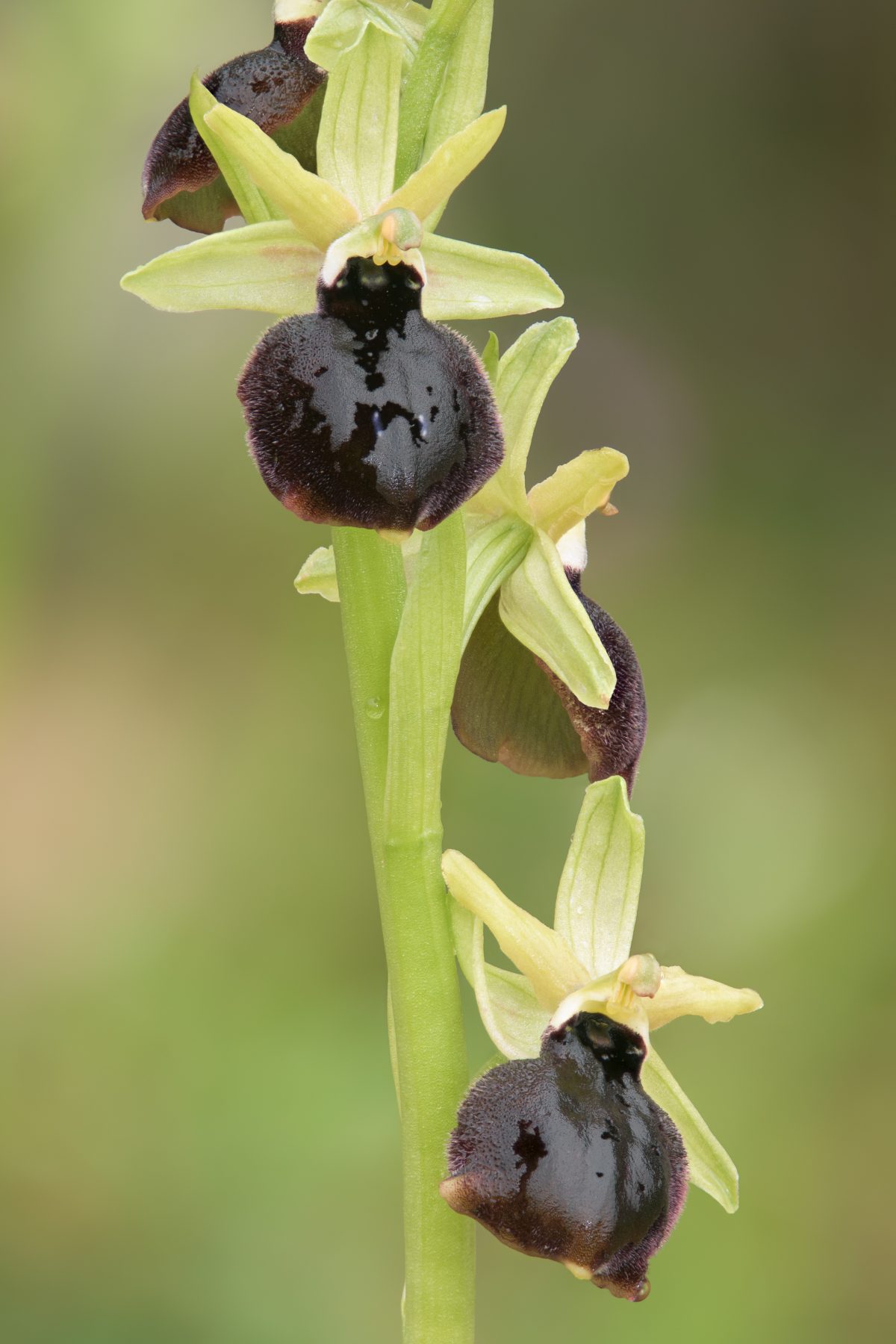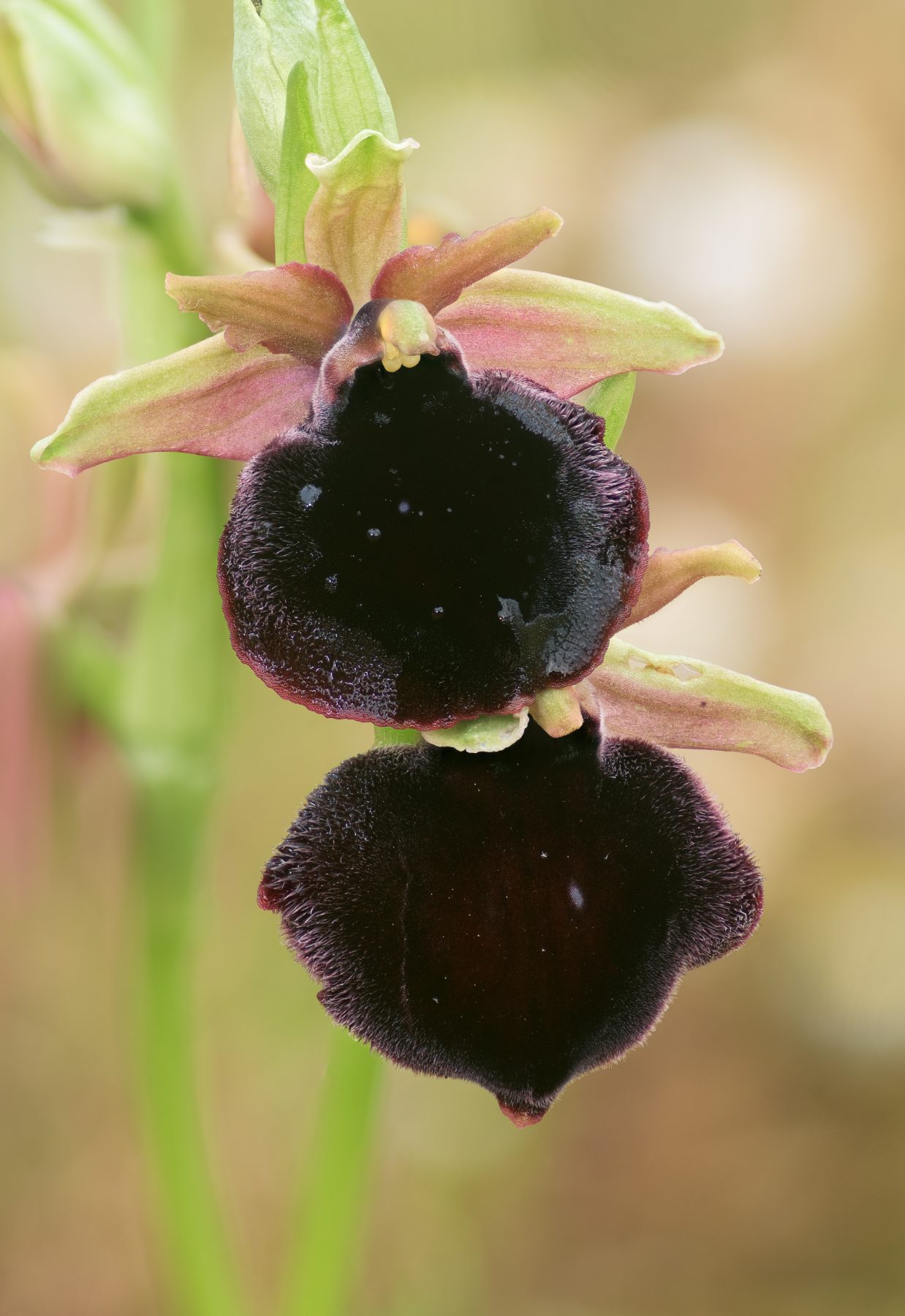
| Etymology: | the Greek mavromata means black eyed girl, referring to the granddaughter of Antonis Alibertis, the discoverer and describer of the species |
| Distribution: | Endemic to Kefalonia |
| Flowering time: | mid-IV.-early V. |
| Taxnonomy: | O. mammosa group |
| Similar species: | O. helenae |
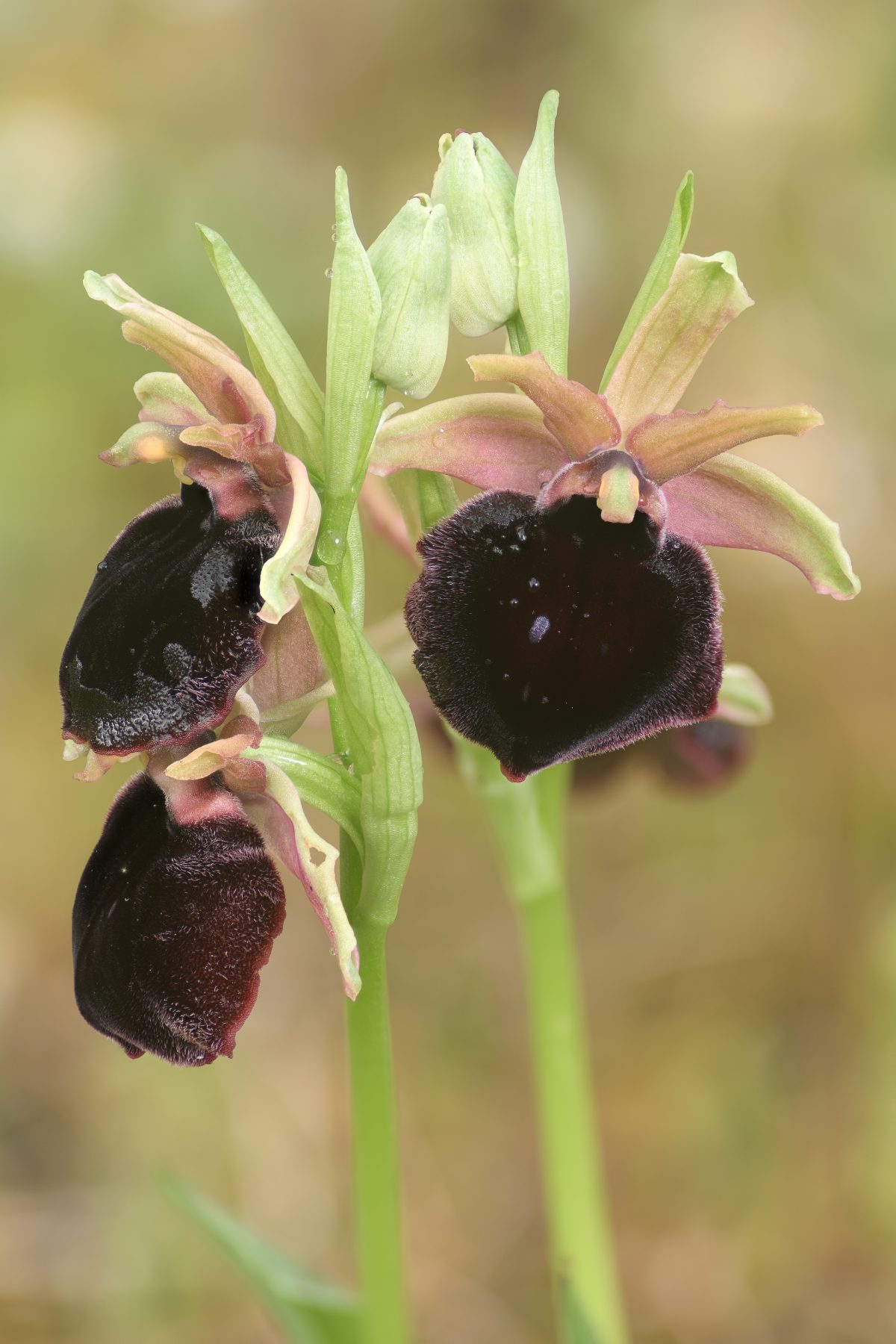
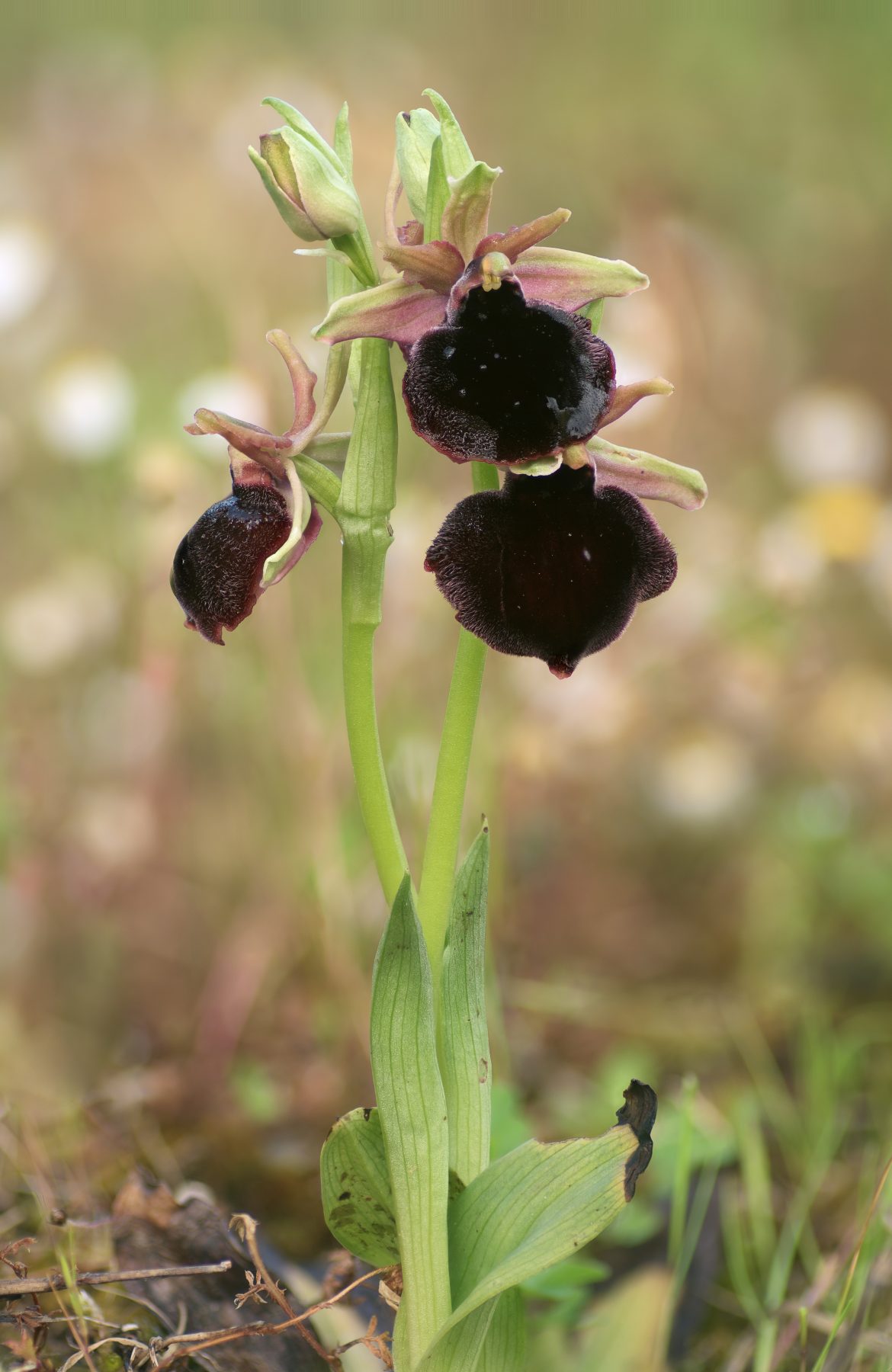
The native bee orchids of Kefalonia, an island in western Greece, were only discovered relatively late, partly because the populations found were small and the plants could easily be confused with other species. The small-flowered Ophrys cephalonensis, belonging to the O. oestrifera group, was not described until 2014, and even as late as 2018 a new species was “born” on the island: the mammosa-like Ophrys mavrochila following the work of Stefan Hertel and Helmut Presser. The real sensation, however, came between these two discoveries. During one of his excursions on the island, Greek orchidologist Antonis Alibertis pulled his car over for a quick pit stop – and, as an aside, this is an instructive story about how you can stumble upon an interesting “weed”, or even a species new to science, under the most ordinary circumstances, so always keep your eyes open! – when he noticed huge, black, rounded bee orchids with almost unmarked lips not far from the road, plants that simply could not be assigned to any known species. Naturally, this did not discourage him, and in 2015 he duly “assigned” these plants to a brand-new species, Ophrys mavromata, while also expressing his affection for his granddaughter (mavromata means “black-eyed girl”).
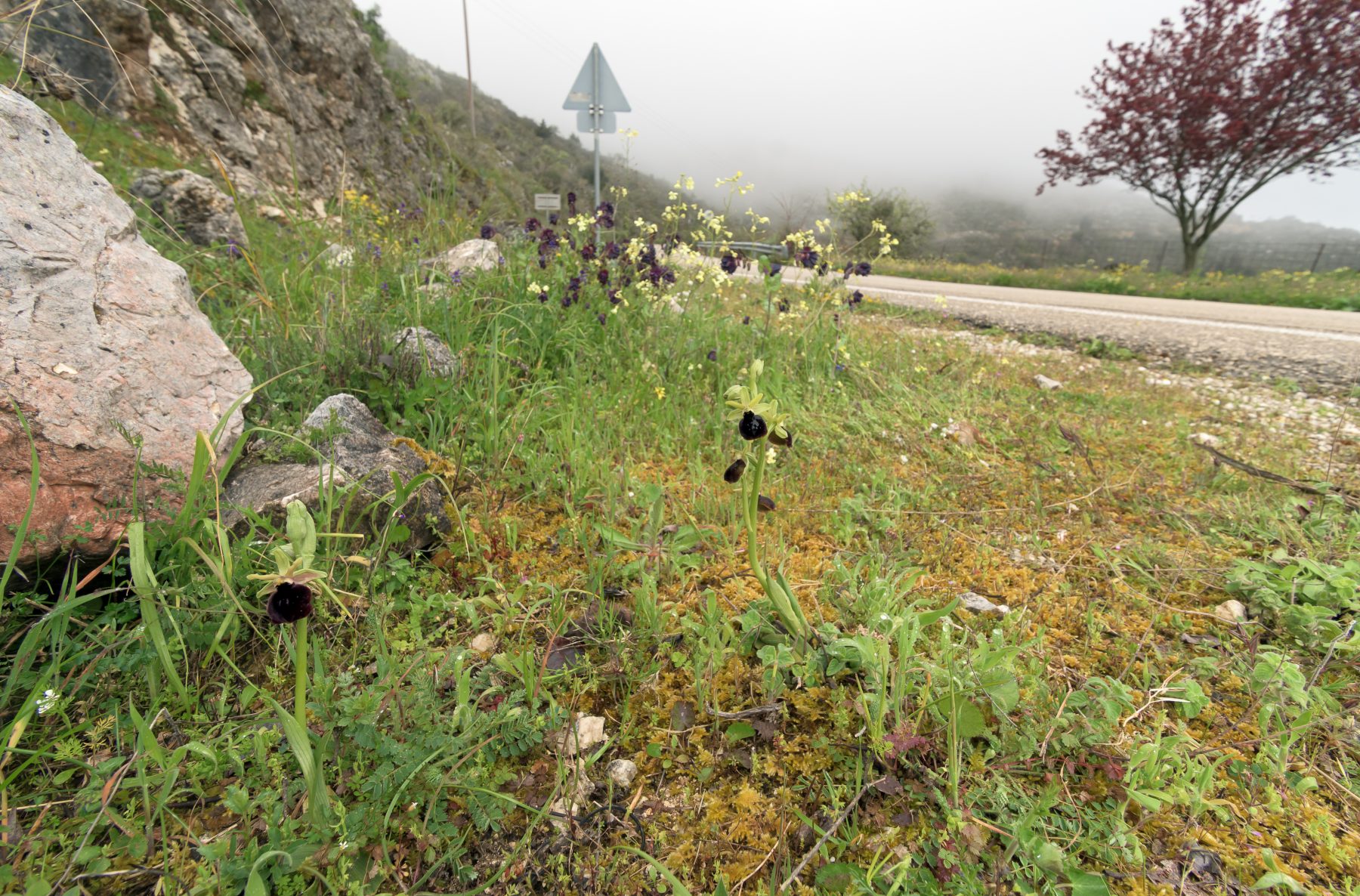
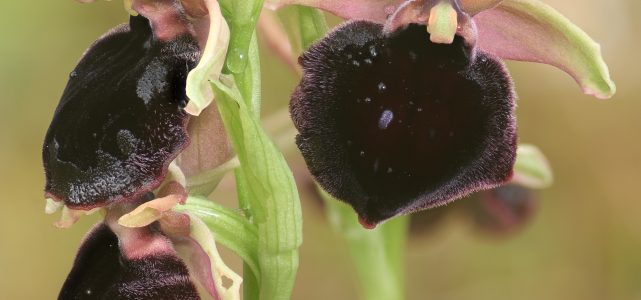
During our 2023 trip to Greece, we certainly did not want to miss this novelty either, so slightly ahead of mid-April we took the ferry from the Peloponnese to the island, hoping to catch the dark devils right at the beginning of their flowering period. The population we visited really was sitting on both sides of the main road, stretching along for several dozen metres, in places even in the shade of the guardrail. The still life was further enlivened by an abandoned truck (apparently, the species has since also been found a little farther away, in a less disturbed location). And the flowers we found were, without exaggeration, astonishing: huge, several-centimetre-wide, broad, rounded, pitch-black from a distance but revealing brownish and reddish shades up close, mysterious-looking due to their reduced lips and with something of a helenae-like appearance. These chunky little beauties were sitting in the grass and were easy to spot even from our parked car.
Since then, Hannes Paulus has also discovered the pollinator of these black beauties: none other than the rather widespread Bombus terrestris, the buff-tailed bumblebee. This means that, beyond reasonable doubt – at least according to the biological species concept – we are dealing with a distinct bee orchid species. This raises the question of why, given the highly specialised insect–flower interdependence characteristic of bee orchids and their pollinators, the plant has not spread alongside such a widespread pollinator. The answer can probably only be guessed at for now. Various factors may be involved; for example, alongside the hymenopteran pollinator, mycorrhizal associations may also limit the “range of movement” of O. mavromata. In any case, this is yet another reminder that there is still a great deal we do not know about orchids…