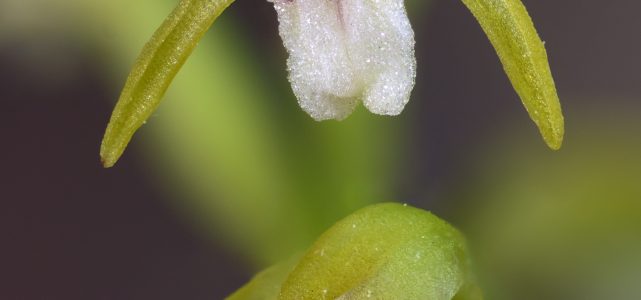
| Etymology: | Trifida refers to the three-lobed structure of the flowers, presumably considering the lip and the lateral sepals together |
| Distribution: | Across the whole Europe, most frequent in Middle and Northern Europe, Middle East, Caucasus, Asia, USA, Canada |
| Distribution in Hungary: | Bükk, Mátra, Vértes, Aggtelek Karst |
| Flowering time: | late IV. -mid VII. |
| Flowering time in Hungary | late IV. -late V. |
| Similar species: | None in Europe |
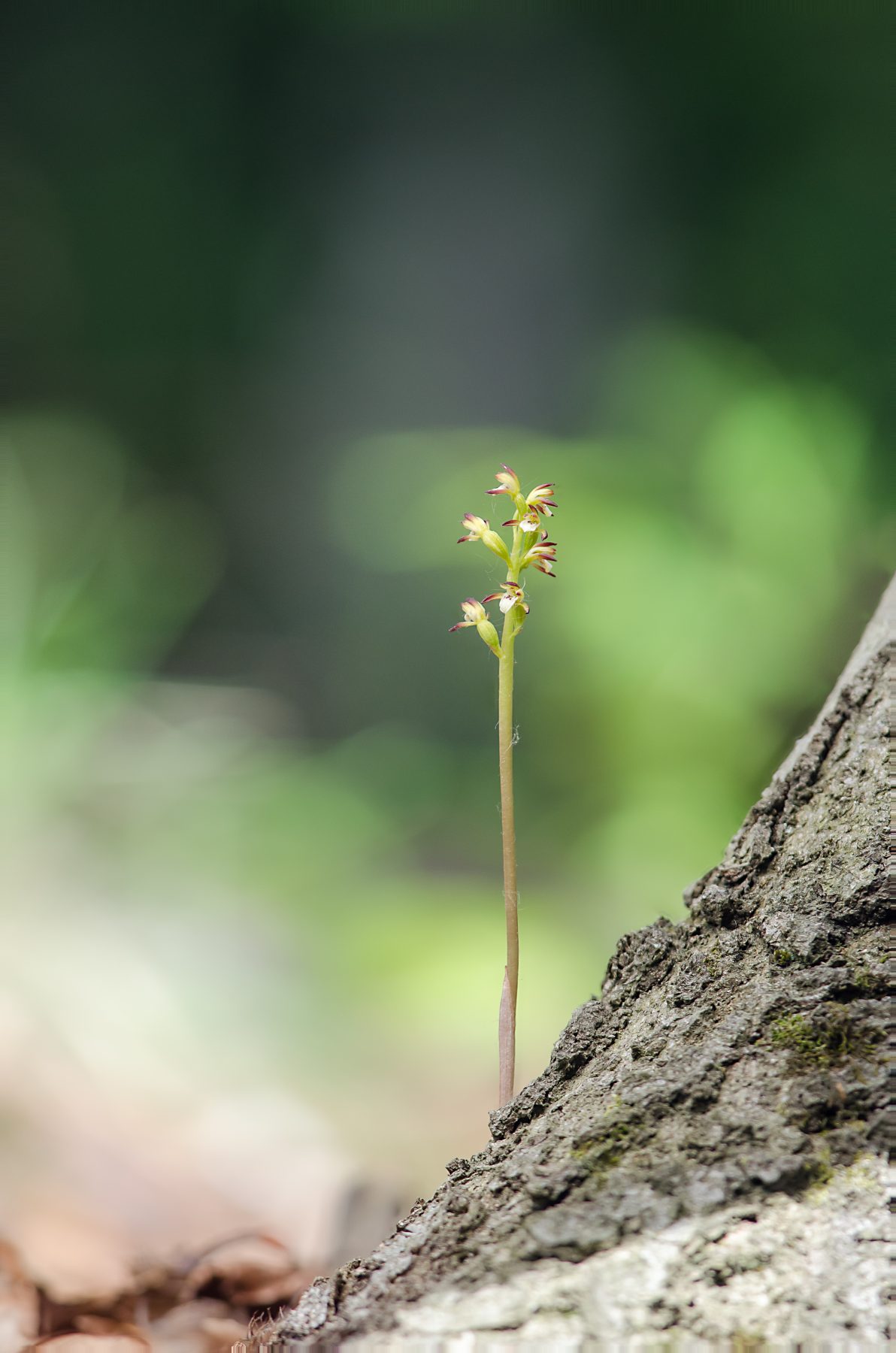
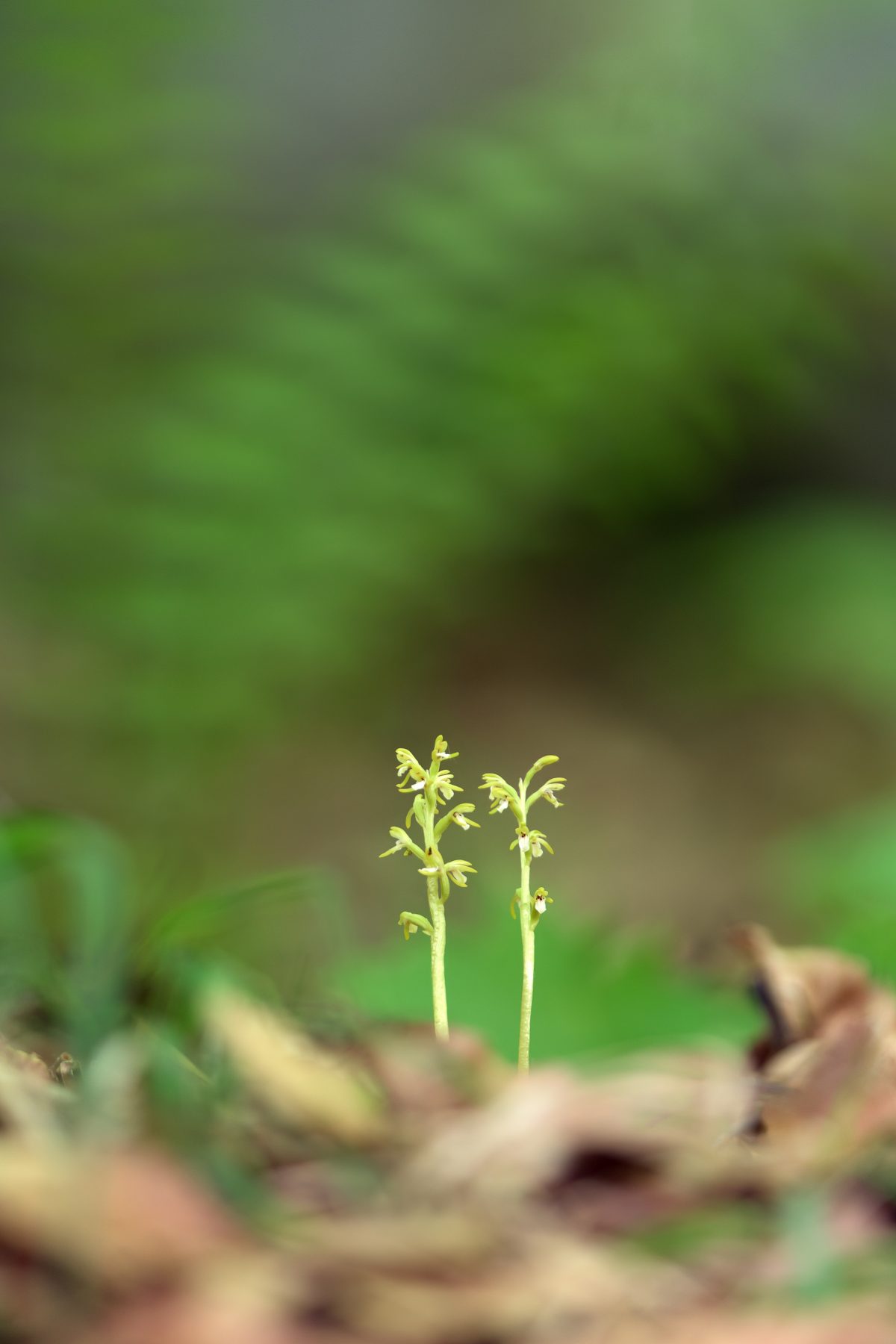
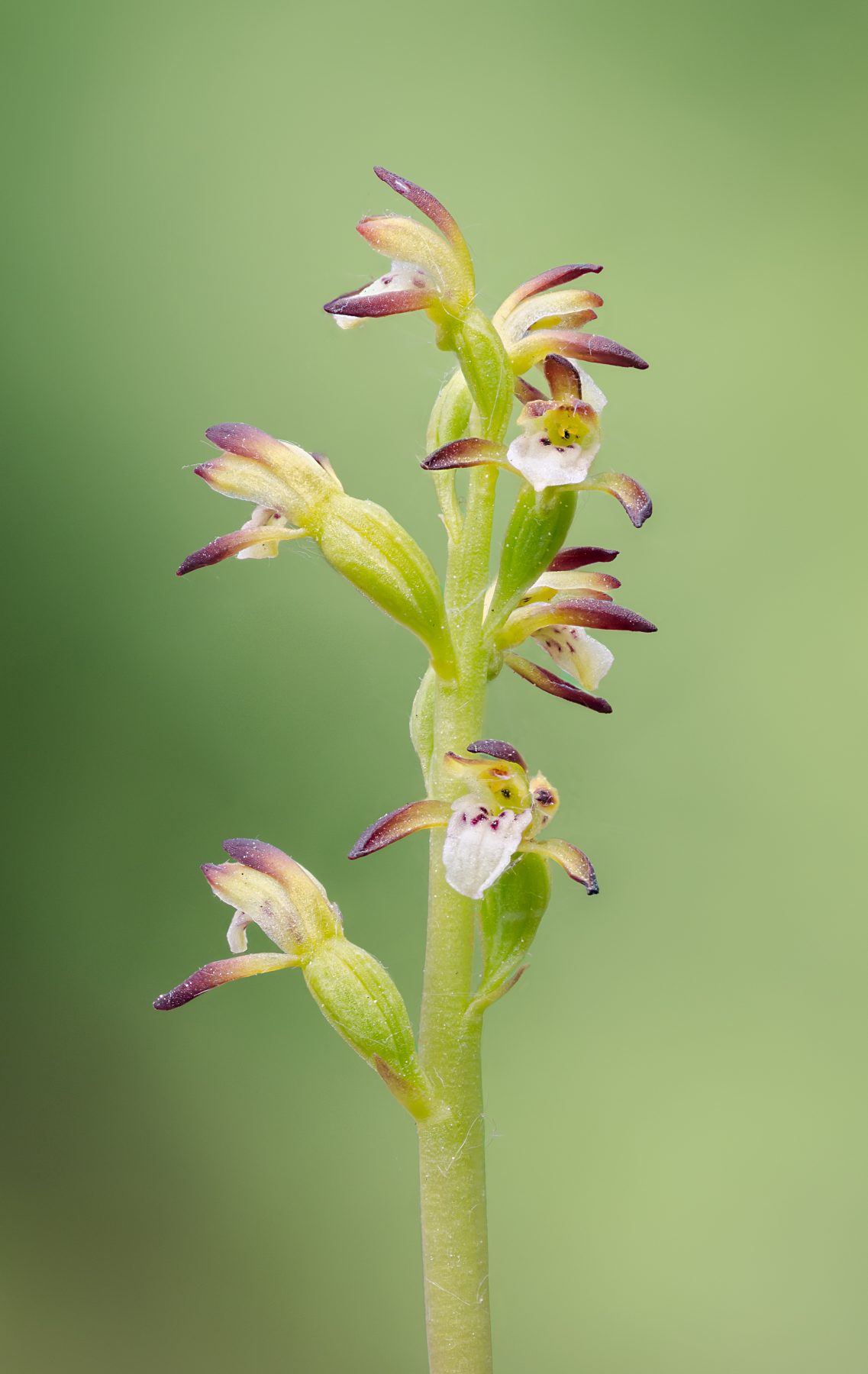
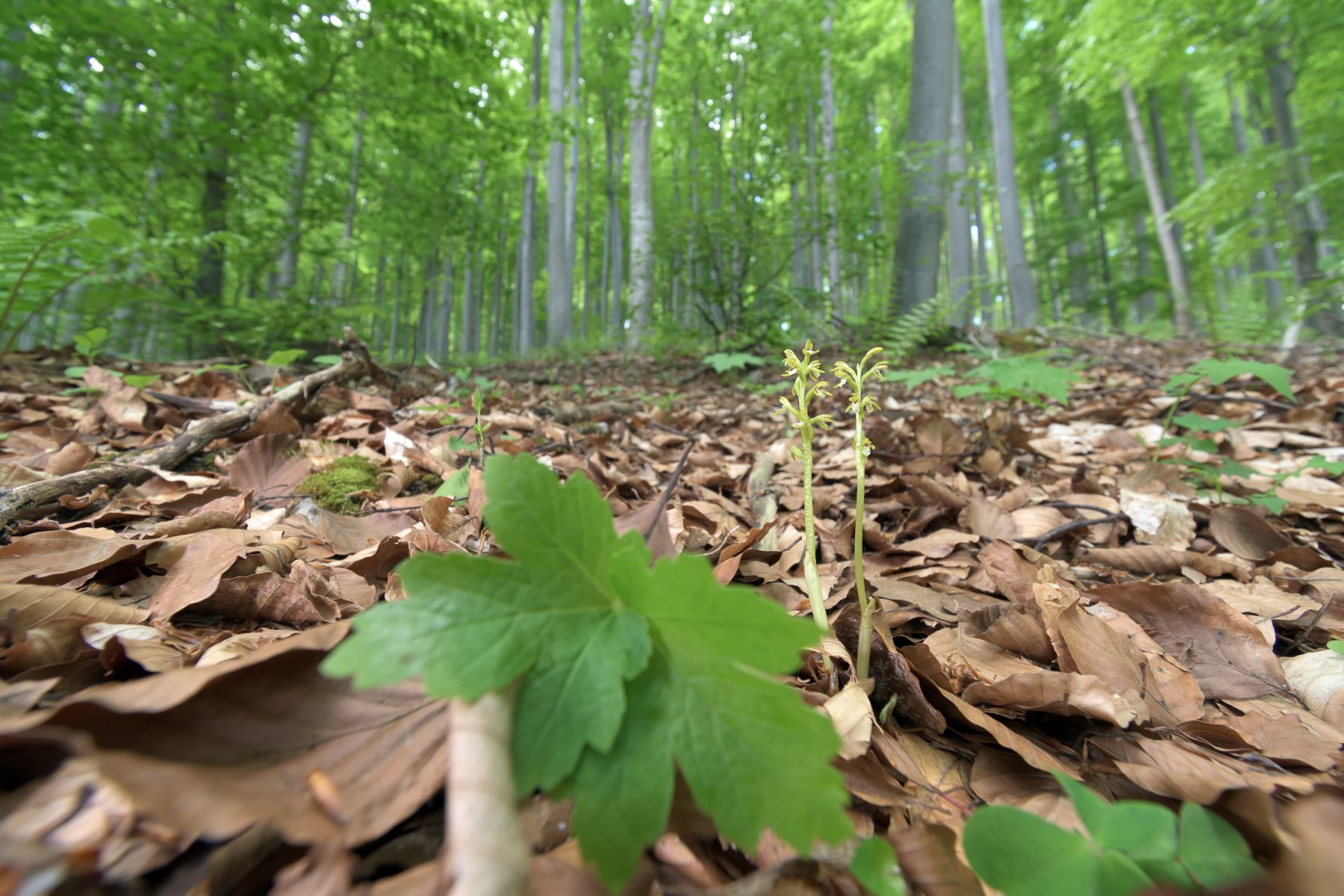
No one is likely to come across the coralroot orchid (Corallorhiza trifida) while hiking in the woods—unless, of course, their name happens to be Alexandra Halász—because, for one thing, it is very rare, and for another, it is tiny beyond belief, barely peeking out from beneath the thick layer of leaf litter in beech forests. Even if we happen to know exactly where it is growing, we still have to scrutinize the ground with bulging eyes to spot it. In this respect, it could shake hands with the bog orchid (Hammarbya paludosa) or the alpine dwarf orchid (Chamorchis alpina). At least there is one small advantage: the coralroot emerges from the brown leaf litter with its pale greenish, sometimes yellowish, delicate shoots, so the slight contrast in color helps draw the scanning eye toward it.
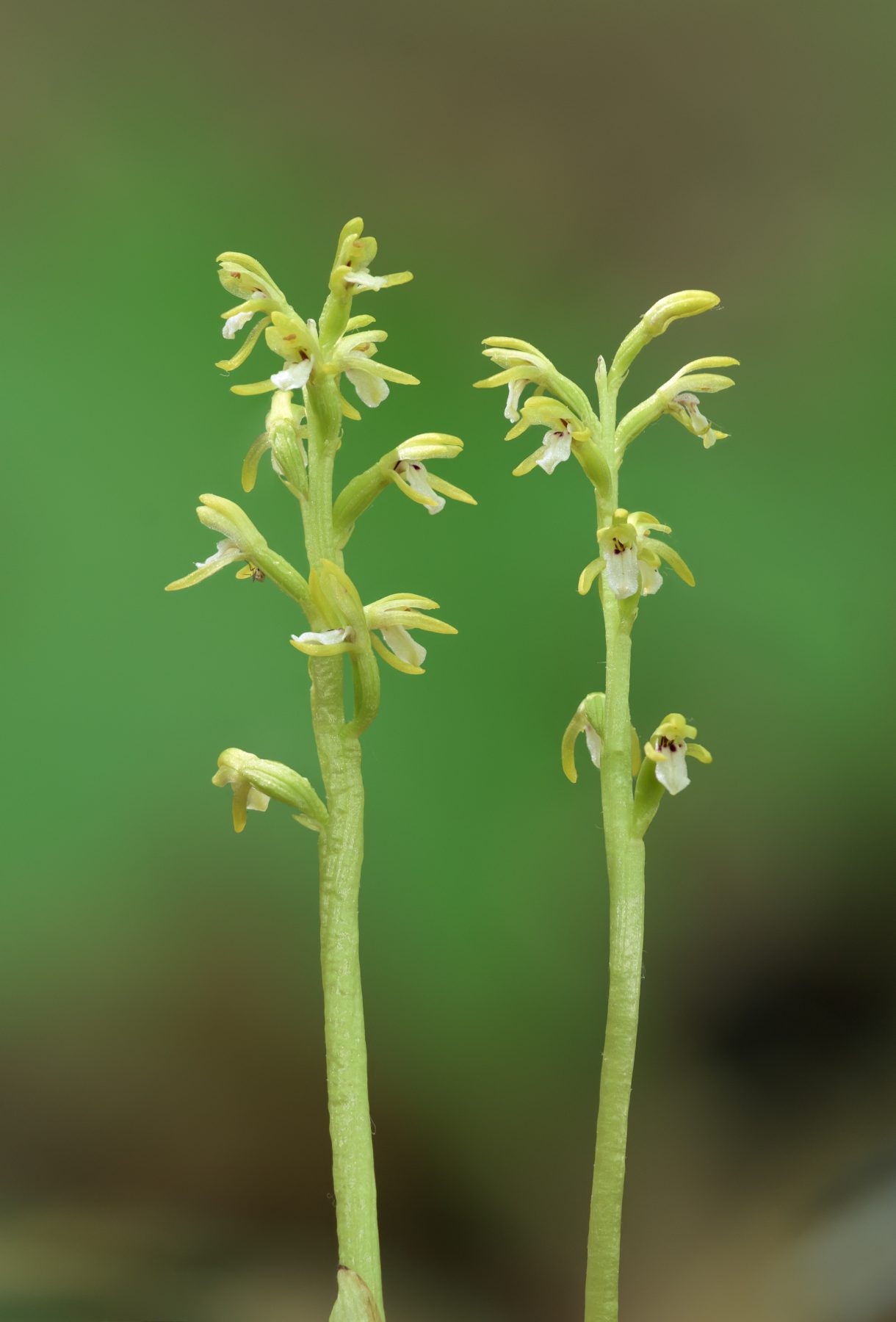
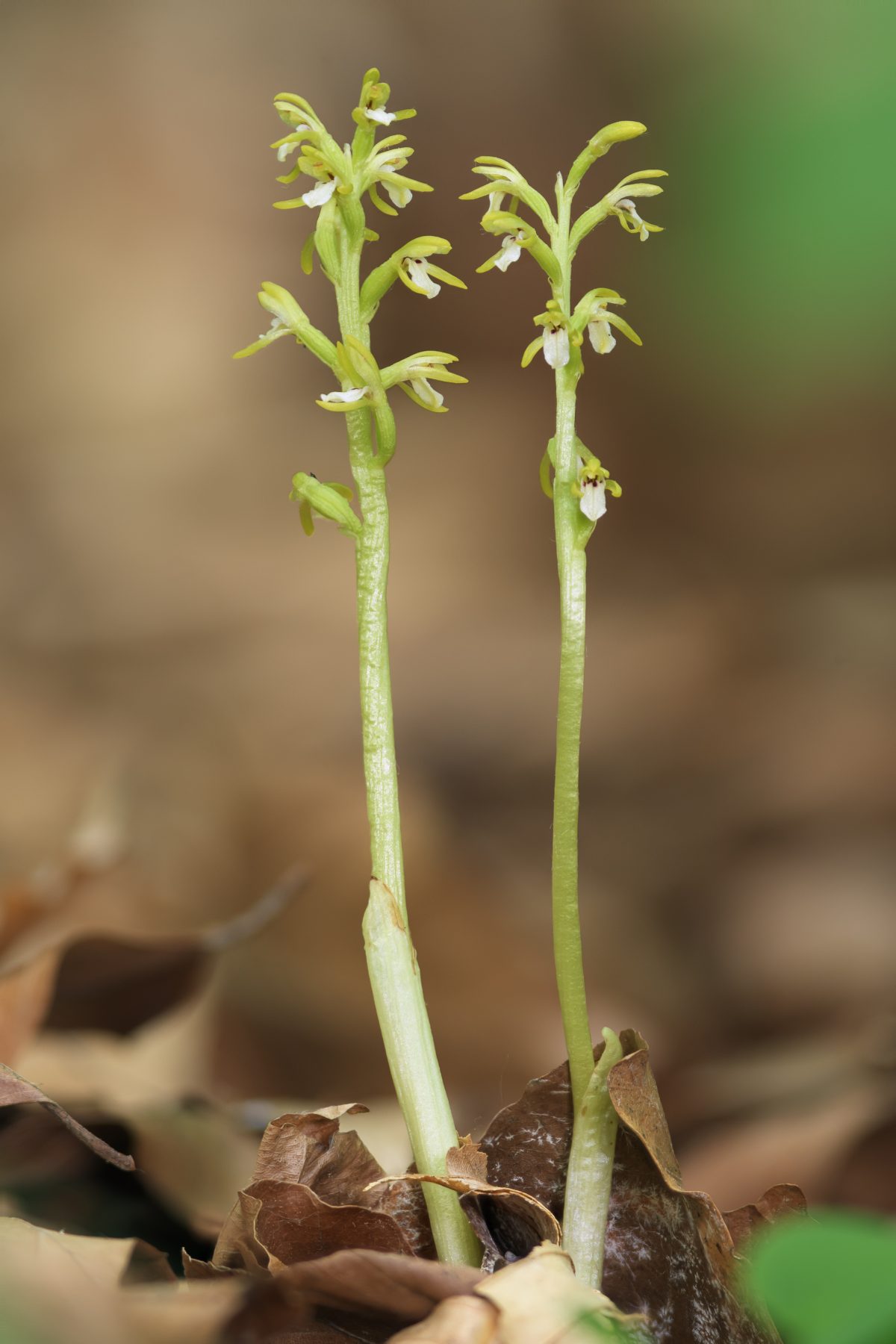
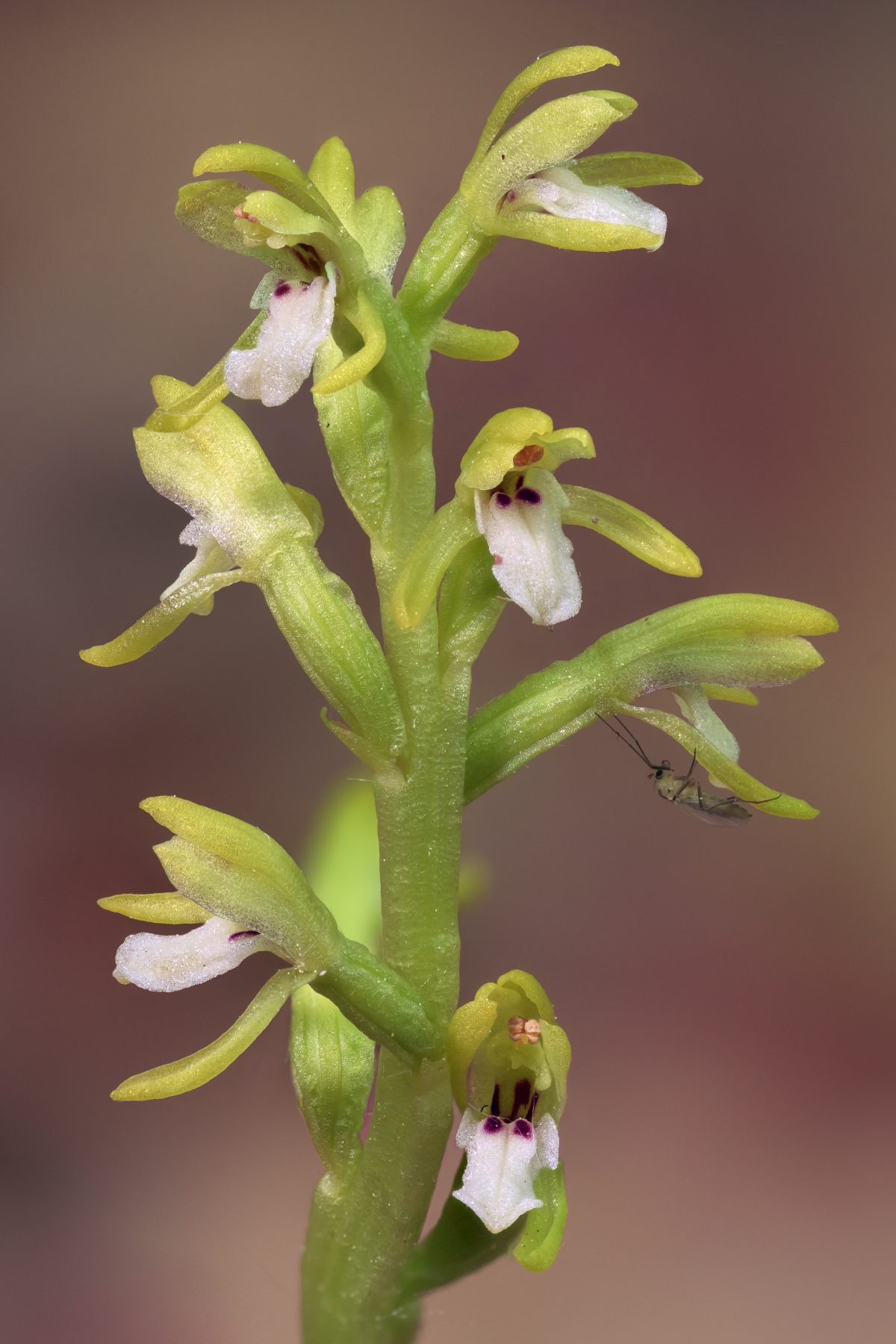
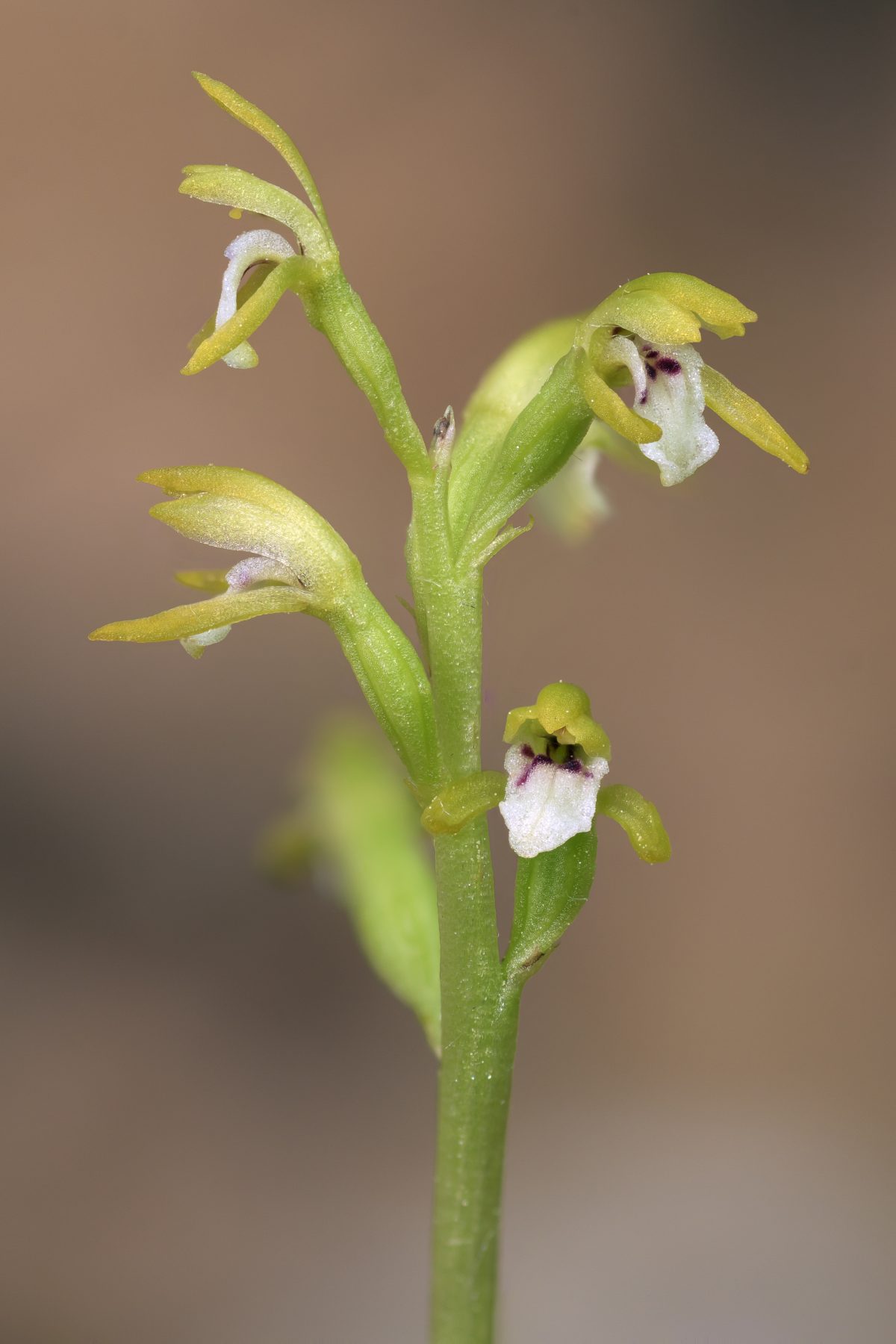
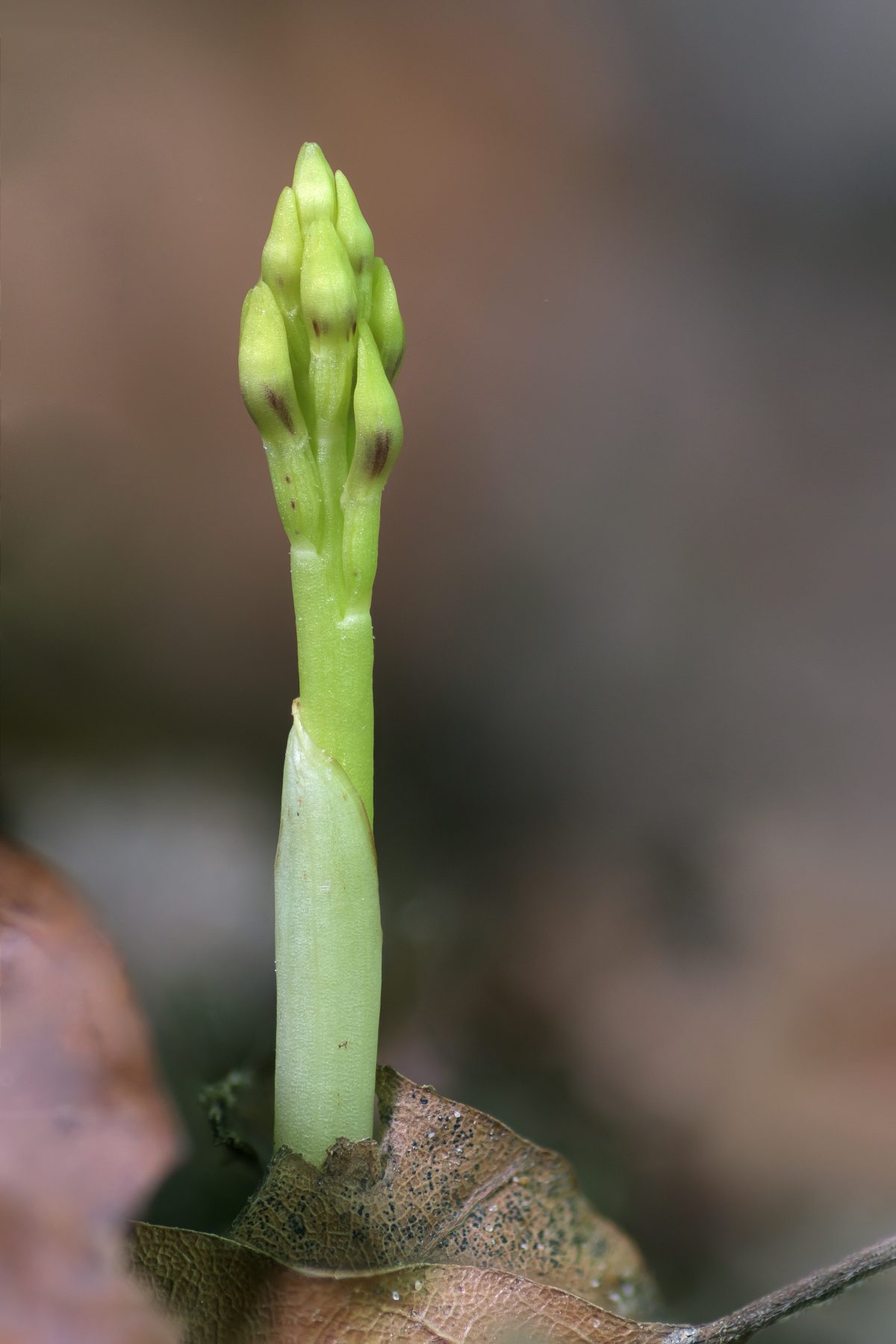
Although it takes its name from its coral-like rhizomes, the insignificant above-ground shoot, bearing only vestigial leaves, itself looks more like an upside-down root extension pointing toward the sky, ending in short, greenish-white, sometimes wine-red-brown-and-white branches. And those branches are none other than the inflorescence. Its peculiar above-ground appearance is no coincidence: our plant has entrusted a very large part of its nutrient acquisition to fungi, while photosynthesis is more of a “we’re technically still doing it” kind of affair. Consequently, it does not need to waste energy developing such unnecessary components as a respectable-sized green leaf.
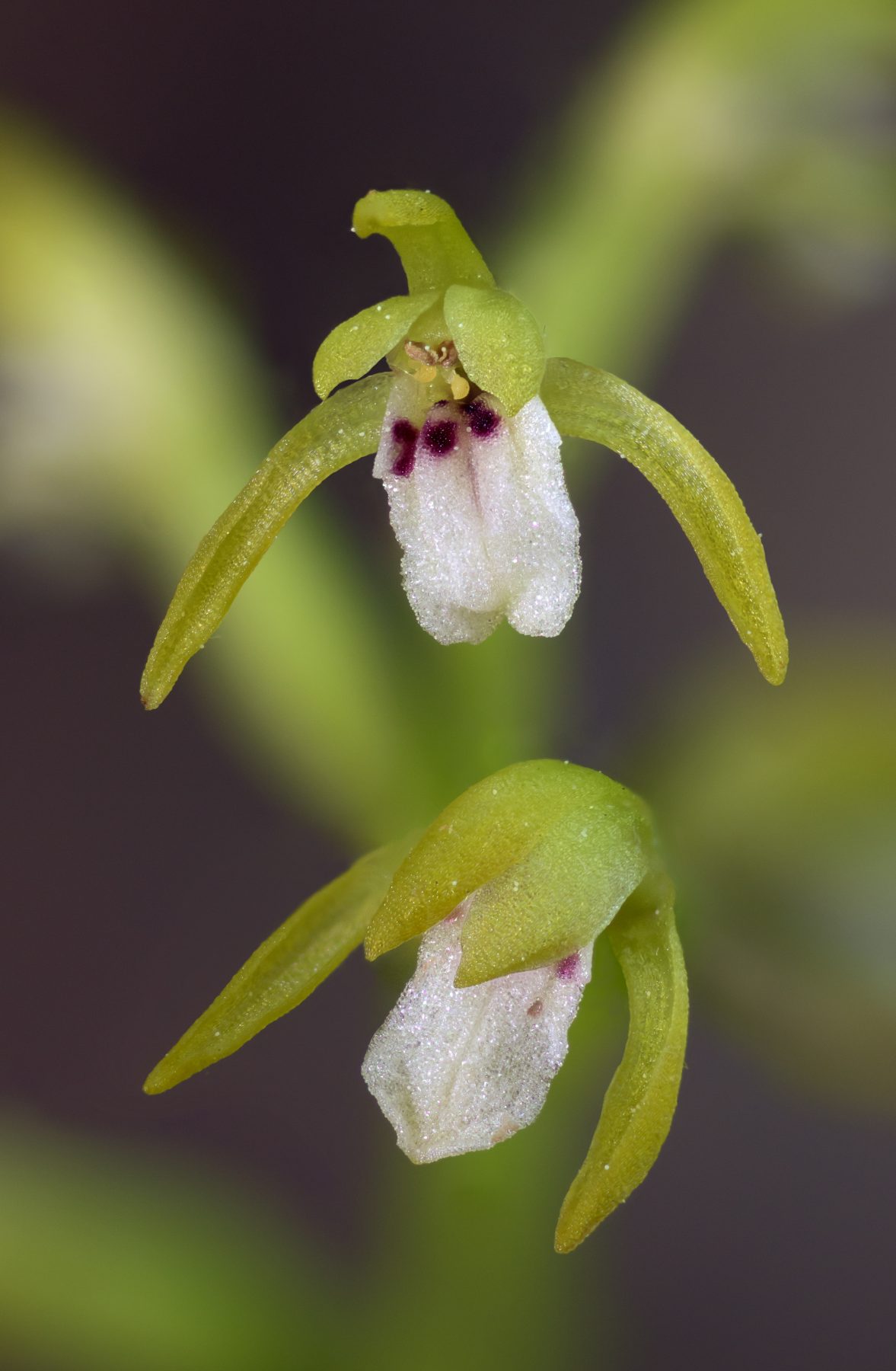
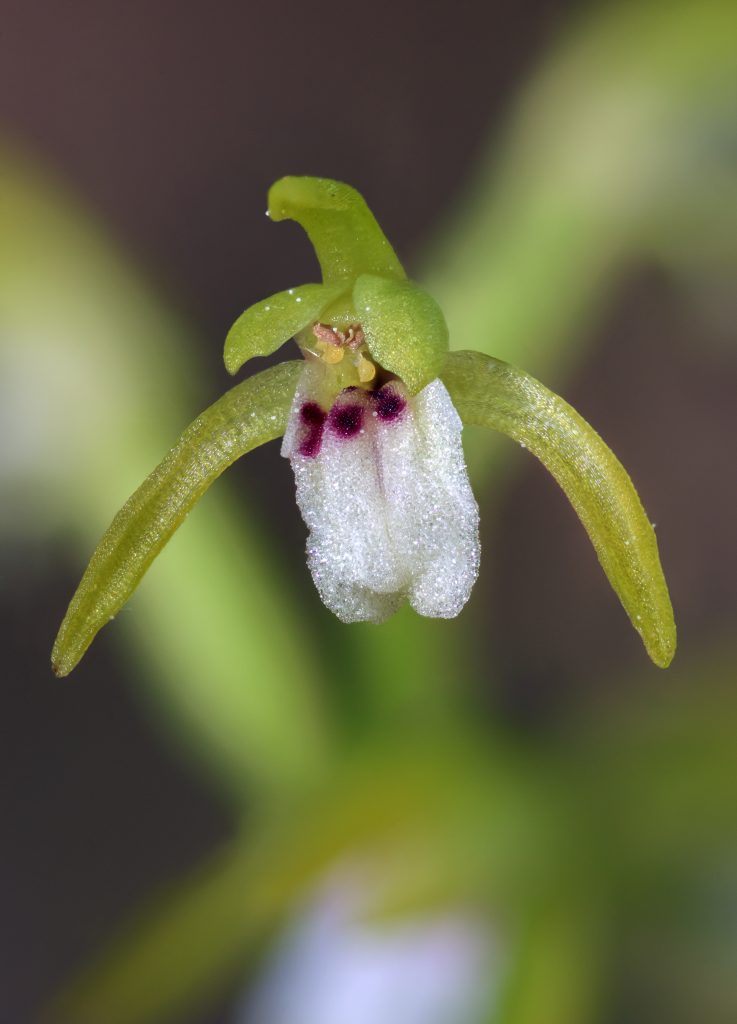
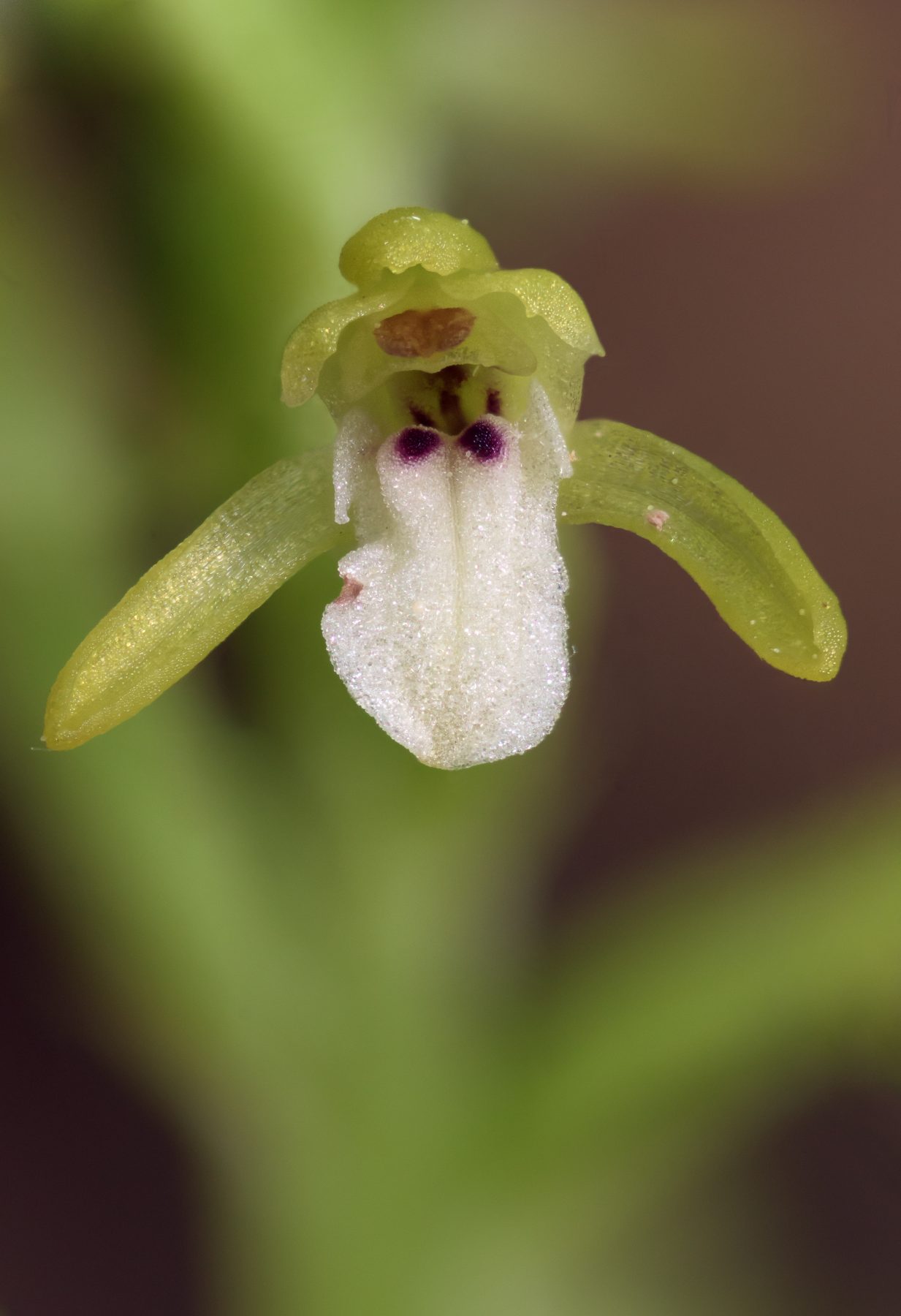
Take a close look at the individual flowers—from just a few centimeters away—and the orchid-like appearance finally emerges. Their bilateral symmetry, the elongated-ovate petals leaning together with the dorsal sepal, the downward-pointing, rather threadlike and lance-shaped lateral sepals, and the snow-white lip, sticking out like a protruding tongue and decorated with tiny crimson spots, already bear a striking resemblance to the floral finery of the “big bothers”—that is, the human-scale orchids, such as the Orchis purpurea.
Tiny reproductive organs naturally call for tiny pollinators, and the plant has adapted accordingly over the course of evolution: only small beetles, flies, and hymenopterans are capable of carrying out this noble task. Or, if they happen not to wander by, the coralroot simply takes care of the matter itself, switching to self-pollination mode (facultative autogamy). After fertilization, the swollen seed capsules droop downward, producing the characteristically nodding, fruit-bearing appearance of the species.
In Hungary, the main flowering period falls in May in the few central and northern areas where it occurs—the Mátra, Bükk, and Aggtelek Karst, as well as, somewhat insularly, the Vértes—so it can rightly be considered particularly rare. Elsewhere in Europe, it occurs wherever cool conditions prevail, mainly in mountainous regions and, far to the north, across the flat taiga and tundra. Here in Hungary, beech forests are its preferred habitat, while elsewhere it is quite happy with conifers or even cold-tolerant bushy willows. It is also native to North America and Asia, so we might call it something of a northern cosmopolitan.
Throughout Europe, it is threatened by intensive logging, and Hungary is no exception; we can safely add damage caused by game animals to the list as well. We can also be fairly certain that this species will not be spared by the increasingly warming climate. Its habitat in the Vértes, an entire steeper hillside, began to move in a landslide-like fashion and shifted downslope, but thanks to the relatively orderly nature of the movement, the plants themselves survived. Its official nature conservation value in Hungary is HUF 10,000.
Back to the genera Corallorhiza ↶