| Etymology: | From the name of the English amateur botanist, Charles Carmichael Lacaita (1853-1933) who collected the type specimen in 1904 |
| Distribution: | Middle and southern part of Italy, Sicily, Island of Vis in Croatia (extinct on Malta) |
| Flowering time: | mid-IV. to mid-VI. |
| Taxnonomy: | O. oxyrrhynchos group |
| Similar species: | – |
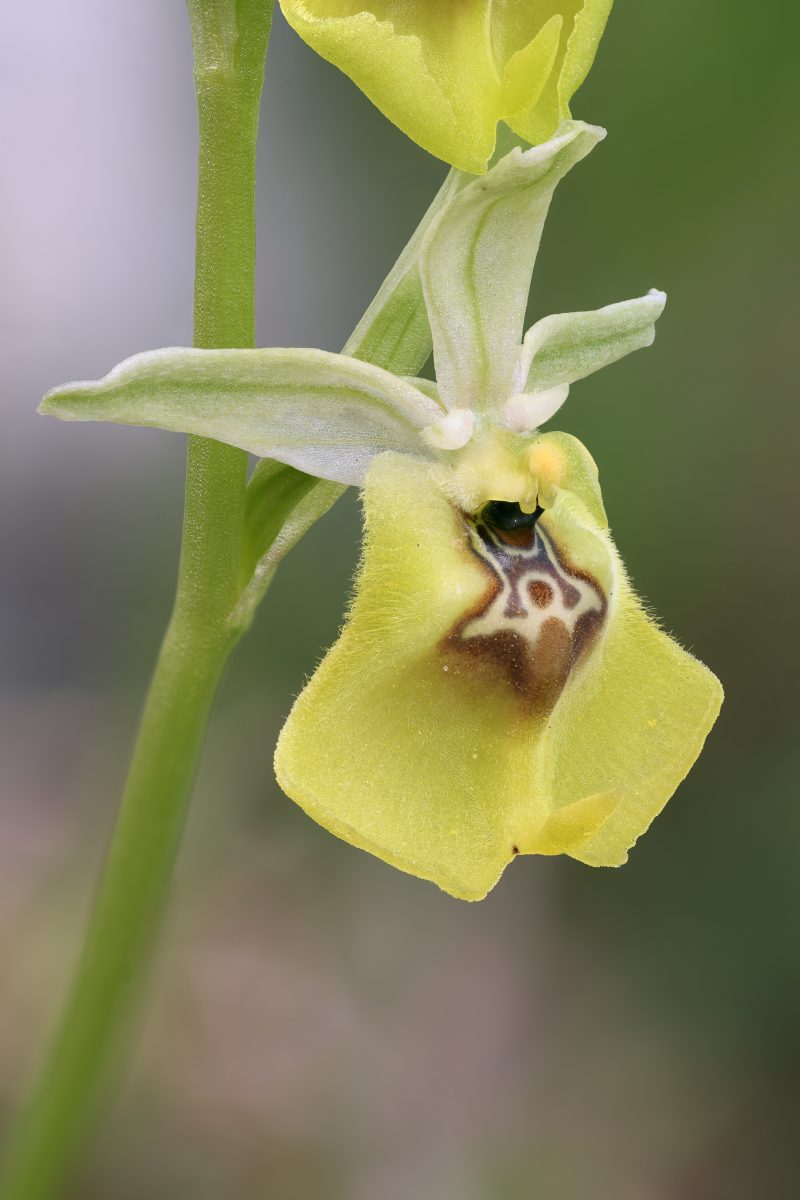
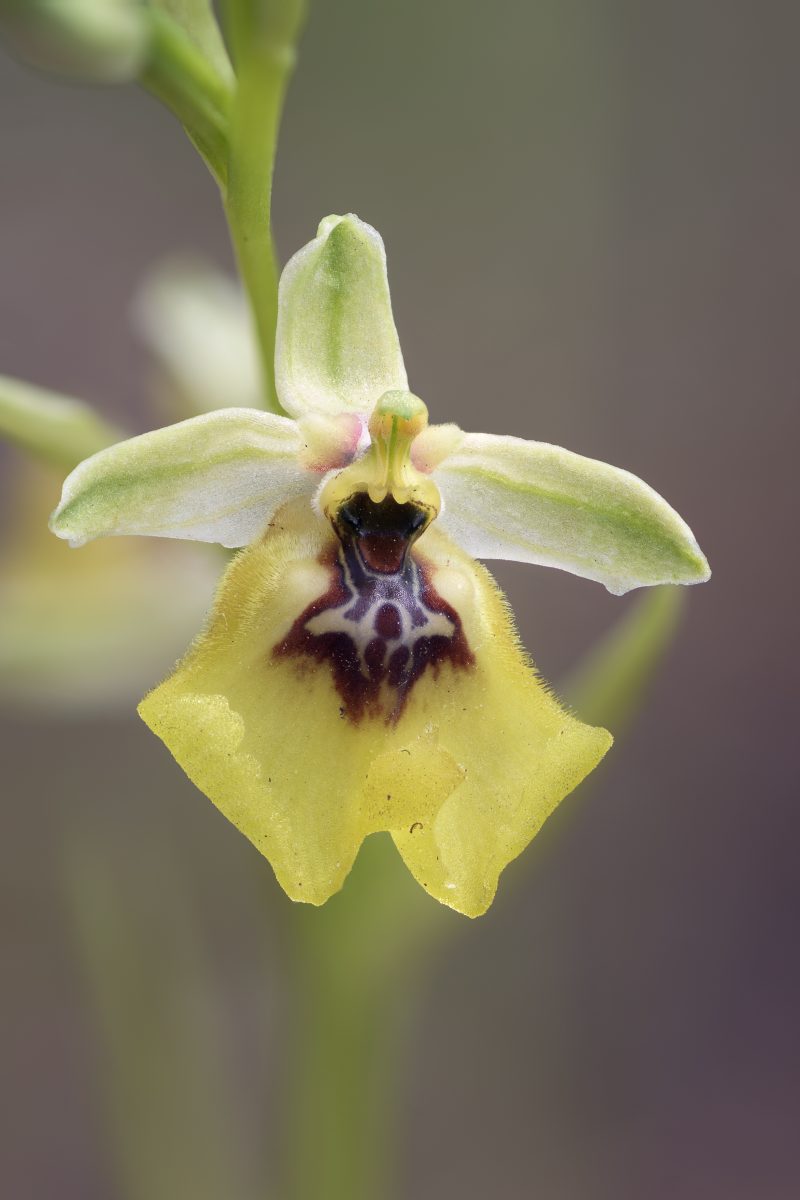
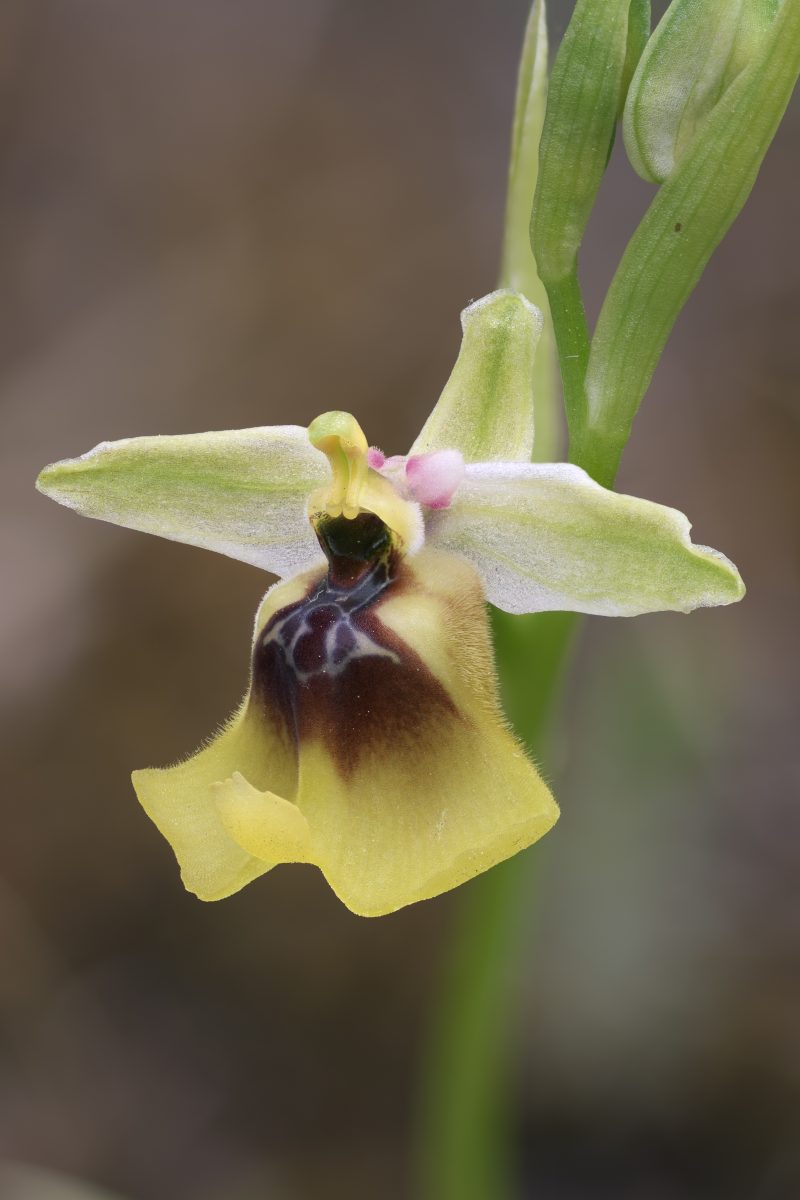
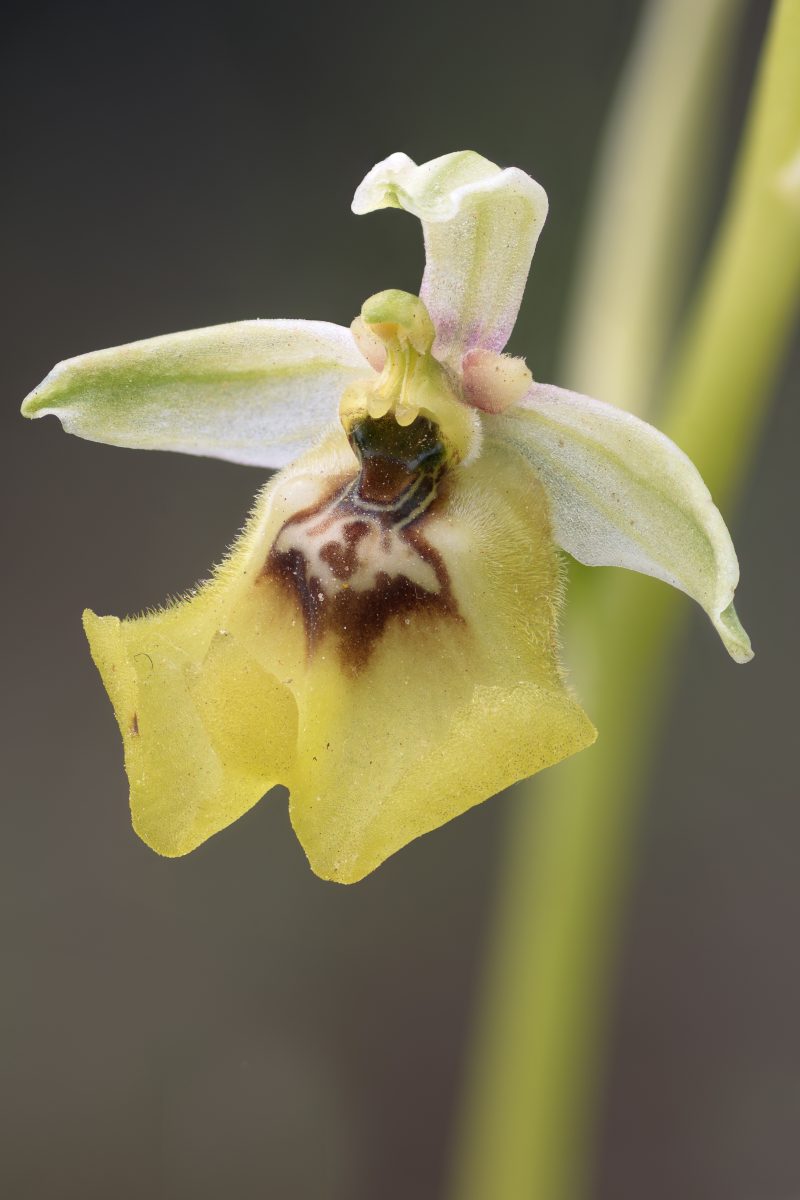
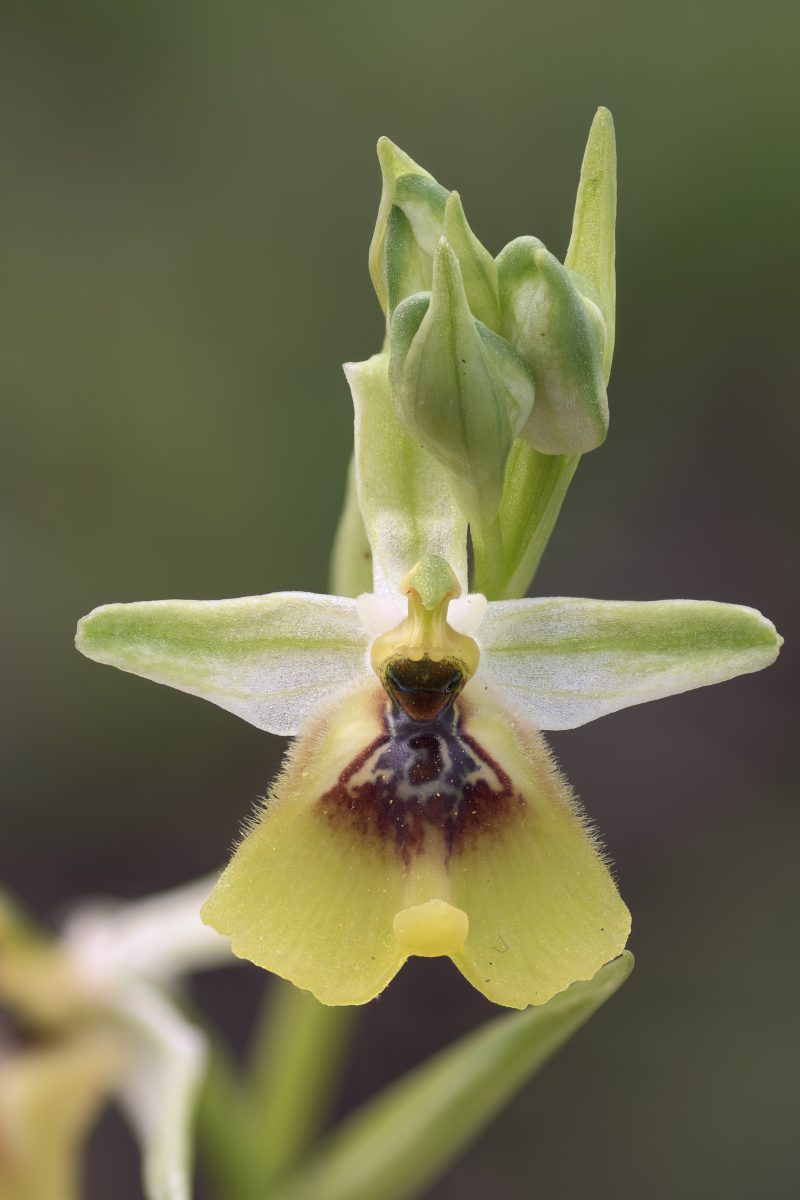
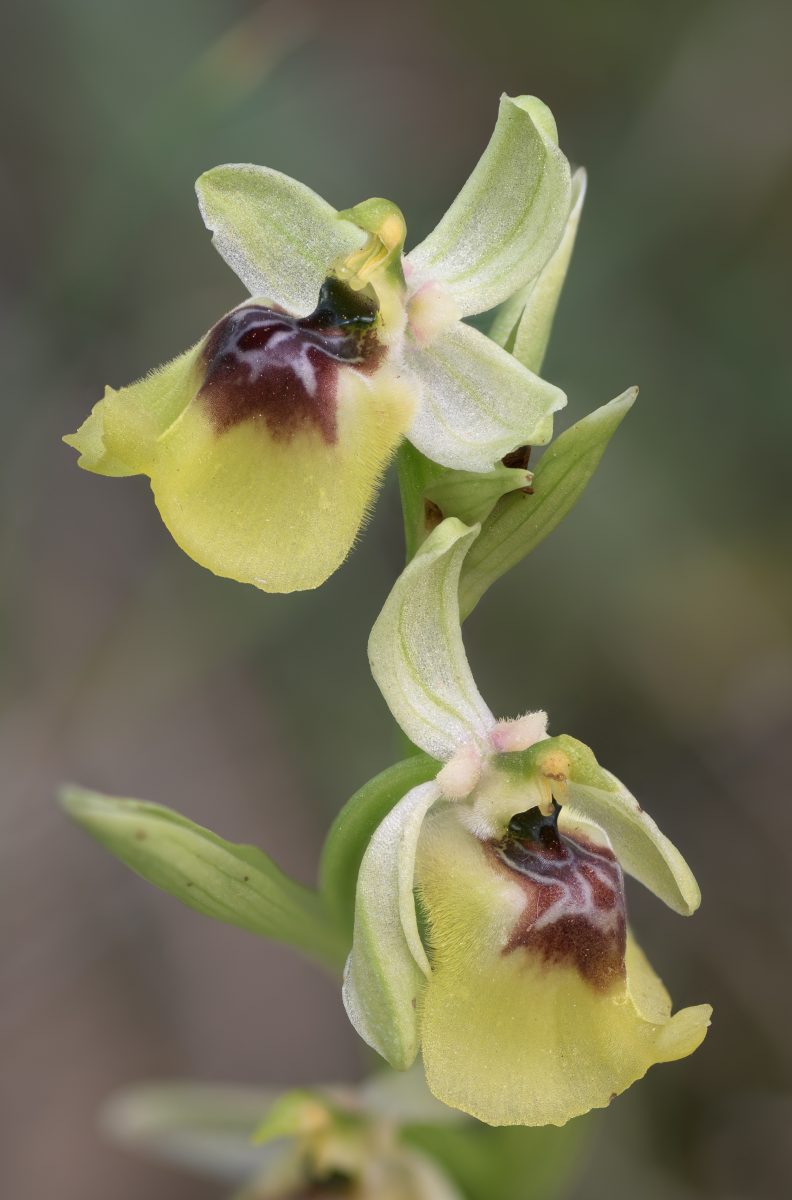
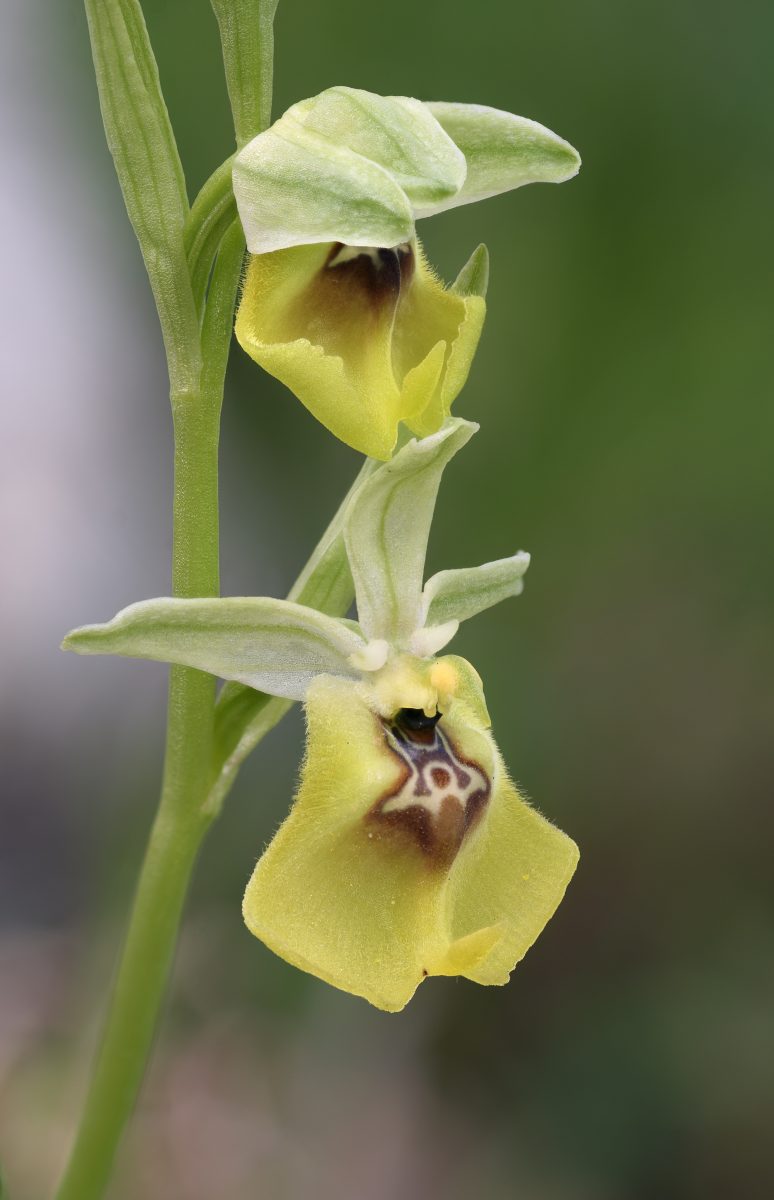
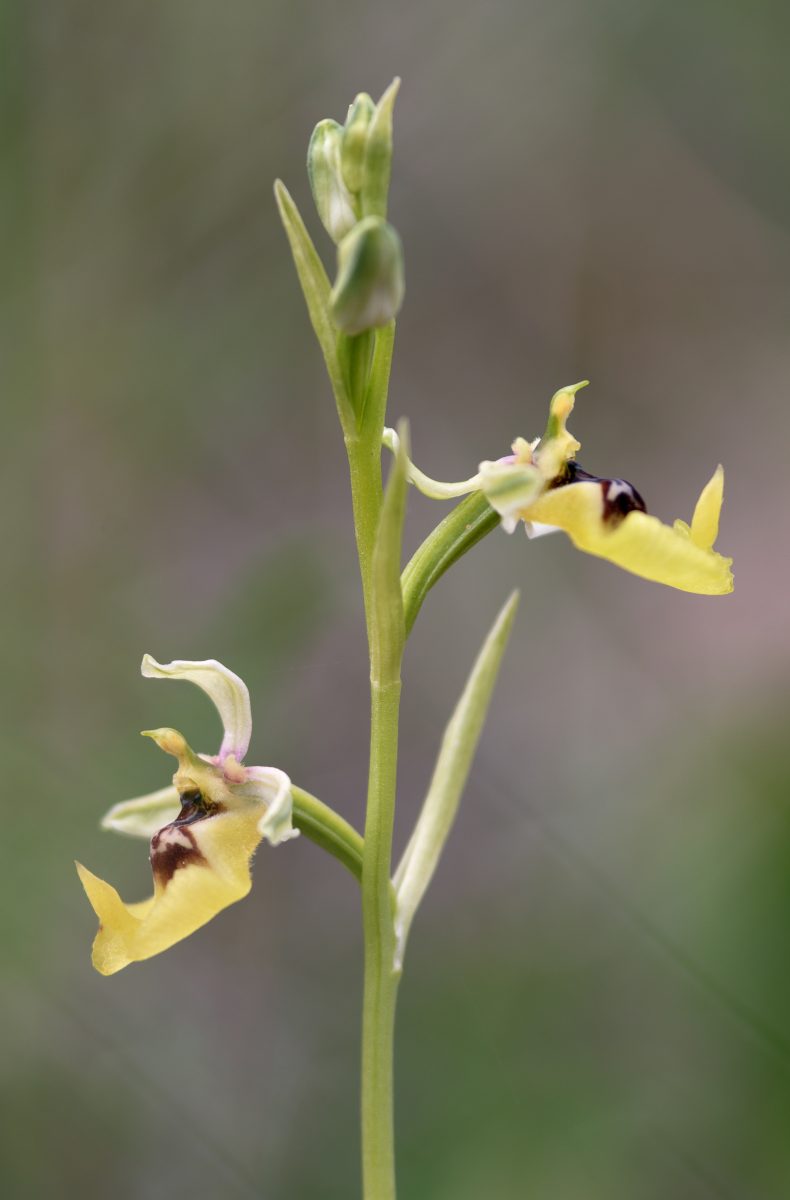
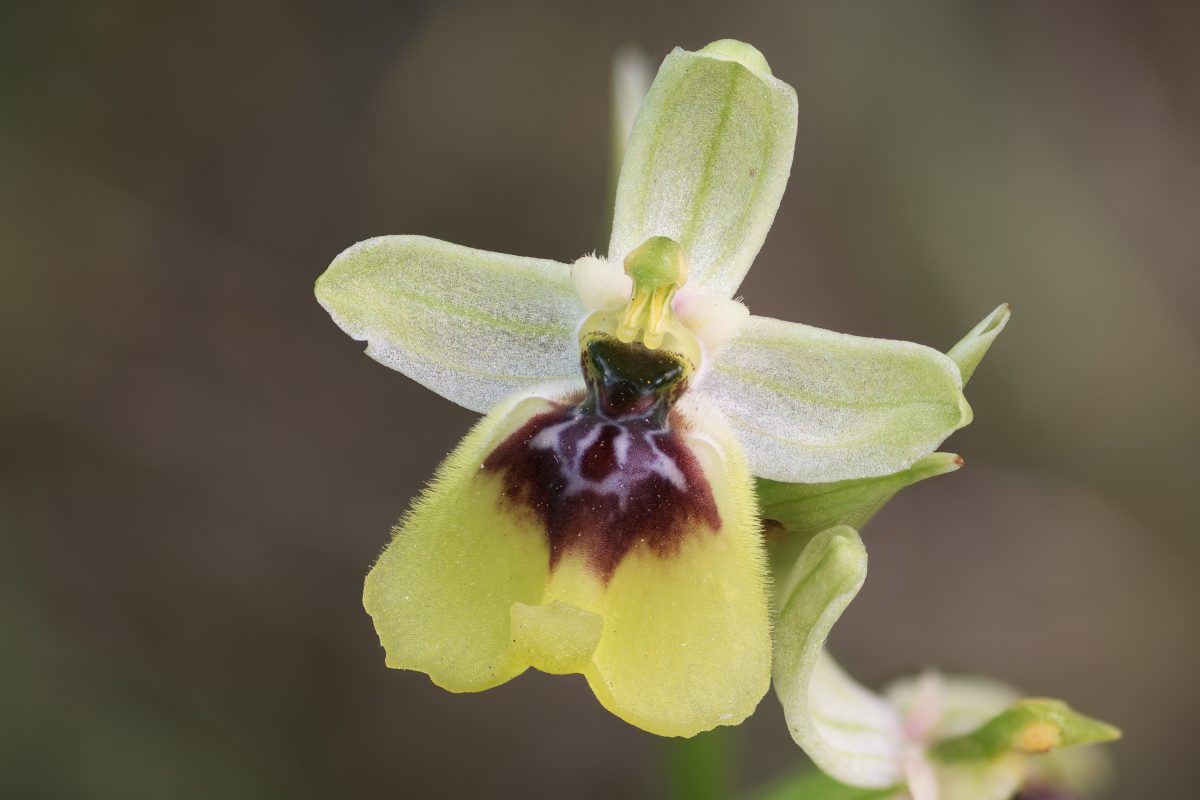
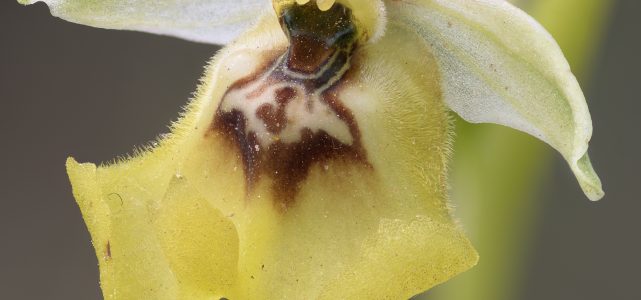
Ophrys lacaitae has a magical effect. With looks like these, it’s hardly surprising: it seems as jaundice has almost completely swallowed up a large, trapezoidal, fuciflora-type labellum, leaving behind just a small, breastplate-like patch of pattern for show—but even that has been almost entirely absorbed by this all-conquering lemon yellow. Add to this the equally shrunken basal field, the mosquito-like elongated pseudoeyes, and the erect, oversized labellum appendage inherited from its close relative, Ophrys oxyrrhynchos. As my friend Robi Lukács puts it, it’s unreal—and it really is. Encountering these plants in the field is a completely unexpected experience: suddenly, these large yellow trapezoids emerge from the undergrowth, and it’s not something we’re used to seeing as Ophrys hunters.
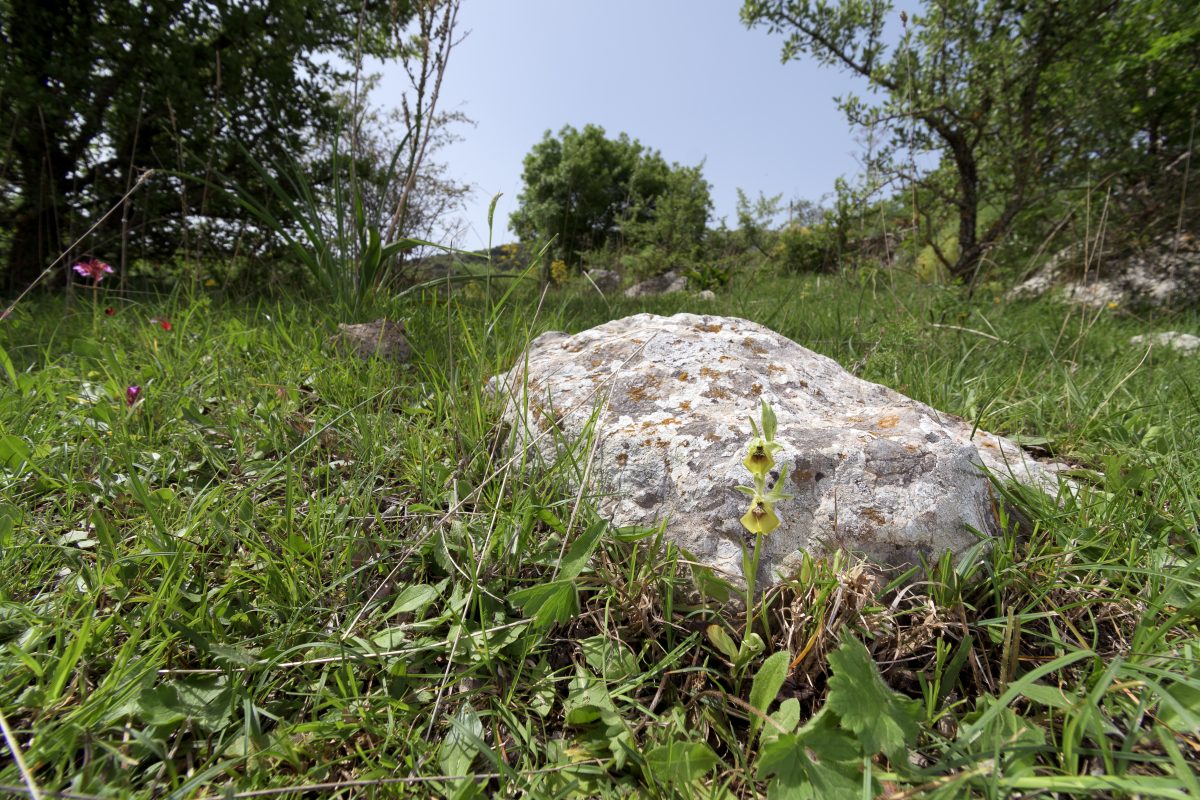
Their allure is so powerful that more than a few Central European orchid fanatics are willing to “twitch” this unmistakable species—through making the Adriatic island of Vis their nearest rendezvous point solely to see it. Those living in the southern half of Italy, on the other hand—for example, in Lazio, Campania, or Basilicata, or in Sicily—are in luck: they may only need to venture out on a fine day in May to the nearest pasture, roadside, olive grove, or patch of garrigue, where these oversized yellow goblins will be grinning back at them.
We, as distant enthusiasts from the Carpathian Basin, chose Sicily from among the possible destinations for our first encounter and a photo shoot with our model in late April. That’s when it begins to unveil its charms there, while the main orchid season is still more or less underway, making it possible to combine our celebrity hunt with the island’s promised orchid bonanza.
Well, the bonanza never materialized. We happened to hit a rather lousy year, when we had to hunt down practically every single species one plant at a time across a Sicilian landscape that had been grazed to within an inch of its life, fertilized haphazardly, and looked barren and desolate—yet remained spectacular from a bird’s-eye view. Ophrys lacaitae wasn’t exactly abundant either, although that’s not particularly characteristic of the species in the first place. Still, over the course of a week, we managed to track down a handful of plants, mostly dwarf-sized thanks to the harsh spring. (According to the dream books, incidentally, this species actually thrives on intensive grazing.)
I certainly wouldn’t say I’m disappointed with the Lacaitae project, but neither am I fully satisfied. So, somewhere down the road, there will have to be a sequel…