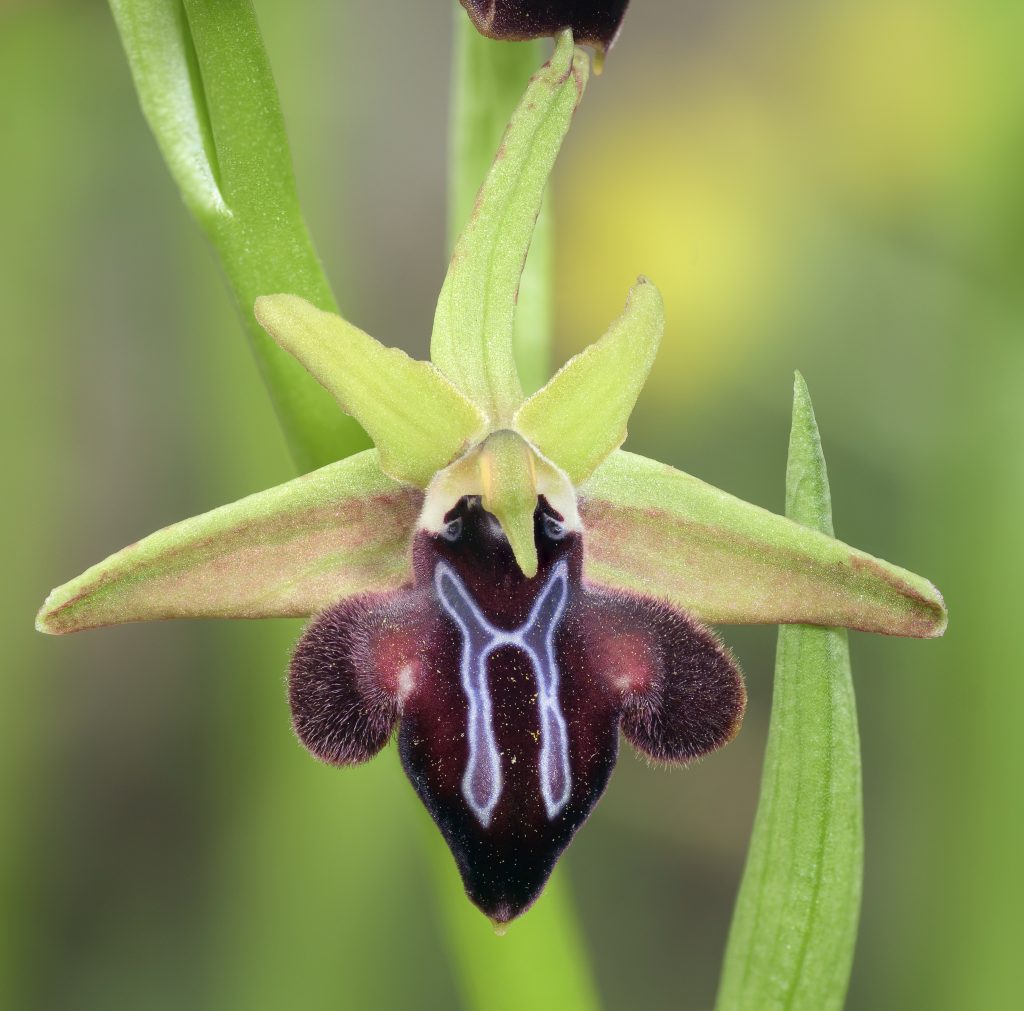
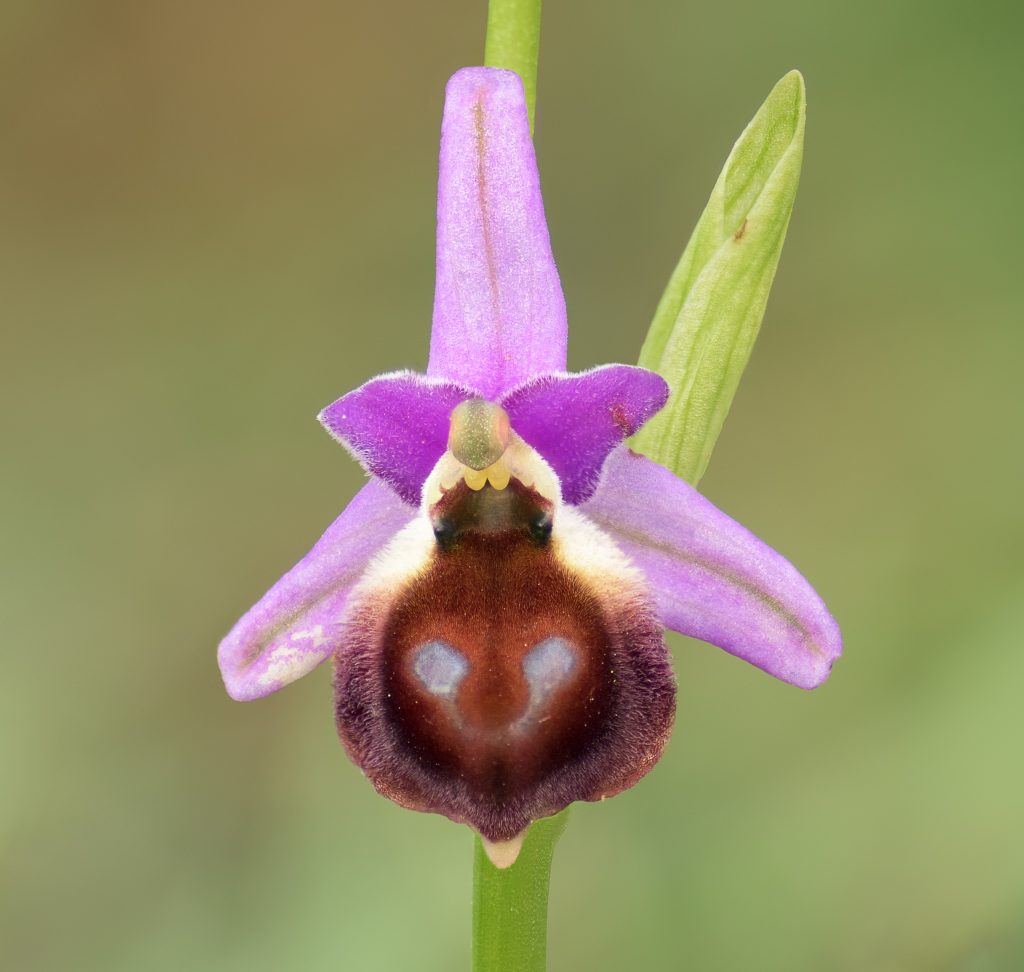
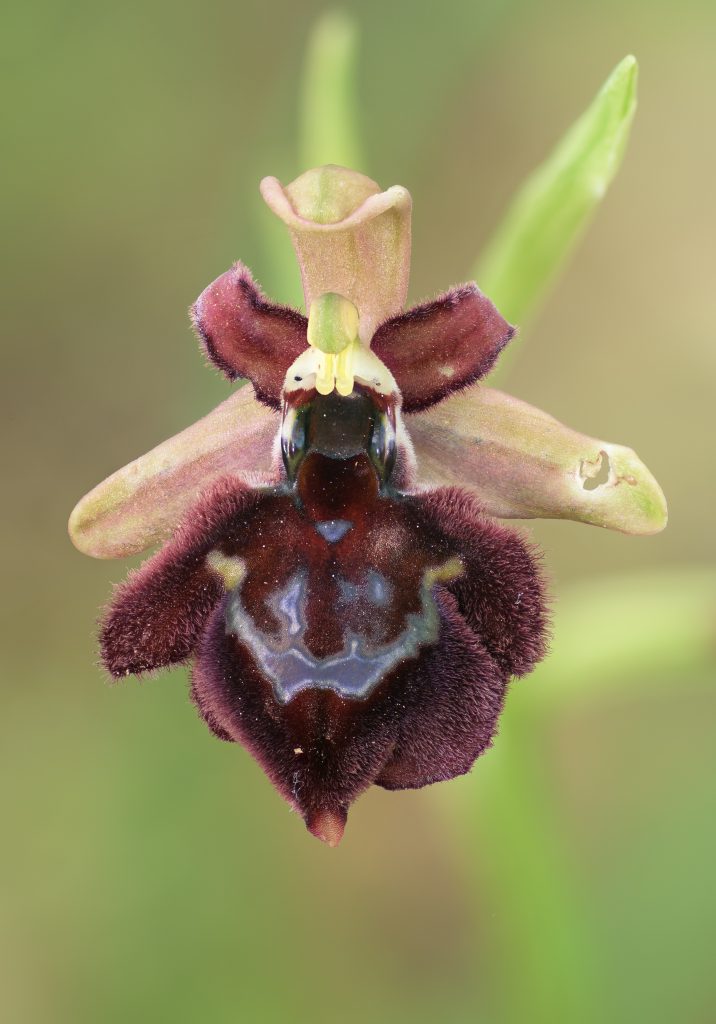
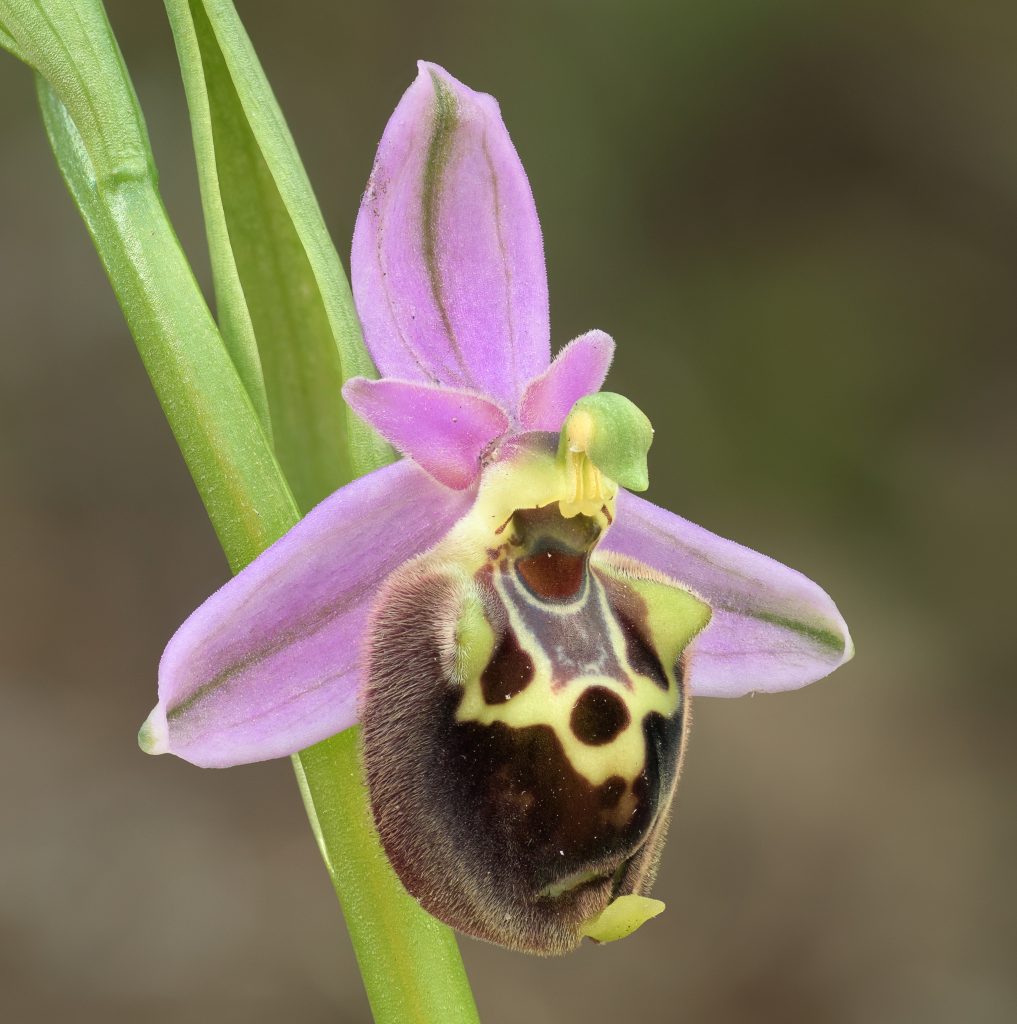
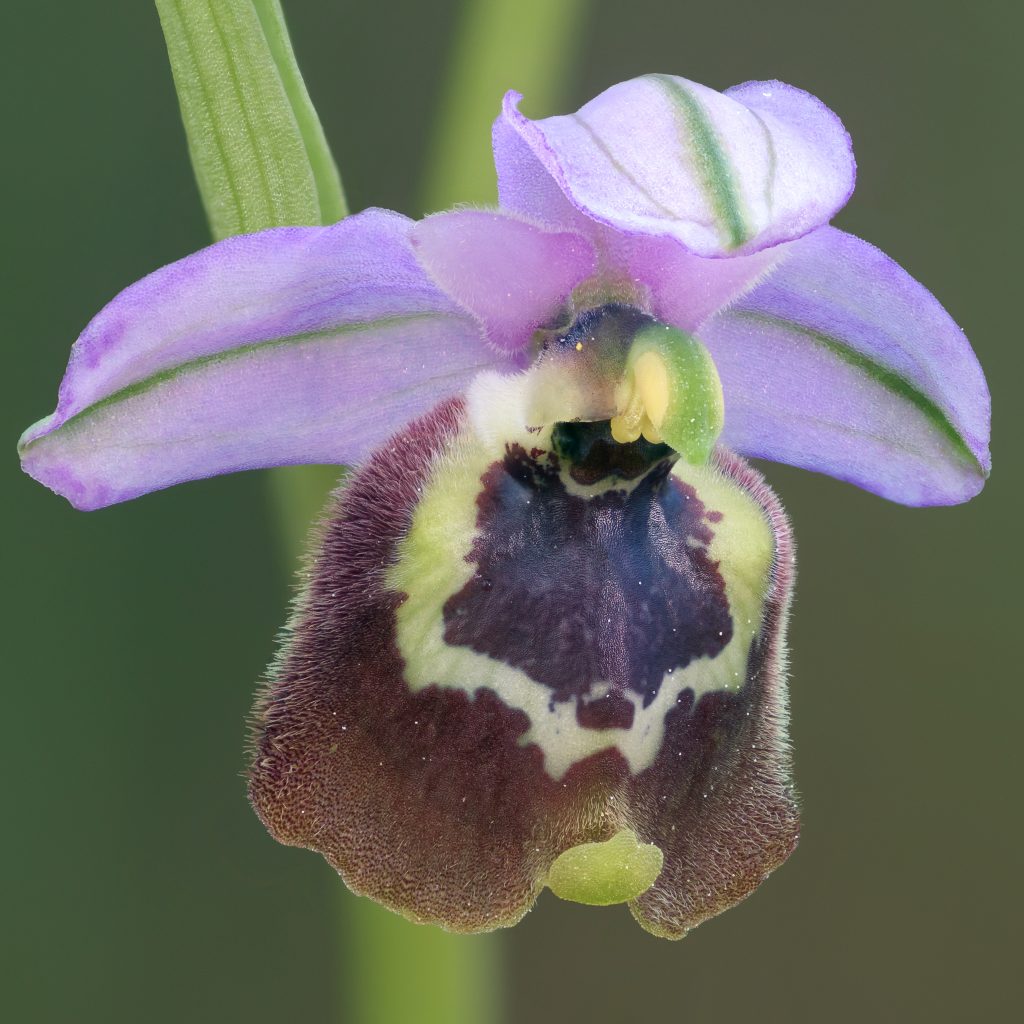
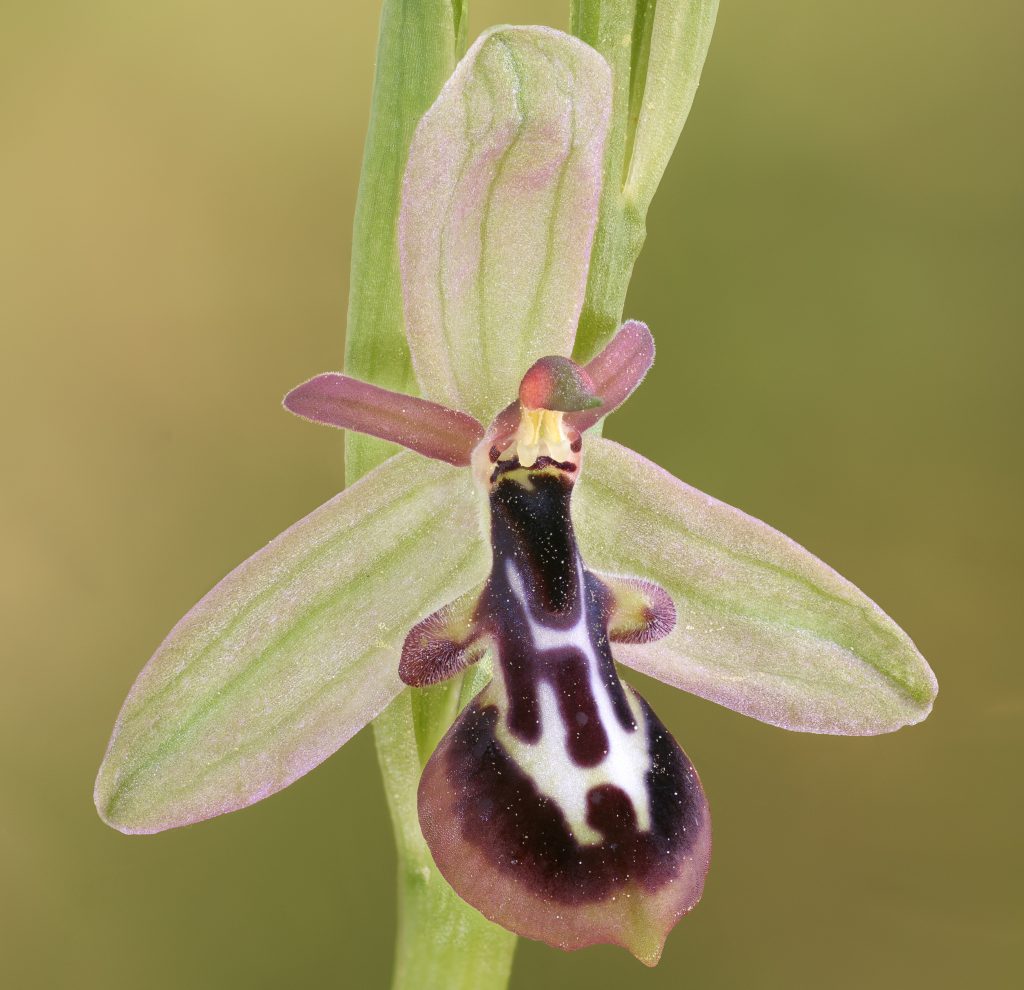
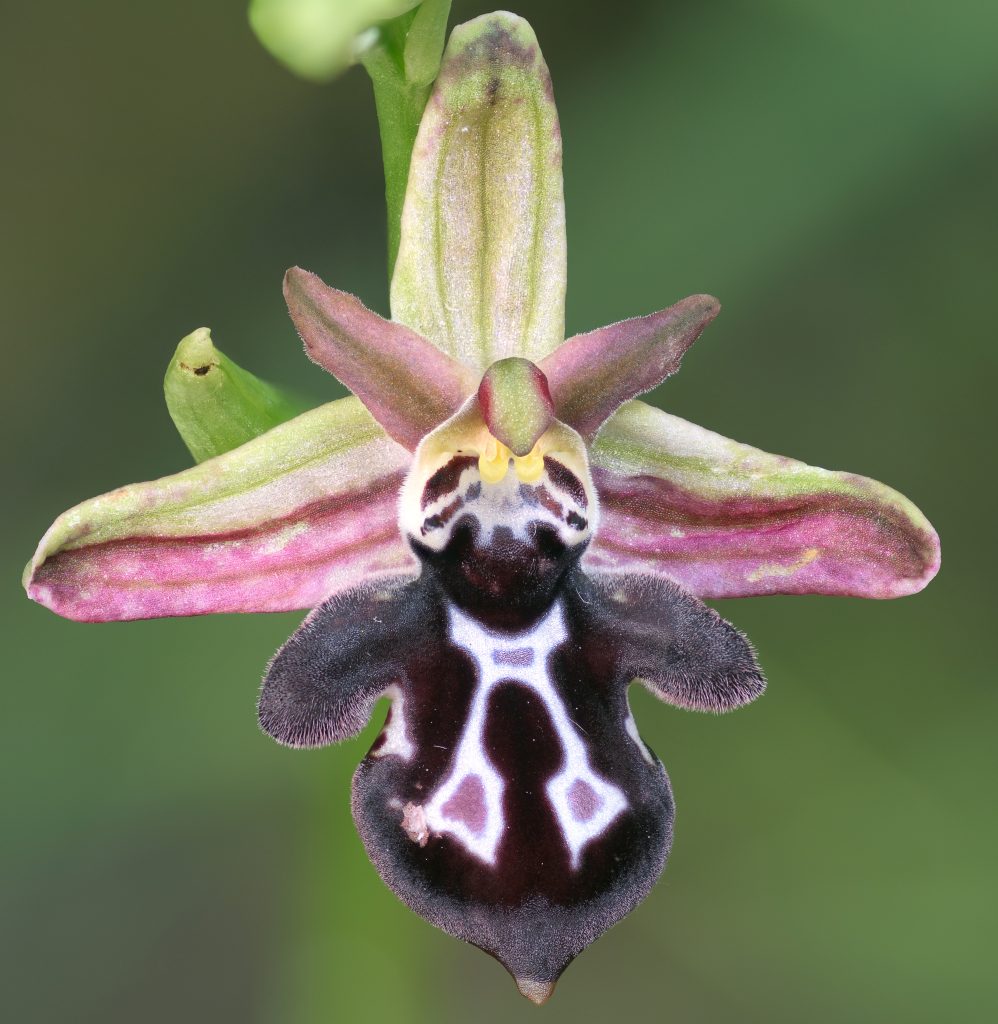
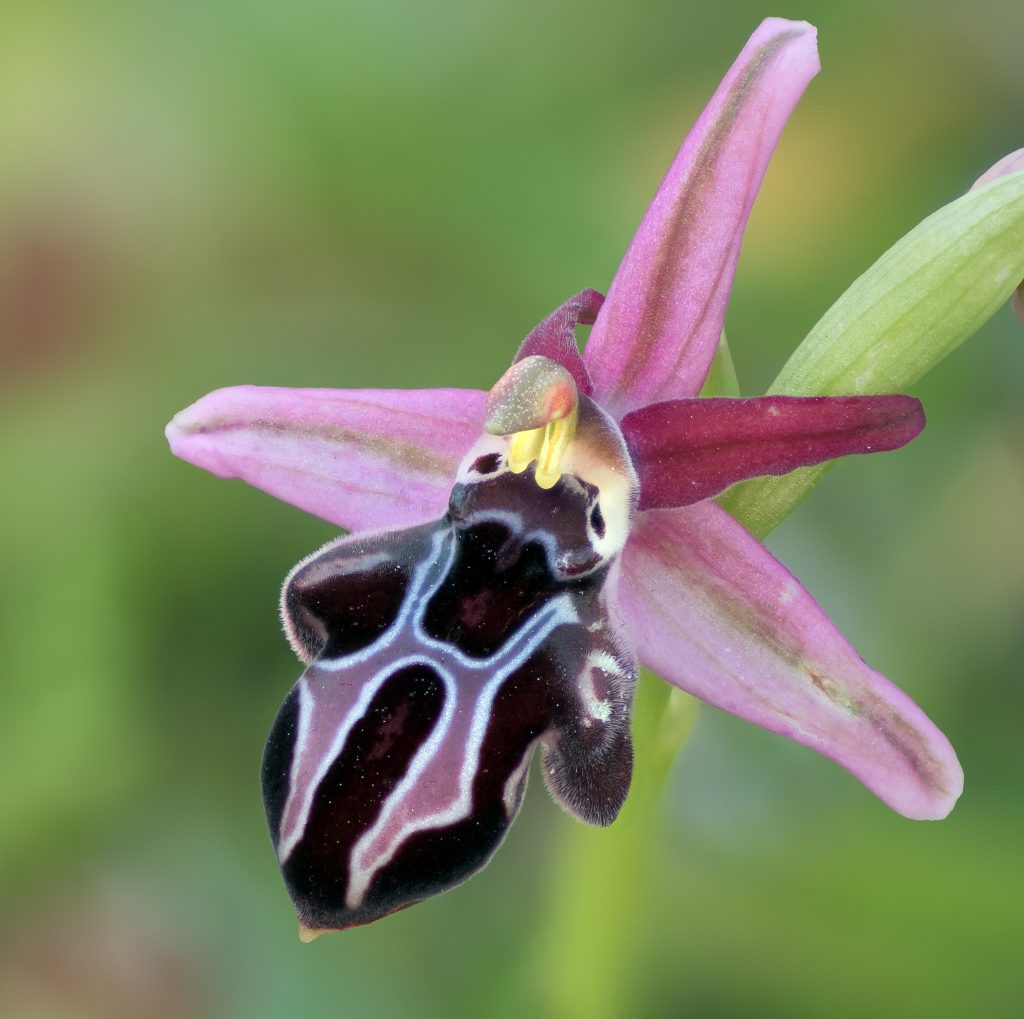
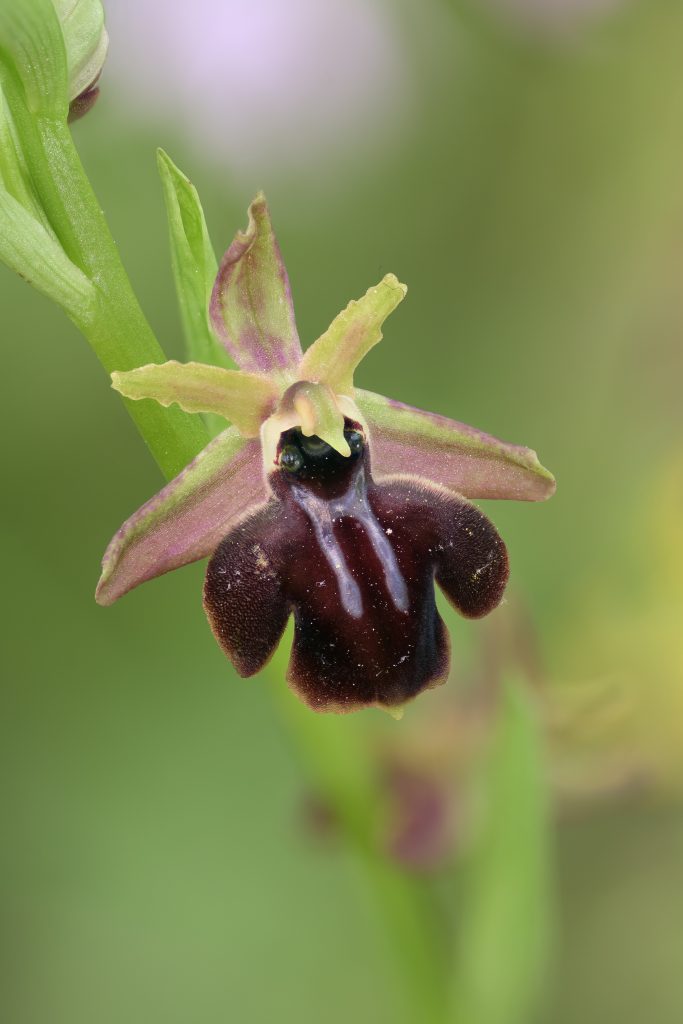
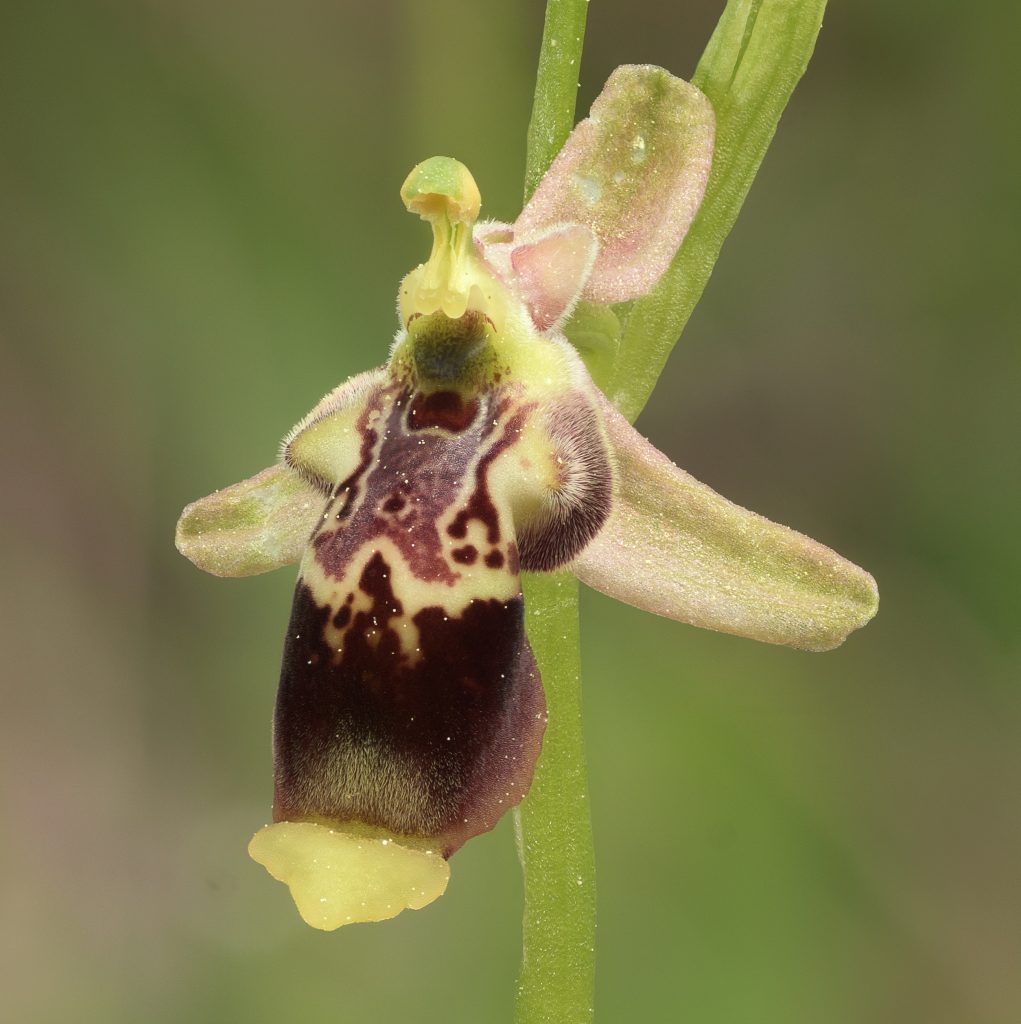
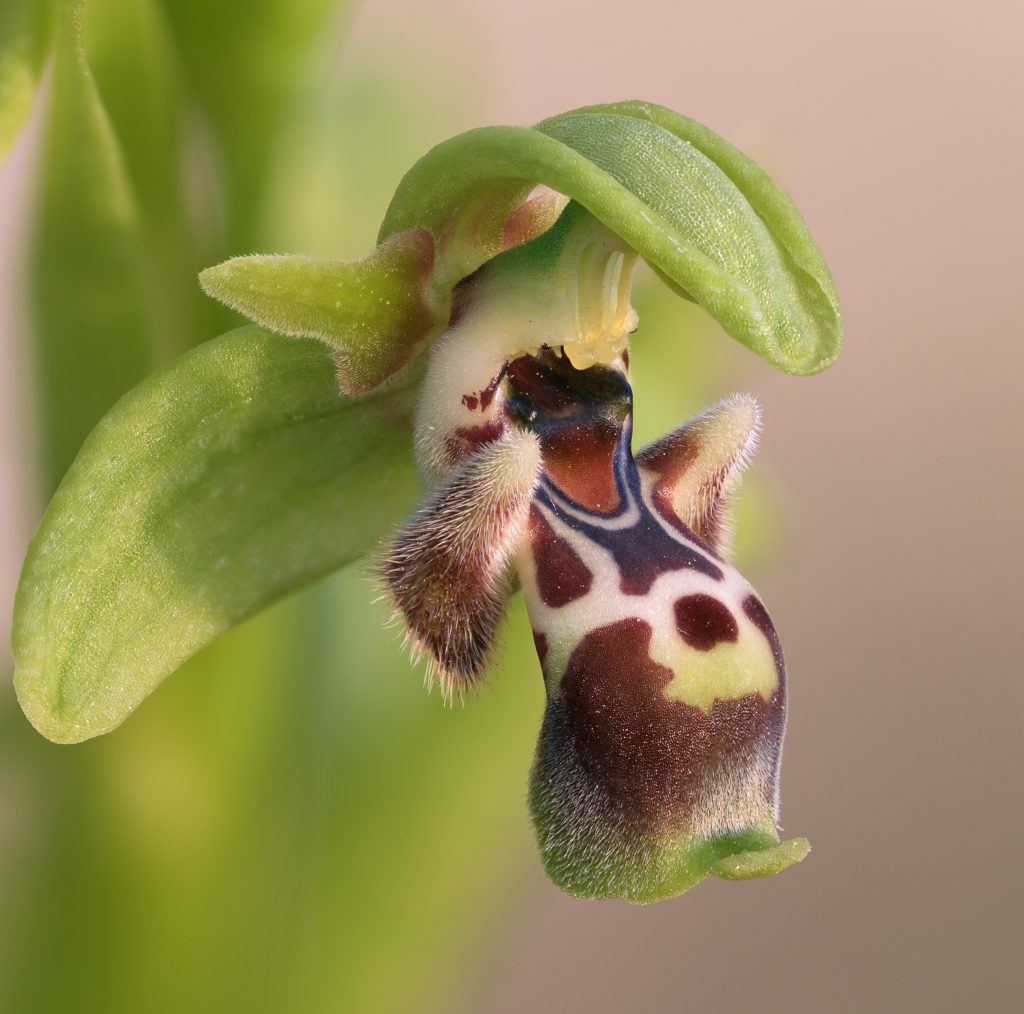
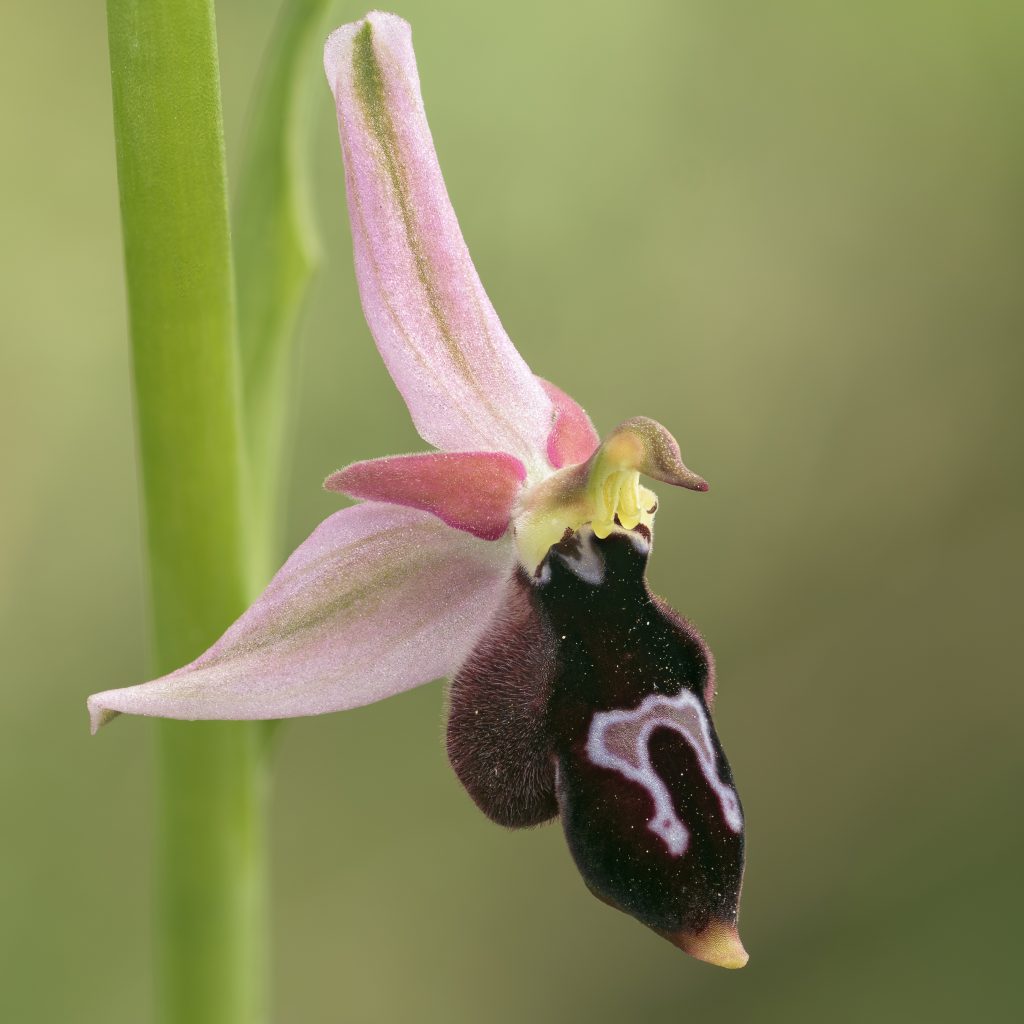
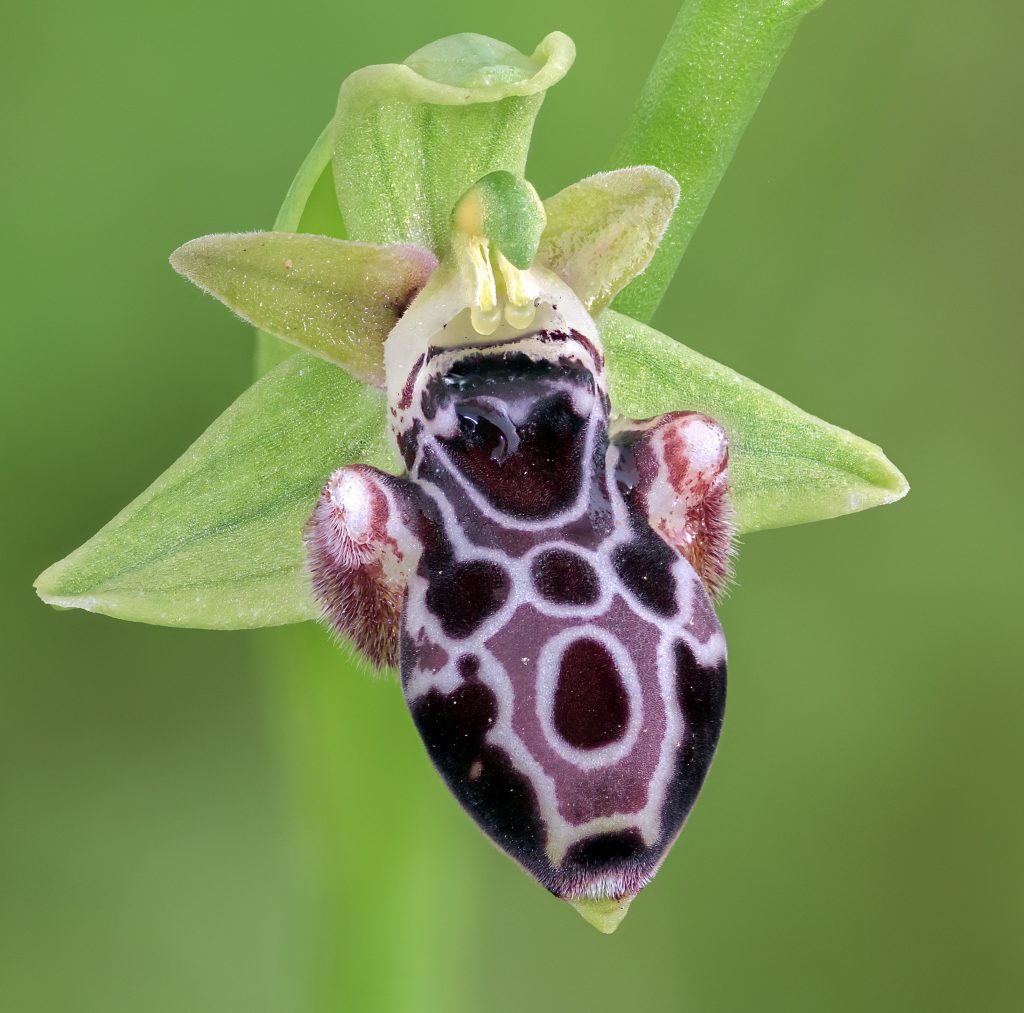
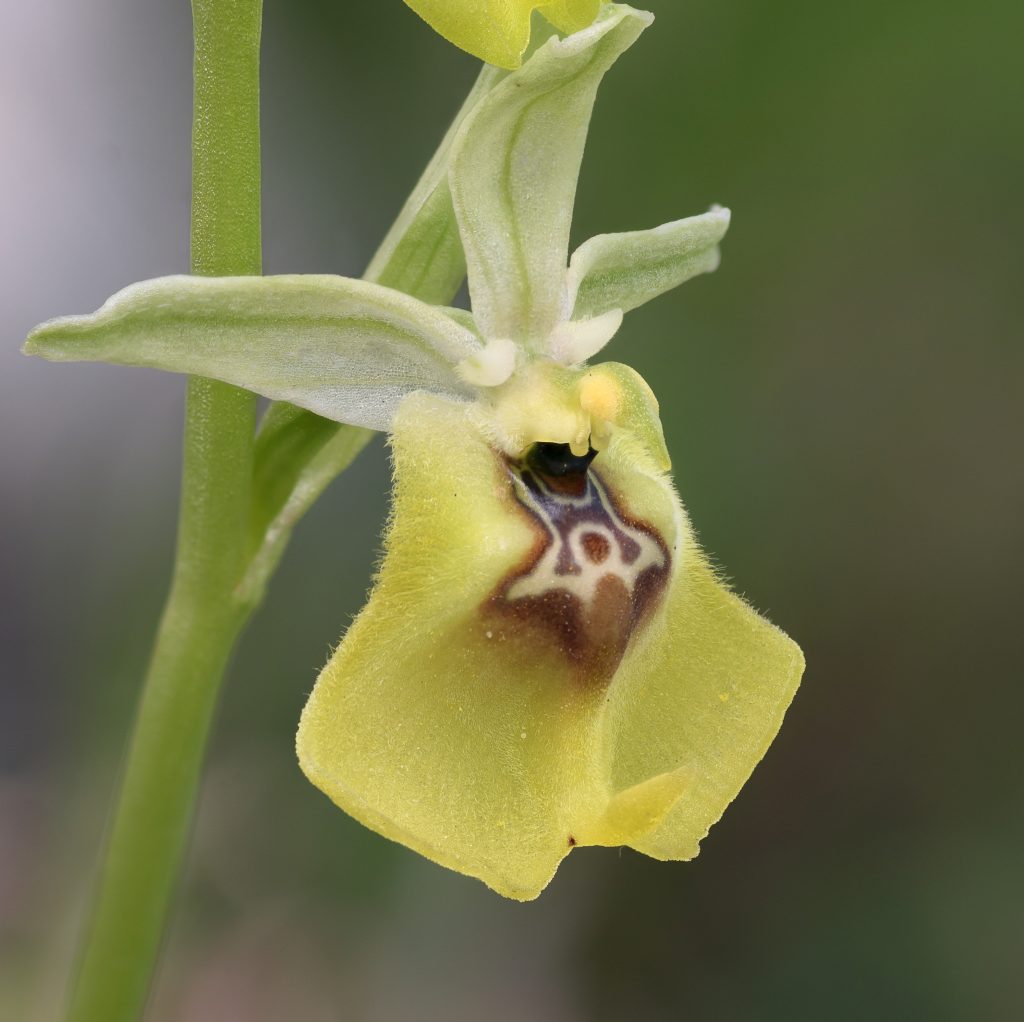
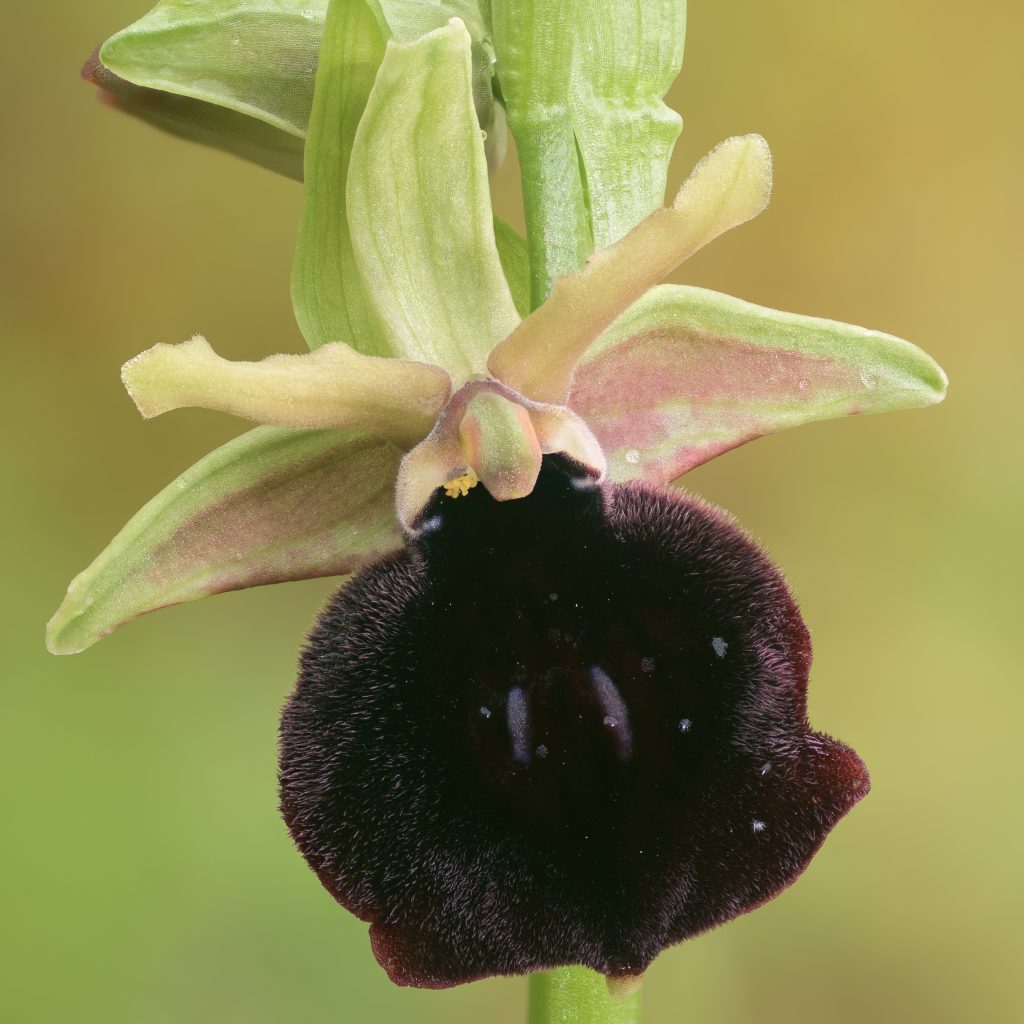
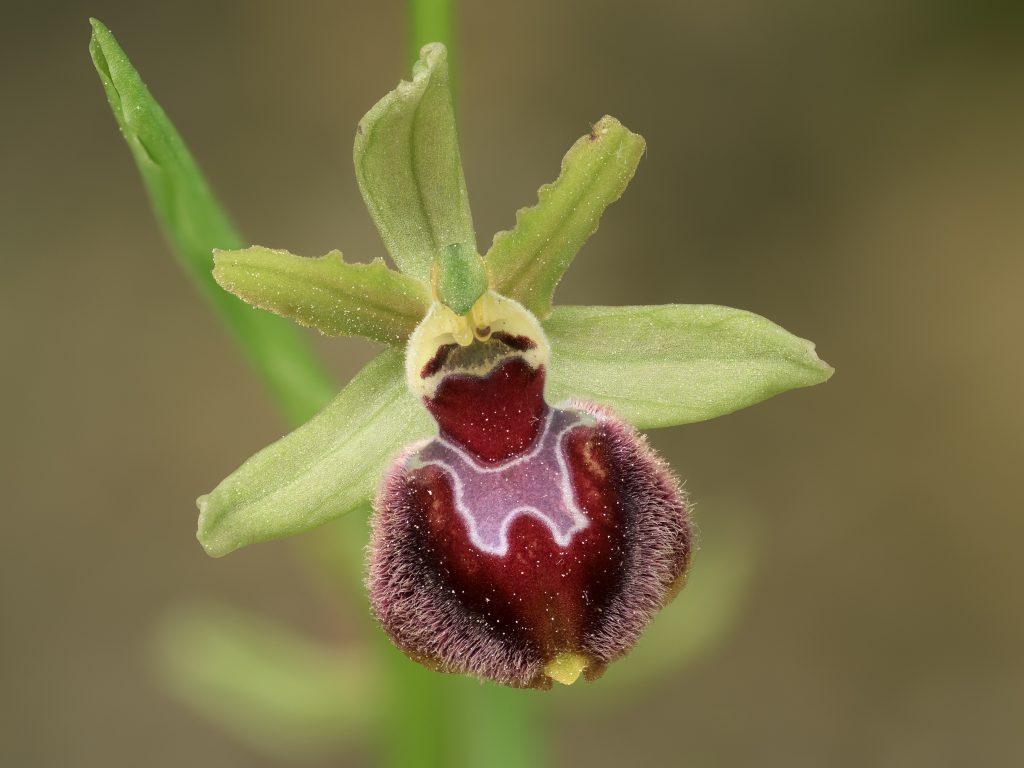
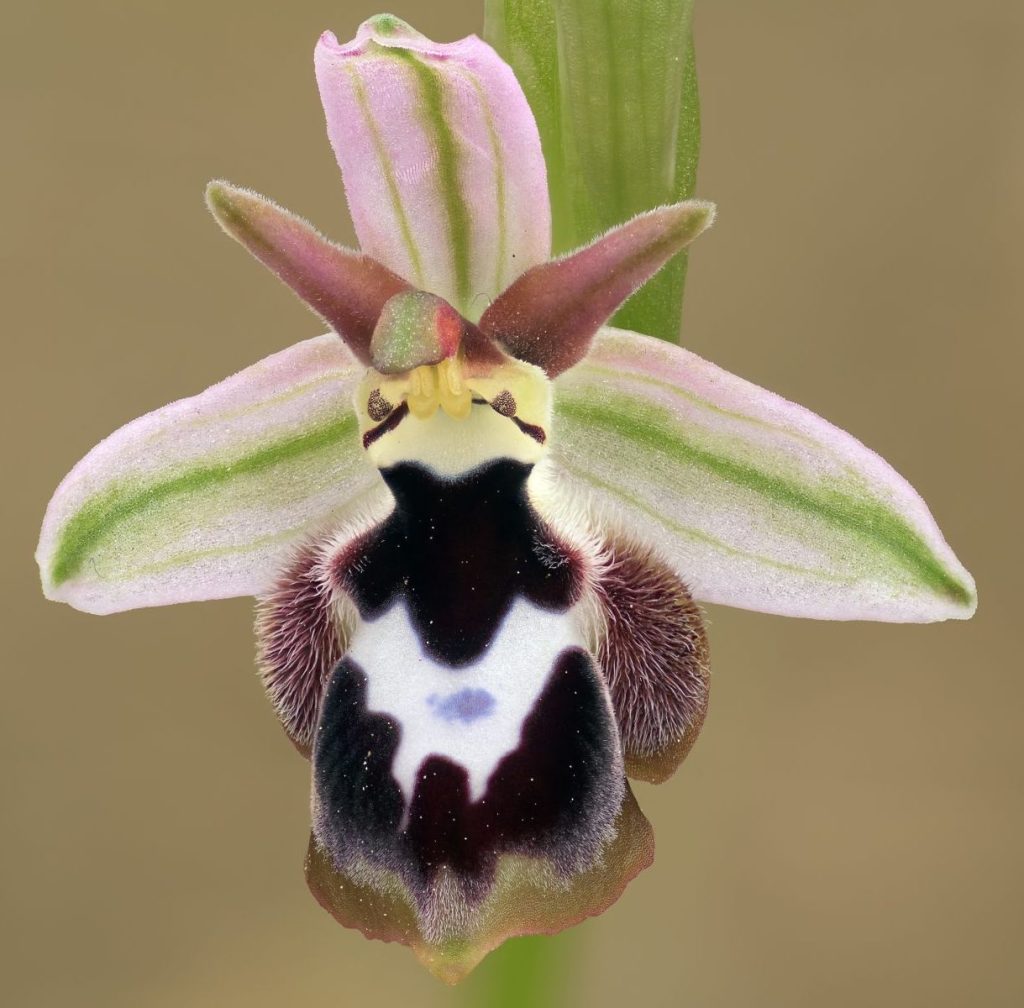
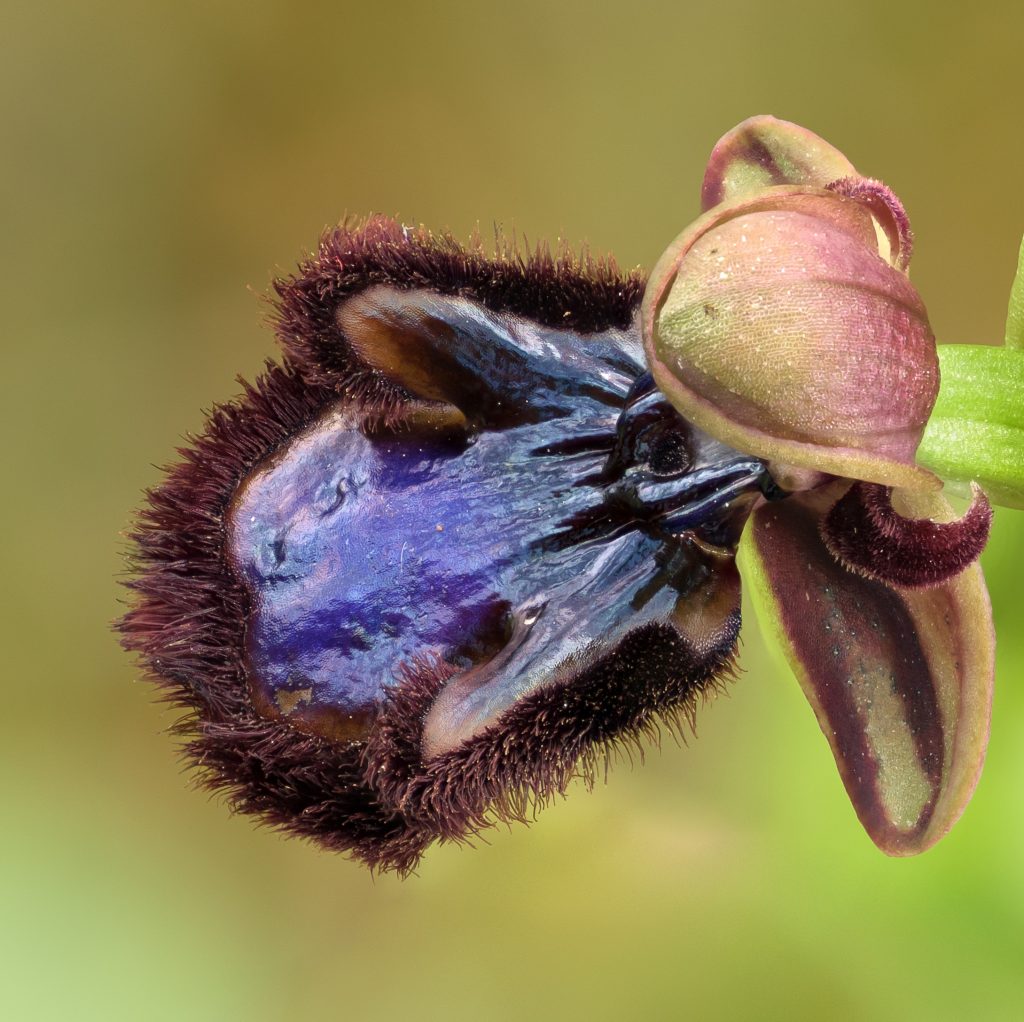
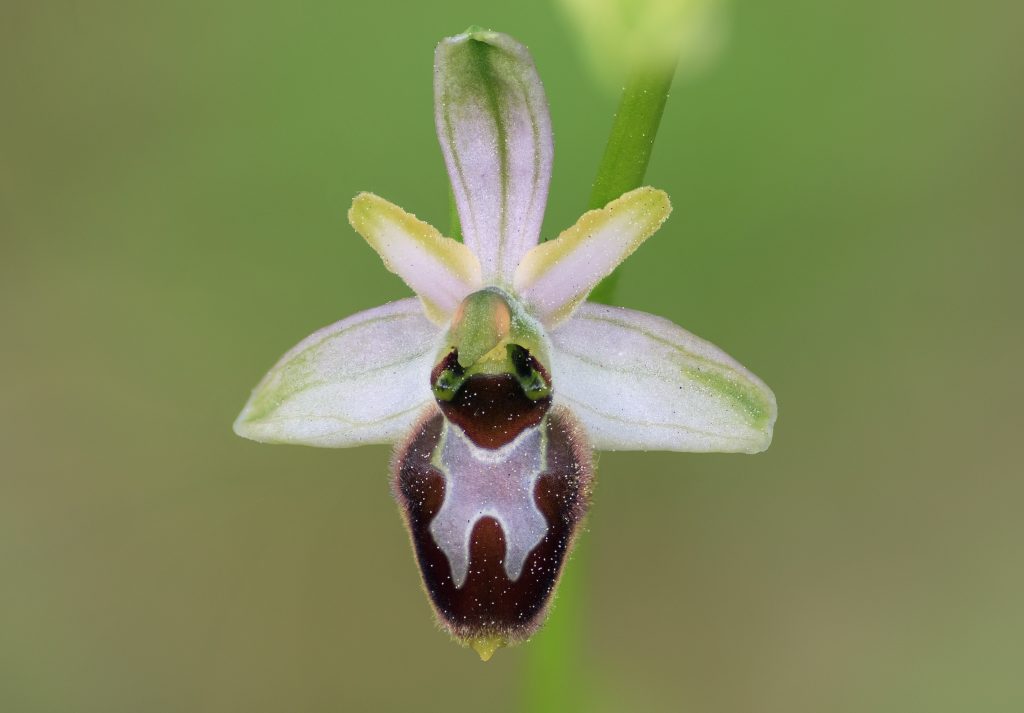
There is no other genus quite like the bee orchids, at least for me. I can hardly decide where to begin introducing them, as there is so much that can be said about them, and it’s very easy for me to slip into excessive enthusiasm. Starting with the fact that their labellum mimics female insects one by one in order to deceive the males of real insects—sometimes so convincingly that even a human can effortlessly perceive them as arthropods—all the way to the point that they also possess anthropomorphic characteristics (the Euophrys section in particular—but more on that later), with eyes, mouths, ears, and ornate “clothing” (often gaudy and multicolored, at other times delicately shaded or strikingly contrasted).
And the funny thing is that these otherwise tiny flowers (even in the largest bee orchids the labellum does not exceed 3 cm in size, and is more typically around 1–2 cm) do not appear particularly striking at first glance; however, upon closer inspection, the features I was raving about above reveal themselves. The character of bee orchids truly emerges in close-focus, macro-style photographs (not necessarily “true” macro, so a 1:1 magnification is not required), which is why such shots dominate my galleries (naturally using focus stacking techniques).
In a sense, they are not entirely unique, as sexually deceptive pollination strategies have evolved in other genera as well. Among European orchids, for example, Serapias lingua has “chosen” this tactic (in contrast to other Serapias species, which provide shelter for insects). Looking farther afield, in Australia there are several genera that imitate insects and stimulate males to copulate, such as the genus Caladenia or the beard orchids (Calochilus); the latter even somewhat resemble our bee orchids (except that their labellum breaks into fine filaments, giving it the appearance of elongated human facial hair).
Moreover, bee orchids do not rely solely on visual stimuli to trap unsuspecting arthropods—they also emit specific male-attracting pheromones, which a mate-seeking insect can detect from afar with its olfactory organs, long before it can see the “artificial female.” But once the scent trail draws it close to the mischievous flower, visual stimuli take over, and if the insect is still inexperienced enough (or overly aroused), it quickly gets down to business. During so-called pseudocopulation, in the case of Euophrys the animal faces the column with its head while vigorously moving its abdomen above the lower appendage of the labellum, whereas in Pseudophrys it attempts to mate in the opposite orientation, with its abdomen toward the column and its head above the appendage. In both cases, during the futile act, the pollinarium—dislodged by the jostling—sticks to the unfortunate victim (in the first case to its head, in the second to the tip of its abdomen). Then, once it realizes that something is off about the encounter, it understandably departs in frustration, and if it has not yet learned from the mistake, it repeats the same folly at the next flower, thereby neatly transferring the pollen packet onto the stigma. The victims of this deception are mainly hymenopterans—bees (often from the genera Eucera or Andrena), less frequently wasps (e.g. Agrogorytes), but there are also certain scarab beetles (Blitopertha) that fall for the trick.

This type of pollination results in a peculiar coevolutionary process with the insect, since observations suggest that pollinators follow the flowers in a species-specific manner—that is, a given bee orchid species is typically targeted by a single insect species. This exerts strong selective pressure on the given Ophrys species, which thus becomes increasingly isolated from other bee orchids pollinated by different insects, and also becomes more and more adapted in appearance and size to its pollinating arthropod. According to entomologist Hannes Paulus, in the case of Ophrys this is the primary driver of speciation; thus, if two bee orchids are pollinated by different insect species, they should be classified as separate species. Others (especially Anglo-Saxon researchers, e.g. Bateman) argue that the situation is not so simple, since insects often make mistakes, leading to mixing between somewhat divergent individuals, which may result either in hybridization or ultimately in the disappearance of differences through gene flow. Either way, the genus is evolutionary very active, speciation is under way at present time, hence hybrids are rather common.
It is mainly the former school that has led to the rapid increase in the number of Ophrys species in recent decades (in the early 2000s Delforge listed around 250 species, while in the 2024 Kreutz book the number of taxa is already around 500). This pollinator-based speciation—often further reinforced by ecological, morphological, and geographical distinctions—has earned the term “splitting” in the orchidology slang, and those who follow this approach are called “splitters.” In the opposite corner are the “lumpers,” who recognize far fewer bee orchid species (based on molecular analysis and genetics) and treat more subtle differences only at the subspecies or varietal level.
But before I delve too deeply into analyzing the botanical community studying bee orchids, let us instead look at the structure of the flower itself. As usual, the perianth consists of two whorls: the outer whorl (the sepals) is made up of three mostly elongated-ovate segments, while the inner whorl consists of two typically shorter (the petals) and narrower segments along with the labellum. At the upper part of the labellum is the column, ending in a beak-like structure with paired anthers. The pollen mass found in the anther sacs is connected by a narrow stalk to the adhesive body, the viscidium, which is located at the base of the column and is surrounded by a membranous sac (bursicle) filled with fluid to prevent the dehydration of the viscidium. When an insect touches the sac, the membrane ruptures, and the exposed adhesive body—resembling a suction cup—attaches itself to the arthropod’s body. The lower part of the column belongs to the stigmatic cavity, on either side of which are the pseudeyes, which according to some studies mimic the articulation of insect wings. Below the stigmatic cavity lies the basal field, which in Euophrys resembles a smiling mouth. Much of the labellum is often occupied by a diverse pattern (macula or speculum), whose central part usually has a bluish-violet iridescence. In O. speculum, the macula occupies almost the entire labellum, whereas in most species it is much smaller. At the very bottom of the labellum is the appendage, whose size and shape are also important diagnostic features. Additionally, lateral lobes and various protuberances or “horns” may appear, which can also be decisive identifying traits.
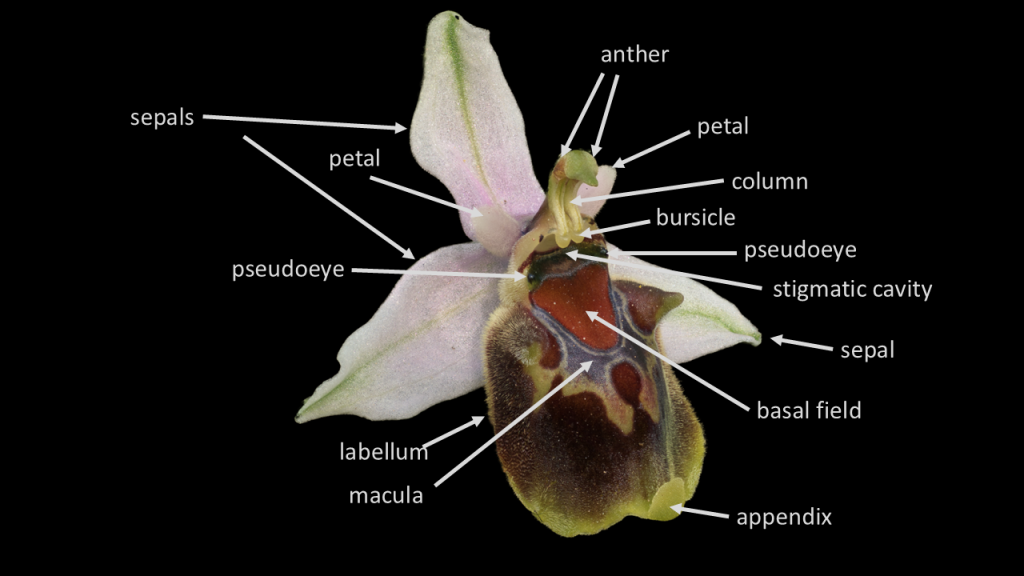
As mentioned earlier, bee orchids can be further divided into two morphologically distinct groups: the Pseudophrys and Euophrys sections. The former represent a more ancient lineage, reflected in the absence of pseudeyes, the lack of a basal field, less colorful and varied perianth segments (usually green or, more rarely, white), and a simpler labellum pattern (typically forming an omega shape); the insect also attempts to copulate in an “inverted” position. These differences are so striking that it is surprising the entire genus has not yet been split into two separate genera (though I won’t offer any suggestions). Pseudophrys (or simply “fusca” types in slang) occur exclusively in the Mediterranean and are therefore absent from Hungary, while Euophrys have successfully colonized cooler parts of Europe, reaching as far as the United Kingdom and Scandinavia.
At the genus level, however, bee orchids inhabit almost all of Europe, with a Mediterranean center of diversity, and they even extend slightly beyond the continent, occurring in North Africa, Asia Minor, around the Caspian Sea, in Iran, Iraq, and the Middle East. Their habitats are diverse; most species are light-loving, typically inhabiting sparse shrublands in Mediterranean regions (phrygana or garrigue, depending on location), but they also occur in meadows, rocky grasslands, hayfields, secondary grasslands, and more rarely in forests. As pioneering species, they often do not shy away from urban environments (there are examples of such habitats even in Budapest in the case of Ophrys apifera). In Hungary, only six species are found (I do not include the fleeting and questionable O. bertolonii), some of which are quite rare, and all are strictly protected.
Finally, a word about the origin of the name. Interestingly, there is no complete consensus, but it most likely derives from the Greek word for “eyebrow,” and the same is true for the Hungarian name “bangó.” The name refers to the eyebrow-like hairiness often observed along the edge of the labellum.