
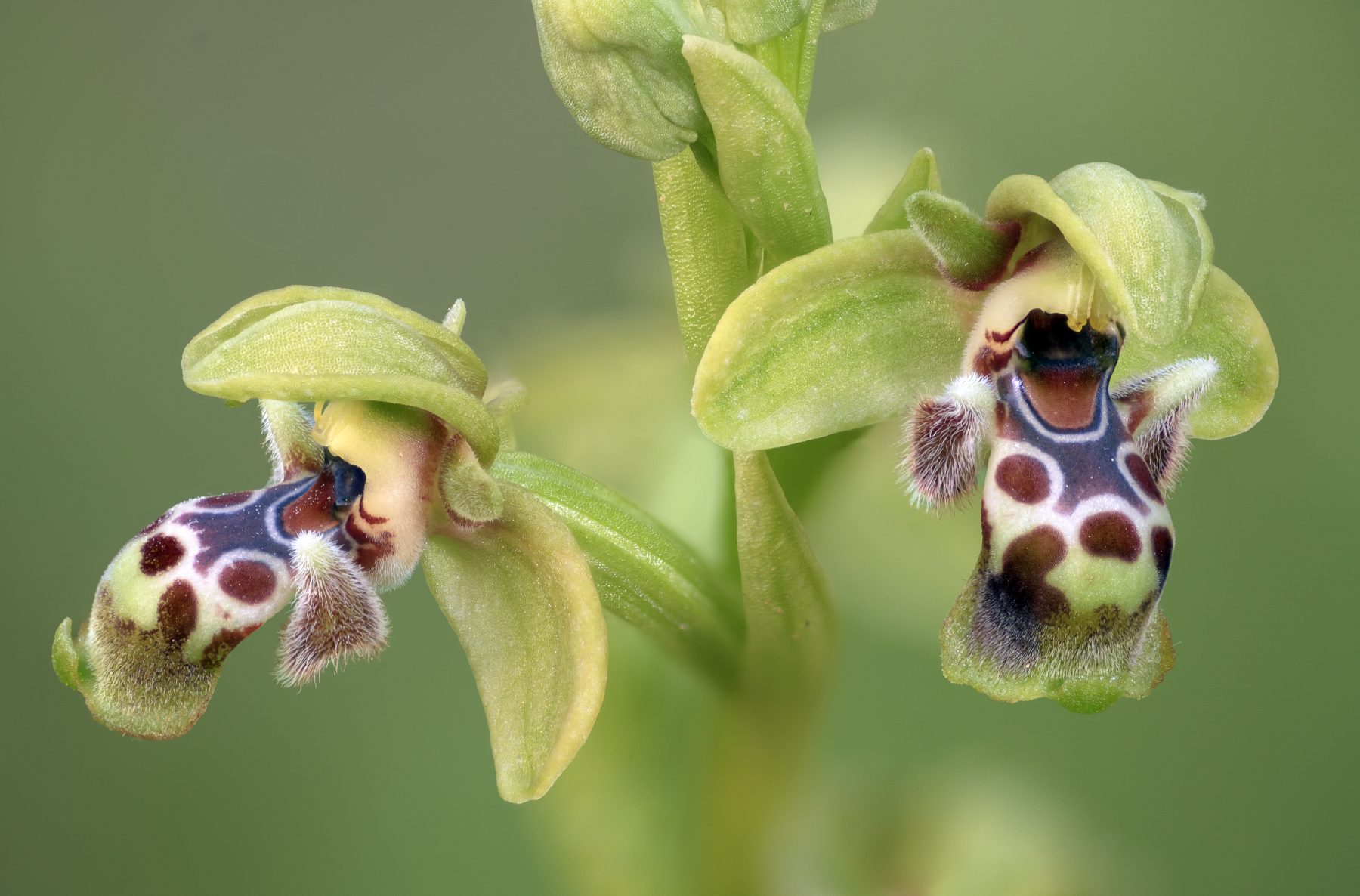
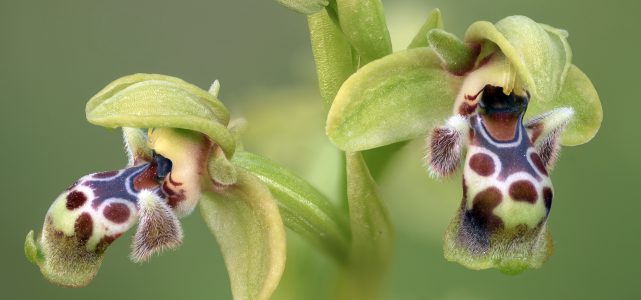
Khuzestanica… With a name like that, anyone would expect an exceptionally exotic Ophrys from the Middle East. In reality, however, it is simply a rather ordinary member of the Ophrys umbilicata group that happens to bear this name. The species’ mystique has been greatly enhanced by the fact that the available literature has consistently illustrated it with incorrect photographs, and even today it is remarkably difficult to find accurate images online, and to make matters even more confusing, its origin has also been misinterpreted.
Delforge (1994) suggested that the species represented a stabilized hybrid between Ophrys bornmuelleri and Ophrys umbilicata. It is therefore hardly surprising that in his 2006 monograph covering the orchids of Europe, the Middle East, and North Africa, the photographs presented under this name actually depict plants resembling Ophrys carduchorum, or at the very least individuals showing evidence of hybridization with that species. Likewise, in Kreutz’s monumental 1998 work Die Orchideen der Türkei, most of the photographs illustrate plants that appear intermediate between O. carduchorum and O. umbilicata. Kreutz also emphasizes that O. khuzestanica differs from O. umbilicata by its taller stature, more numerous flowers, smaller labellum, and by the median sepal, which curves backwards rather than bending over the gynostemium. Ironically, even in his 2024 comprehensive treatment of the orchid species of Europe, the Middle East, and North Africa, Kreutz reused archival photographs taken some twenty years earlier, which again seem to depict plants with obvious hybrid characteristics.
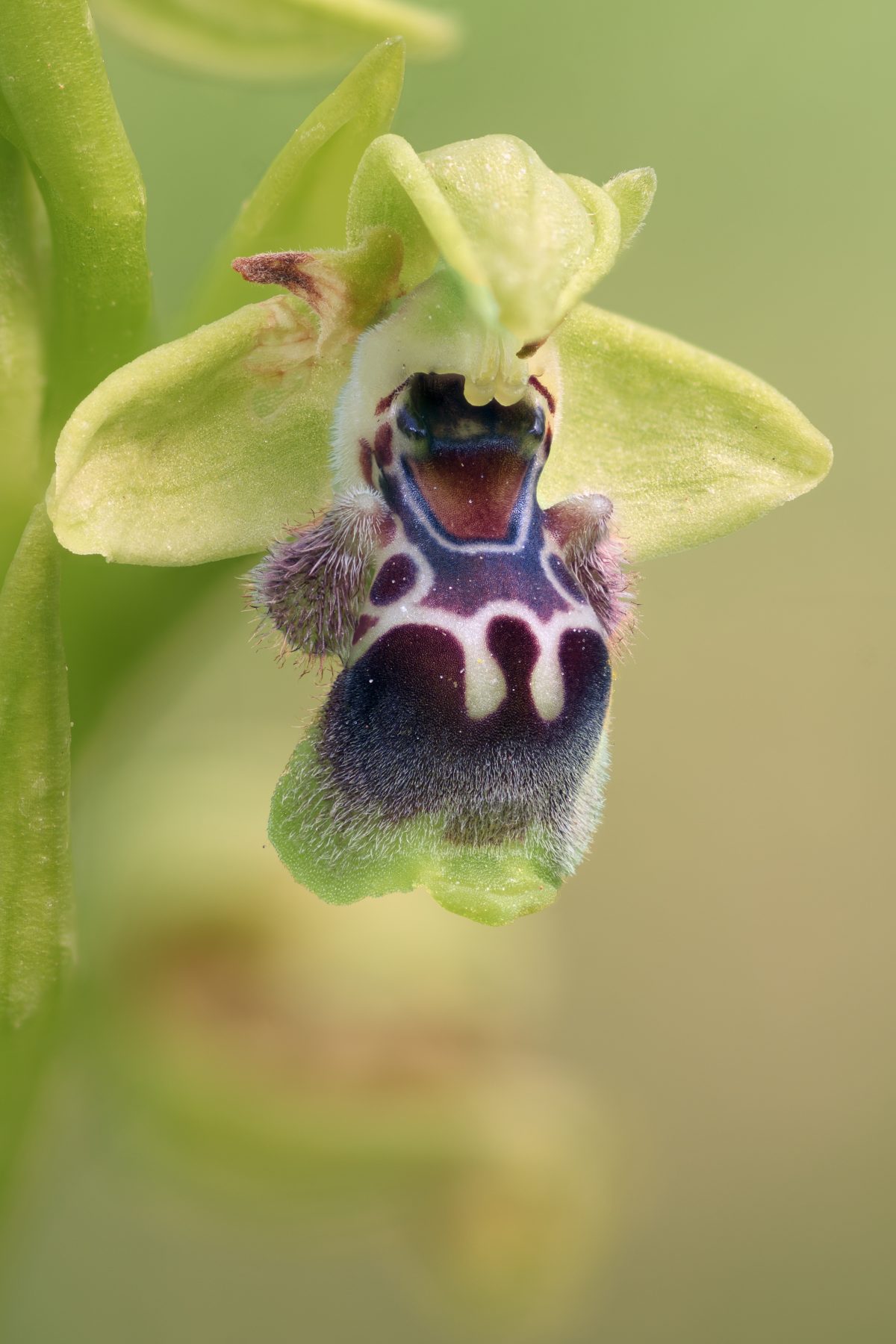
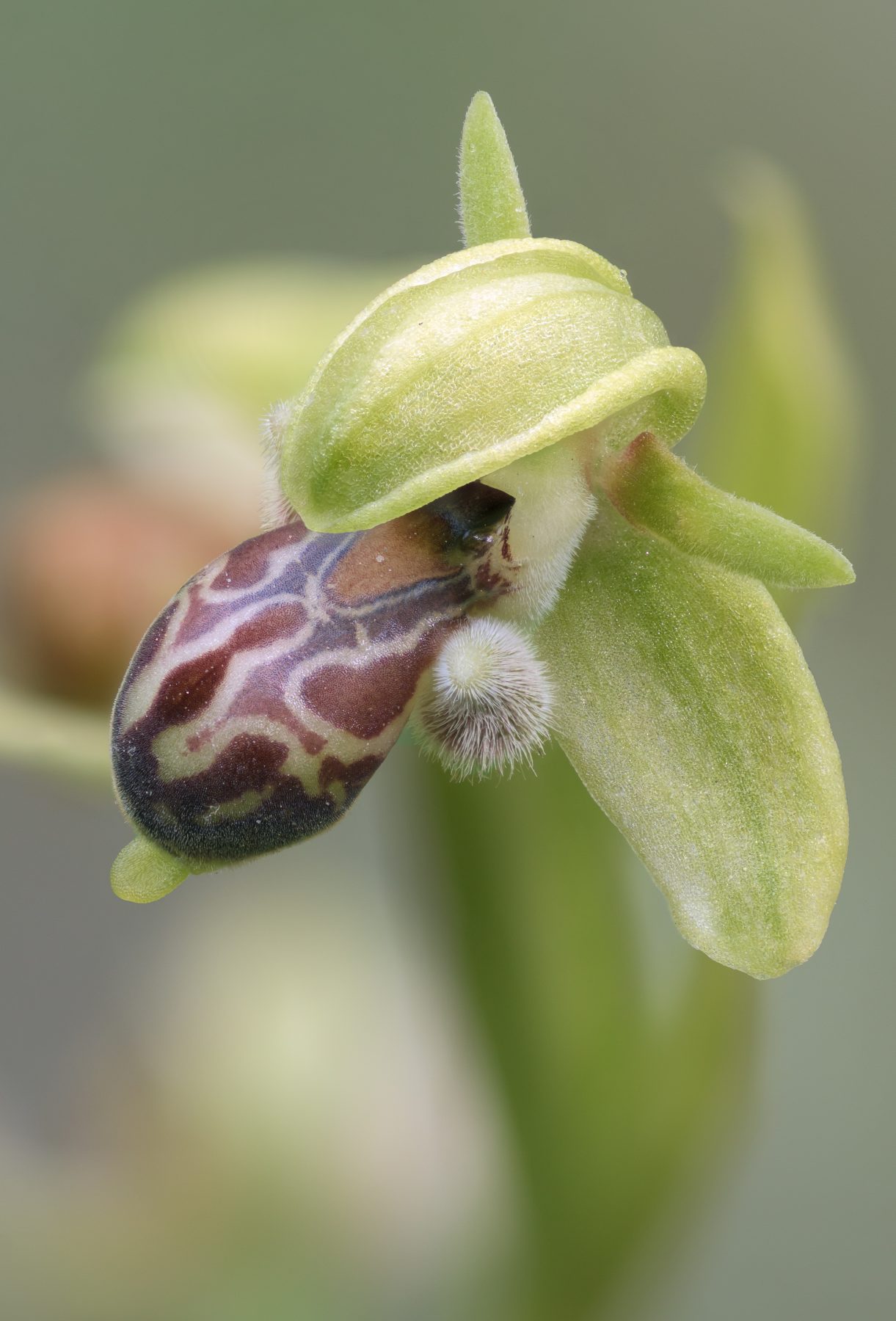
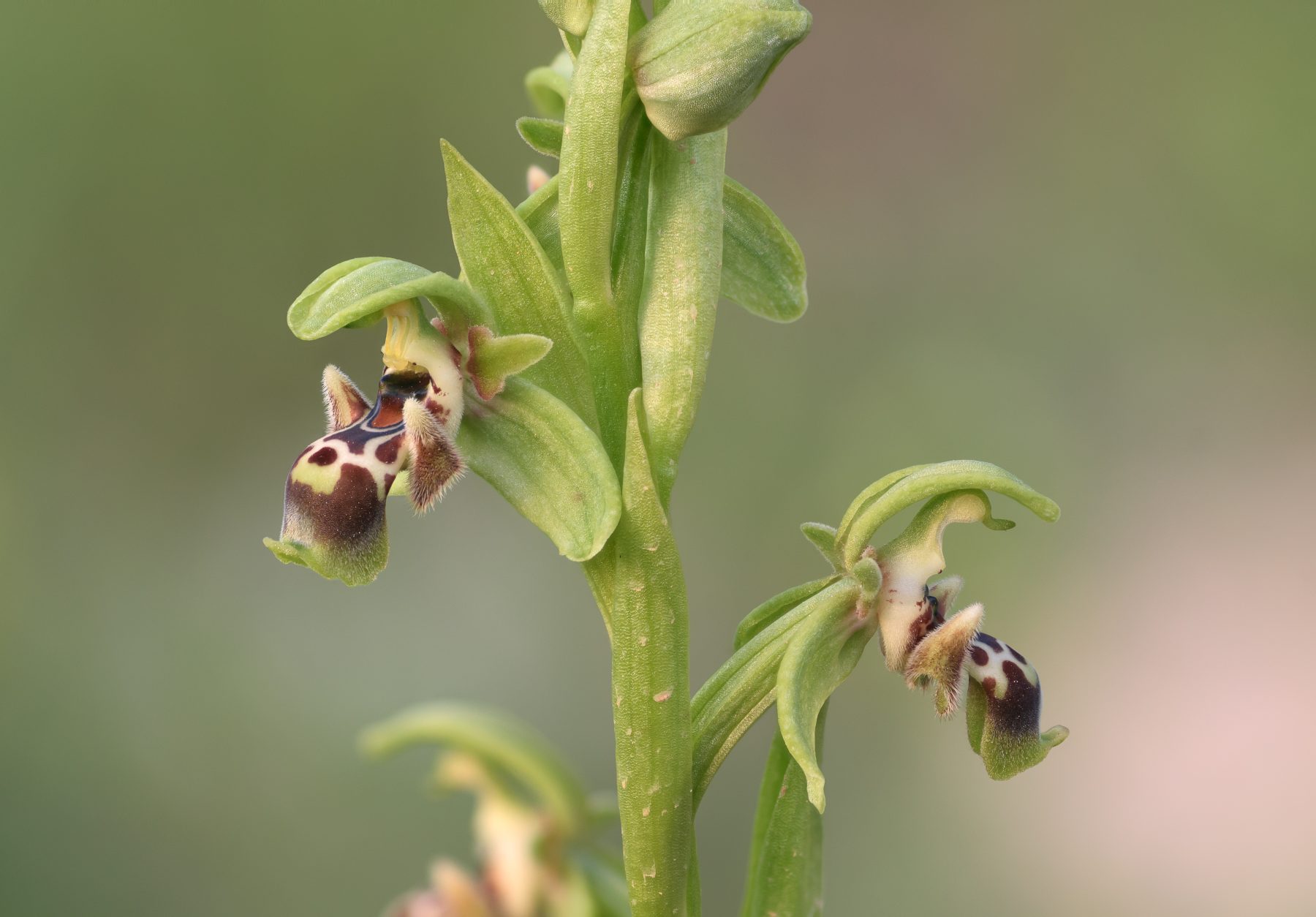
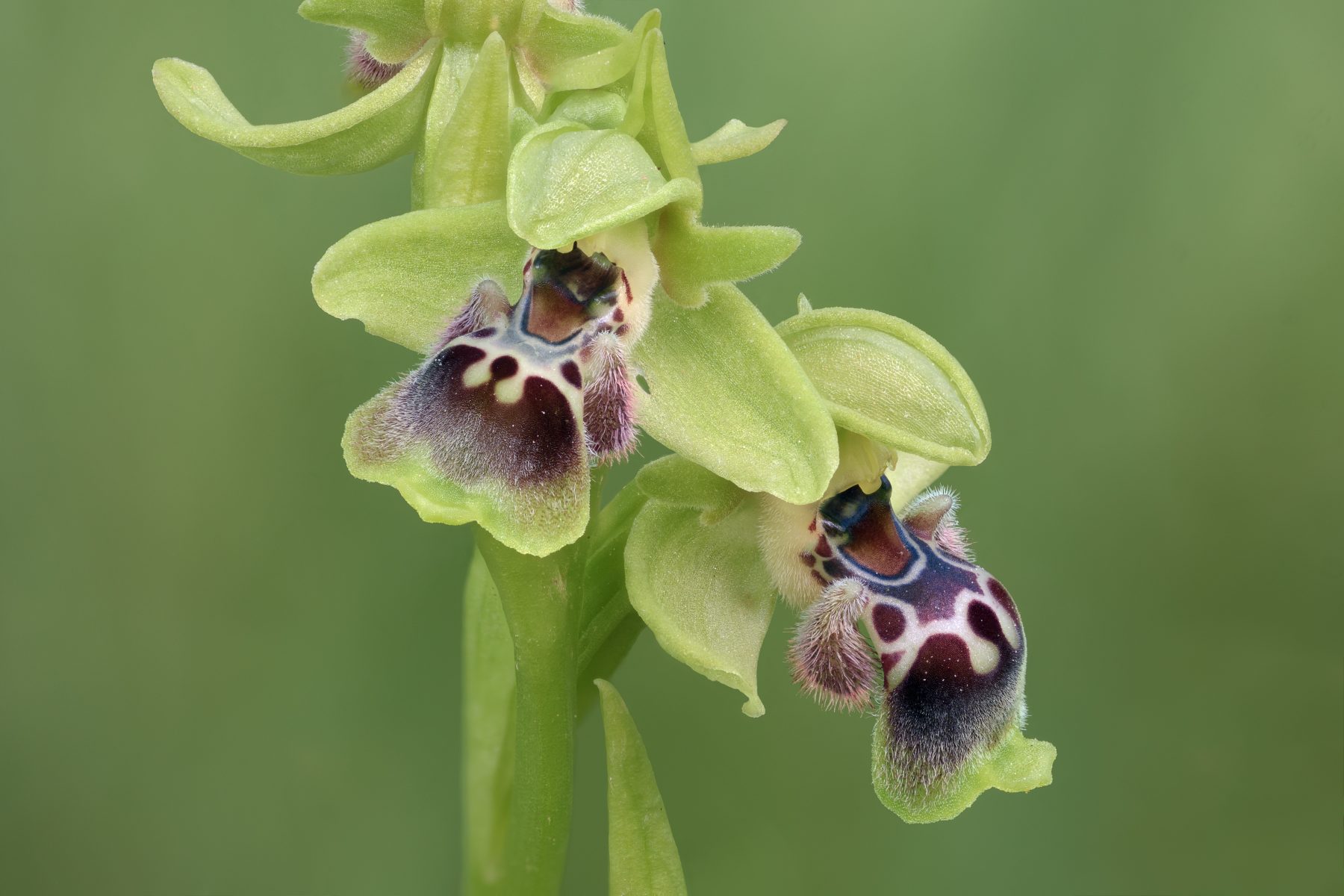
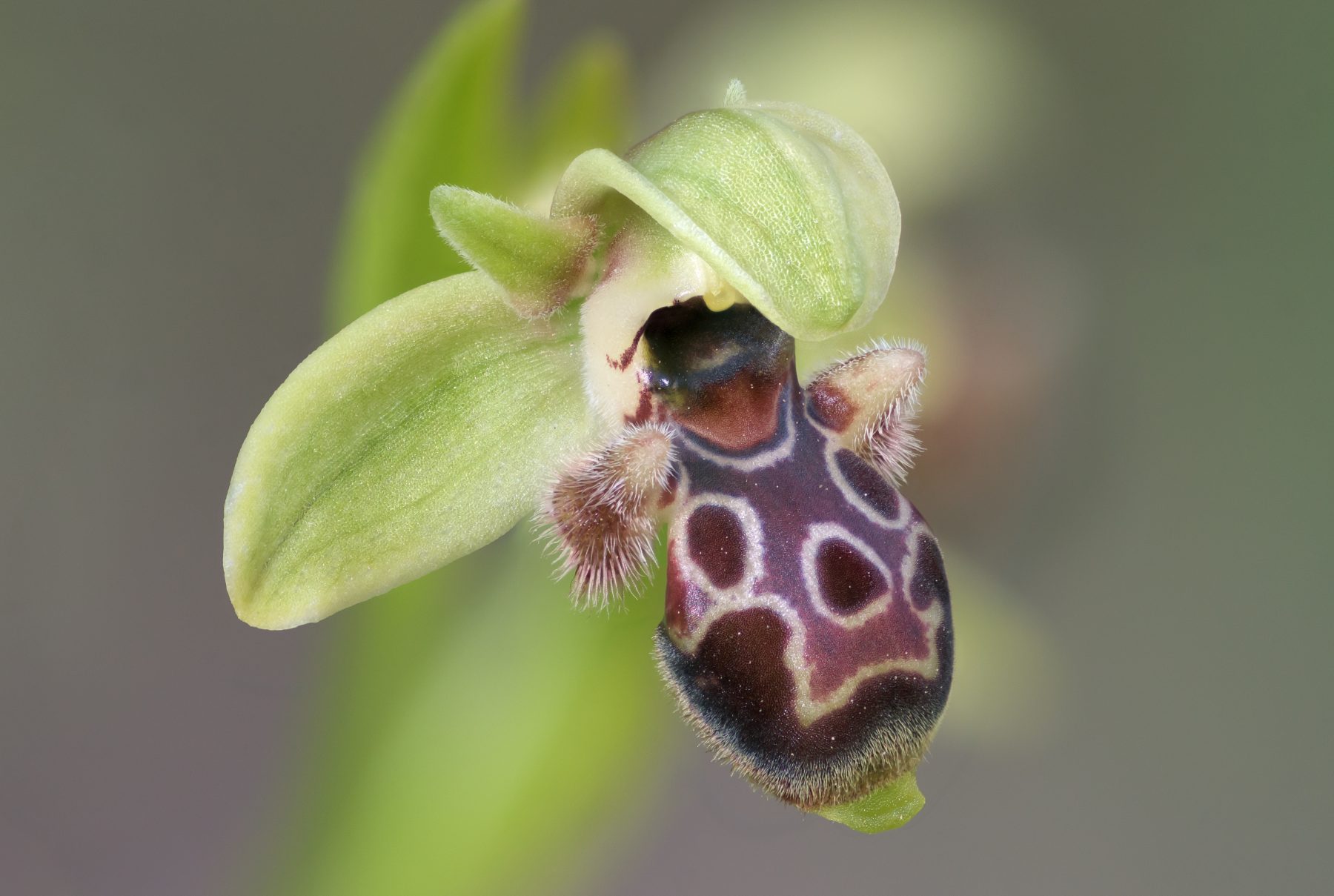
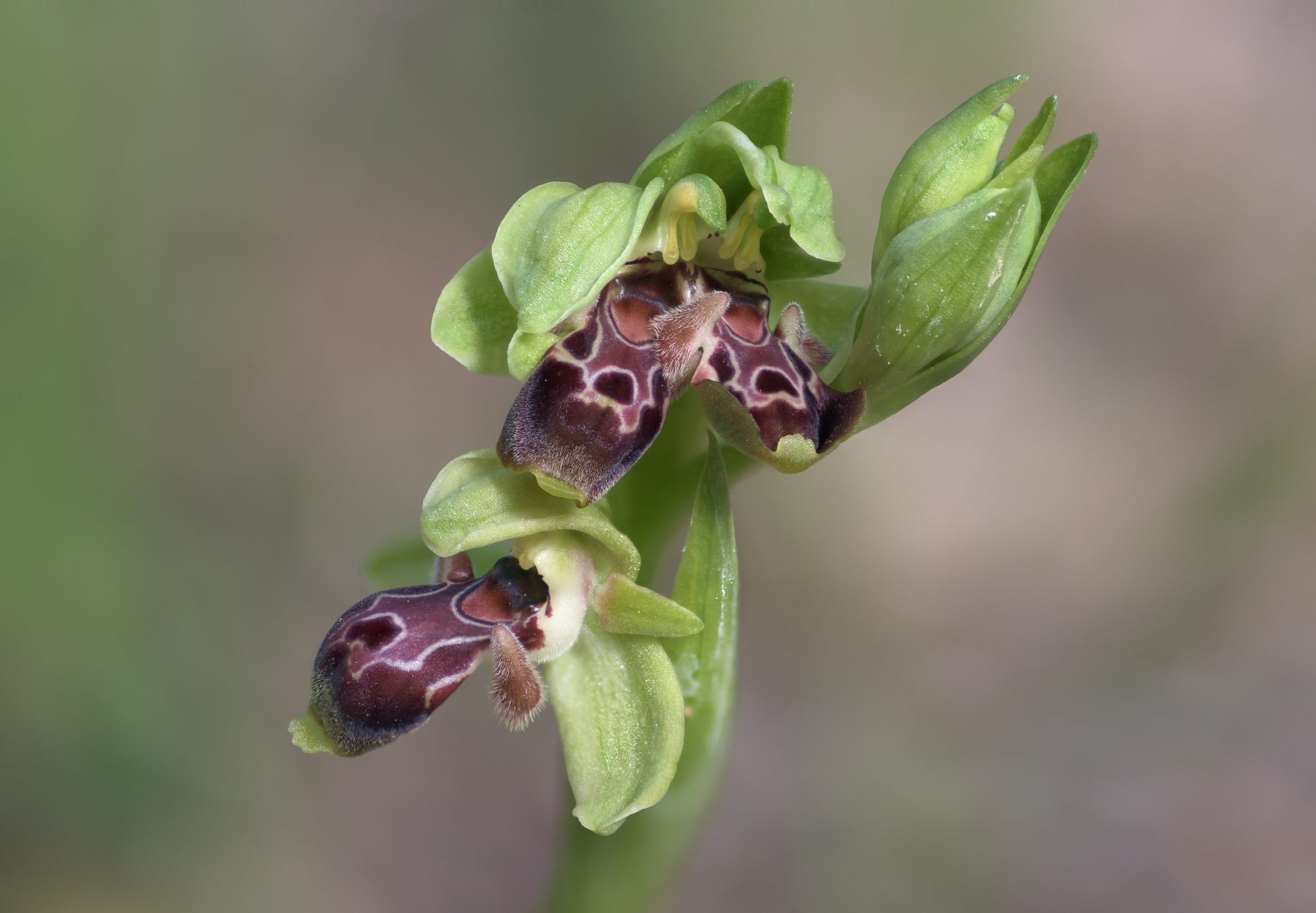
The first indications that something was amiss emerged in the early 2020s, when our Belgian orchid enthusiast friends—Marc Verbeeck, Bram De Block, and Luc Segers—began revisiting and verifying historical records from southeastern Turkey. The photographs they shared in reports and on Facebook showed an O. khuzestanica that looked completely different from the plants illustrated in the literature: a perfectly typical umbilicata-type orchid, with a prominently swollen, rounded labellum displaying the characteristic navel-like marking, greenish sepals, and a strongly incurved median sepal arching over the gynostemium.
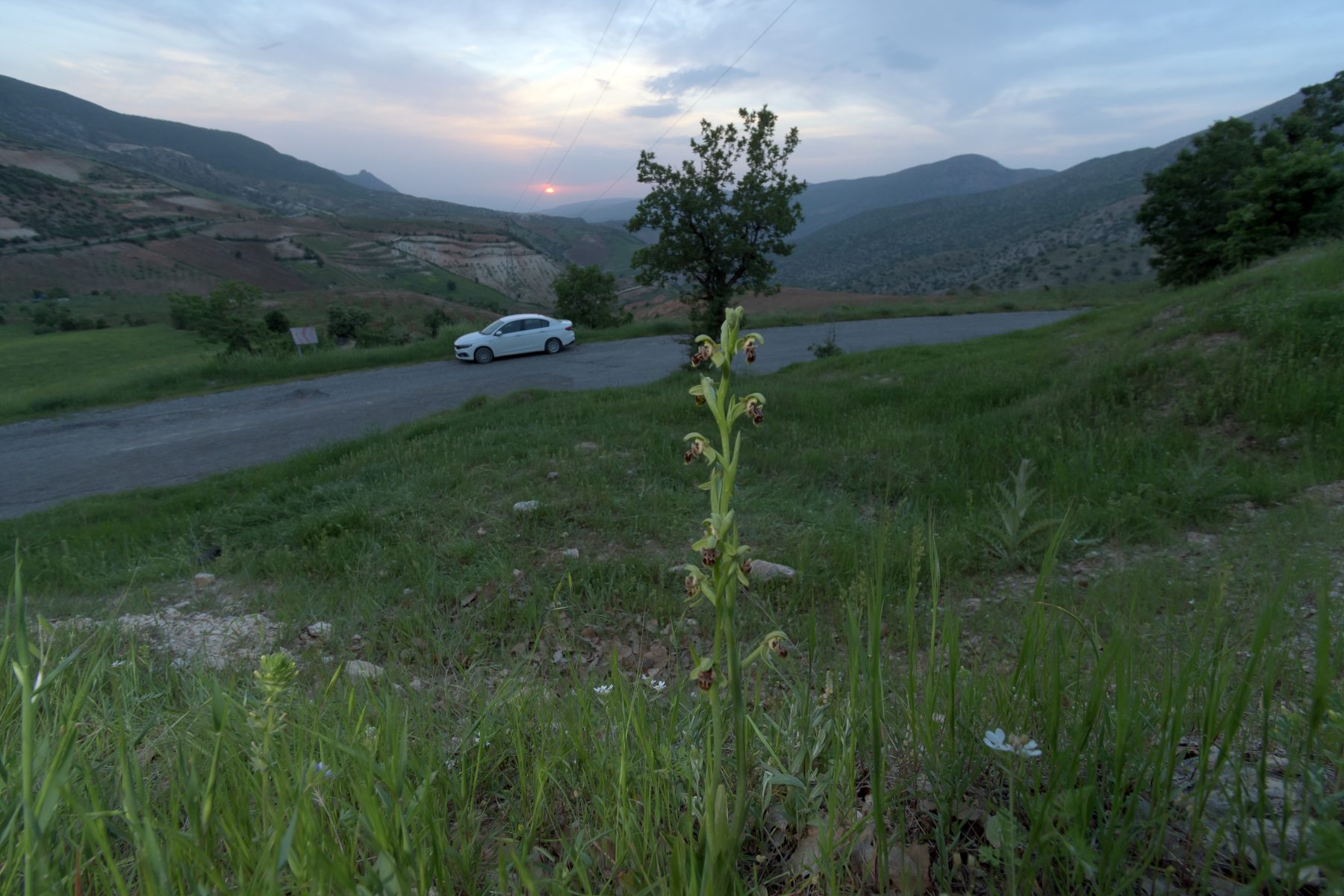
In May 2026, we finally had the opportunity to verify the species with our own eyes. We encountered O. khuzestanica at several sites in Siirt Province, including one roadside embankment where it occurred in impressive numbers, right at the peak of flowering. Based on these observations, the differences from Ophrys attica, a species occurring mainly in Greece, appear very slight. In some individuals, the whitish border surrounding the bluish speculum even recalls the striking pattern of the Cypriot Ophrys astarte or the Rhodian endemic Ophrys rhodia.
My suspicion is that the specimens originally discovered near Lice, in Diyarbakır Province, may have been mixed with O. carduchorum, diverting botanists’ attention and ultimately leading them to identify those plants as O. khuzestanica (we found only a single spike of it in 2026 in that area). A similar situation can still be observed in Siirt Province, where the two species grow together at certain localities and plants of apparently hybrid origin occur. Nevertheless, one question remains unanswered: how did the genuinely pure populations manage to escape notice for so long?
Ophrys khuzestanica typically inhabits scrubby, nutrient-poor grasslands, roadside verges, and open oak woodlands, much like O. carduchorum. Its distribution extends beyond Turkey into Iraqi Kurdistan and southwestern Iran, including Khuzestan Province, where the species was first described in 1983. In these southern parts of its range, flowering usually begins by mid-April, whereas in Turkey it typically reaches its peak during the first half of May. Owing to the exceptionally cool and wet spring of 2026, we were still able to observe vigorous plants at the height of flowering in the middle of May. As for plant size as an identification character, it is worth noting that alongside the tall, elongated, many-flowered specimens—the textbook image of the species—there were also plenty of dwarf individuals displaying the classic umbilicata-like habit.
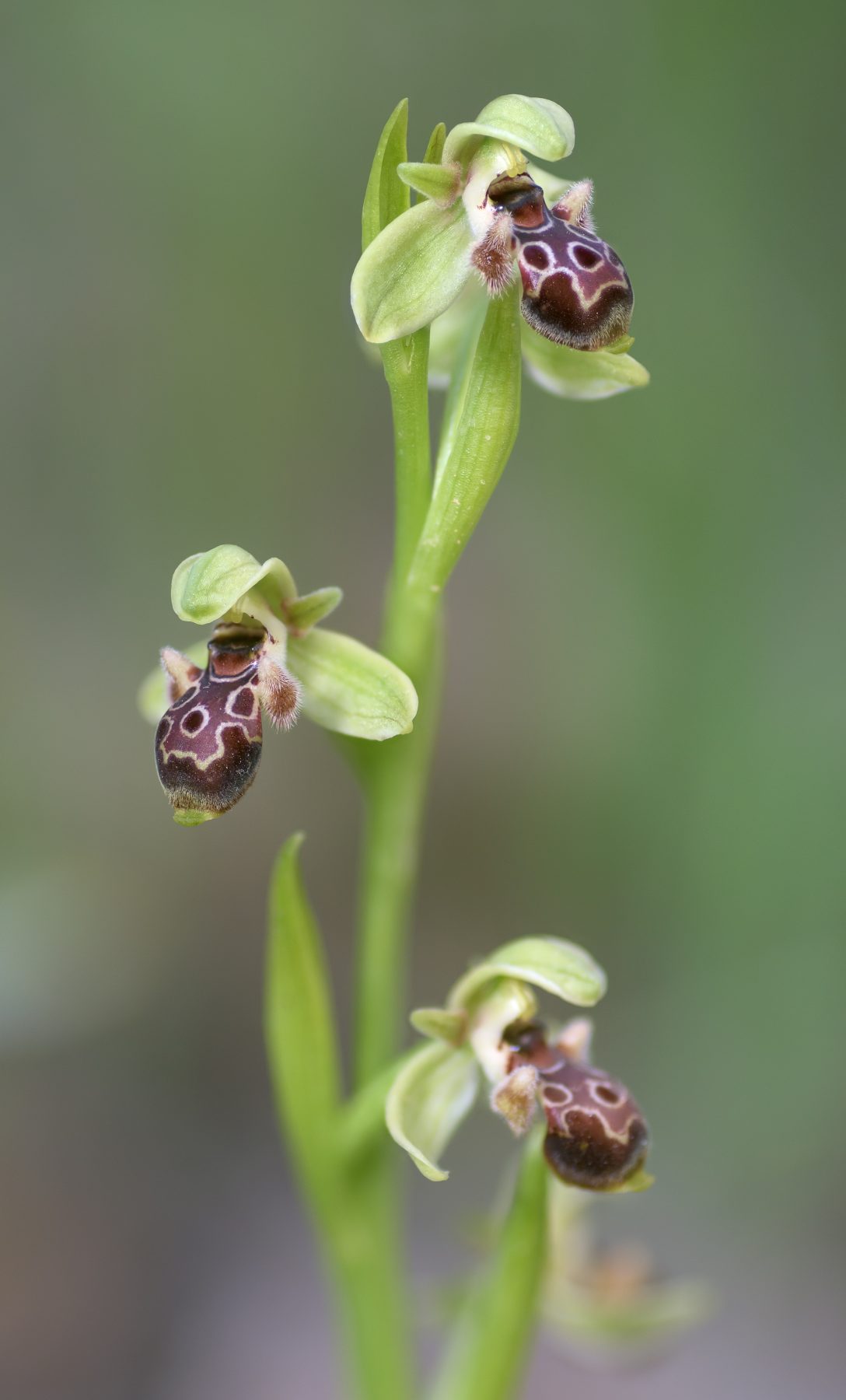
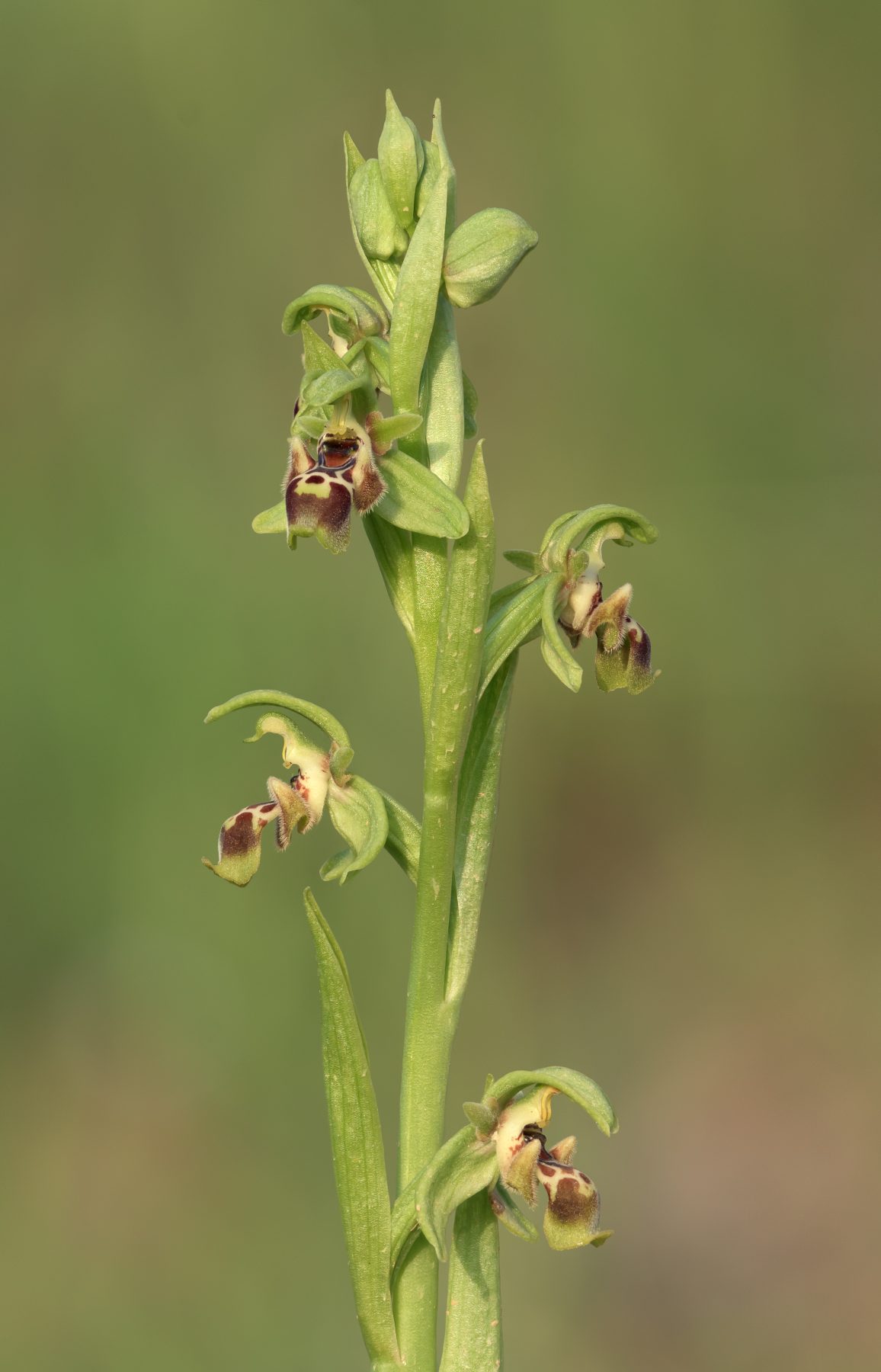
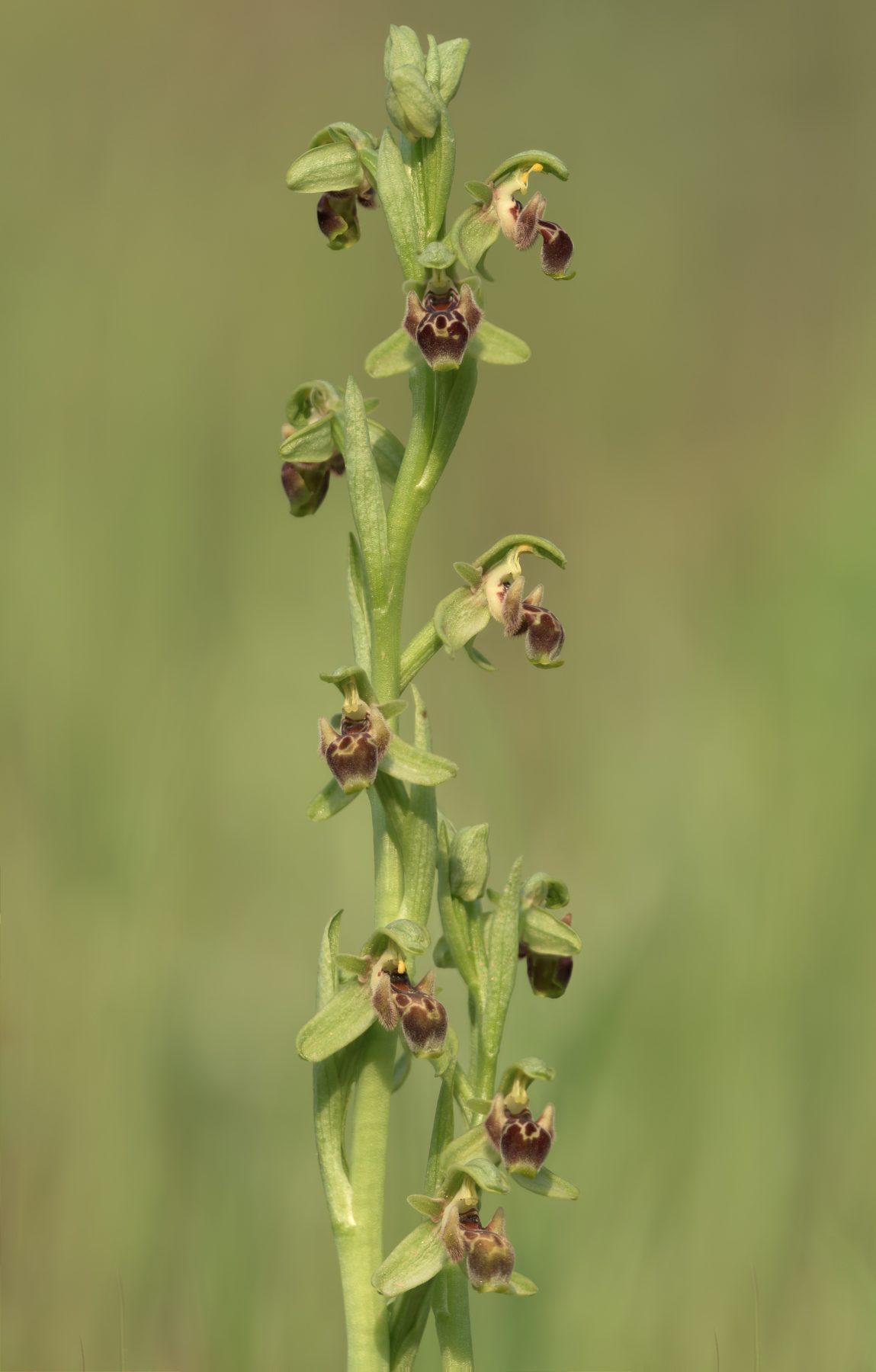
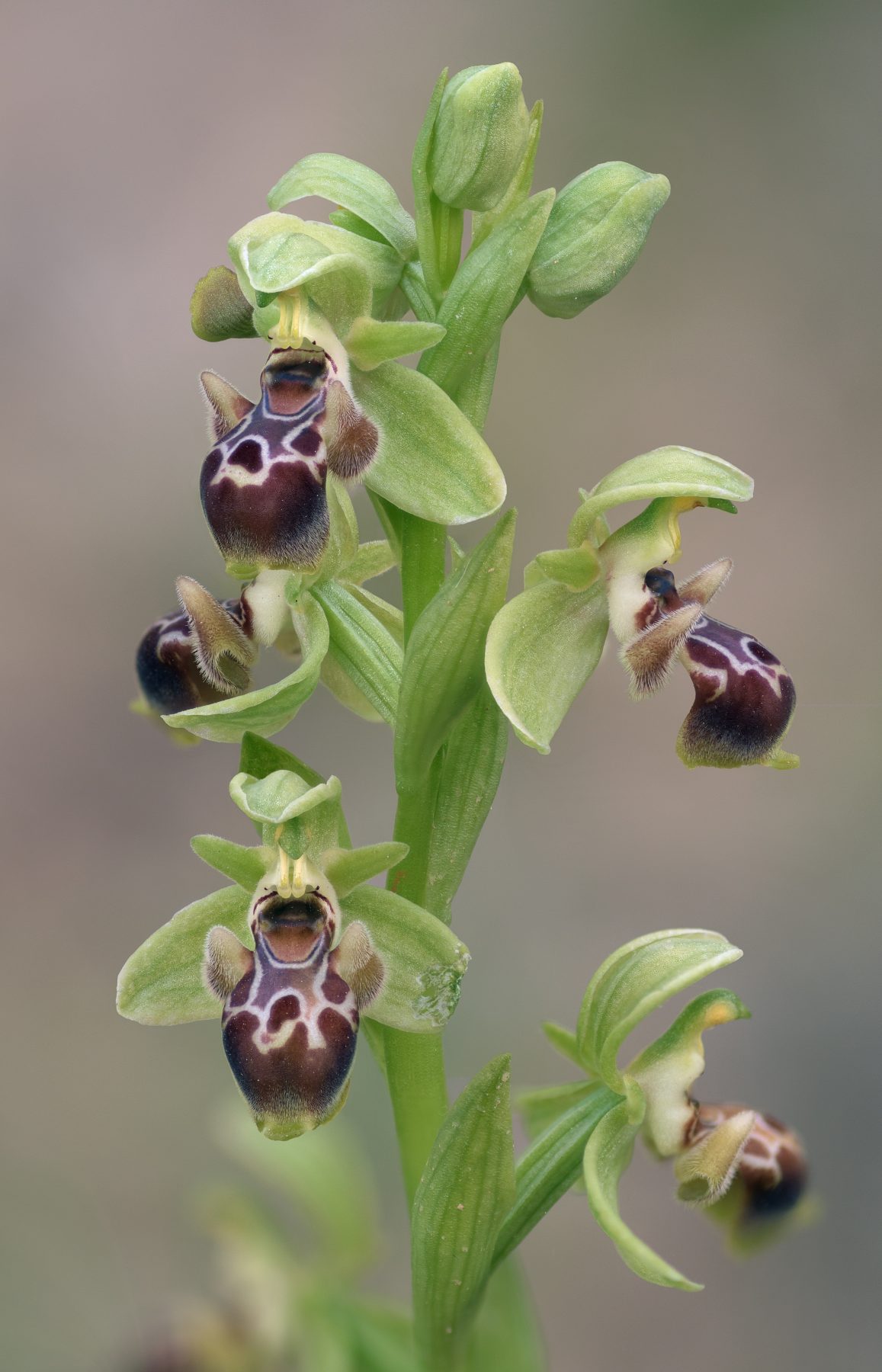




Orchid swarm in a Turkish cemetery, Siirt region