

| Etymology: | After the name of the Austrian botanist, Franz Theodore Strauss who first collected the species in Iran |
| Distribution: | Turkey, Middle East (Iraq, Iran) |
| Flowering time: | mid-IV. to late-V. |
| Taxnonomy: | O. reinholdii group |
| Similar species: | O. konyana, O. reinholdii |
Ophrys straussii is, for me, the most beautiful of the bee orchids. It’s not enough that the rounded labellum is black-and-white and strongly contrasting (which is especially my weakness); it is usually paired with vivid pink perianth segments. And when this is further enhanced by the lateral lobes (the “shoulders”) being whitish, with hairs on them as well (var. leucotaenia), then it becomes a sight that even the most hardened orchidiot can only sigh over.
After all this gushing, here are the dry facts: the species belongs to the reinholdii group. It can most easily be distinguished from the nominal species by its more rounded labellum; the whitish hairs on the lateral lobes; the pattern of the macula, which is often pure white (slightly lilac-tinged) and frequently forms an H-shape, or a complete band with parallel stripes extending downward from it, sometimes creating a navel-like mark; its somewhat smaller size; and its later flowering time (in May).
Like Ophrys cilicica, it has a primarily eastern distribution, though its range is somewhat larger and it is encountered more frequently. Besides southern parts of Asia Minor, it also occurs in Iran, Iraq (its single reported occurrence in Cyprus is questionable). During our 2023 trip to Turkey, it was the most common bee orchid species we encountered over the 10 days; it occurred mainly in forests and their small clearings, and of course in cemeteries as well. Interestingly, we also saw it at 1600 m above sea level (in the Taşkenti cemetery). I am not aware of any Ophrys species occurring higher than this (at least I haven’t encountered one), perhaps only Ophrys insectifera (or several other Turkish species) might be capable of such a thing.
At the same time, on our 2026 trip to southeastern Turkey, we gave ourselves very little chance of running into it, as it had completely disappeared from the Diyarbakır sites we knew from earlier, and we could find no trace of it there either. Just to be sure, we also checked a record dating back several decades in Tunceli Province, naturally without success. All the more surprising, then, was what happened when, in Bitlis Province, we were combing a seepage slope in search of Epipactis veratrifolia: on the gentler part of the slope, a little more than half a dozen straussii plants suddenly appeared right at our feet.
As small as the population was, the plants proved to be remarkably variable. One of them, for instance, showed characteristics of the extremely rare Ophrys konyana, which occurs quite far from here, particularly in the form of its narrow lip, although its more appropriate name would be var. leucotaenia. My opinion of the species expressed in the first paragraph has not changed one bit; if anything, it has only been further reinforced…


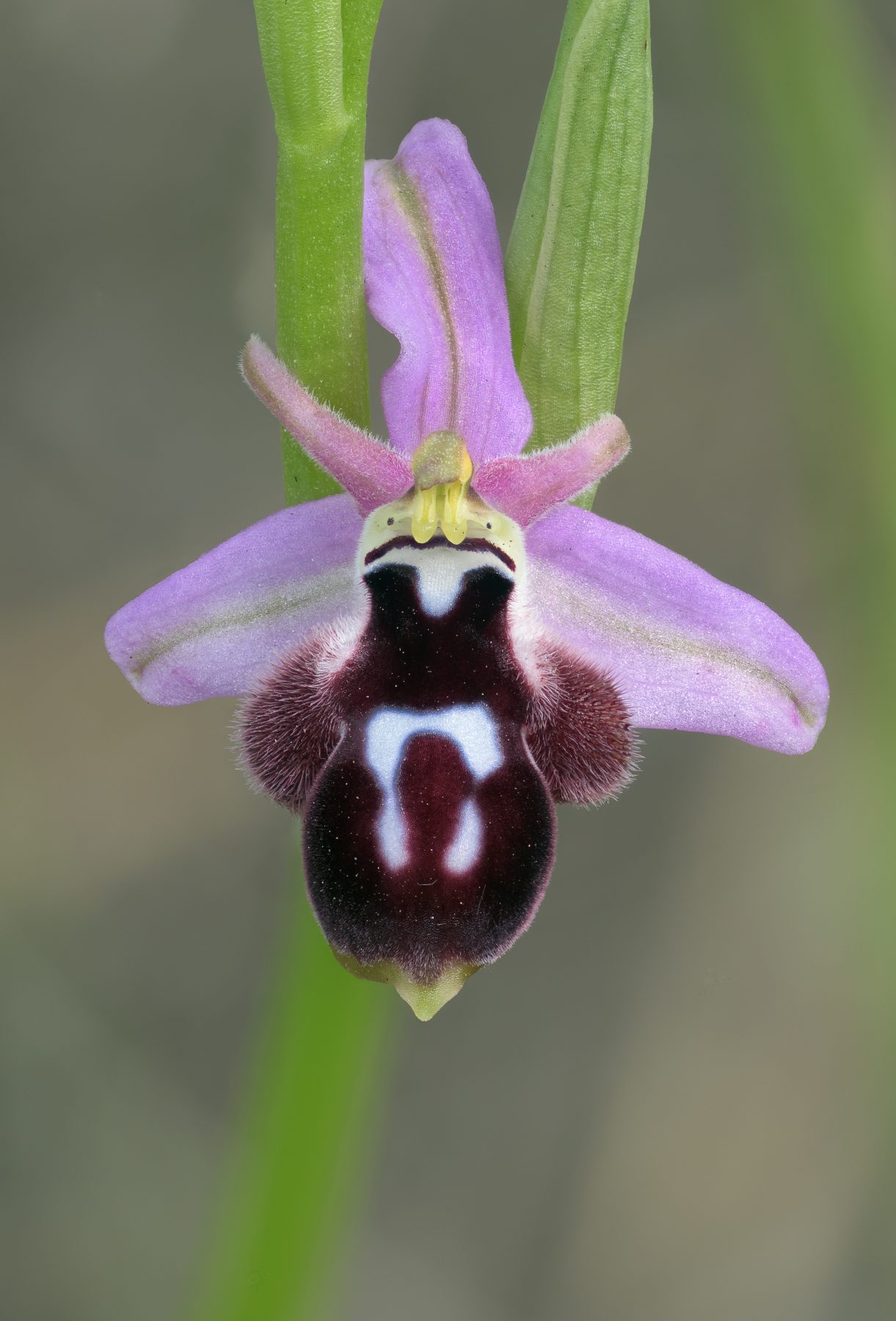
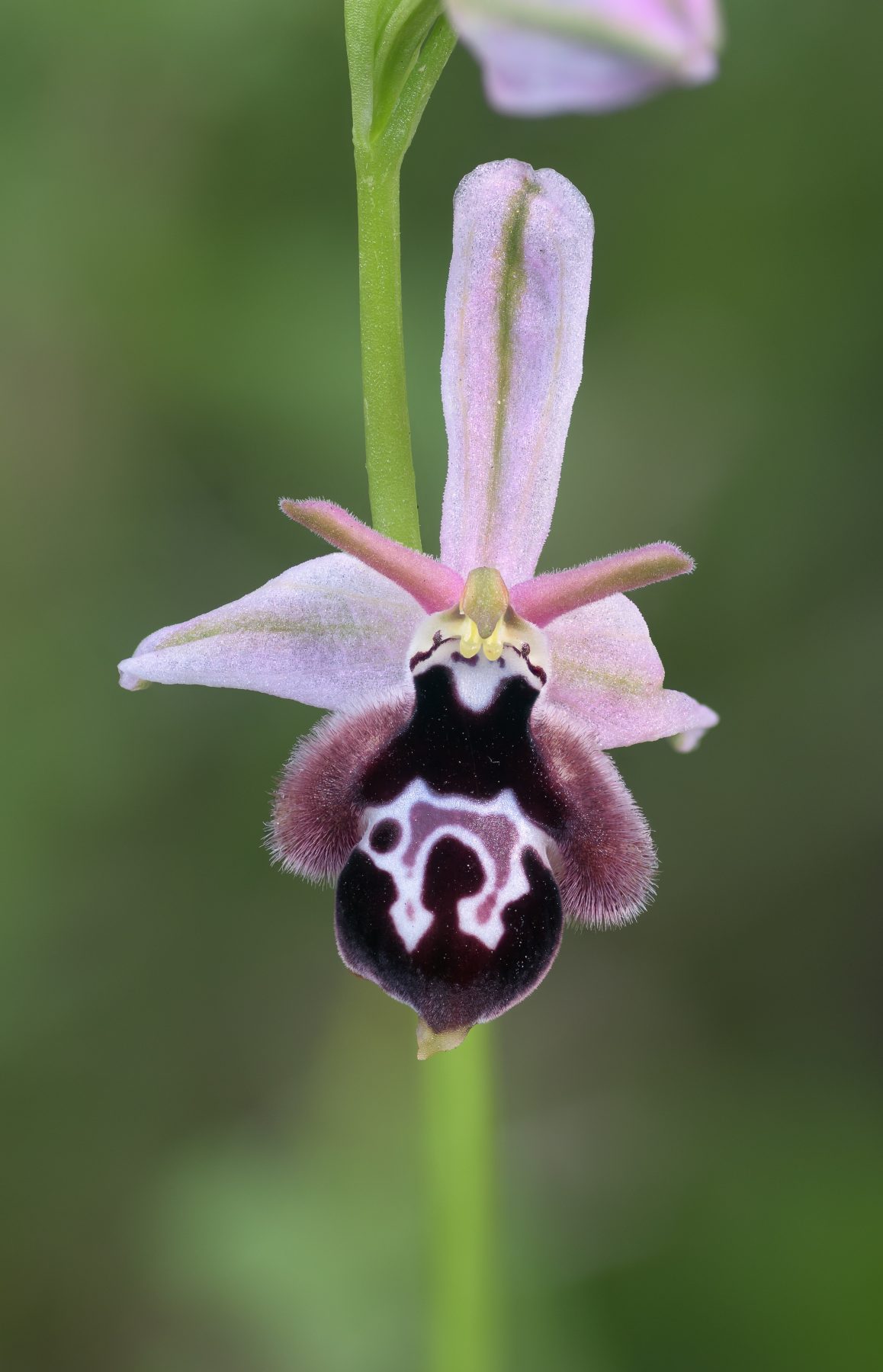
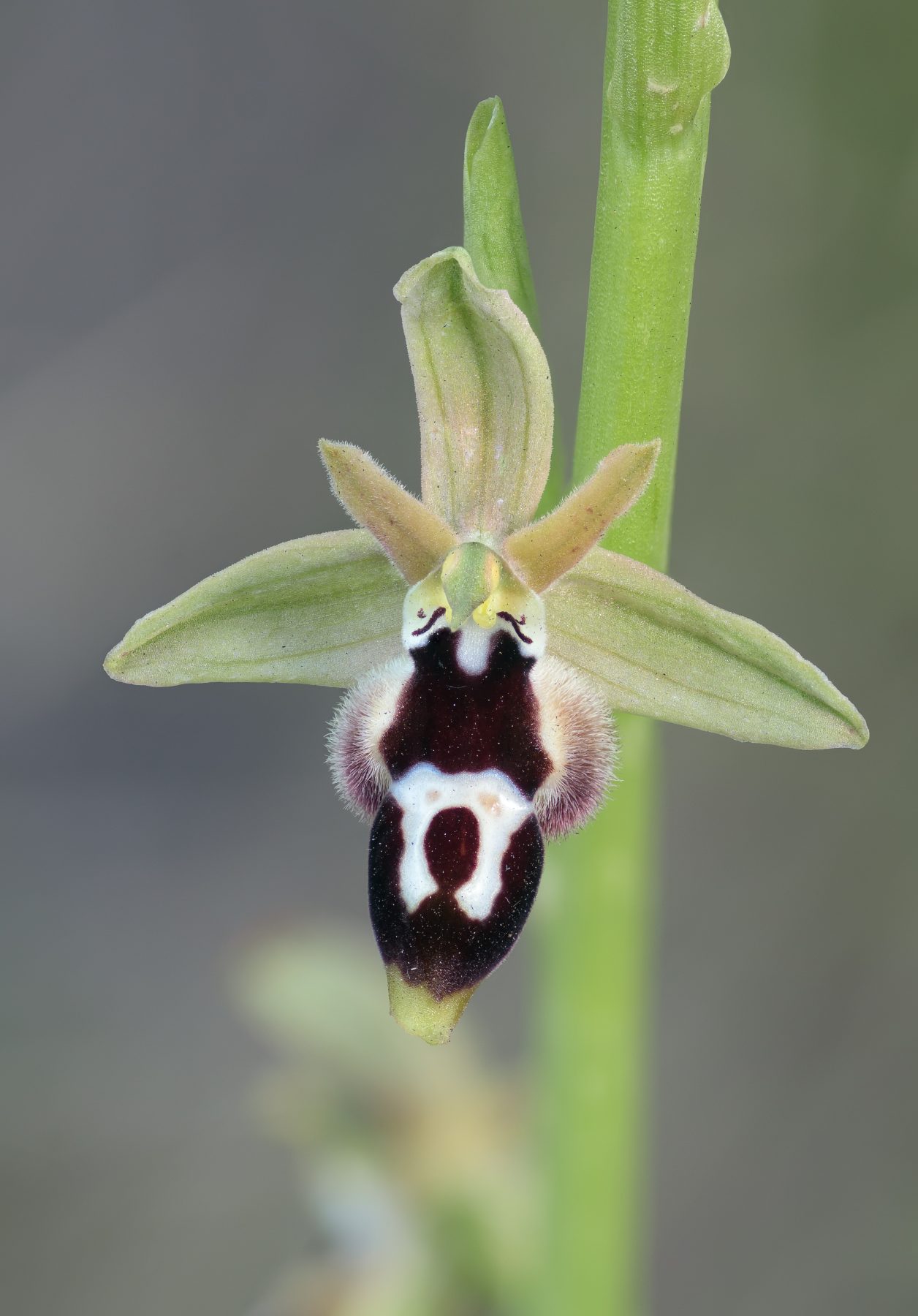
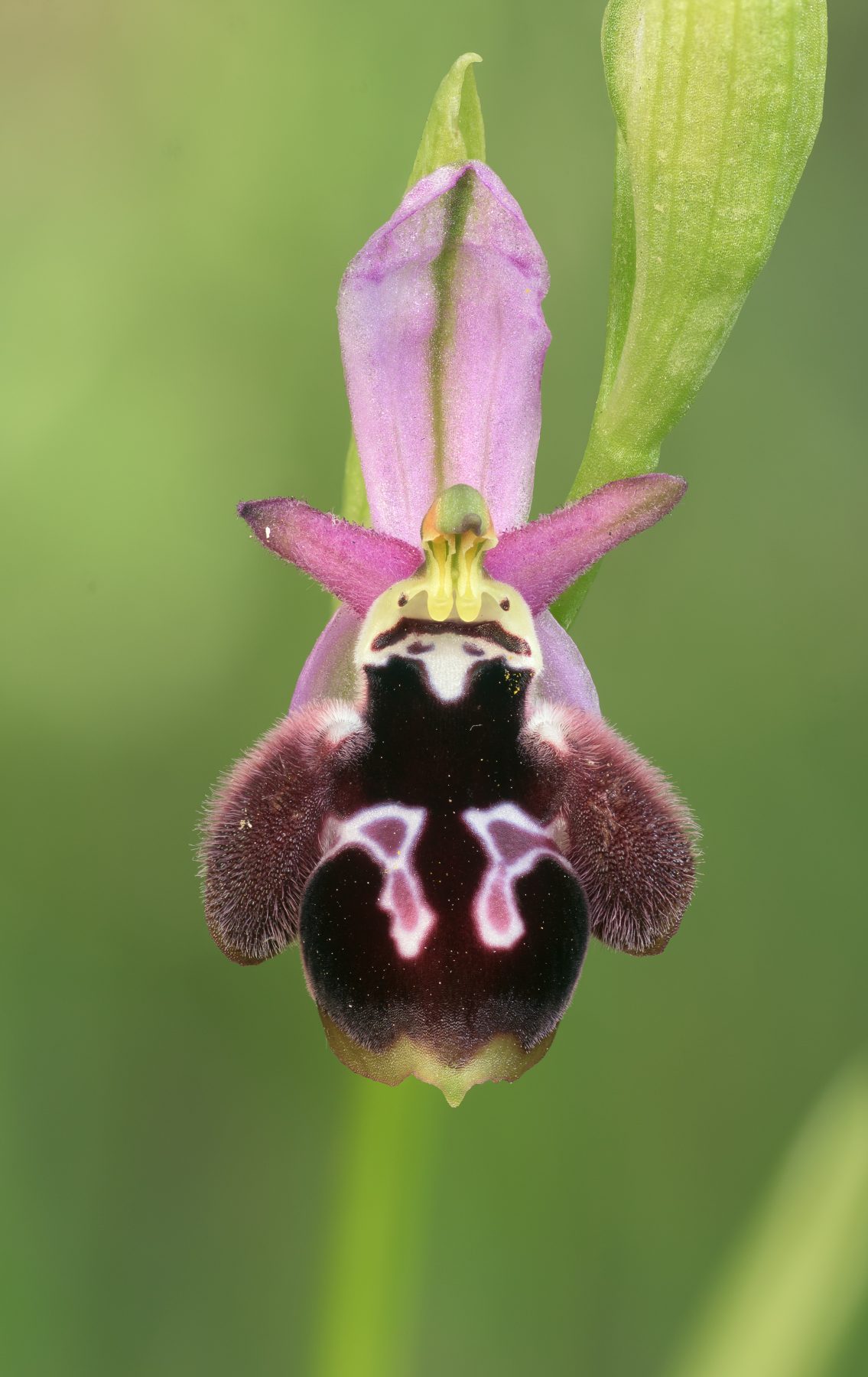
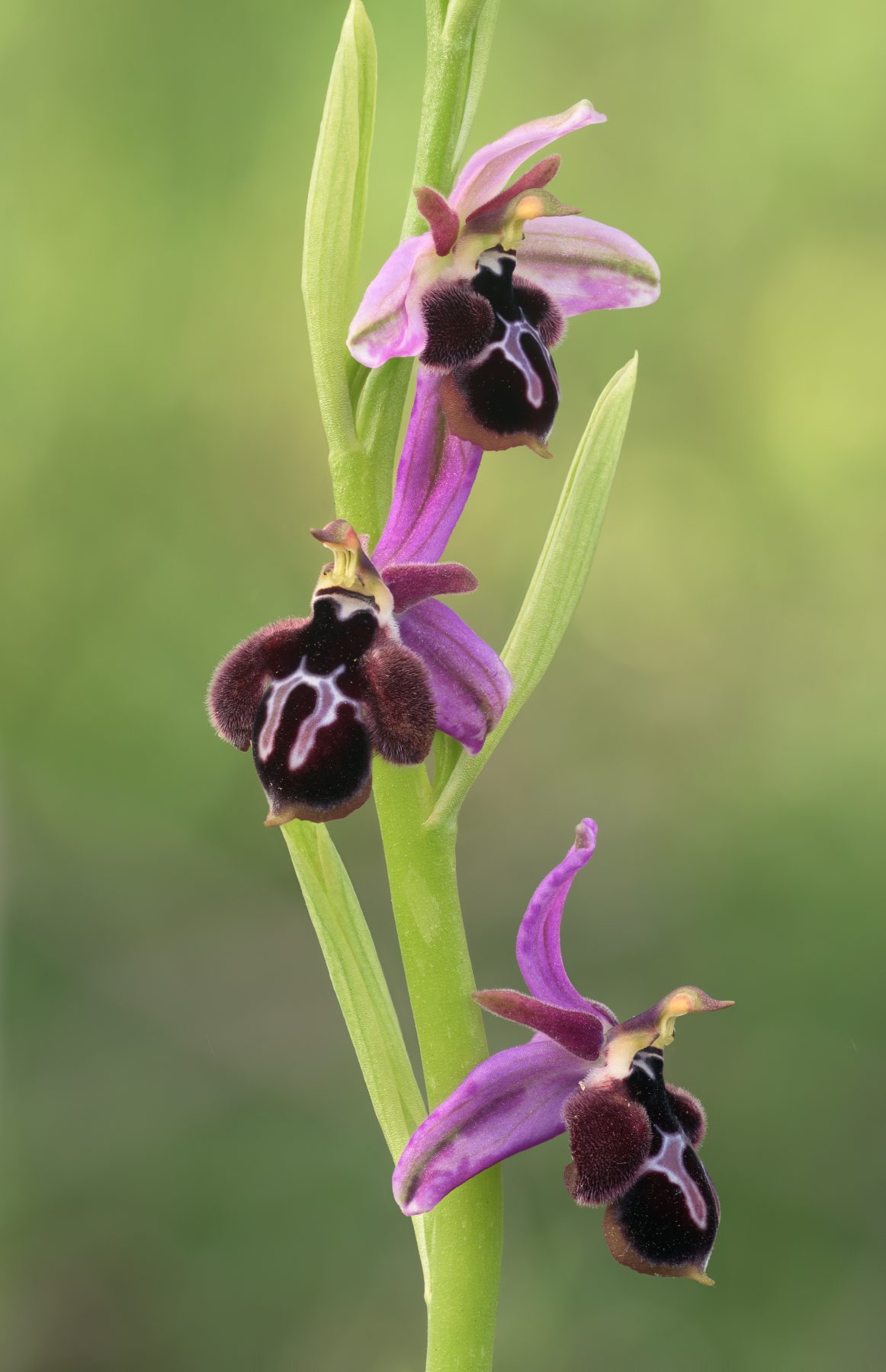
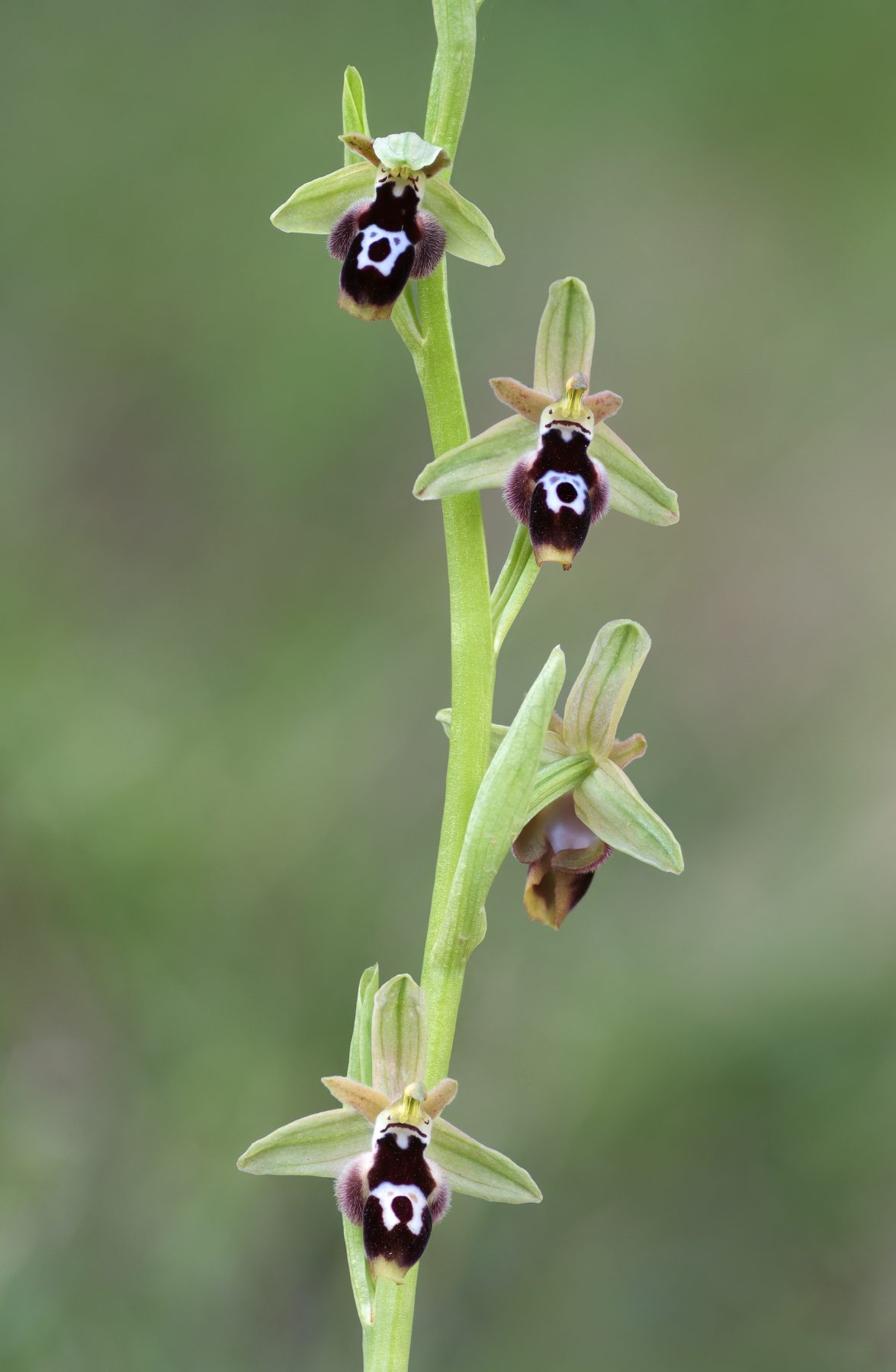


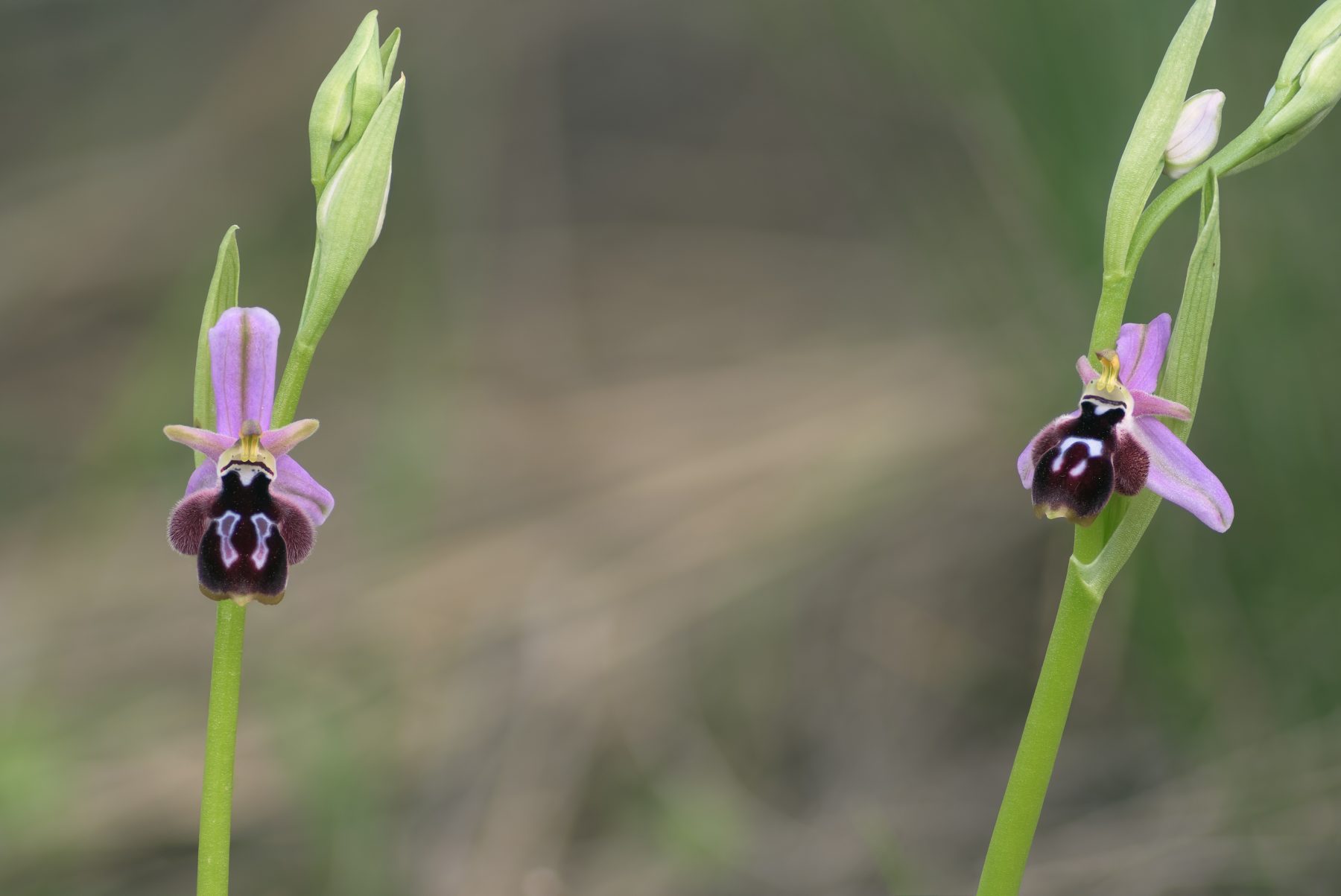
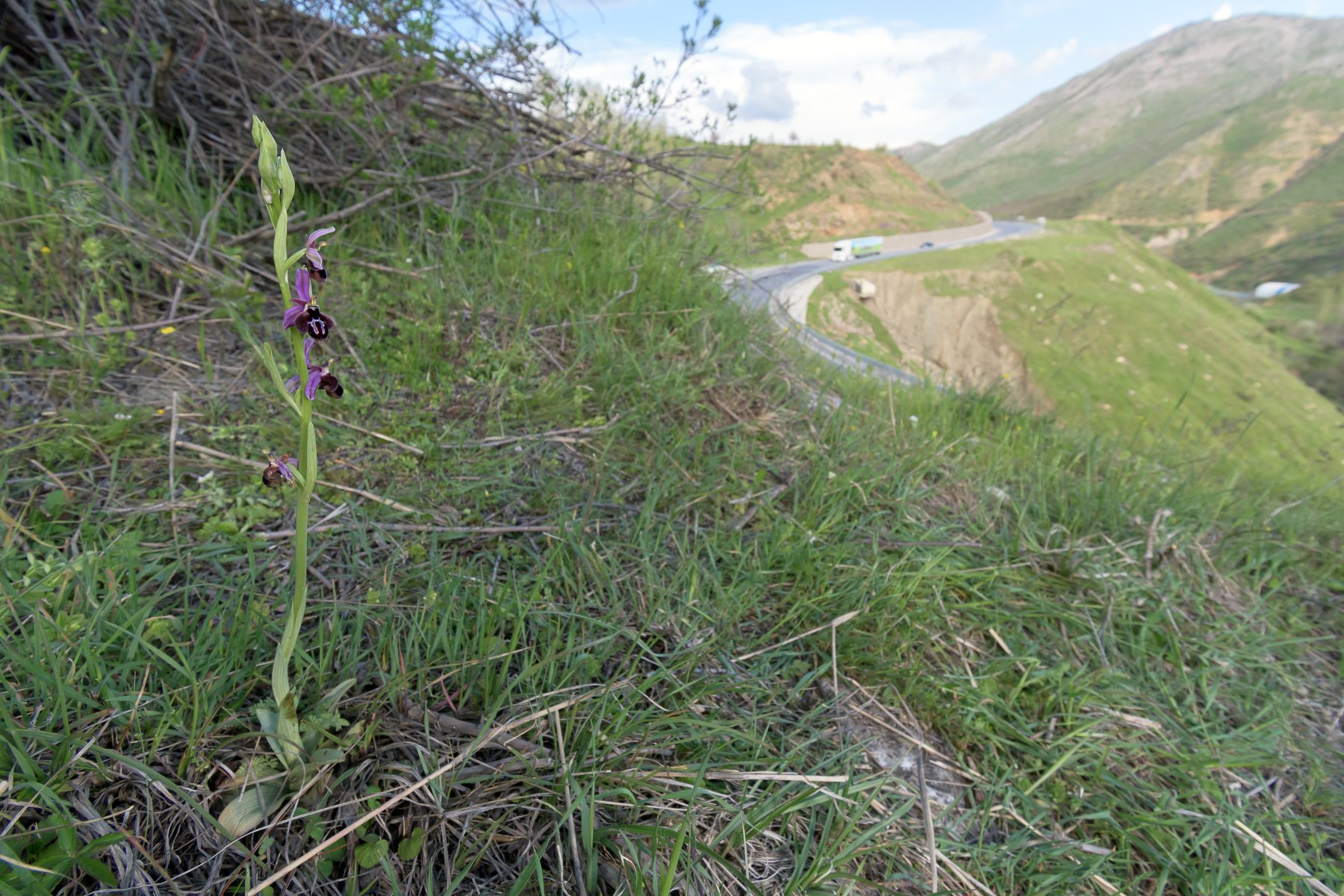

Unexpected Ophrys straussii population in a seepage slope in Bitlis Province, Turkey