| Etymology: | After the name of the Austrian botanist, Karl Georg Theodor Kotschy (1813-1866) who discovered the species |
| 1818Distribution: | Cyprian endemism (only one place and one plant in Antalya, Turkey) |
| Flowering time: | mid-II. to mid-IV. |
| Taxnonomy: | O. umbilicata group |
| Similar species: | O. cretica, O. ariadnae, O. cretica subsp. beloniae |
Interestingly, this Ophrys species, native to a place so far away from us, has several connections to Hungary. Although it was first discovered and collected by the Austrian botanist Kotschy in 1862, its formal description in 1926 was the work of none other than Rezső Soó (together with H. Fleischmann), who had no qualms about immediately naming this wonderful plant after its discoverer. Moreover, our fellow countrymen have also been involved in the debate over its taxonomic affinities. Because of their morphological similarities, many botanists place Ophrys kotschyi within the Ophrys reinholdii group. Indeed, several members of this group, particularly Ophrys cretica and its variants, which are widespread on some of the Greek islands (such as Ophrys cretica subsp. beloniae from Rhodes), look almost indistinguishable from it.
Just how misleading these similarities can be was demonstrated, among others, by Gábor Sramkó, a biologist from Debrecen, together with Attila V. Molnár and Gergely Gulyás, using molecular genetic techniques. According to their findings, published in 2011, the morphological resemblance to the aforementioned Greek species is the result of so-called convergent evolution. The culprit is a shared pollinating hymenopteran, Melecta tuberculata, which visits both Ophrys cretica and Ophrys kotschyi. It is well known that bee orchids like to dress up as females of the insect species they target, since this mimicry is one of the key elements of their deceptive pollination strategy. Consequently, individuals that attract similar pollinators are bound to evolve similar appearances, at least from a visual perspective. These facts, however, have done little to dissuade some orchid experts: Kreutz (2024), for instance, still consistently places the species among the reinholdii-type orchids, considering that its rightful taxonomic home…
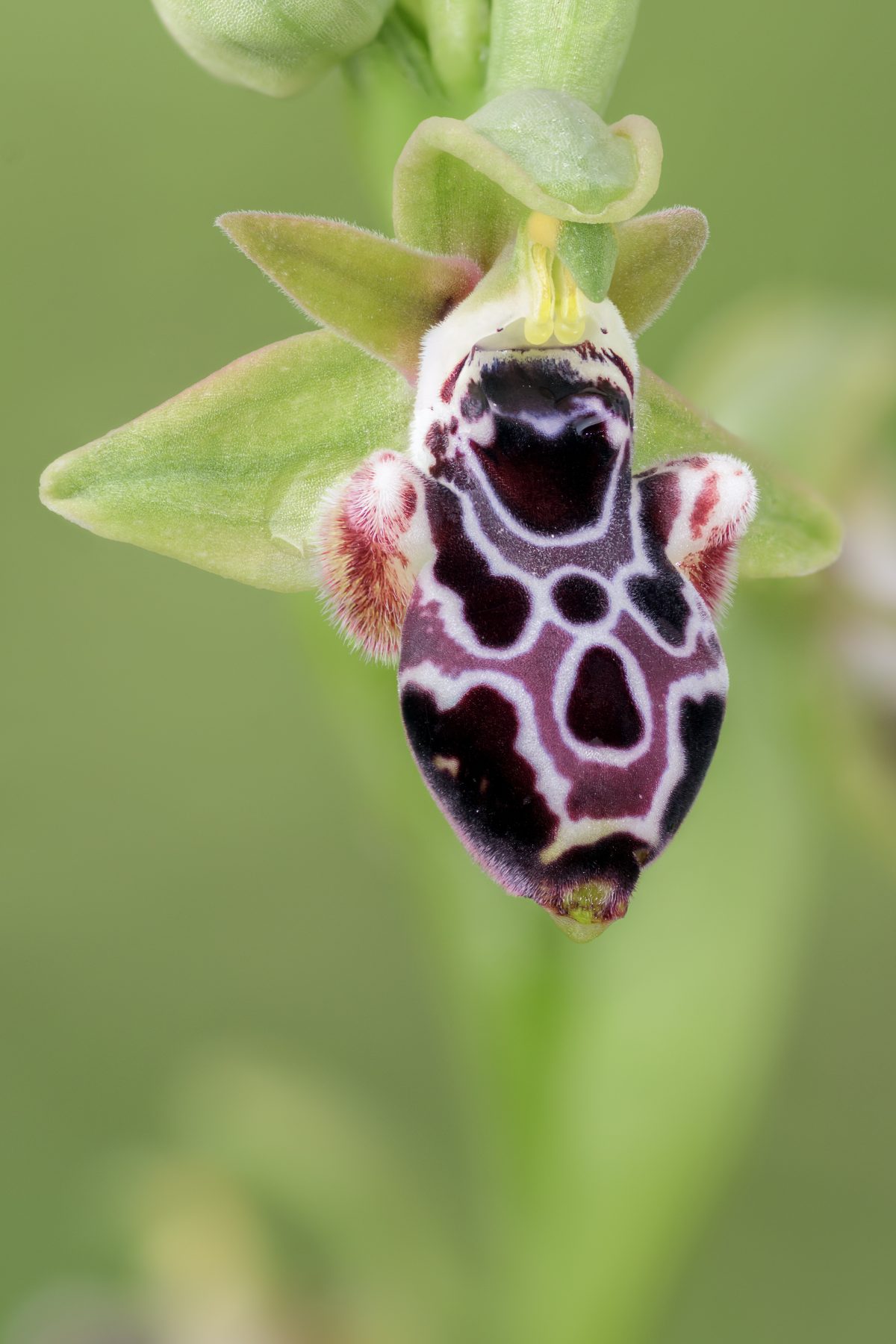
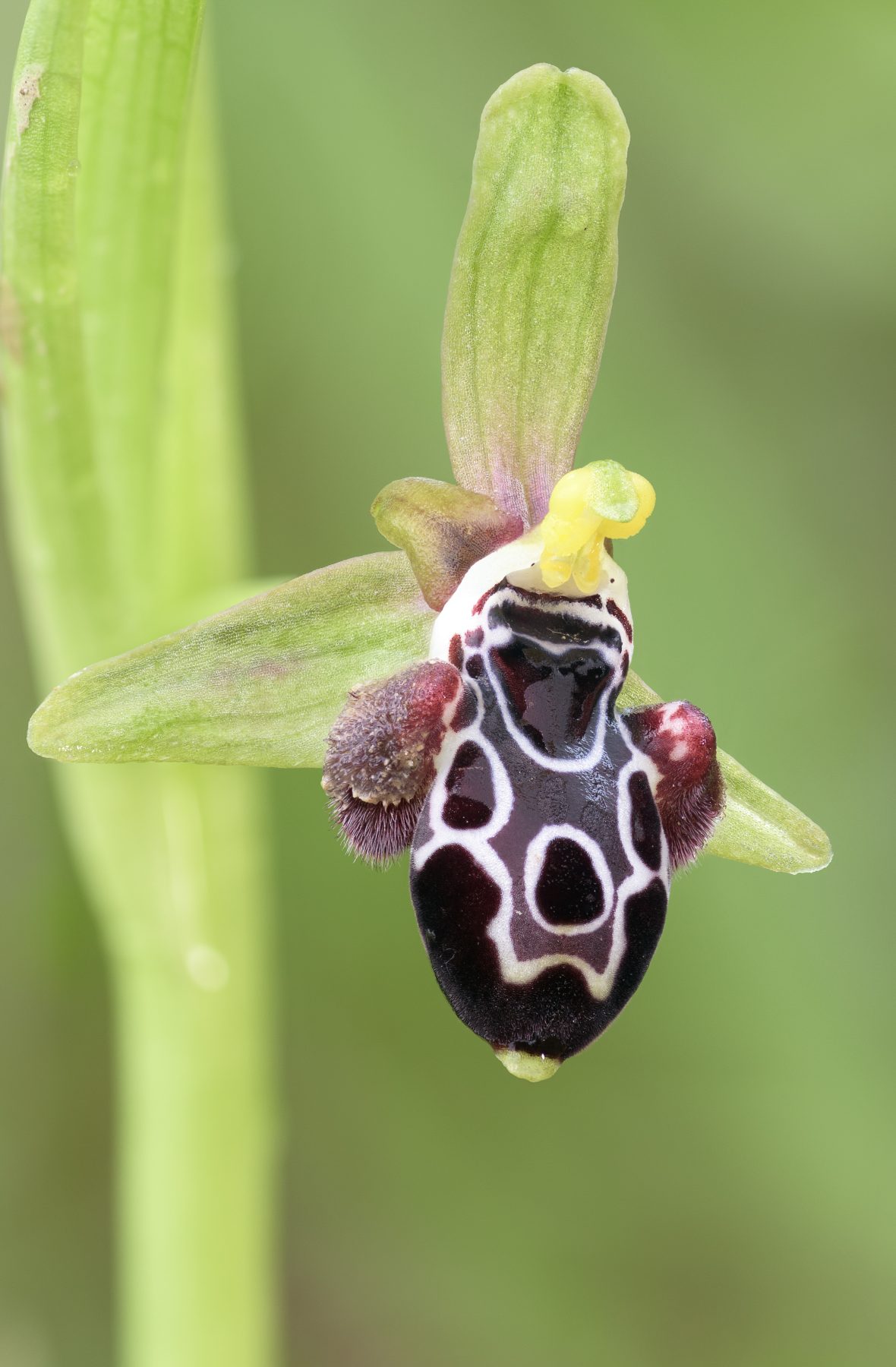
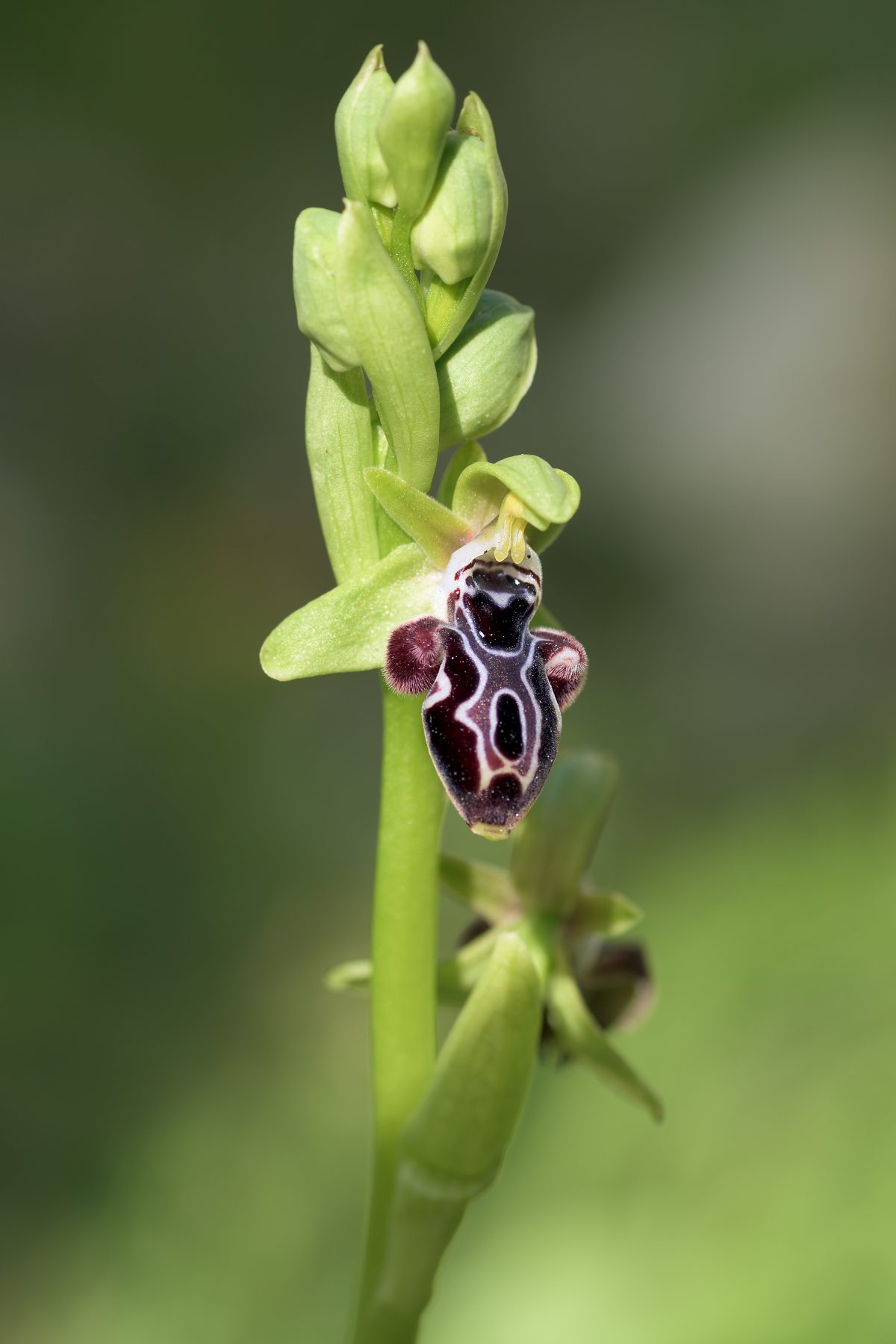
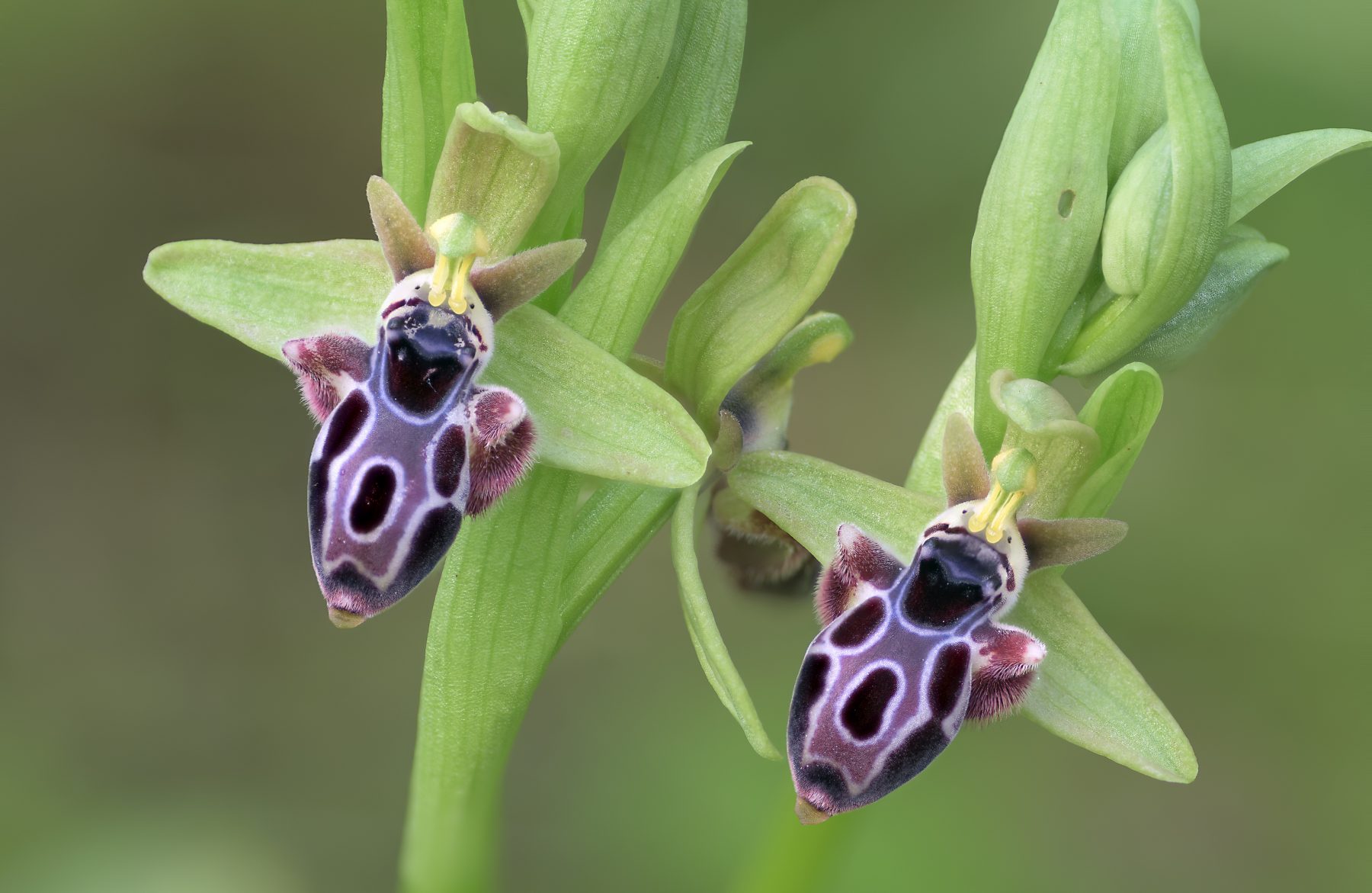
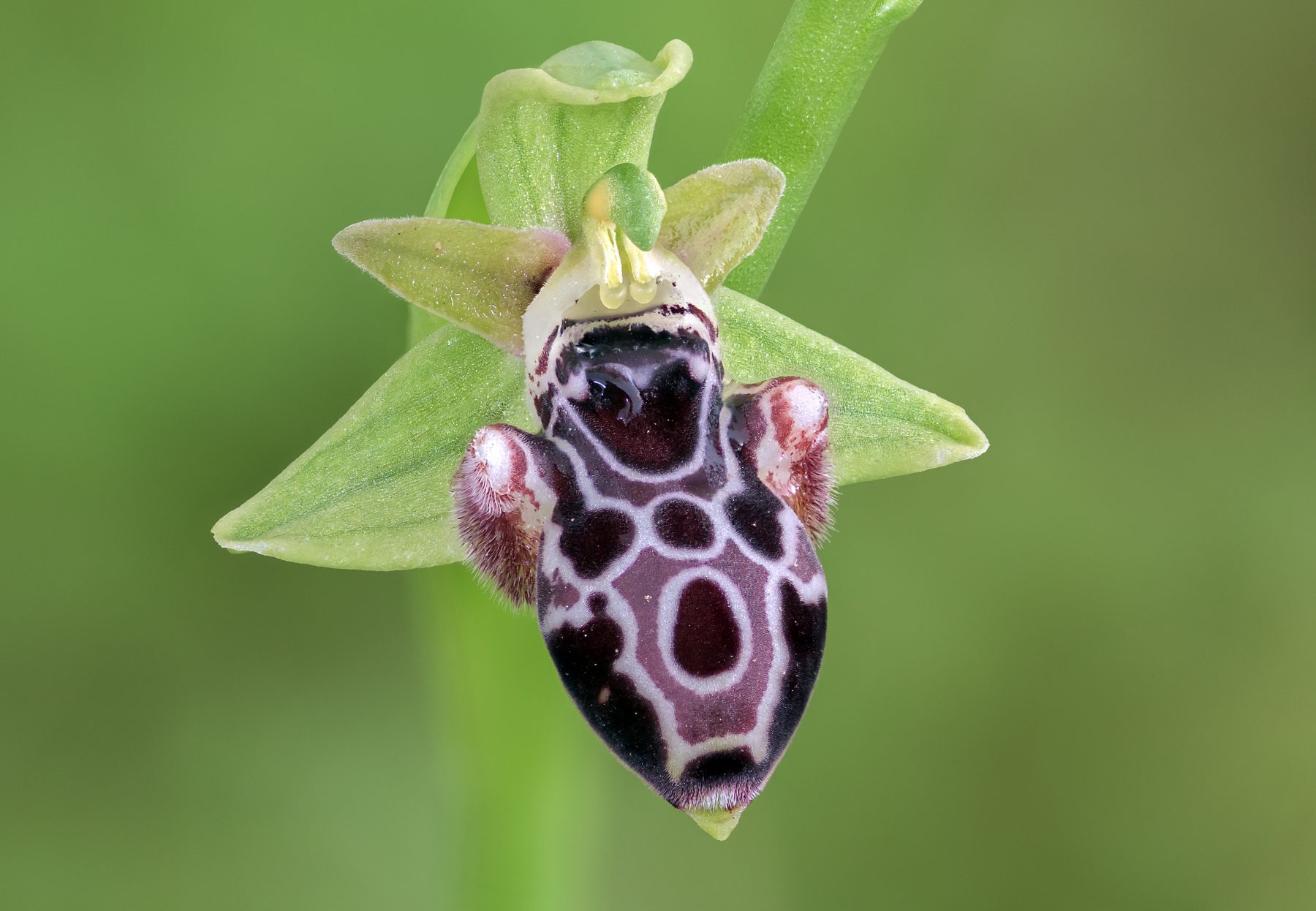
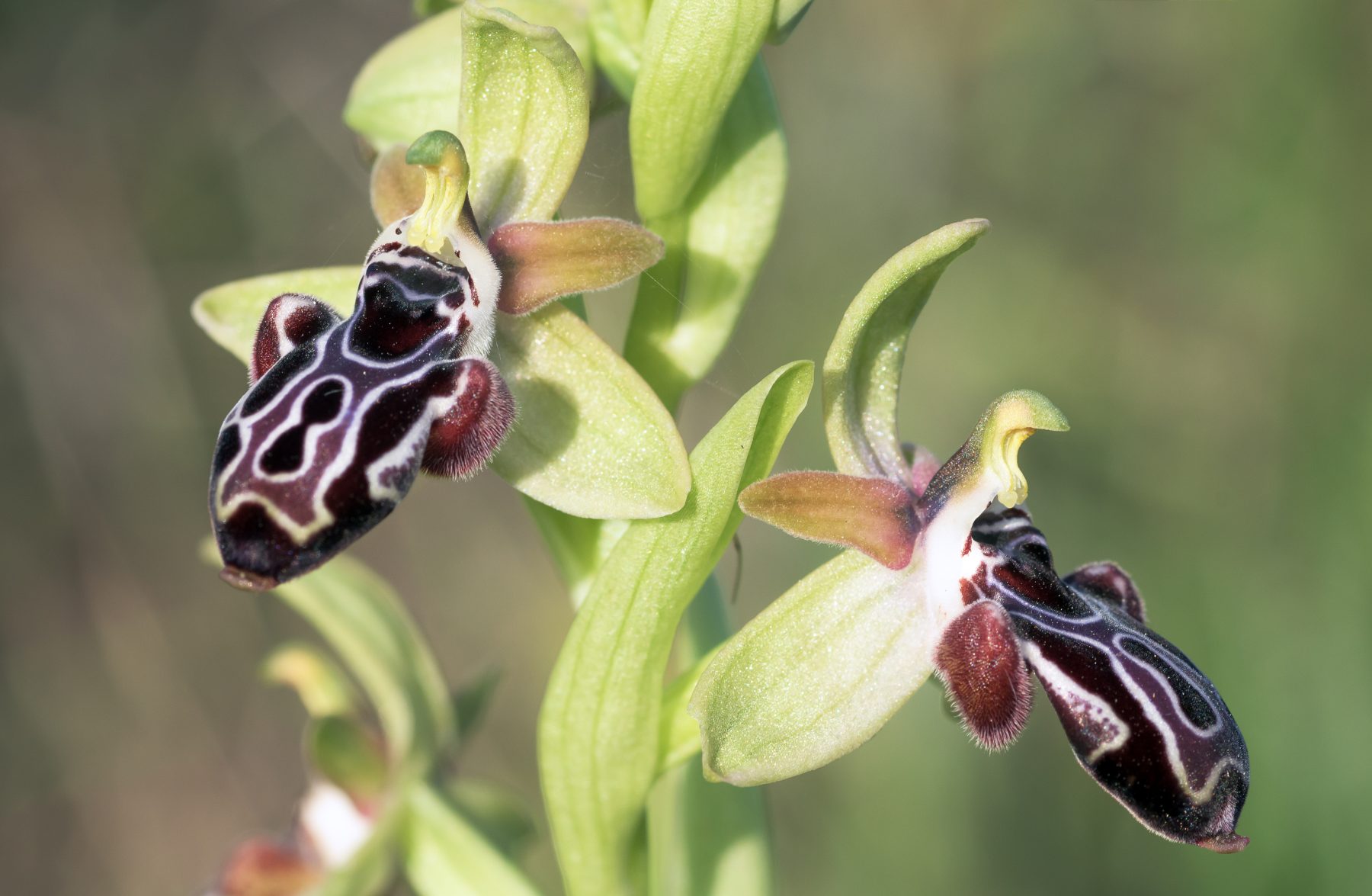
Ophrys kotschyi actually belongs to the umbilicata group, as indicated by the downward-curving dorsal sepal, which arches over the column, as well as by the frequent presence of an umbilicus-like marking on the lip. If necessary, it can even be distinguished from Ophrys cretica at first glance. The dorsal sepal of O. cretica do not bend forward nearly as conspicuously, but, more importantly, the stigmatic cavity in the Greek species and its relatives is whitish, whereas the “forehead” of O. kotschyi is distinctly dark or black. In any case, O. kotschyi occurs almost exclusively on Cyprus, while O. cretica and its relatives are entirely absent from the island, so there is virtually no chance of confusing them in the field. The species has ventured off the island only once, and even then it made it only as far as Turkey: in 2013, a single plant was observed in a cemetery near the town of Kemer, in the Antalya region. It was recorded there in just one year, and has not been seen at that location since. So, all in all, it seems perfectly content on the island it has been given.
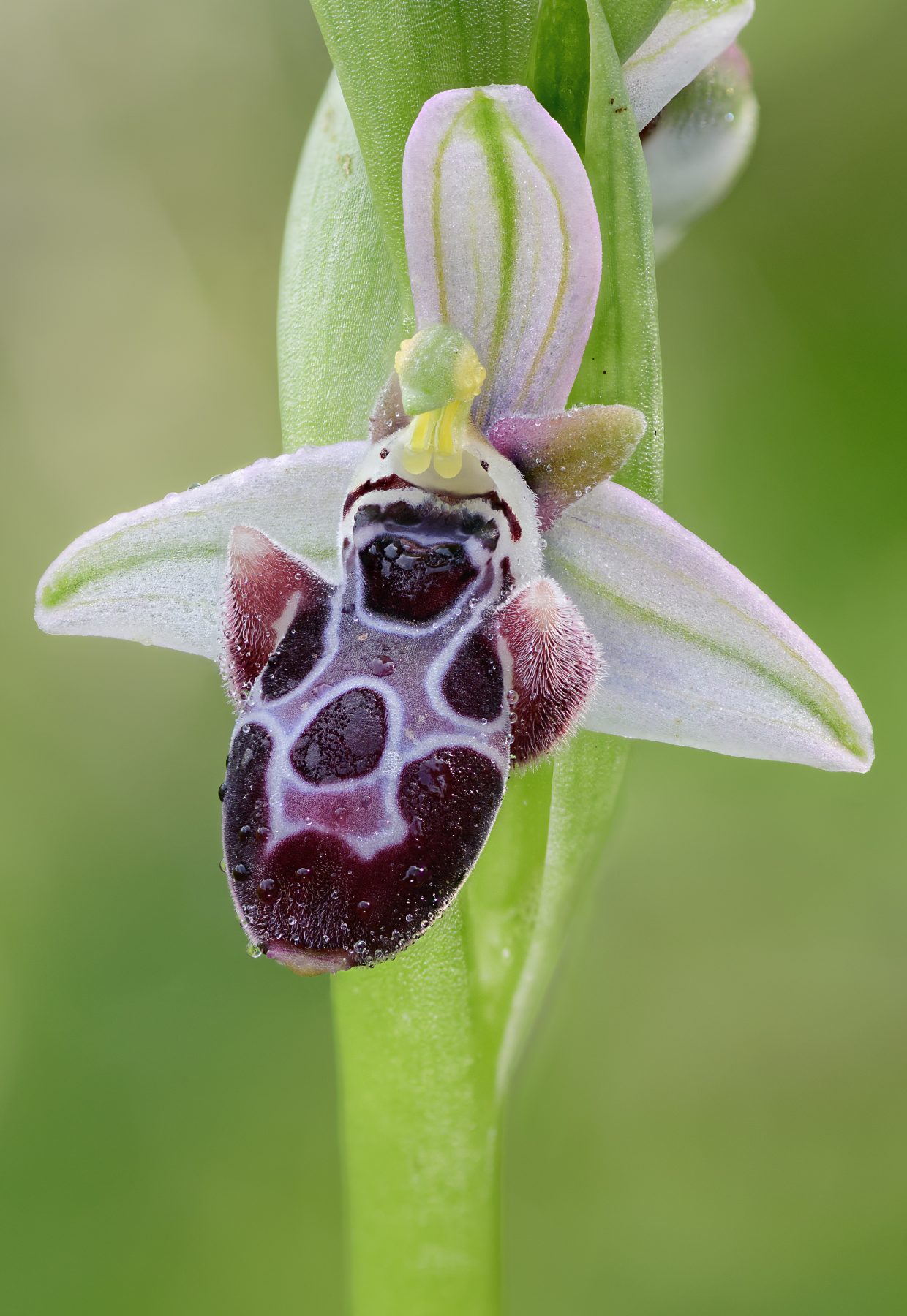
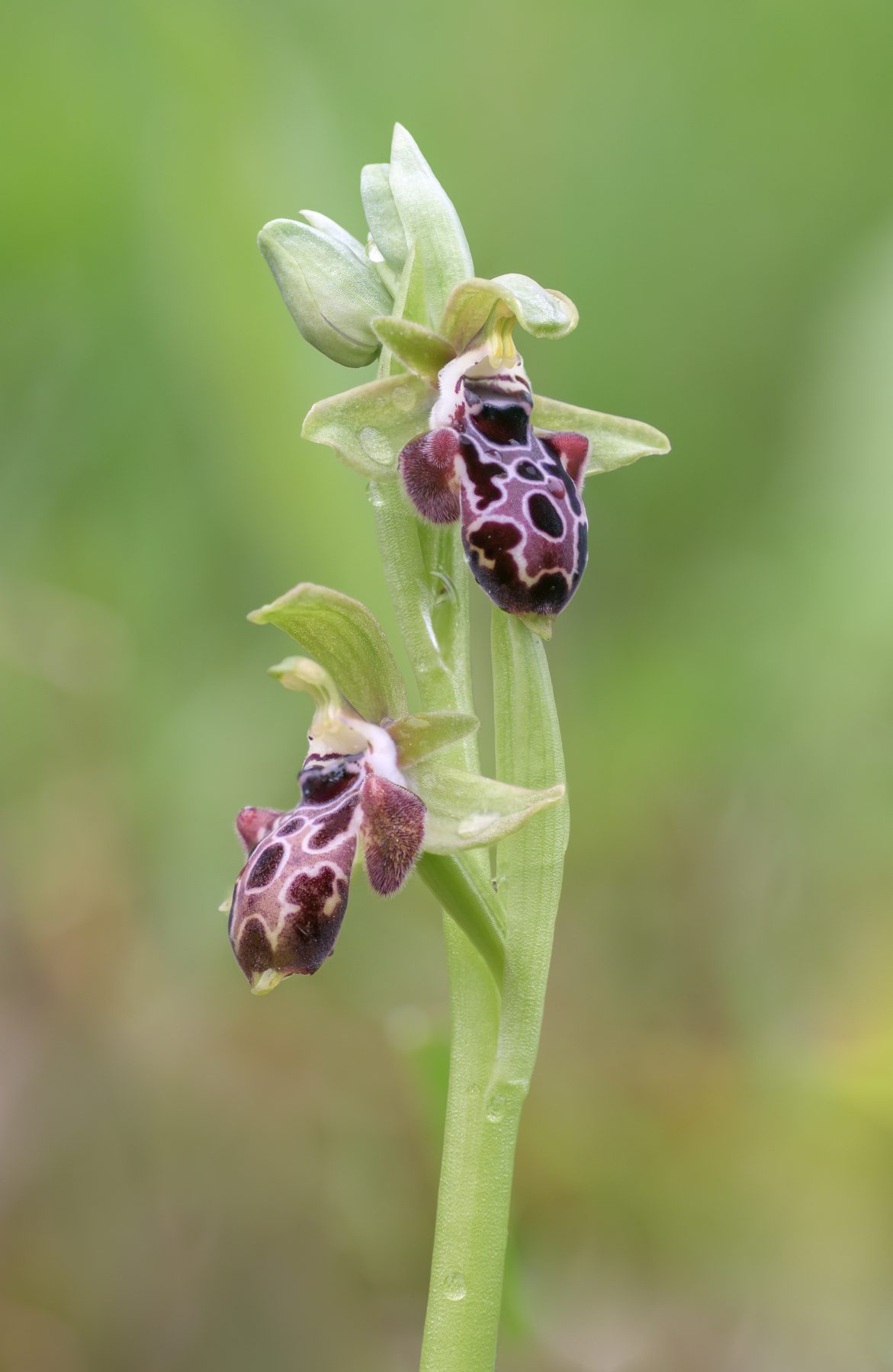
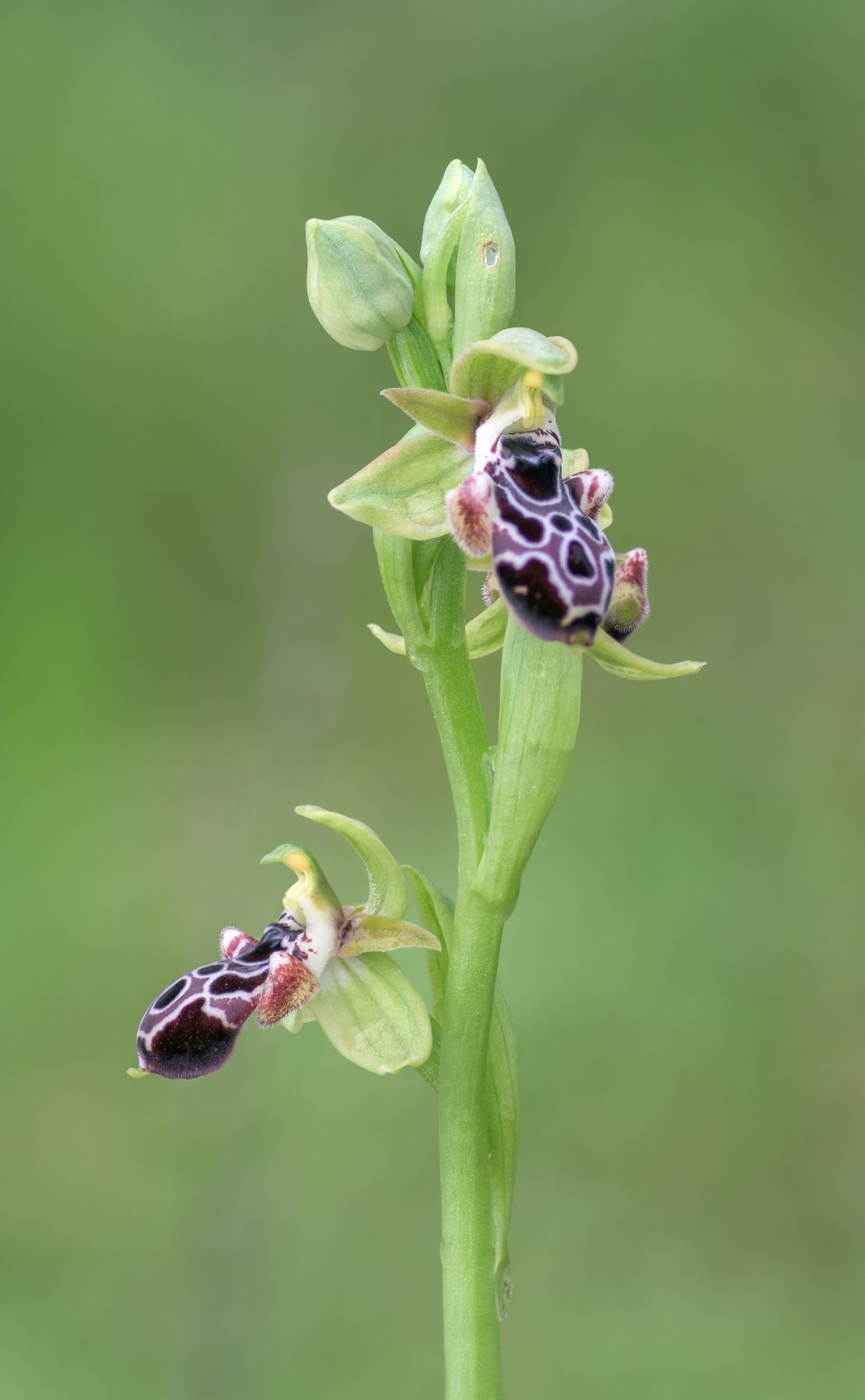
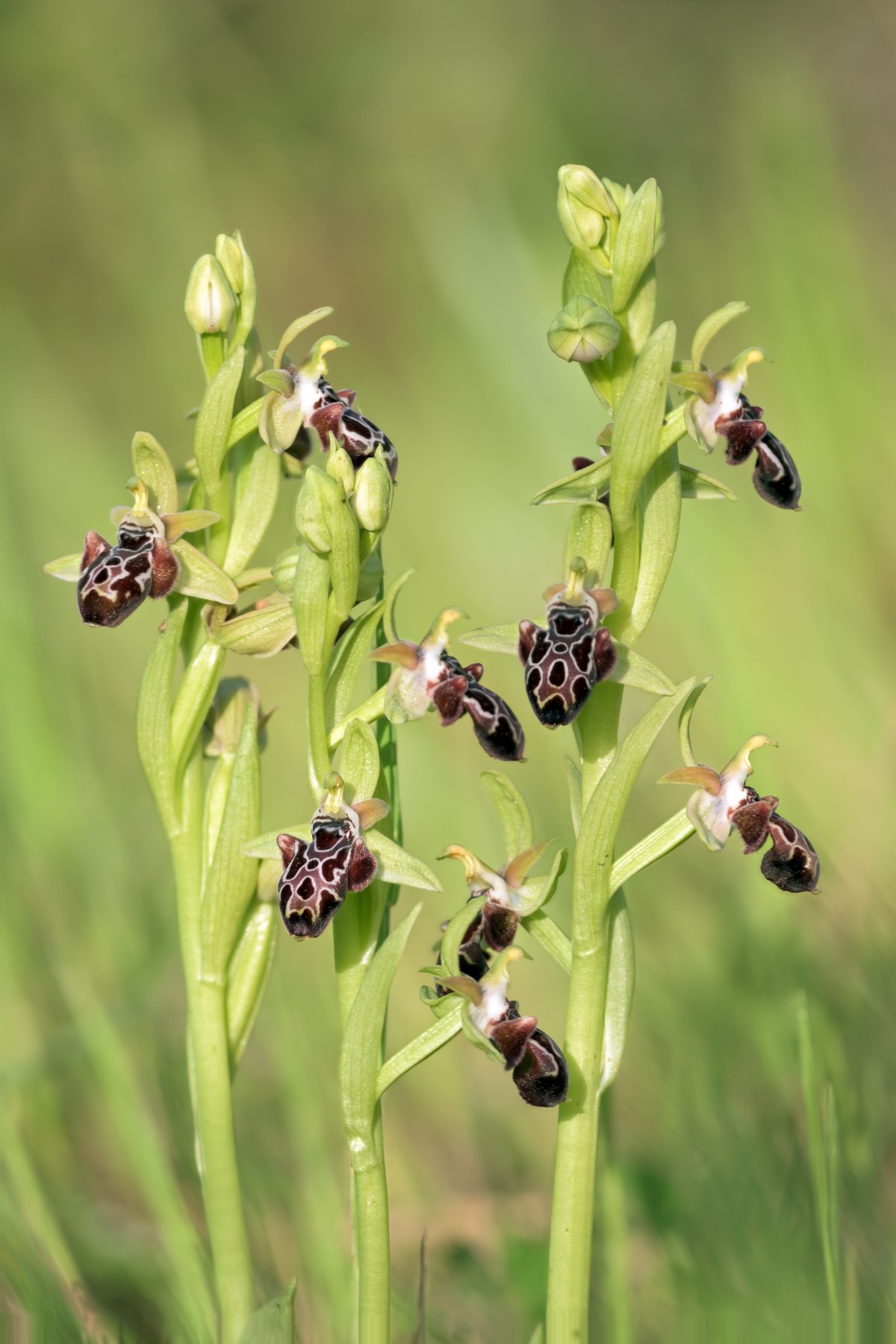
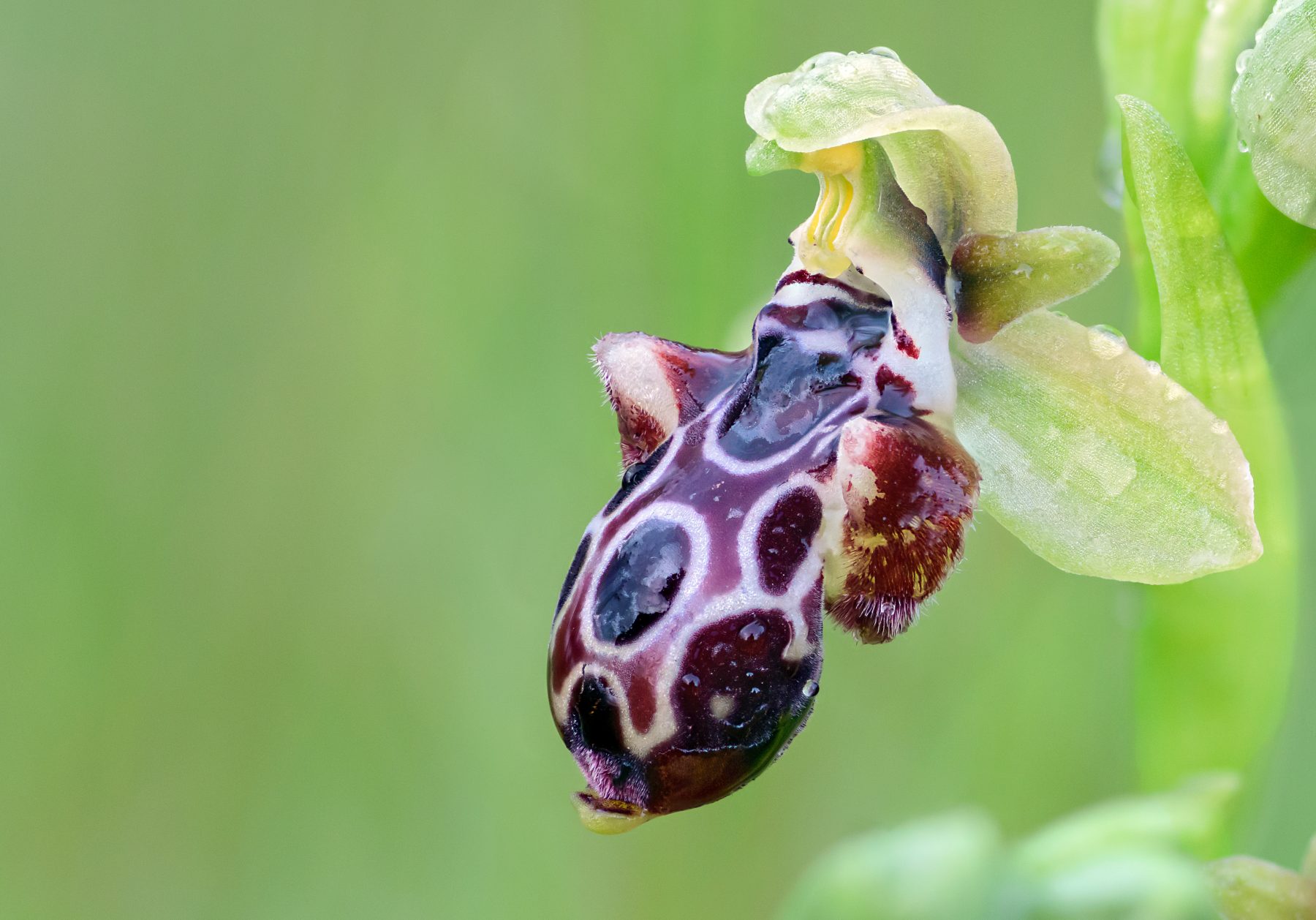
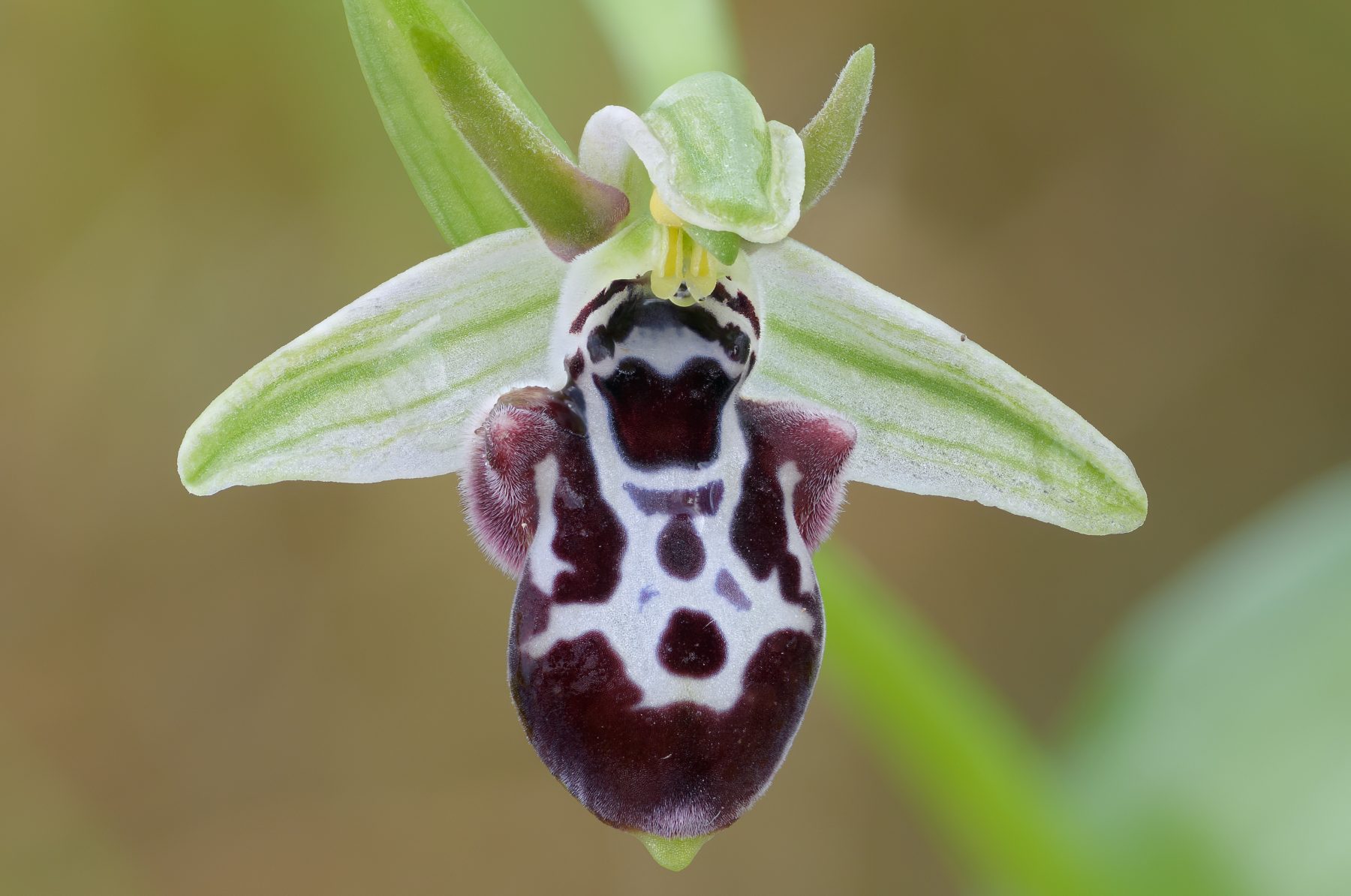
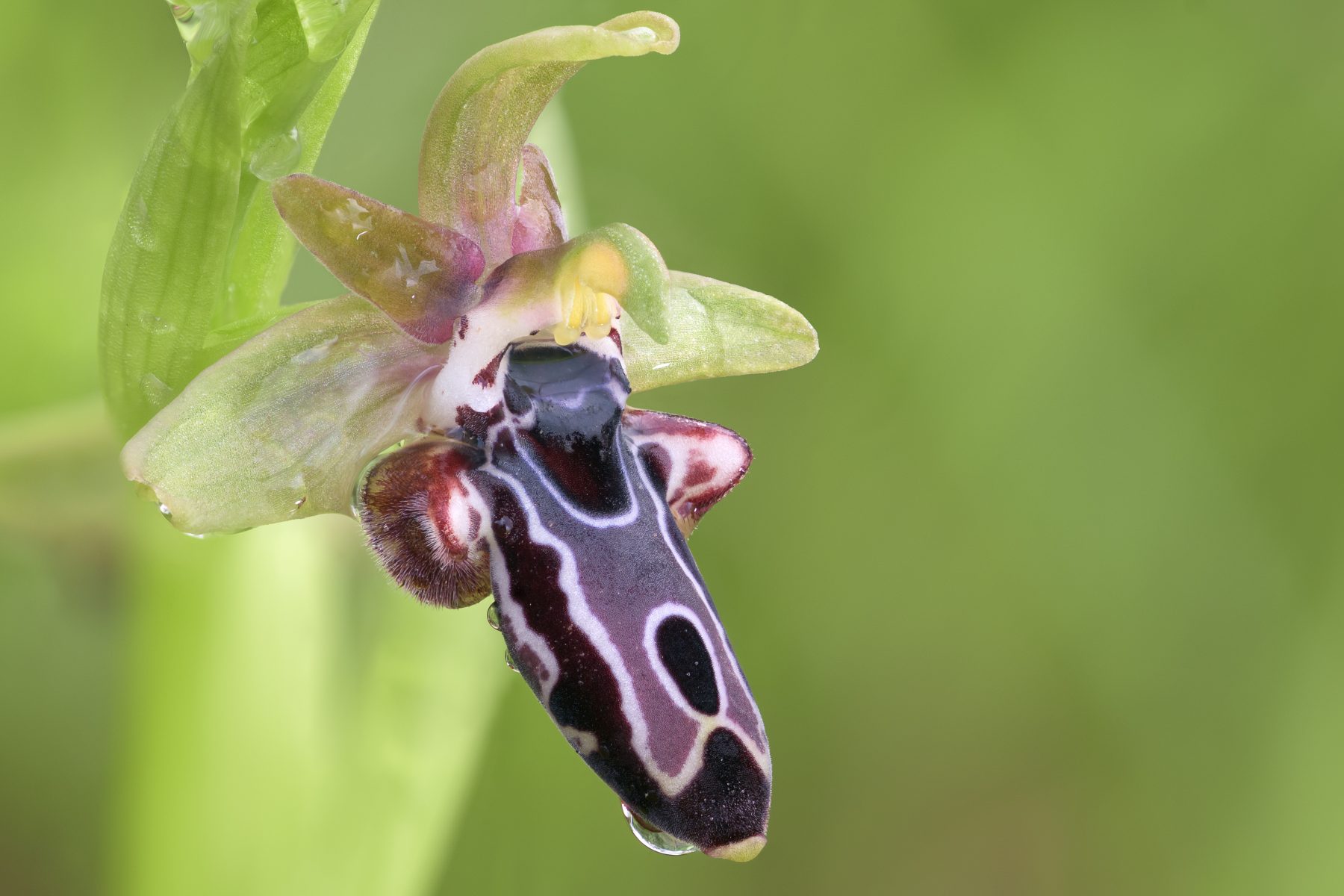
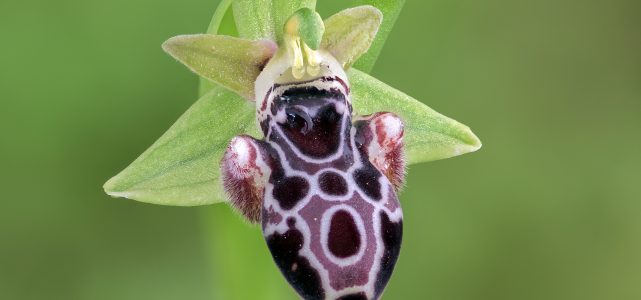
And we, too, can be perfectly happy when visiting it in its homeland, because Ophrys kotschyi unquestionably deserves a place among the most beautiful members of the genus. Its black-based lip, adorned with a large aubergine-purple speculum edged in thick white, contrasts spectacularly with the predominantly green perianths (which are sometimes whitish-pink, as can be seen in the gallery below!). The result is breathtaking, even for those who are not particularly passionate about bee orchids.
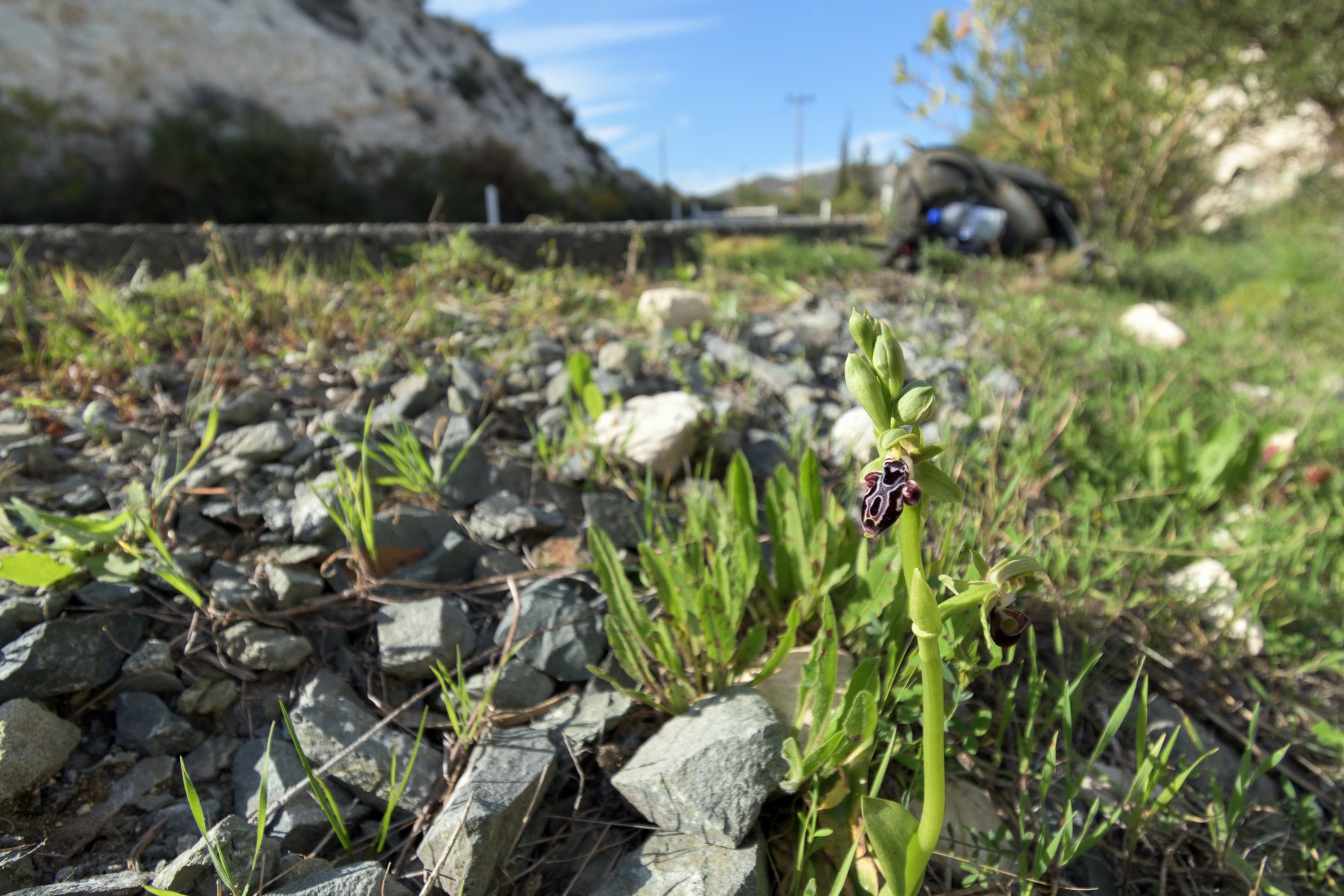
During our expedition to Cyprus in early March 2020, O. kotschyi was undoubtedly the star species of the trip. Every encounter with it, wherever and whenever it happened, was a memorable experience. We came across it somewhat less frequently in the southern part of Cyprus, where it is rarer, but it is considerably more common in Northern Cyprus, especially in and around the Pentadaktylos Mountains. There, we were fortunate enough to come across some magnificent populations containing numerous plants. Among them, we also found a hybrid between O. kotschyi and Ophrys astarte, another Cyprian endemic belonging to the same umbilicata group. This hybrid can also be admired in the gallery below.