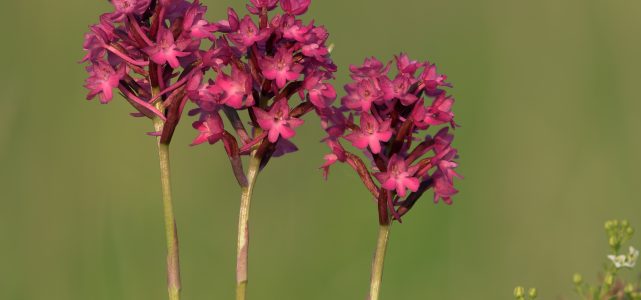
| Etymology: | The Latin epithet pyramidalis refers to the shape of the inflorescence |
| Distribution: | The southwestern main part of Europe (south of the Scotland-Caucasus-Iran line, northeast of Poland is absent) |
| Distribution in Hungary: | Danuba-Tisza Interfluve, Transdanubian Medium Mountains, Transdanubian Hills, Little Hungarian Plain, Bükk Mountains, Aggtelek Karst, Nyírség |
| Flowering time | late III. – late VII. |
| Flowering time in Hungary: | mid-V. – early VII. |
| Similar species: | – |
The type species of the Anacamptis genus (the real Anacamptis!) was also the genus’s only species for a long time, until Bateman, in 1997, reassigned a whole bunch of species previously belonging to the Orchis genus to it, based on molecular genetic evidence, so that it would not have to endure such loneliness. Others, however — Kreutz, for example, relying mainly on morphological characteristics — argue that there is no need to expand the company of the Pyramidal Orchid; it does perfectly well on its own. Alternatively, why not split the species itself into several independent species, thereby solving the tormenting problem of being an only child? The latter approach has resulted in the identity of what was previously known everywhere simply as Anacamptis pyramidalis becoming fragmented. For example, I can no longer say of a Maltese specimen, “Well, this is A. pyramidalis too,” because it flowers too early, has a paler colour and a denser inflorescence. So please call it Anacamptis urvilleana instead! Similarly, if you happen to be in Greece (see the Peloponnesian example in the gallery below!), the correct way to address the plant is Anacamptis brachystachys. And I could go on, but I would rather not, as I am not entirely convinced that this kind of taxonomic “splitting spree” is justified…
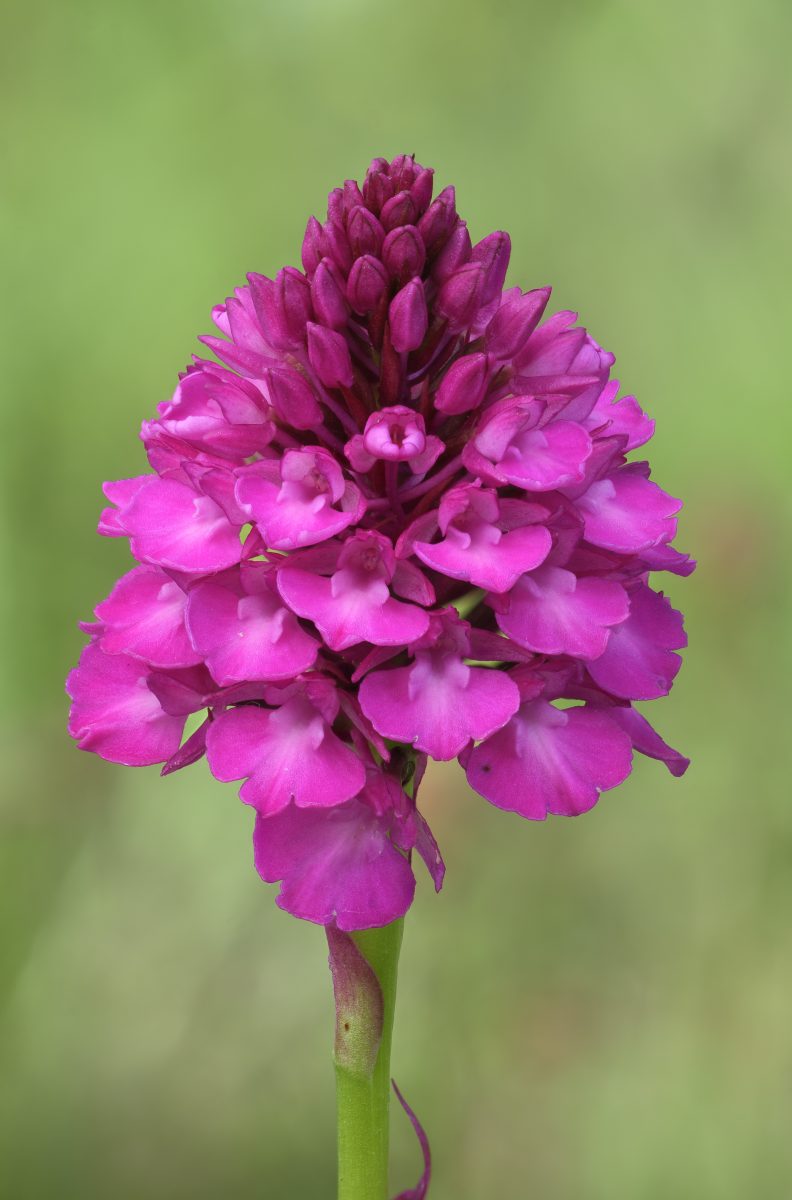
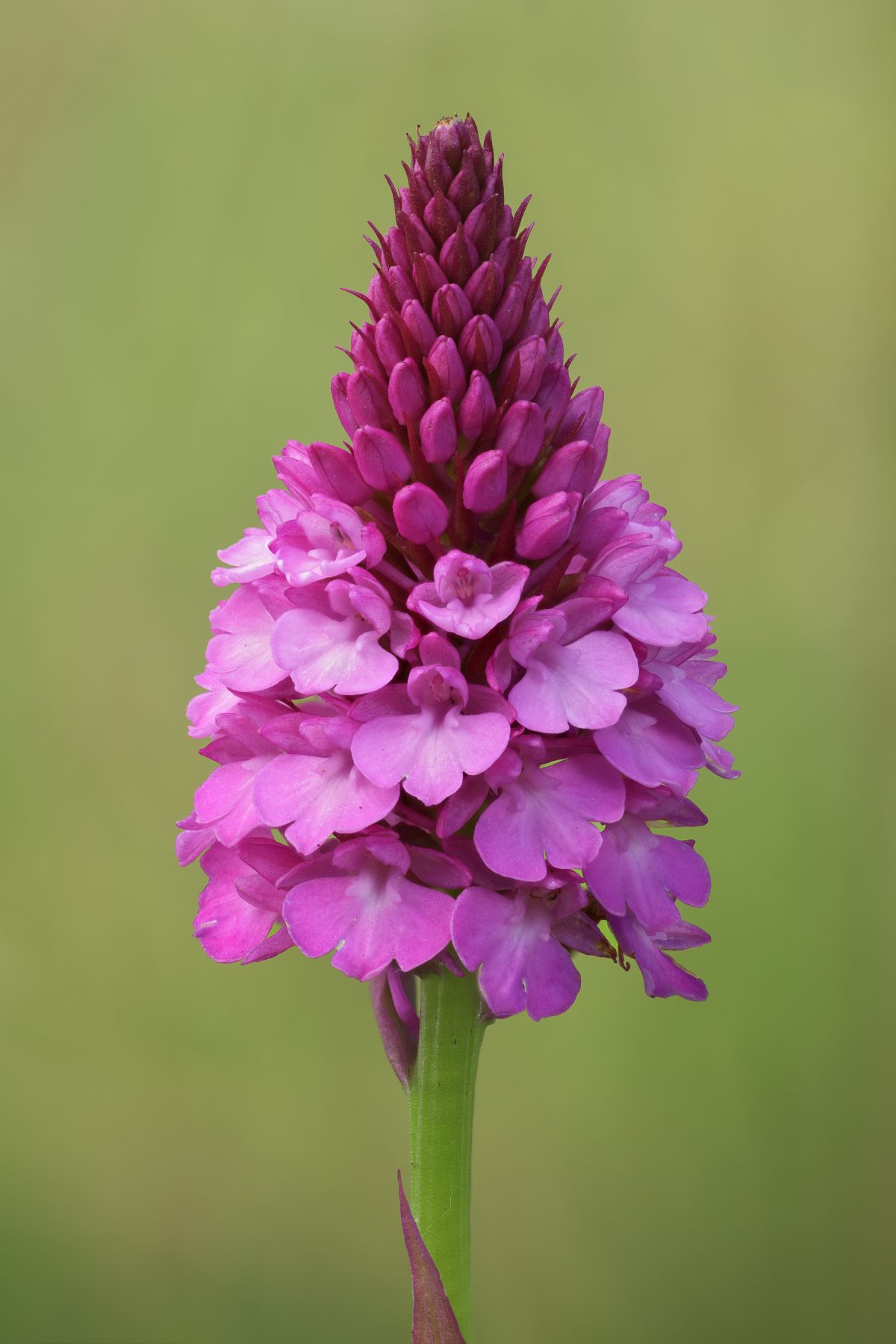
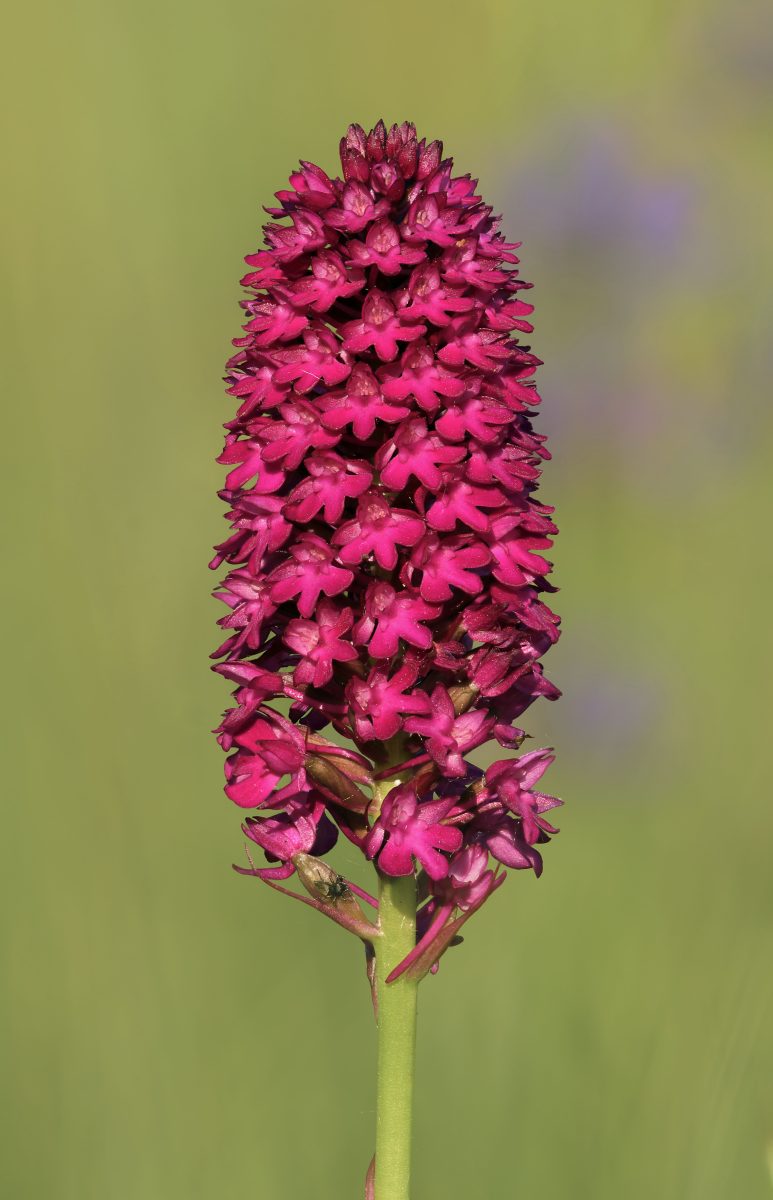
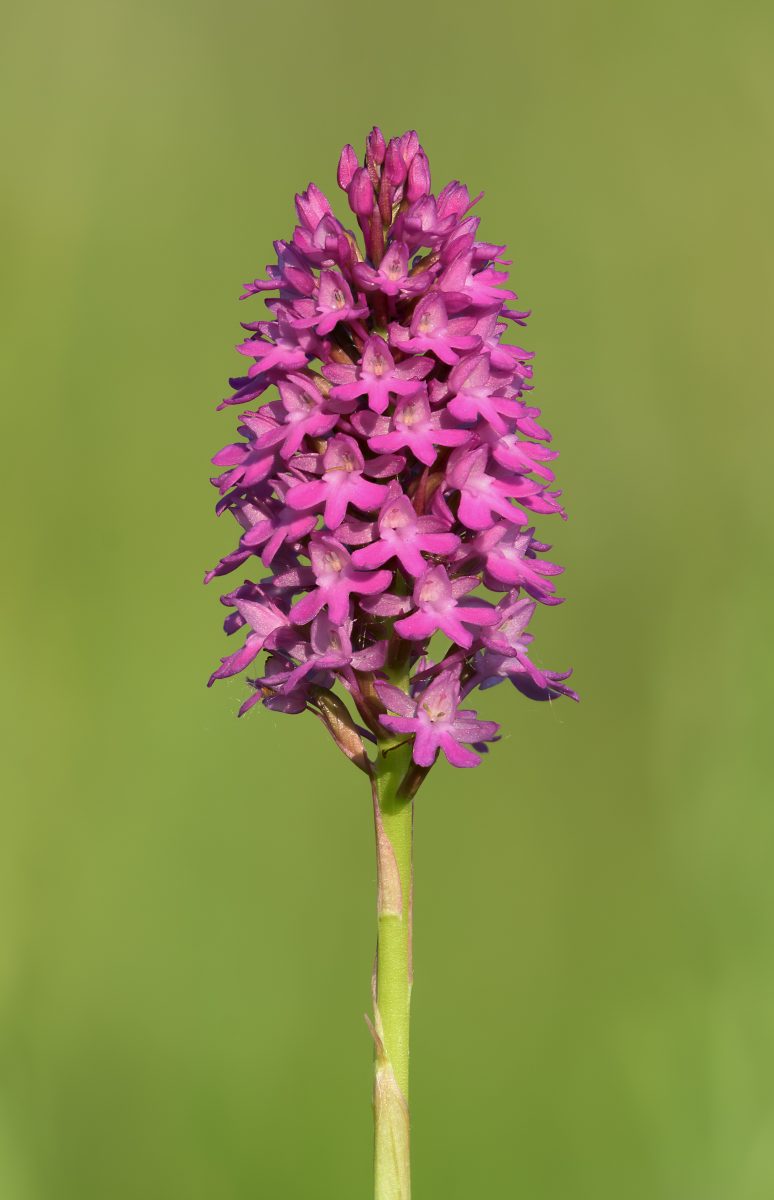
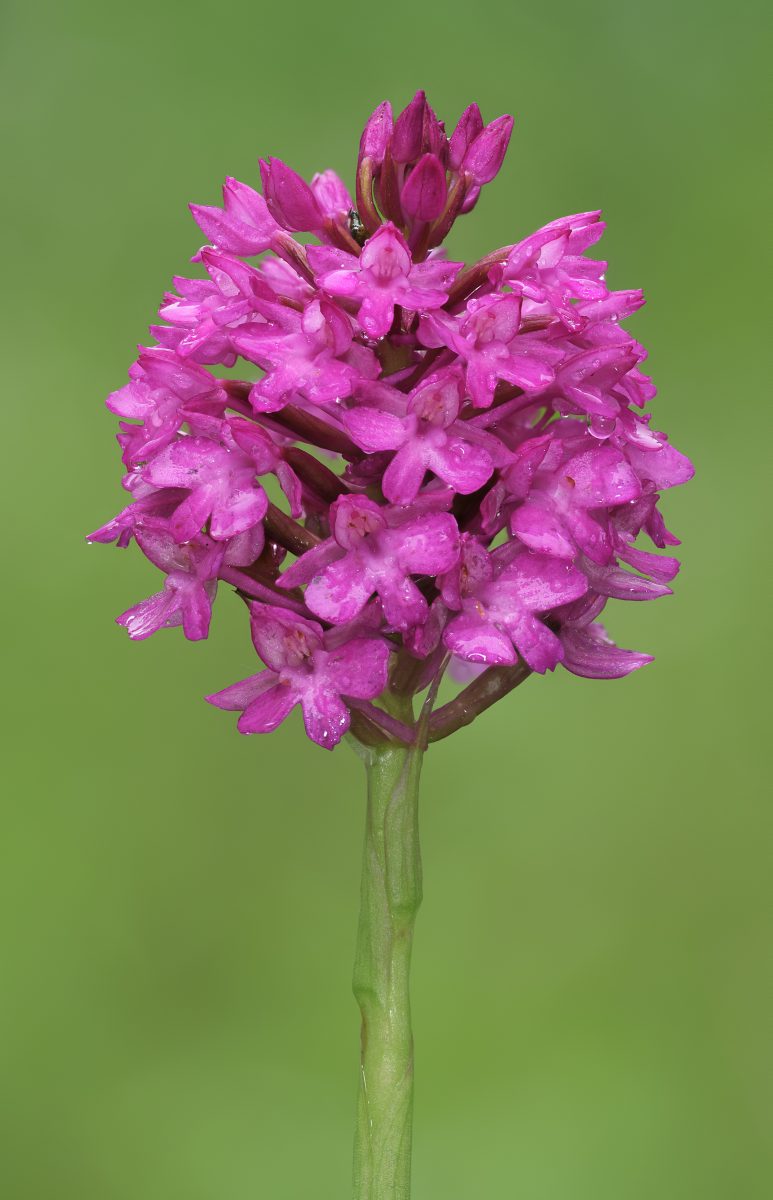
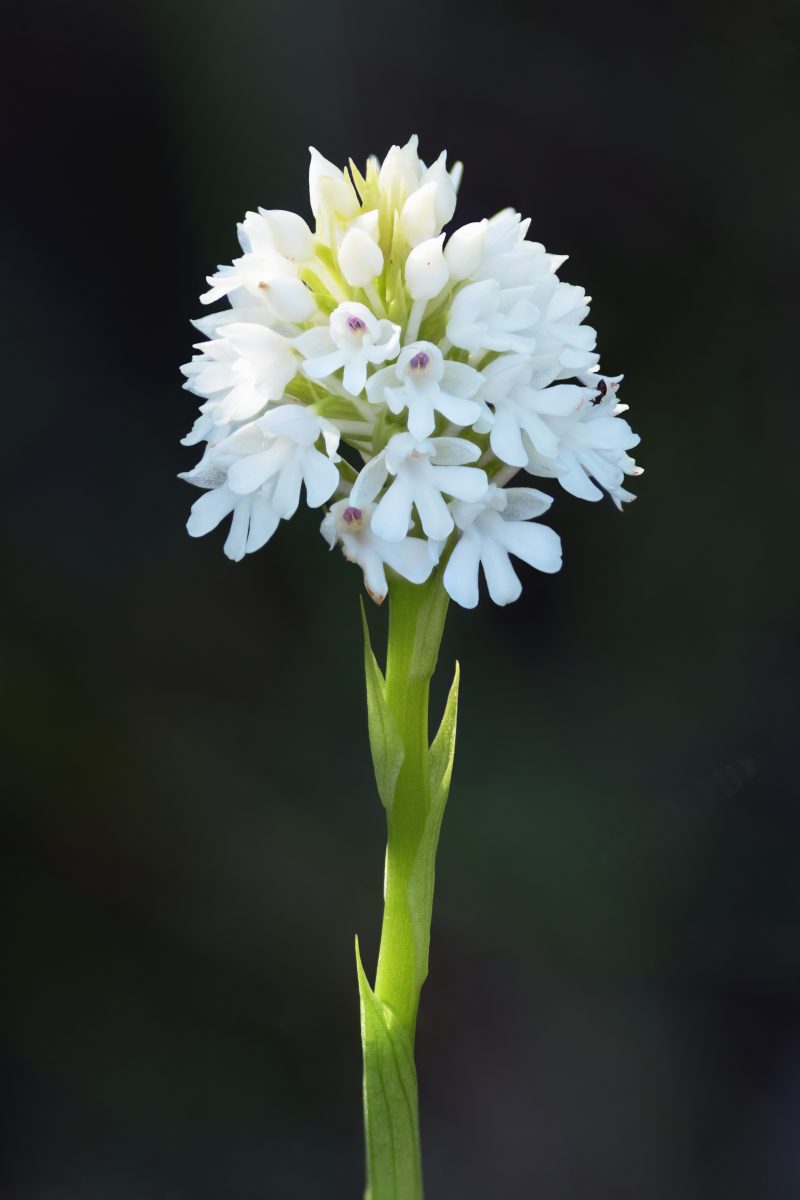
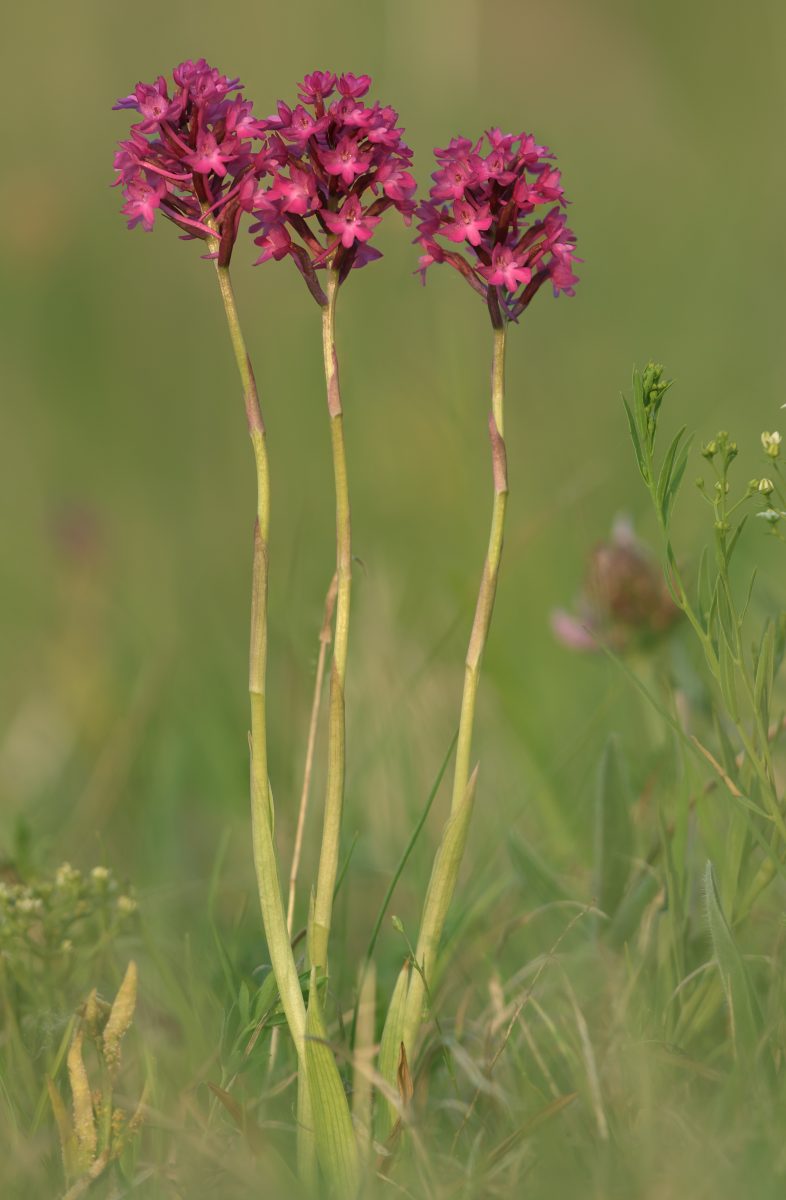
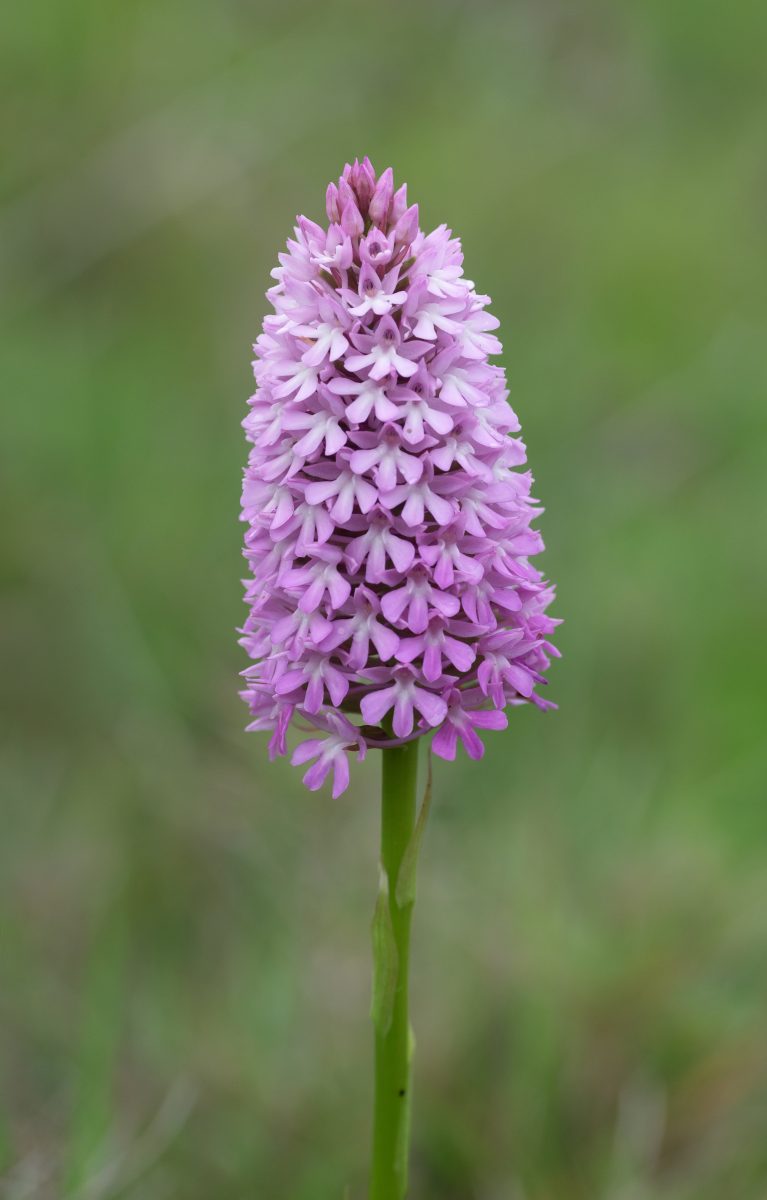
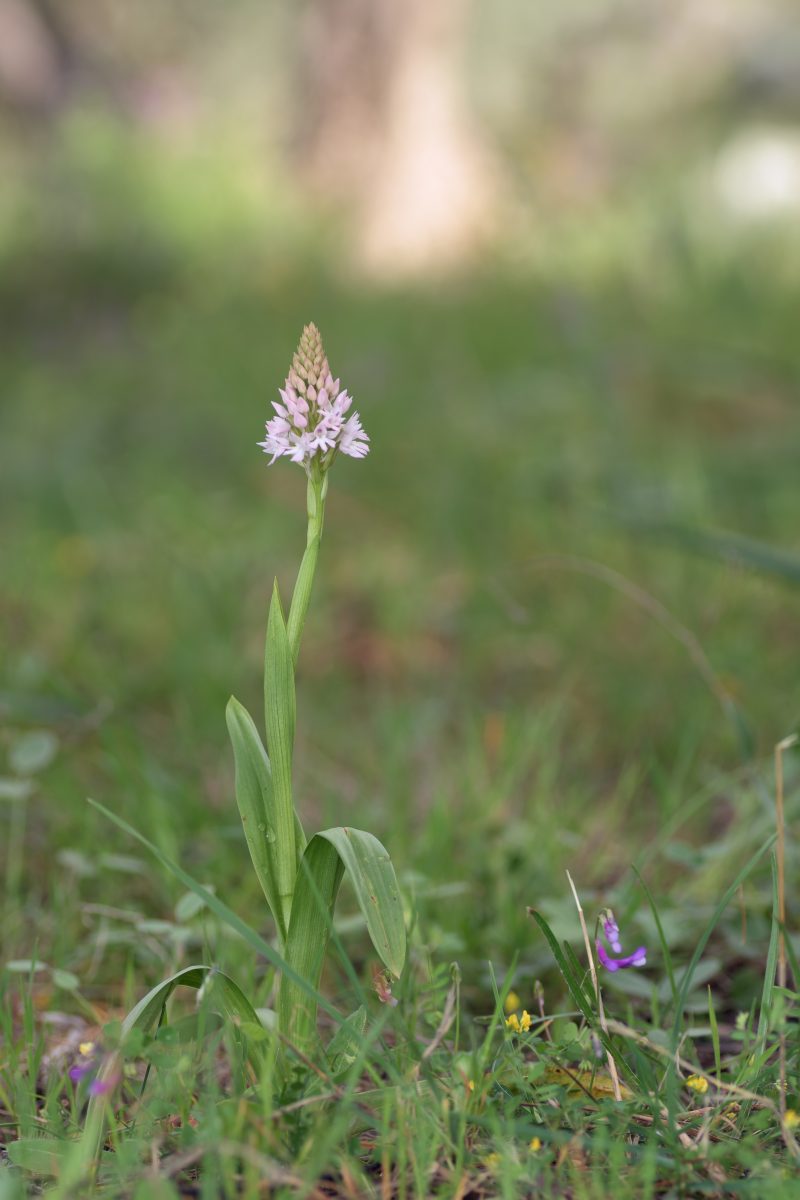
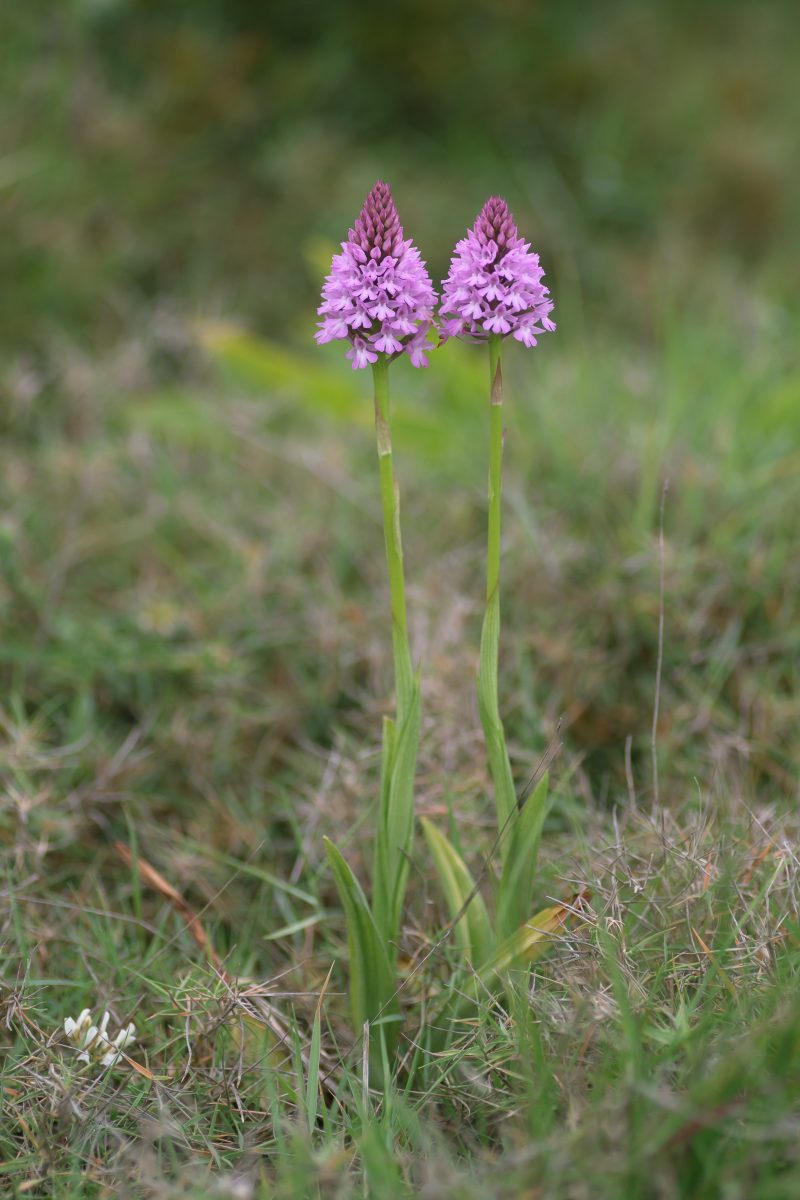
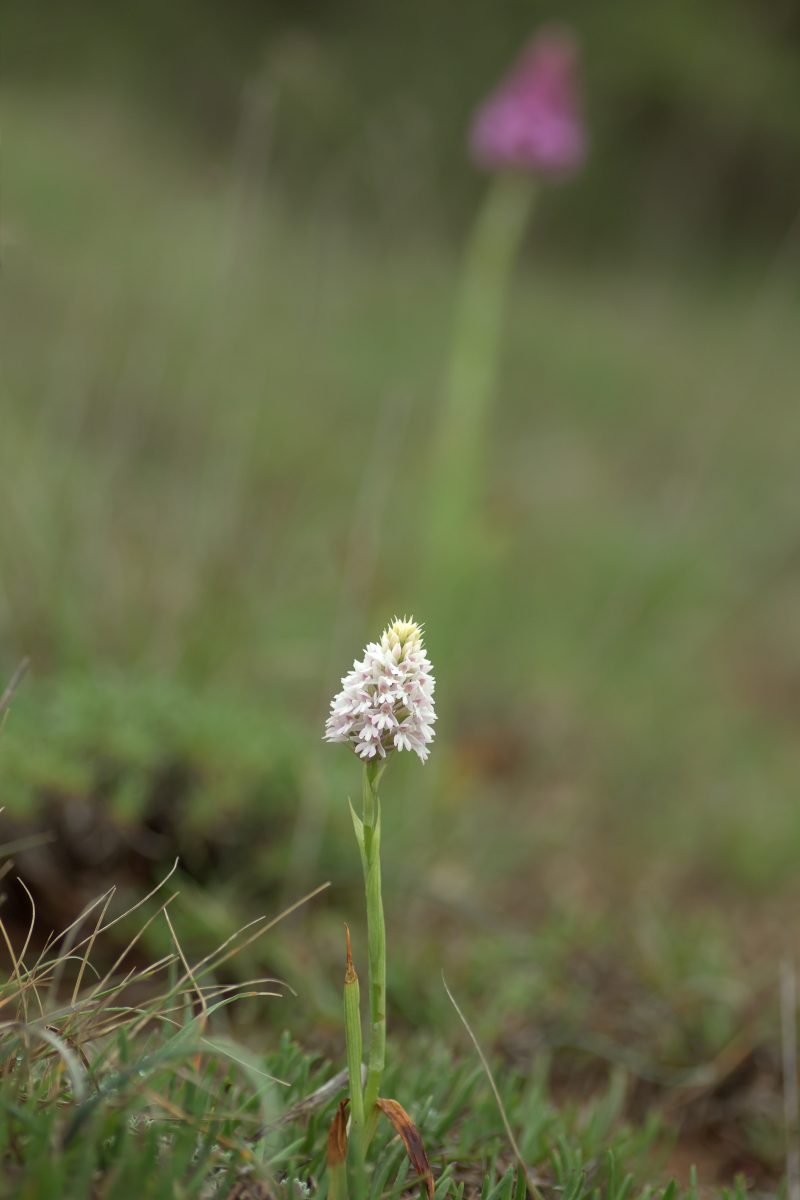
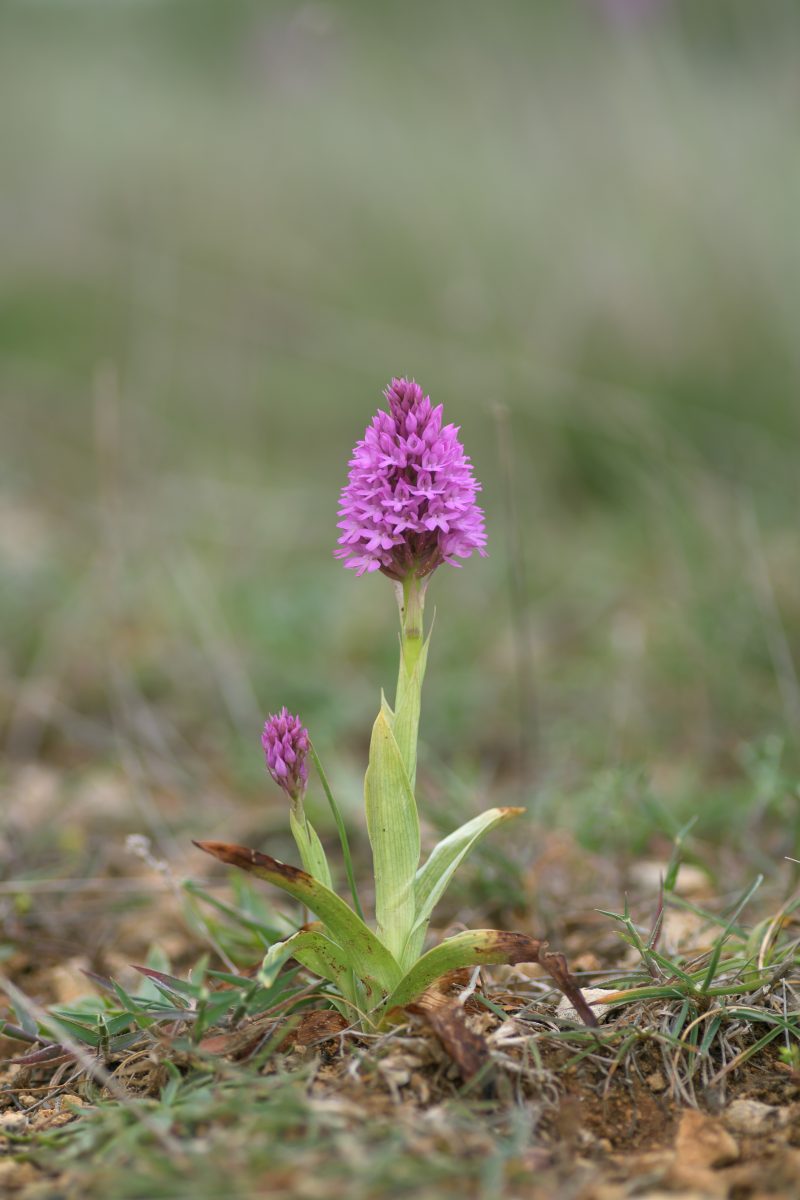
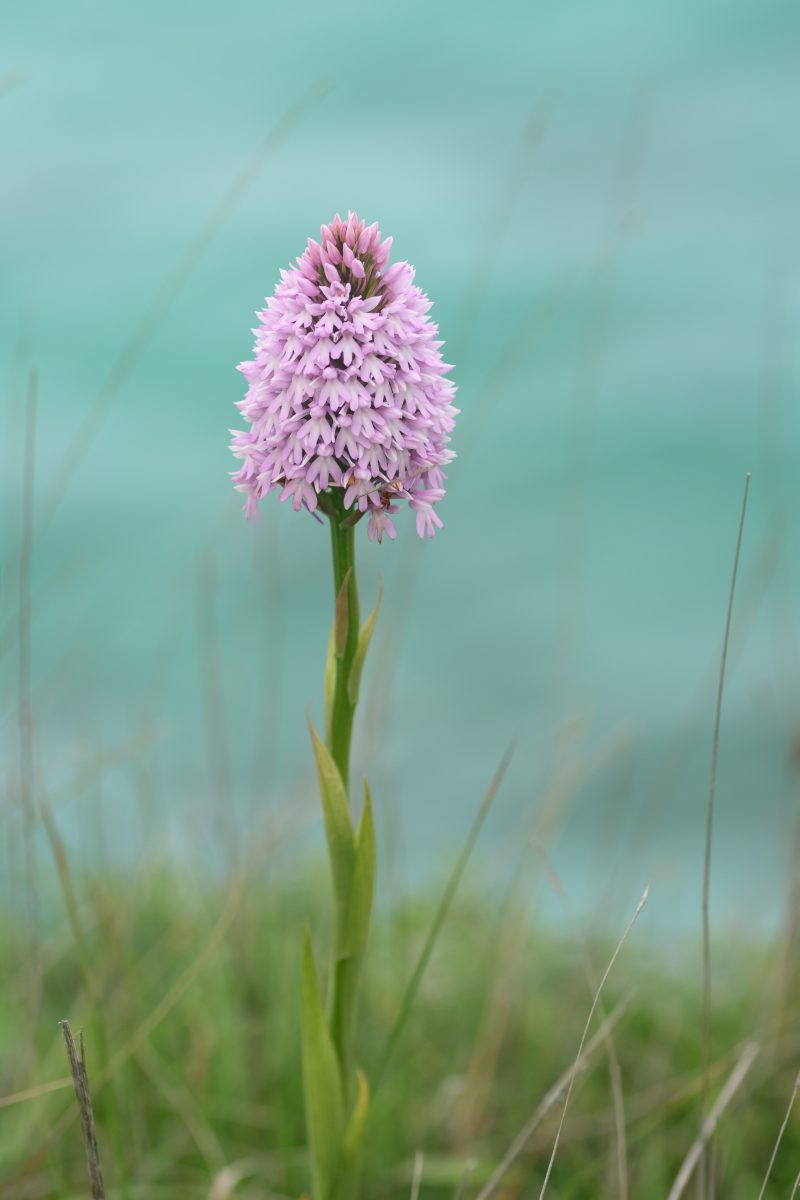
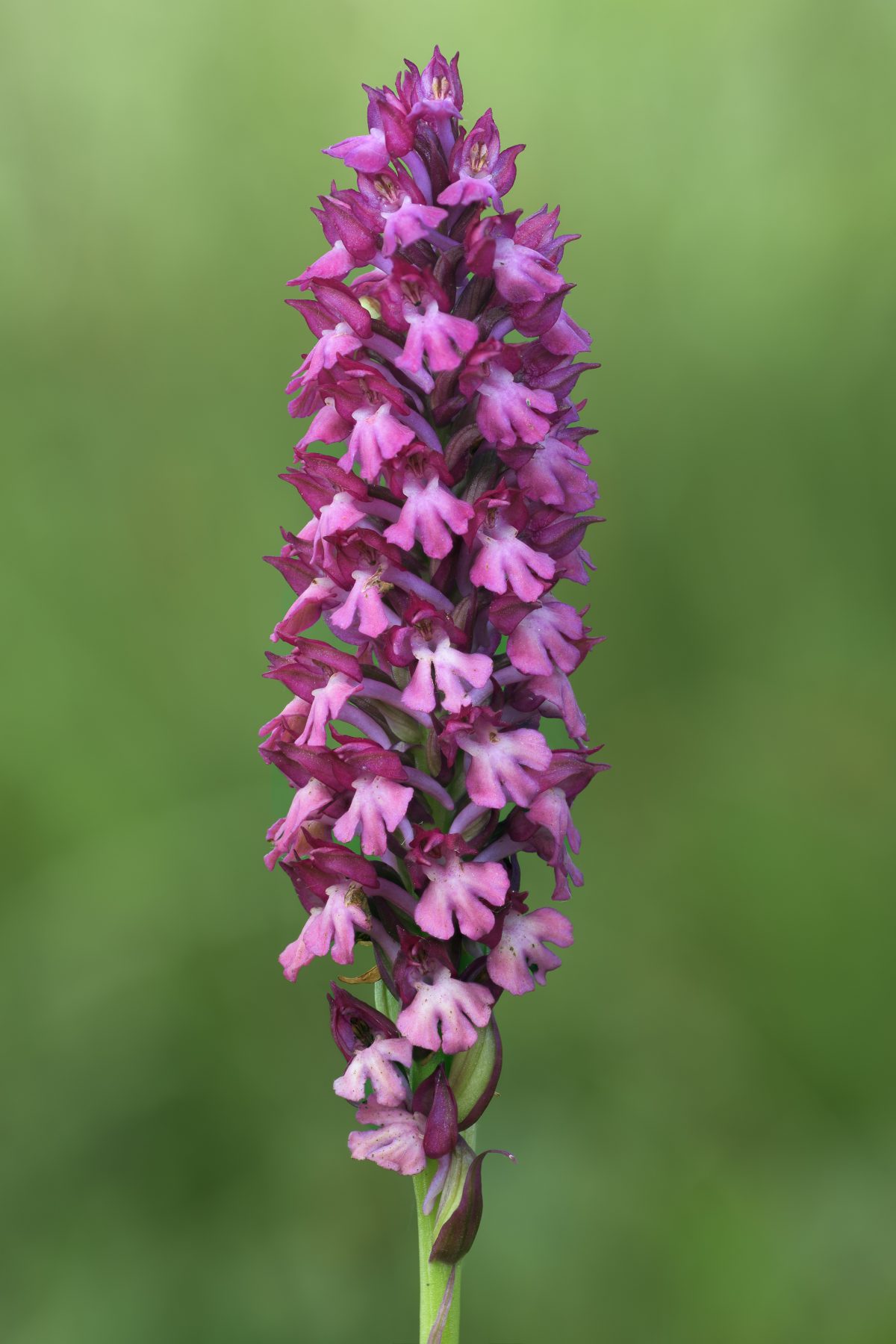
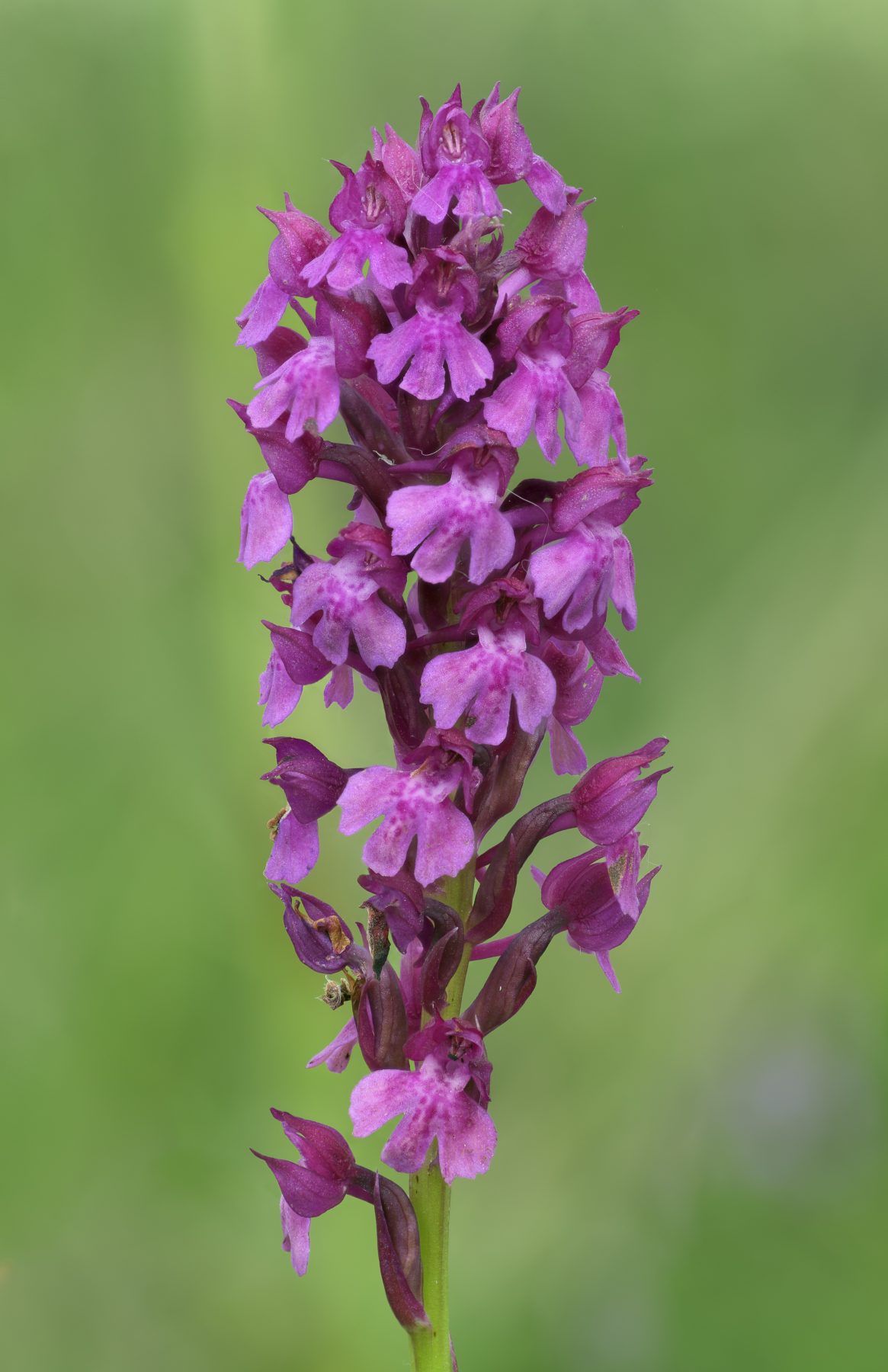
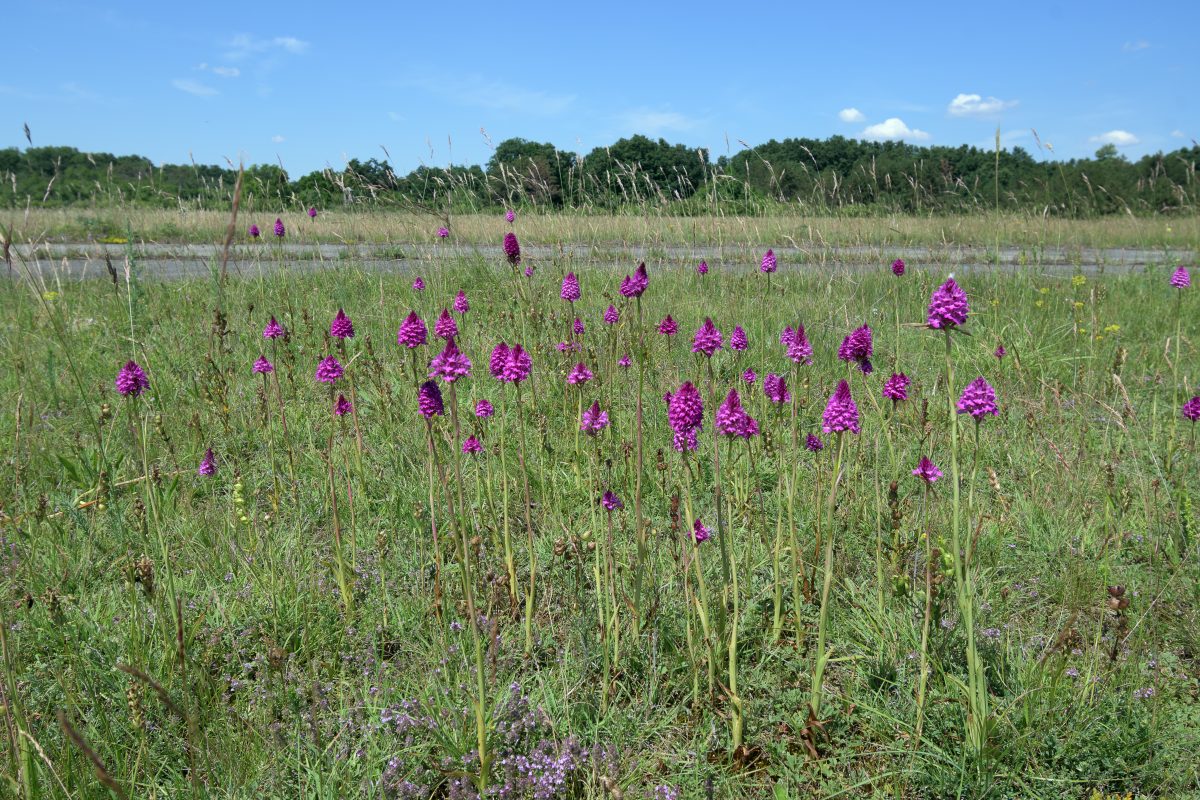
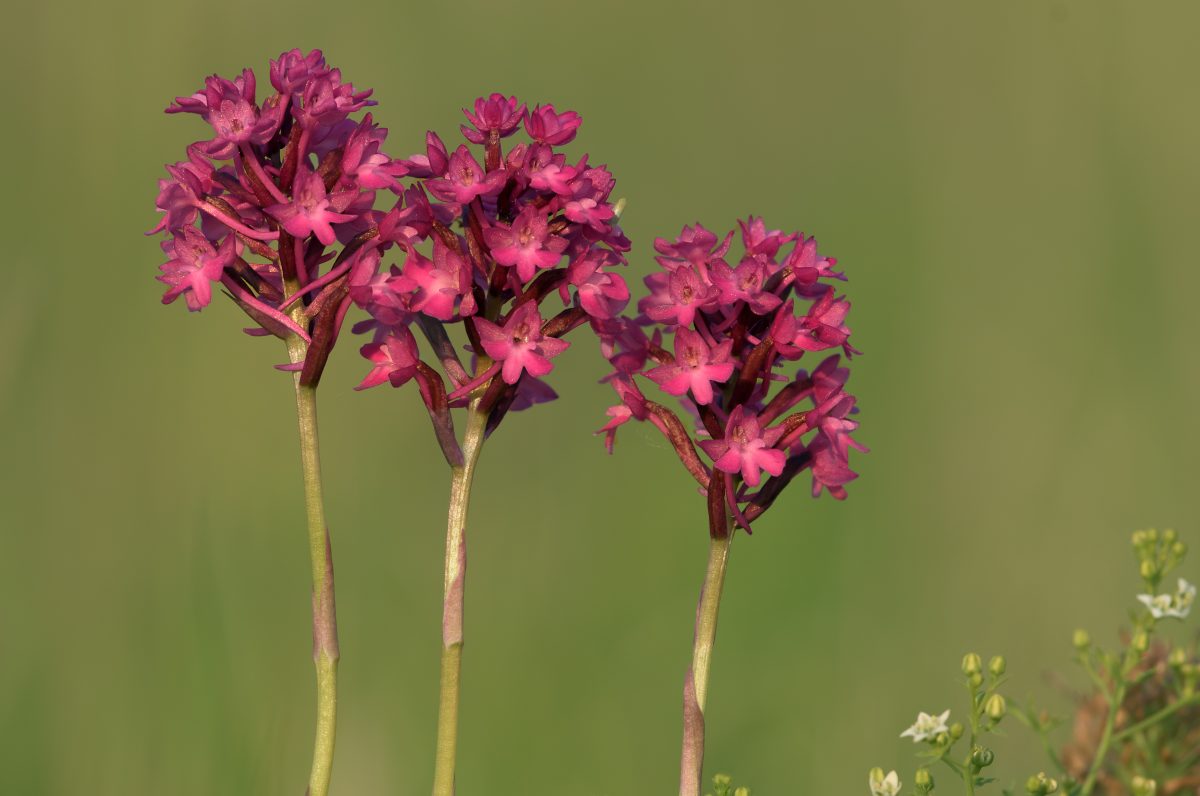
What is undeniable is that this is a rather variable species, not only across Europe but even here in Hungary. Consequently, its main identifying characteristics are not set in stone either: they can vary quite considerably within certain limits, and there are always exceptions. The feature that gave the species its Latin name — the pyramidal shape of the inflorescence — is almost always present, at least at the beginning of flowering; later, the inflorescence takes on an ovoid to rounded shape. The flowers are most often carmine-red or pink, rarely pure white, with an infinite number of possible shades in between. Generally speaking, the farther south we travel in Europe, the more common the paler shades become. In Hungary, therefore, darker tones tend to predominate. An interesting aside worth mentioning here: at the southern tip of the Peloponnese, we came across a population with entirely white inflorescences growing in a stretch of phrygana alongside a motorway.
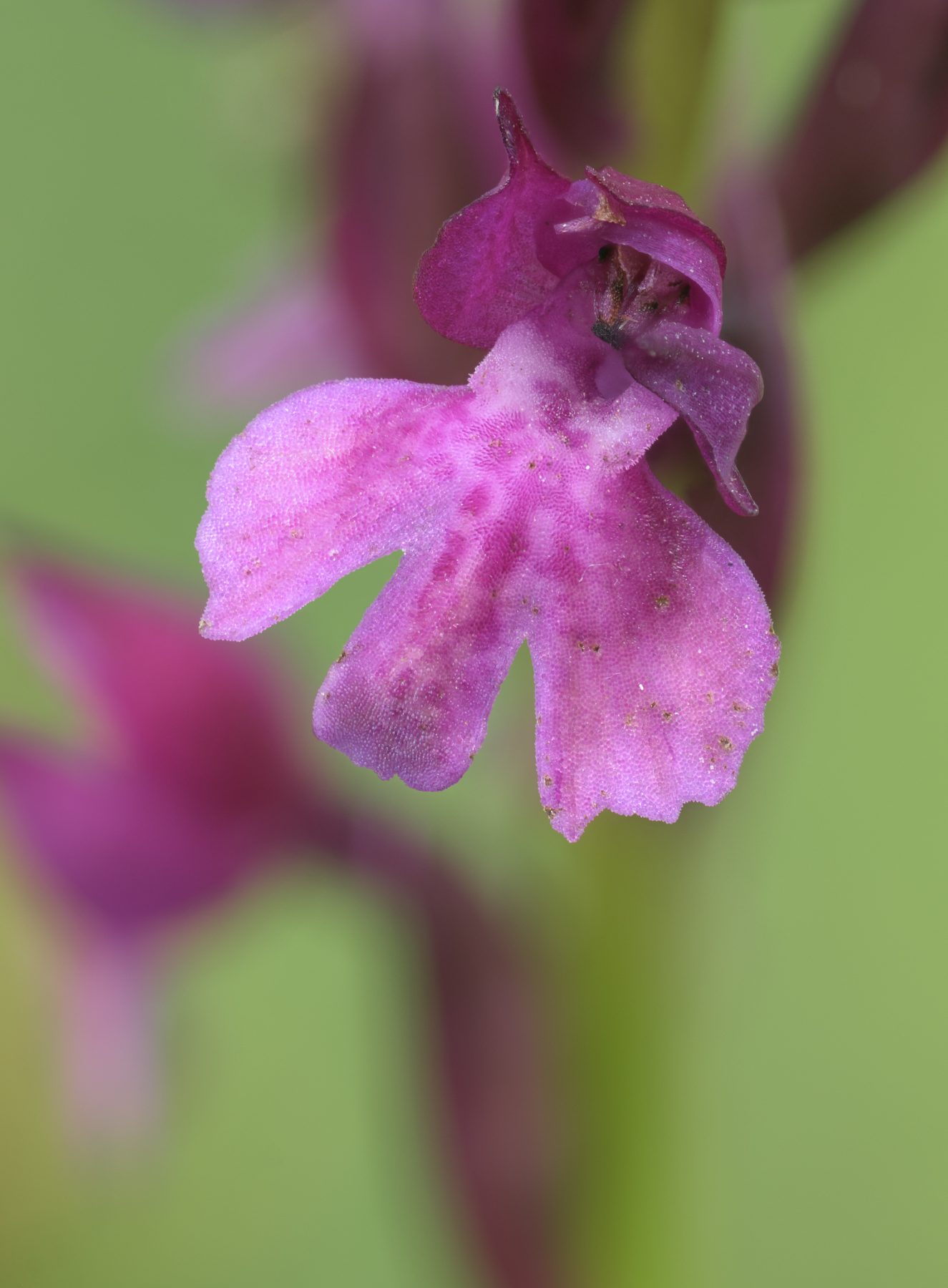
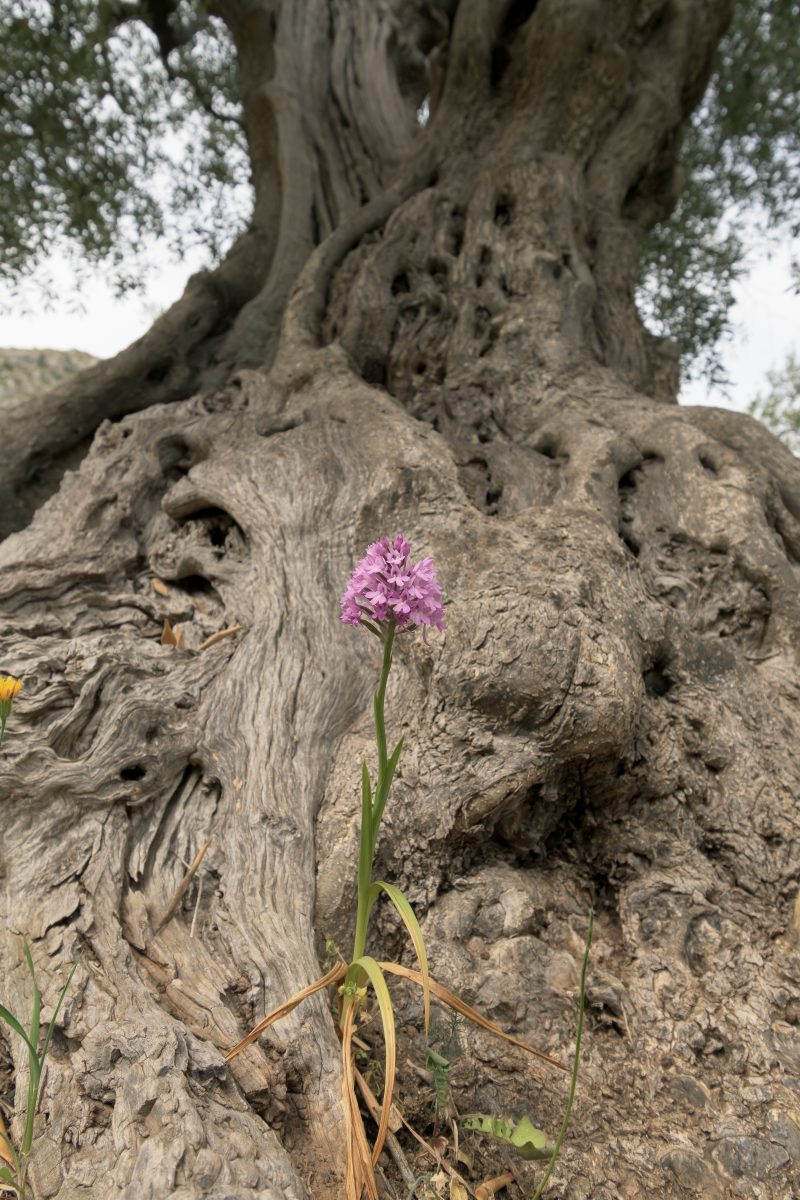
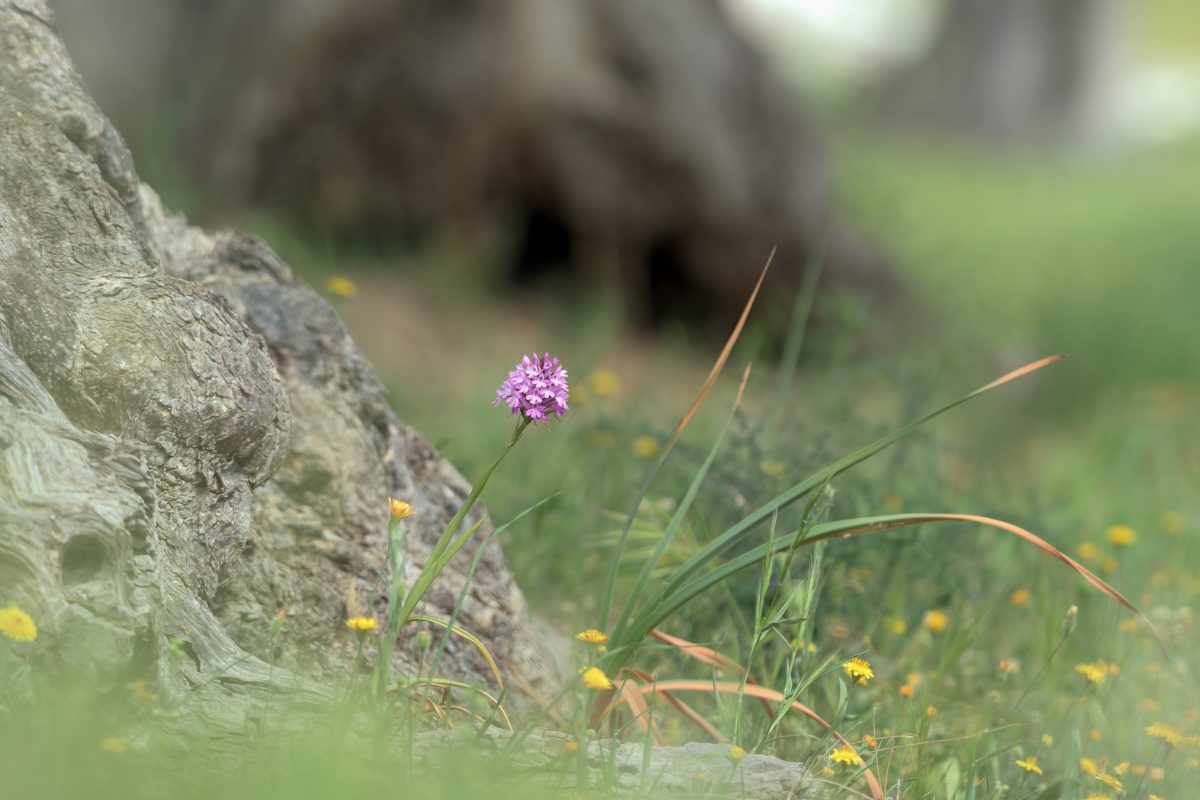
In each flower, the petals and the dorsal sepal form a helmet-like structure (hence the traditional Hungarian name vitézvirág, literally “warrior flower”, referring to the arrangement’s resemblance to a warrior’s helmet). The labellum is deeply three-lobed, although it can occasionally be almost entire (see the very first two photographs from the Vértes Hills!), and bears two longitudinal ridges. Another characteristic feature is the long, slender spur, which may sometimes be longer than the ovary and sometimes shorter. The basal leaves are generally linear, occasionally lanceolate — in other words, grass-like. Yet again, in Greece we encountered specimens with remarkably broad, fleshy leaves; a photograph providing clear evidence of this is also included in the gallery.
Depending on the circumstances, these characteristics — or, more precisely, certain combinations of them — may earn a plant no more than varietal status in the eyes of botanists, while other combinations are promptly rewarded with full species status. This inconsistency has not escaped Kreutz either, and in his major 2024 work, he therefore calls for a thorough revision of the very definition of a species.
Our orchid favours bright, sunny conditions under virtually all circumstances, tolerating shade, at most, on a temporary basis. As a result, its range of suitable habitats is somewhat restricted: rocky and dry grassland slopes, moist meadows, sandy grasslands, marshy clearings, karst scrub woodlands and dry oak forests. It can occasionally also be found in the remnants of quarries that have been reclaimed by nature. In Hungary, it is most frequently encountered in the Transdanubian Range and in the marshy meadow systems of the Danube–Tisza Interfluve. From a distributional perspective, less prominent areas include the Transdanubian Hills, the Little Hungarian Plain, the Bükk Mountains, the Aggtelek Karst and the Nyírség region. In our country it flowers from mid-May until late June.
Further evidence that this orchid is not quite the taxonomic lone wolf it might appear to be is the fact that it hybridises without any particular difficulty with other members of the genus that also produce nectarless flowers and deceive insects — namely, the other Anacamptis species that Bateman transferred from the Orchis genus back in the day. Hybrids with the Bug Orchid (Anacamptis coriophora) occur at several locations in Hungary, including the Vértes Hills and the Turjánvidék marshland area. These hybrids are known as Anacamptis × ticinensis. But the truly sensational encounter is its collision with the Green-winged Orchid (Anacamptis morio), which also took place in the Turjános marshland area. This hybrid, Anacamptis × laniccae, was discovered only a few years ago. There is also a possibility of a liaison with Anacamptis palustris. Their offspring have already been found abroad, for example in Italy, where the hybrid is known as Anacamptis × duquesnei. Since the two species share habitats in several places and have similar flowering periods, such a union is certainly possible here as well.
In certain parts of Europe, this species is in marked decline as its habitats are built over, excessively fertilised or converted into woodland. In Hungary, smaller populations are more vulnerable, facing potential threats from the abandonment of traditional land management, changes in woody vegetation and the spread of invasive species. Its official conservation value in Hungary is 10,000 HUF.
Back to the genus Anacamptis ↶