
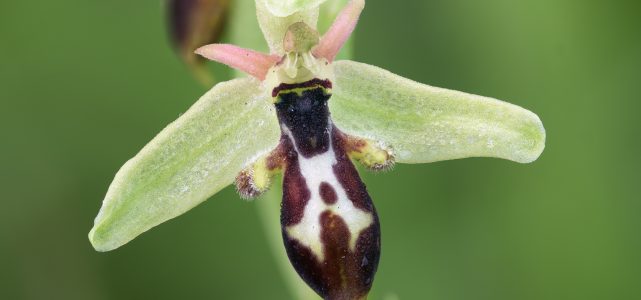
This exotic bee orchid, which from a distance resembles a large mosquito, is one of the finest examples of convergent evolution. Its pollinator belongs to the same digger wasp genus (Argogorytes) as that of the Fly Orchid (Ophrys insectifera). As a result, despite being only distantly related—Ophrys cilicica belongs to the reinholdii group—the two species have evolved a remarkably similar appearance. One could even describe it as the Fly Orchid of Asia Minor. Its name is derived from the ancient region of Cilicia, located in what is now southeastern Turkey. However, its distribution extends beyond this area, reaching northern Syria and western Iran, where the Iranian populations are often referred to as Ophrys kurdistanica.
It is primarily a montane species, inhabiting semi-shaded clearings in woodlands and, in some places, old cemeteries. It is generally considered quite rare. Yet, compared with our 2023 trip to Turkey—when we found it at only three sites in the provinces of Mersin and Antalya—it turned out to be the most frequently encountered Ophrys species during our return visit in 2026 to southeastern Turkey, around Diyarbakır and Siirt. Near Lice, we even discovered its hybrid with the highly localized Ophrys carduchorum. Its flowers are tiny and rather inconspicuous at first glance, but viewed up close, their intricate beauty becomes apparent, making it hard to look away. The extensive photo gallery below is a testament to just how captivating this species is. Like several other late-season Turkish bee orchids, it flowers in May.
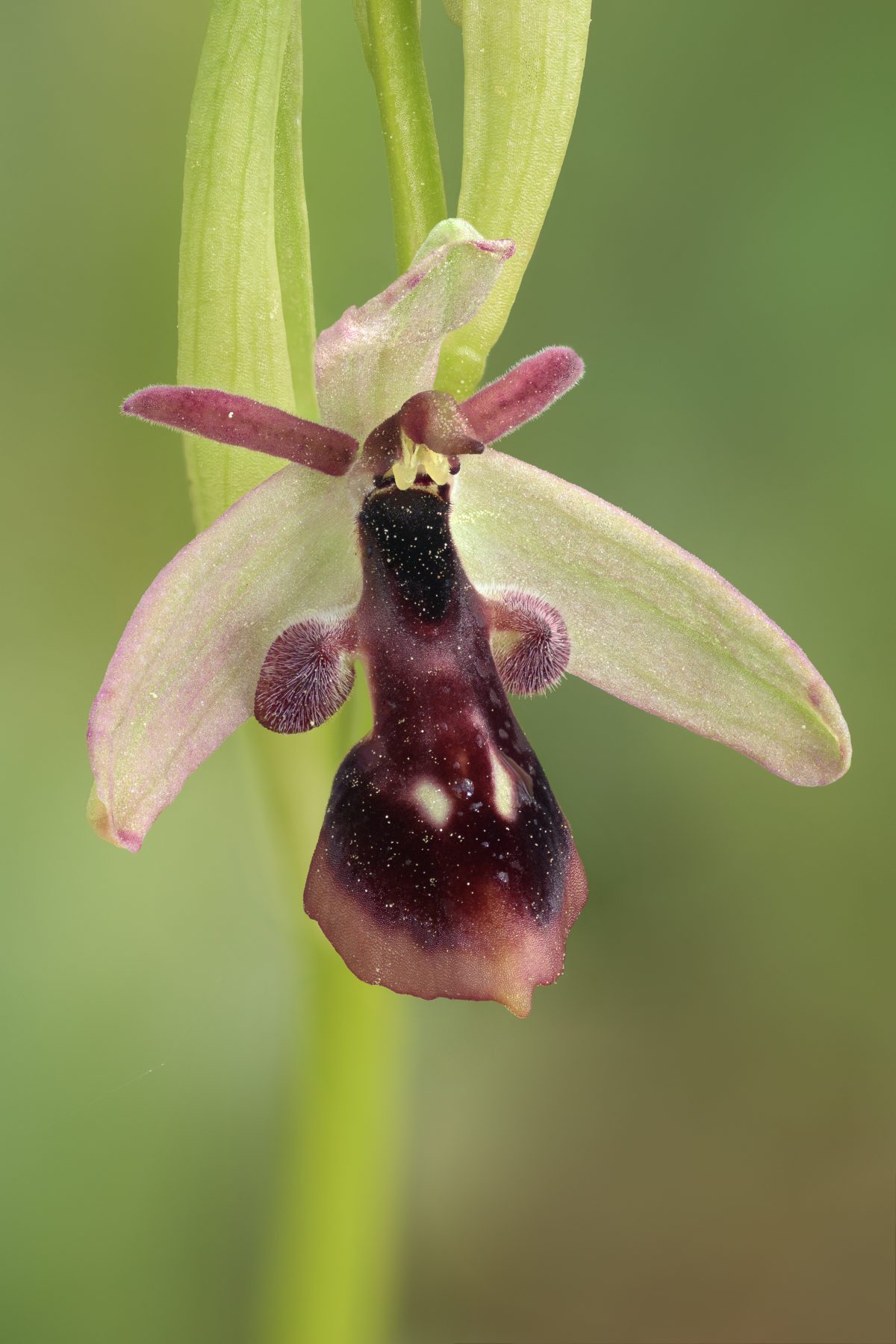
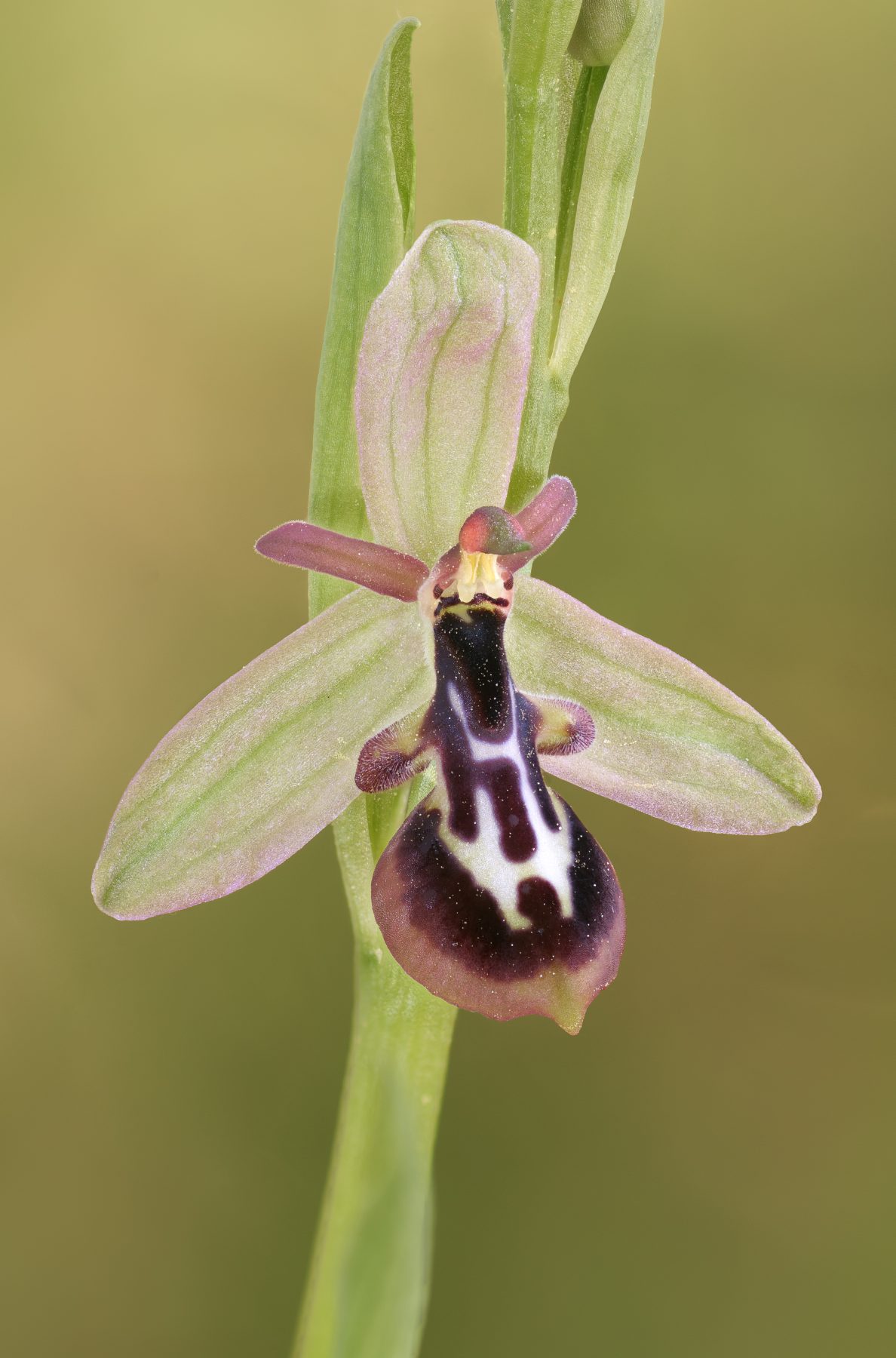
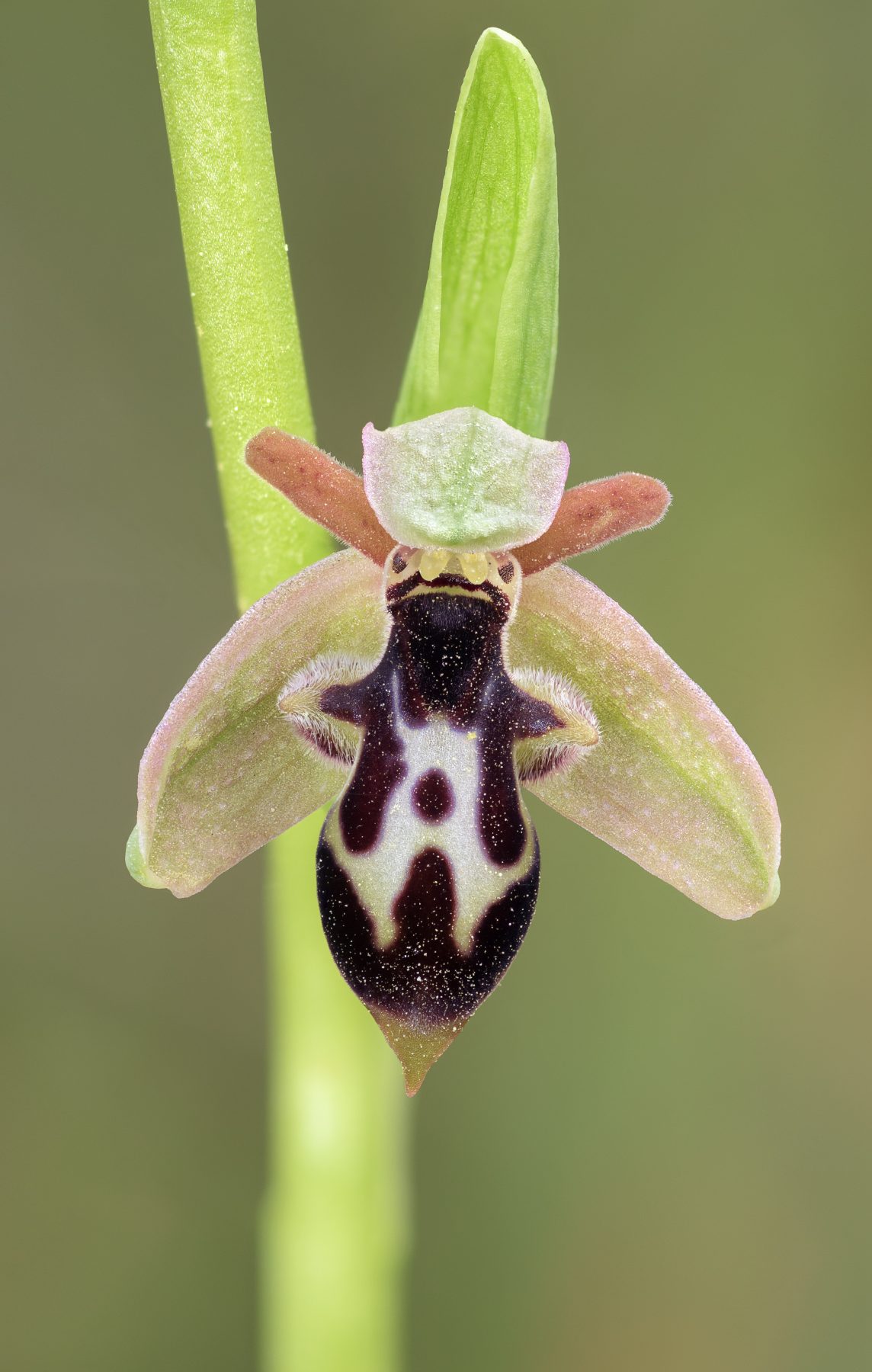
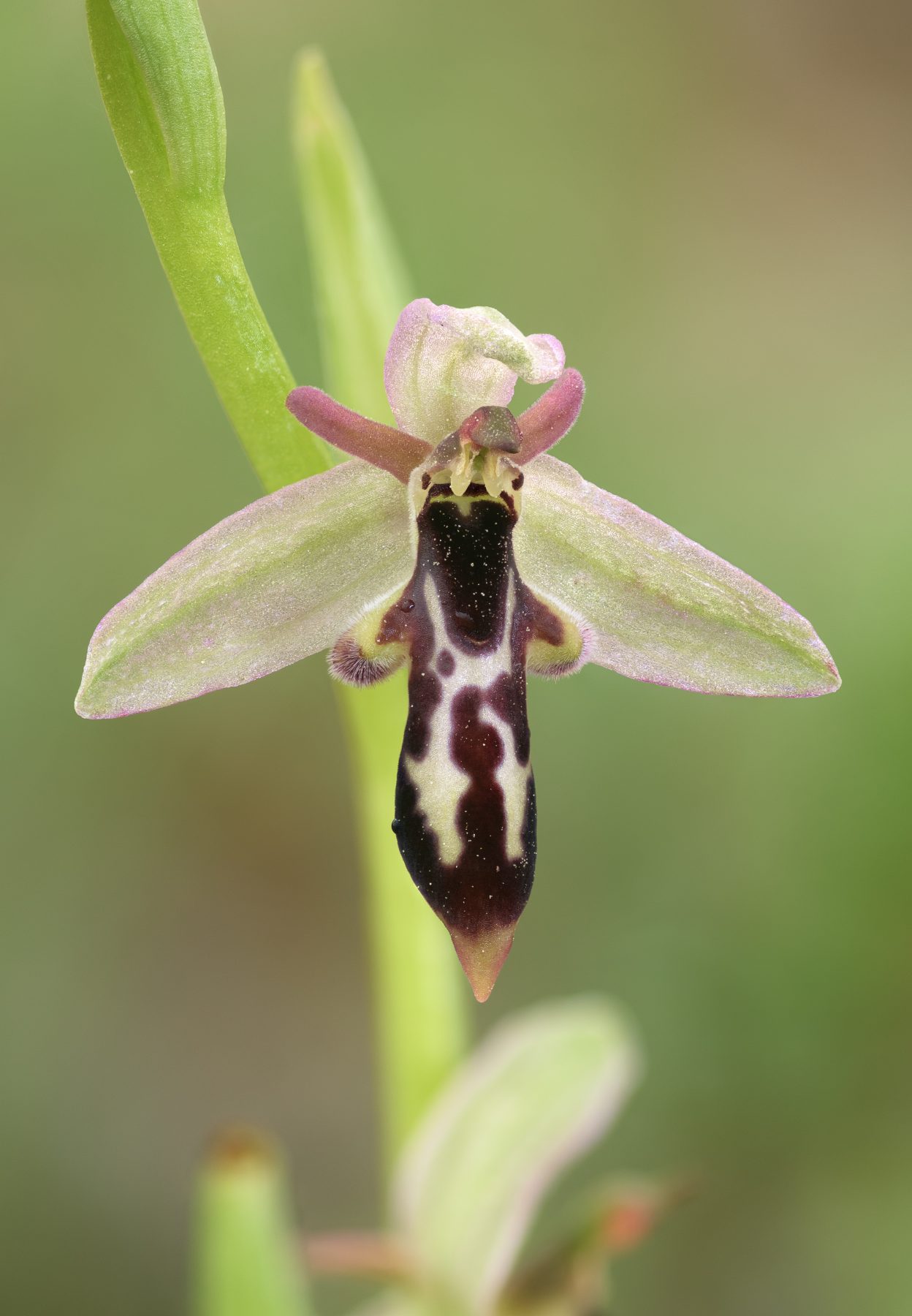
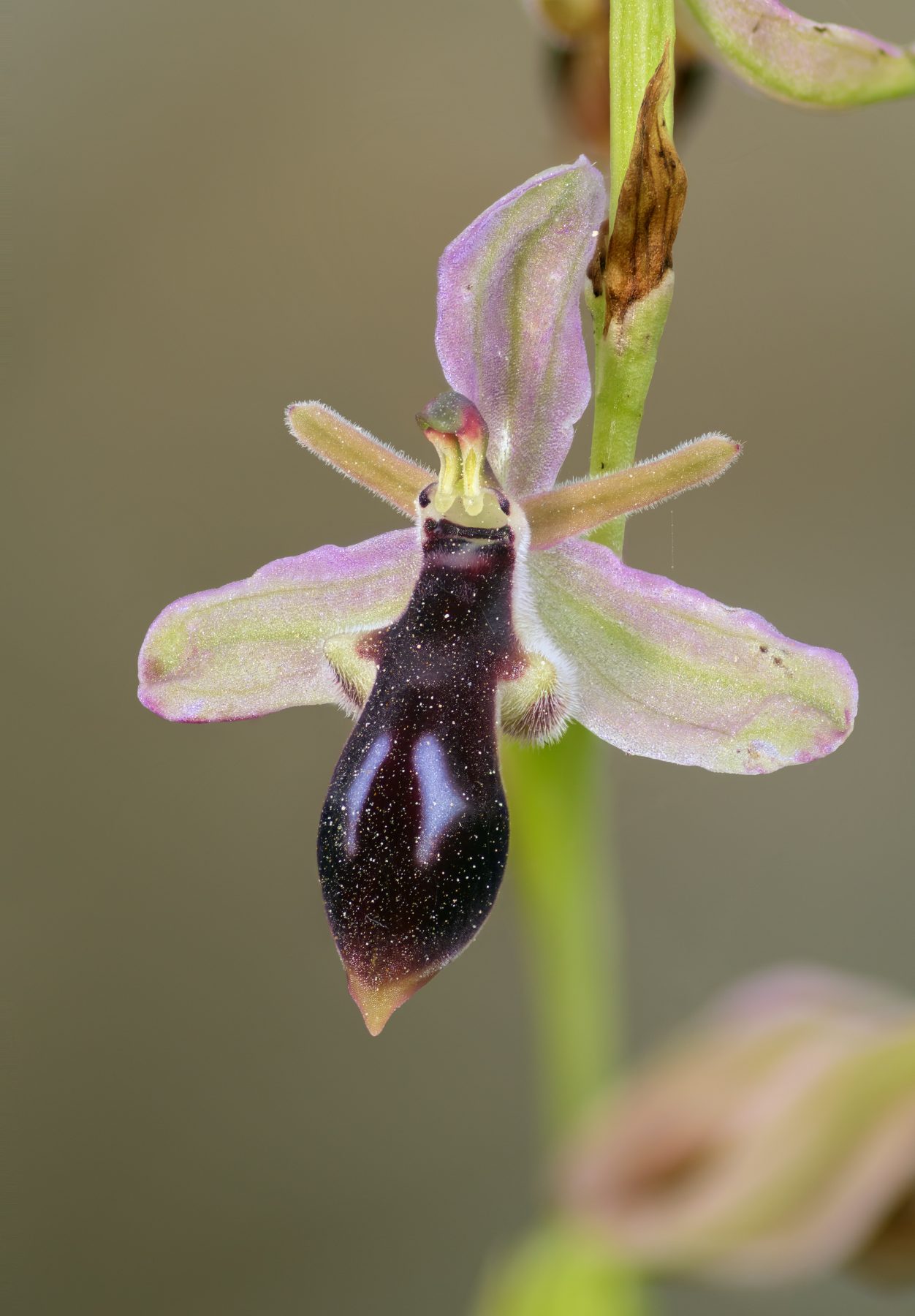
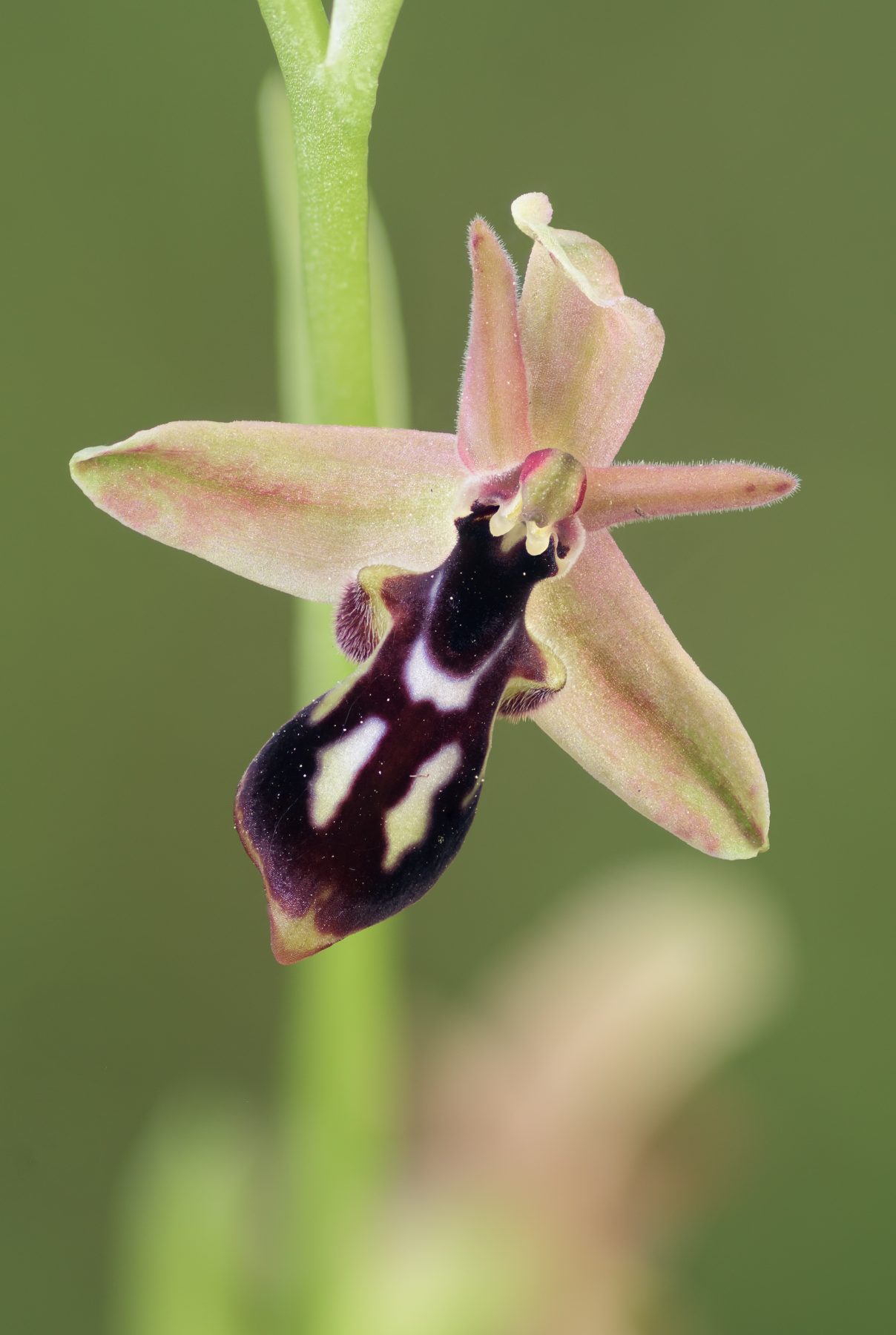
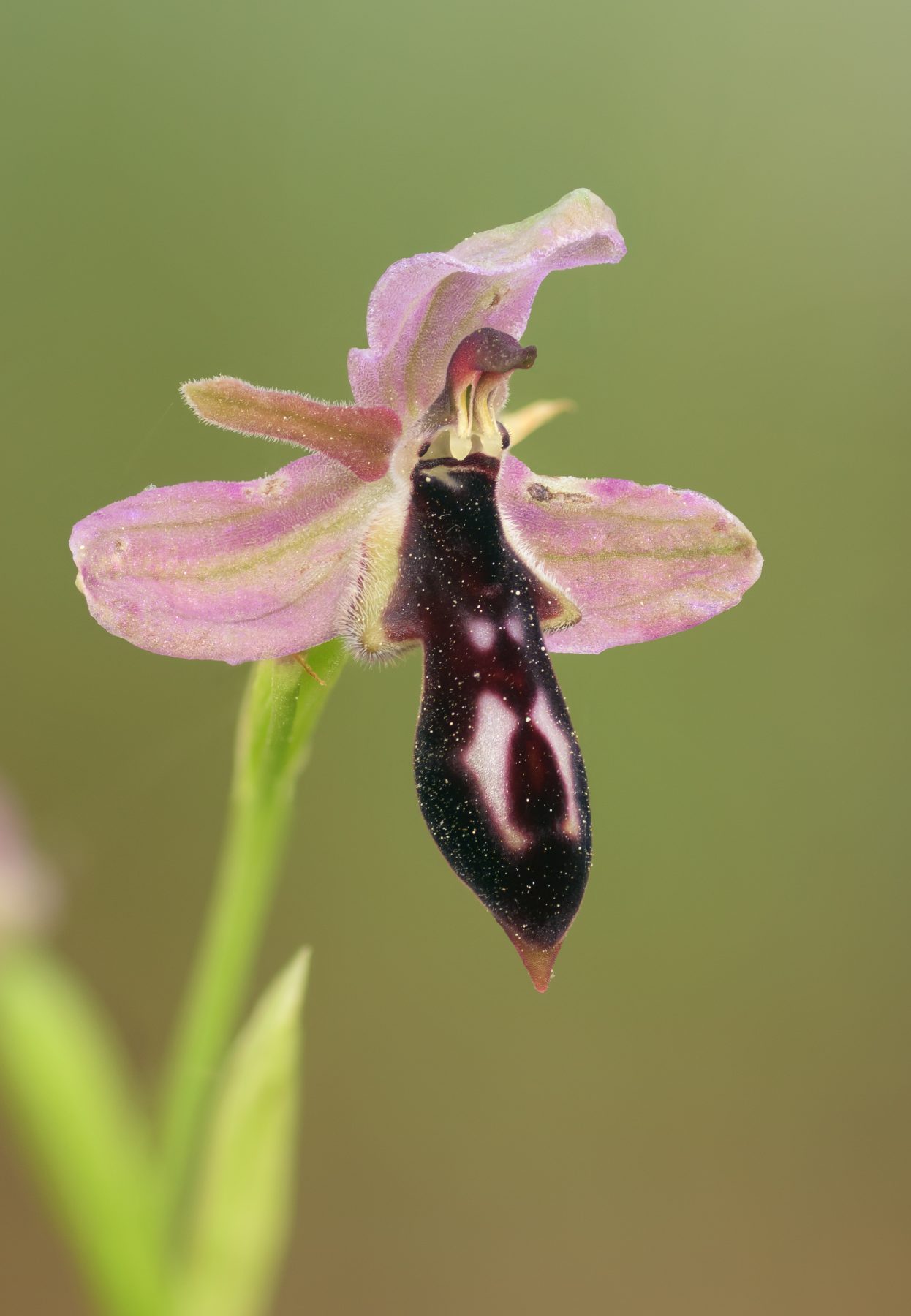
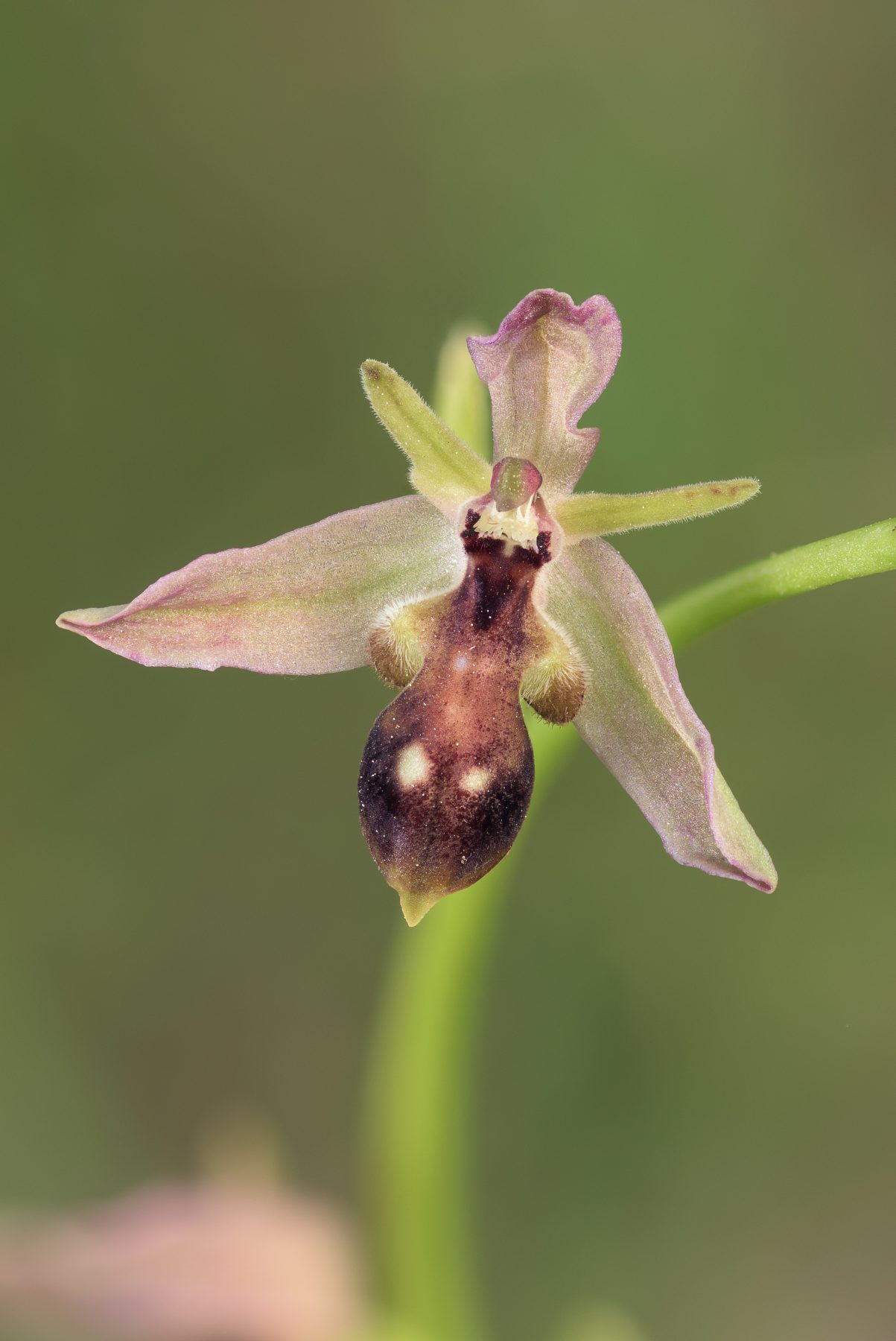
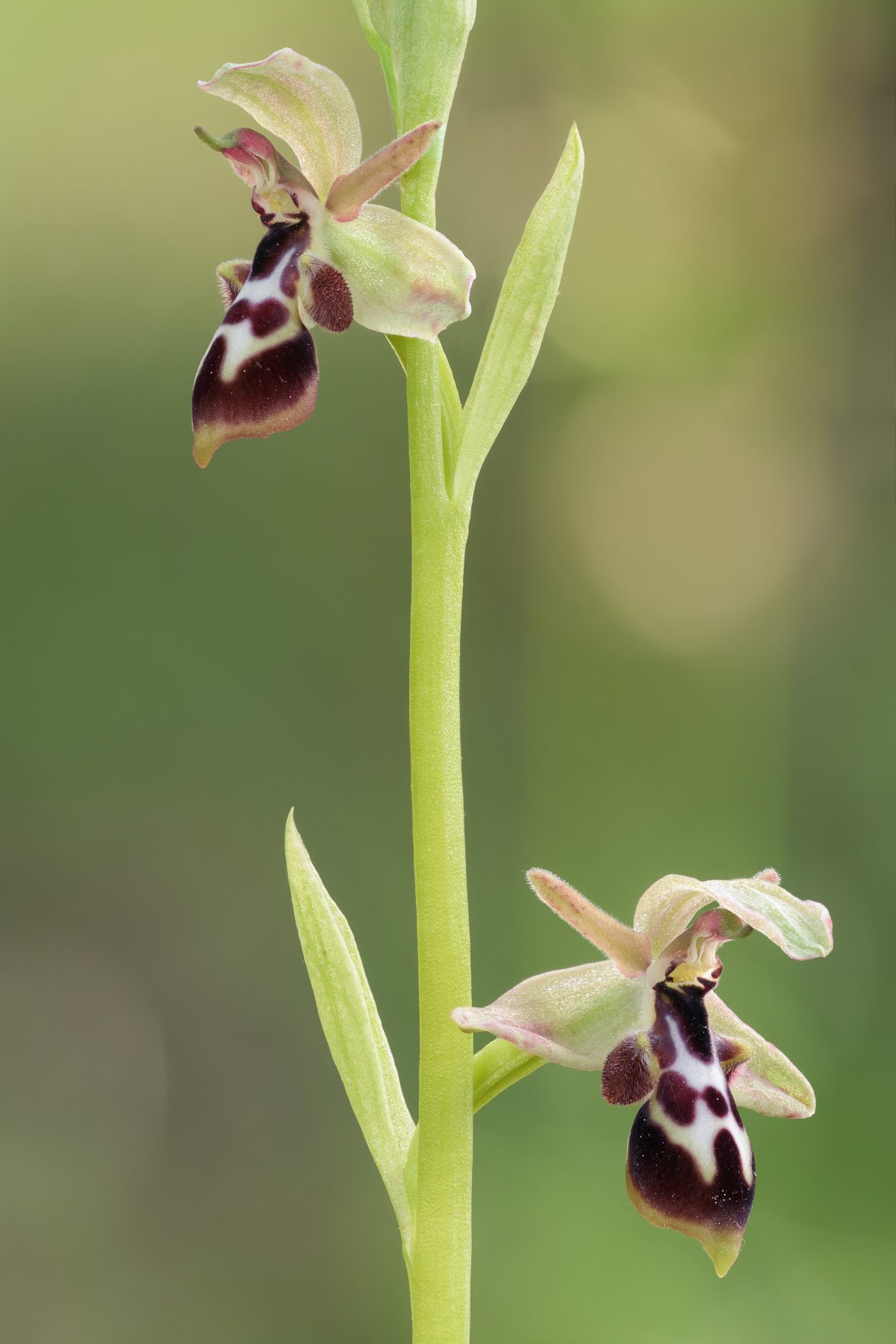
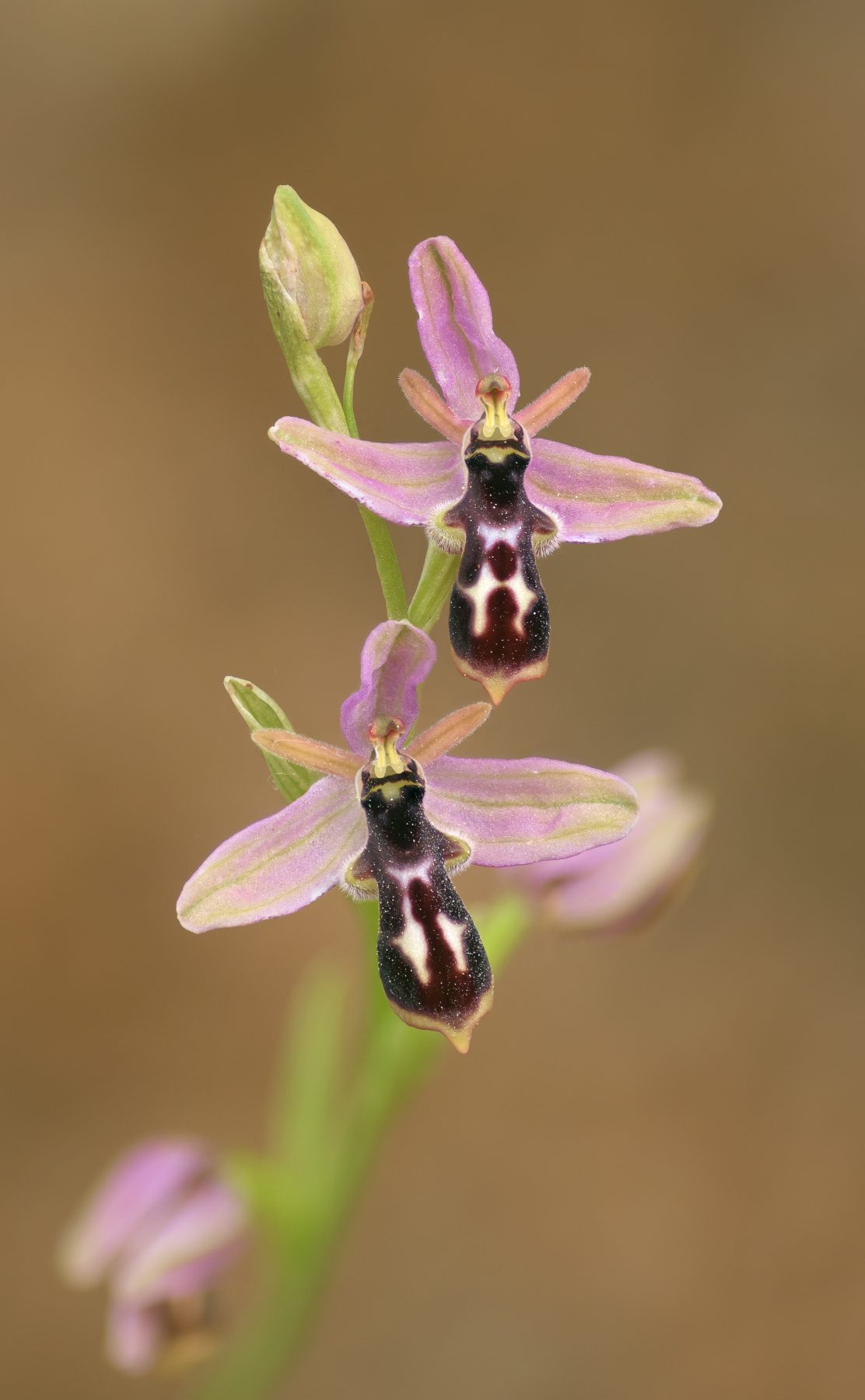

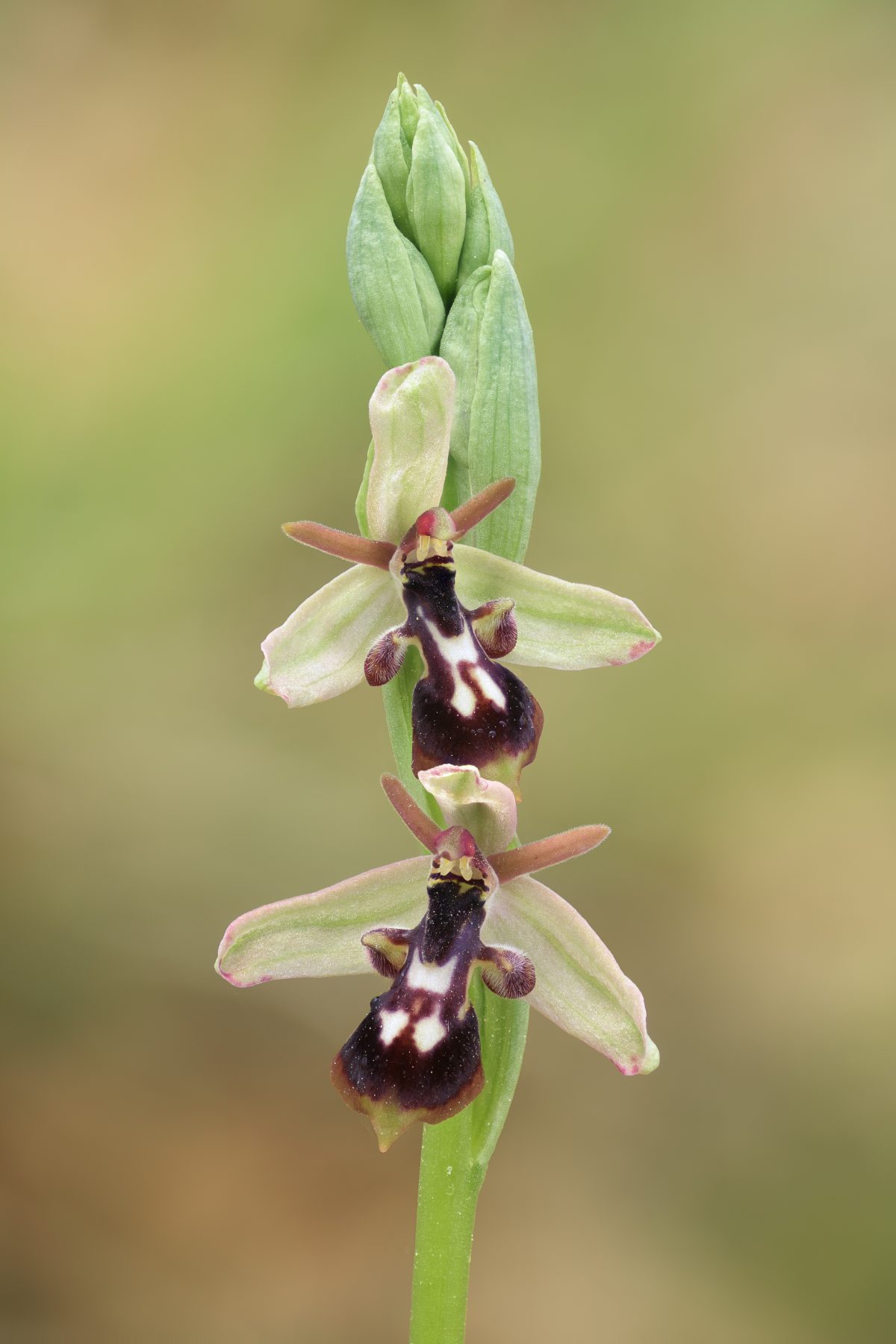
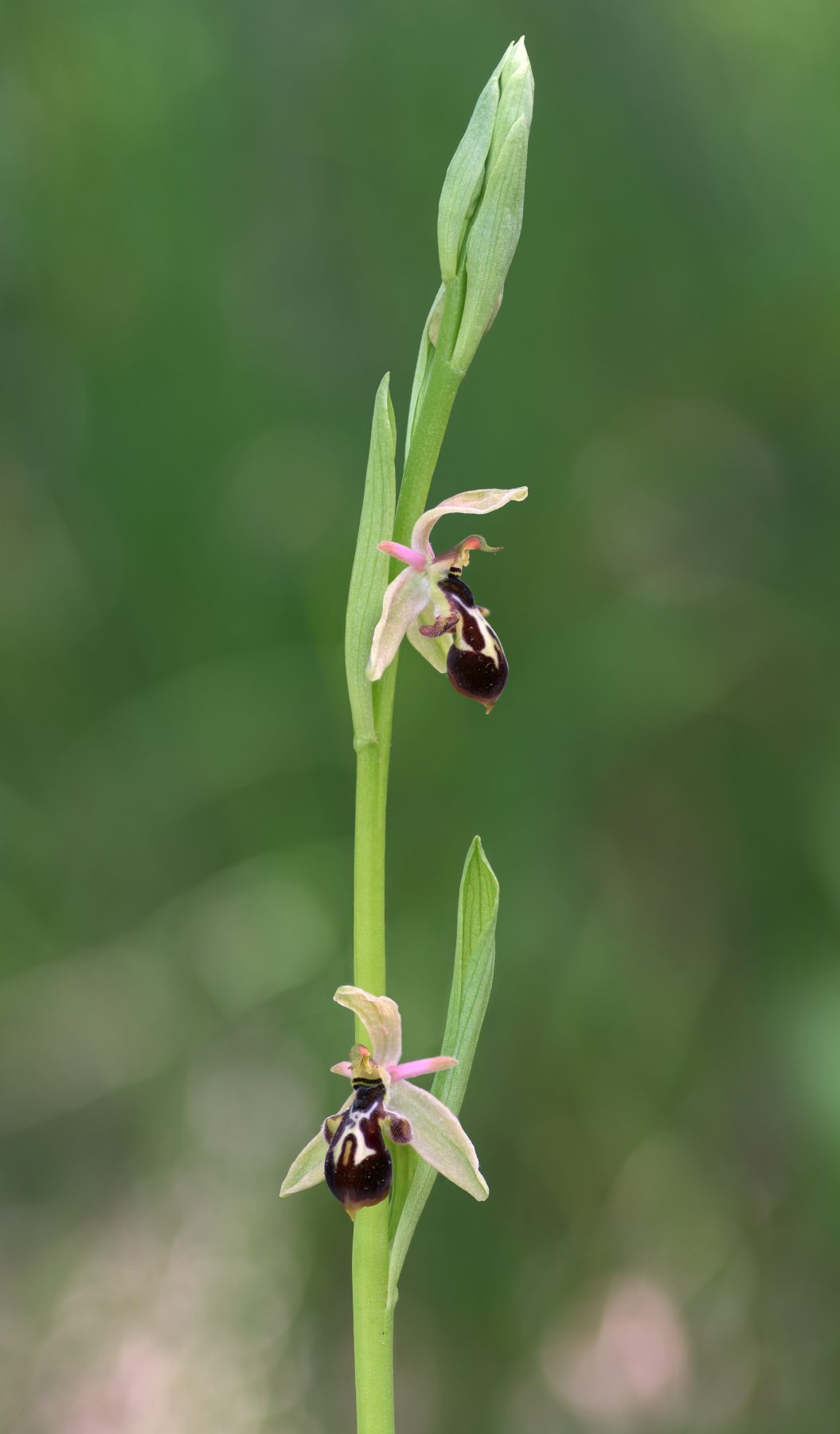
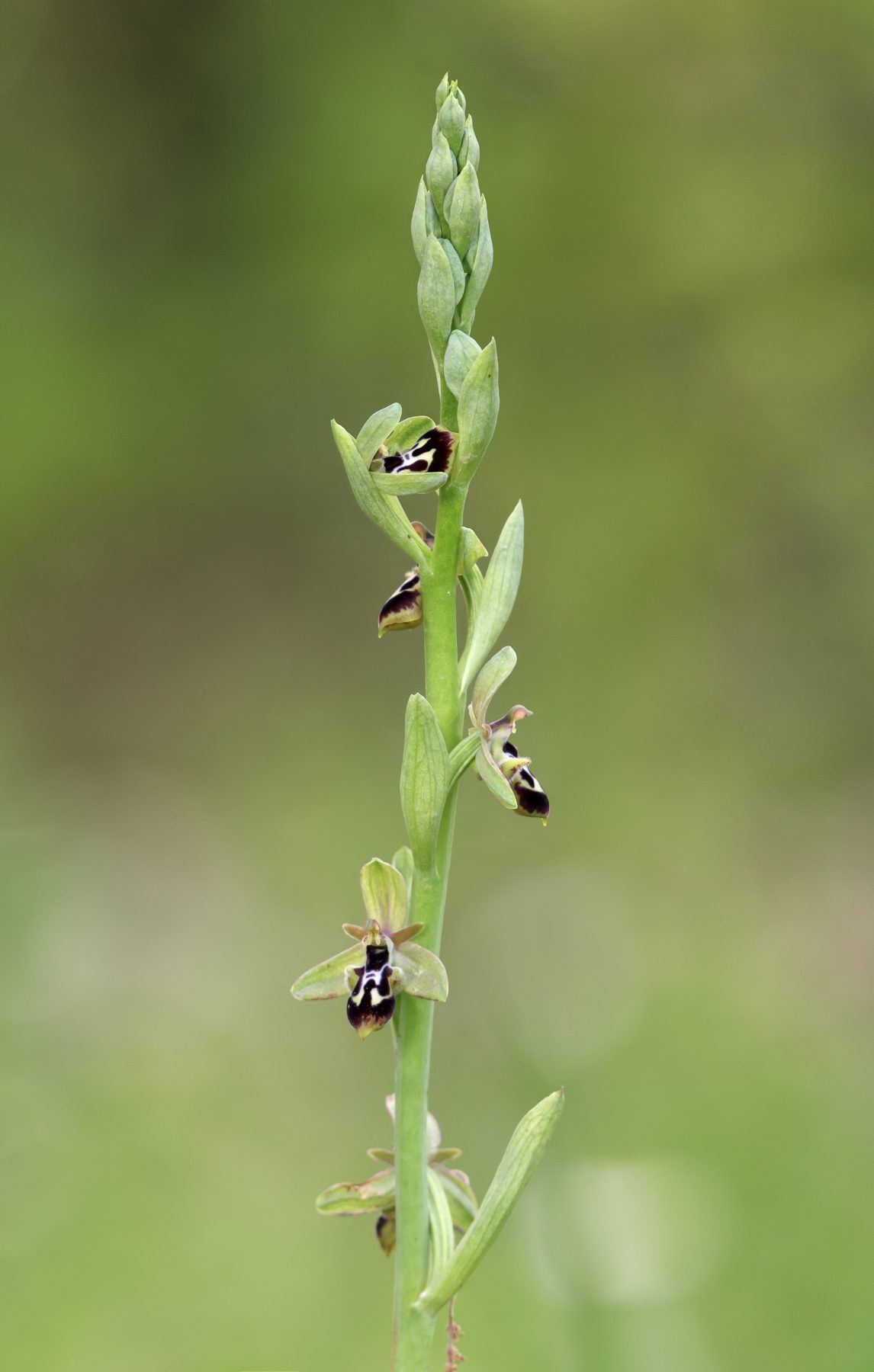
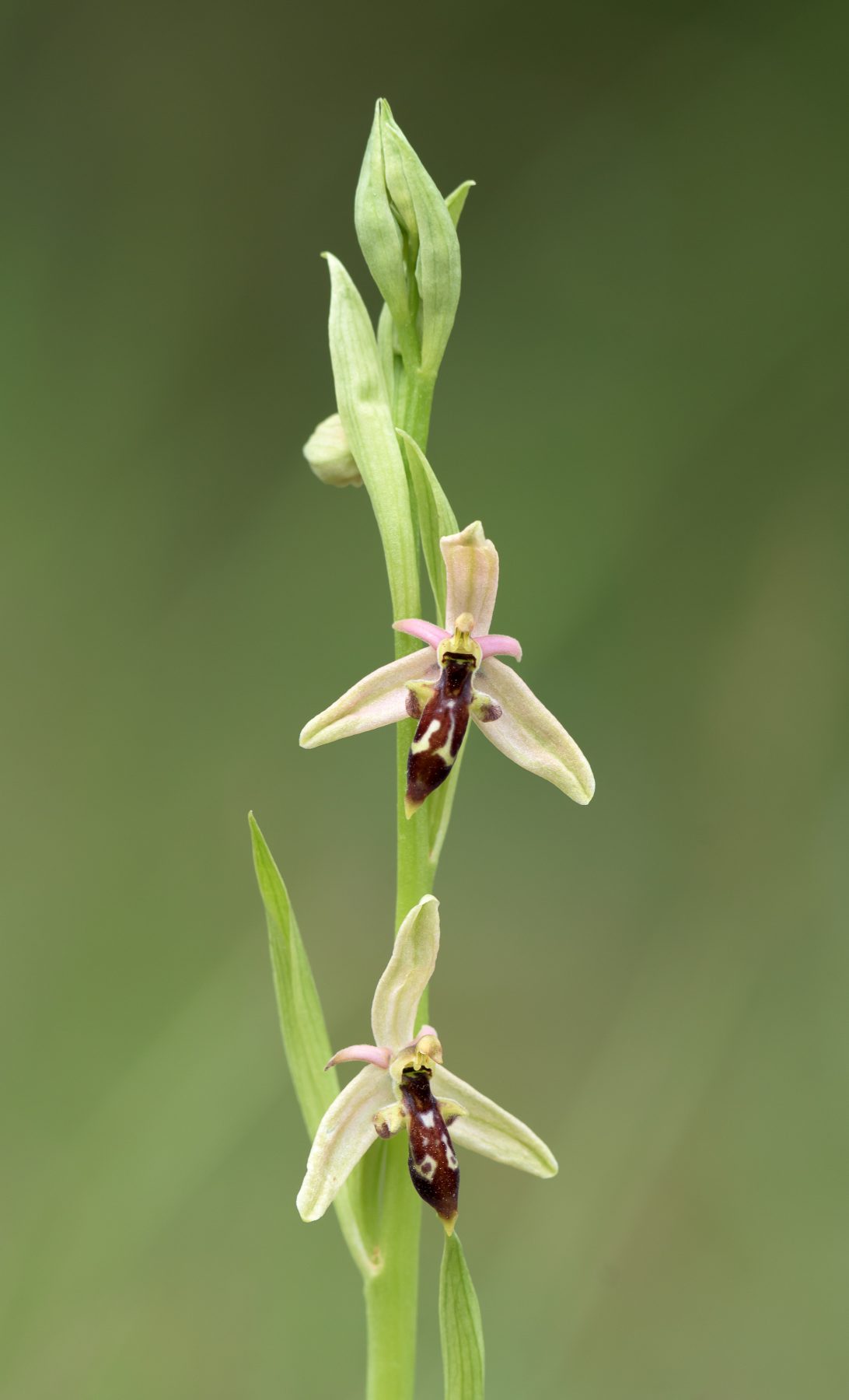
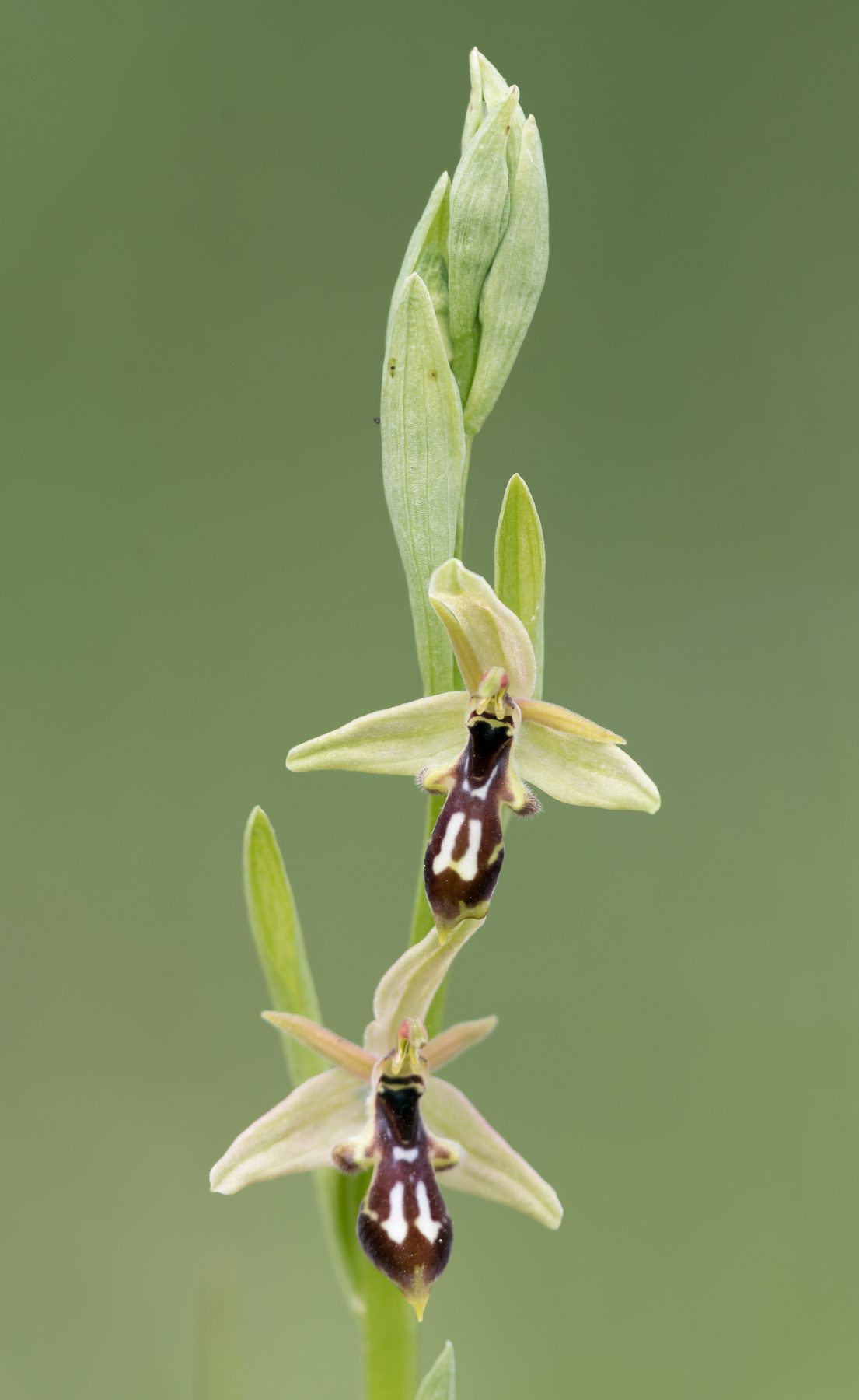
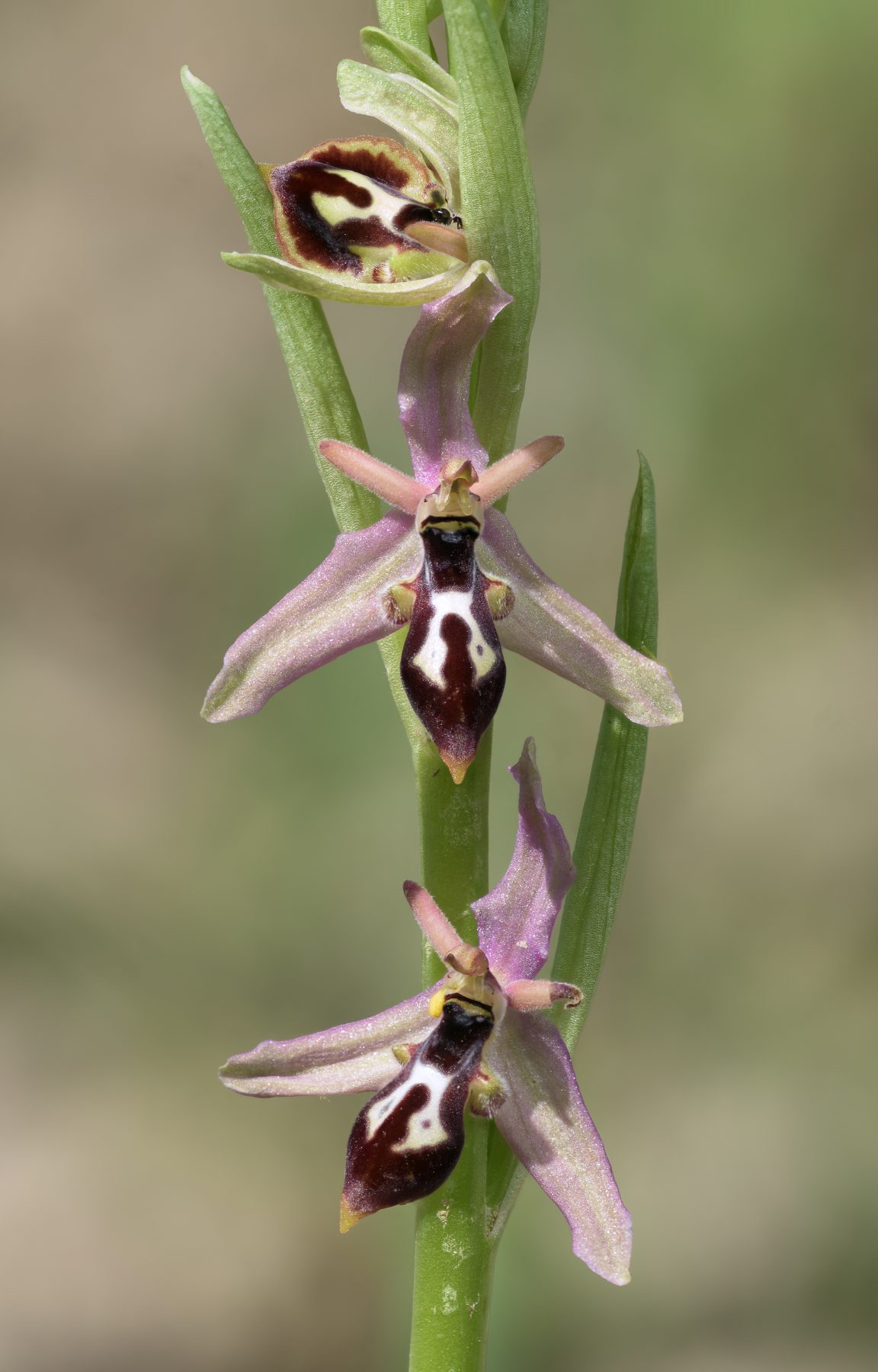
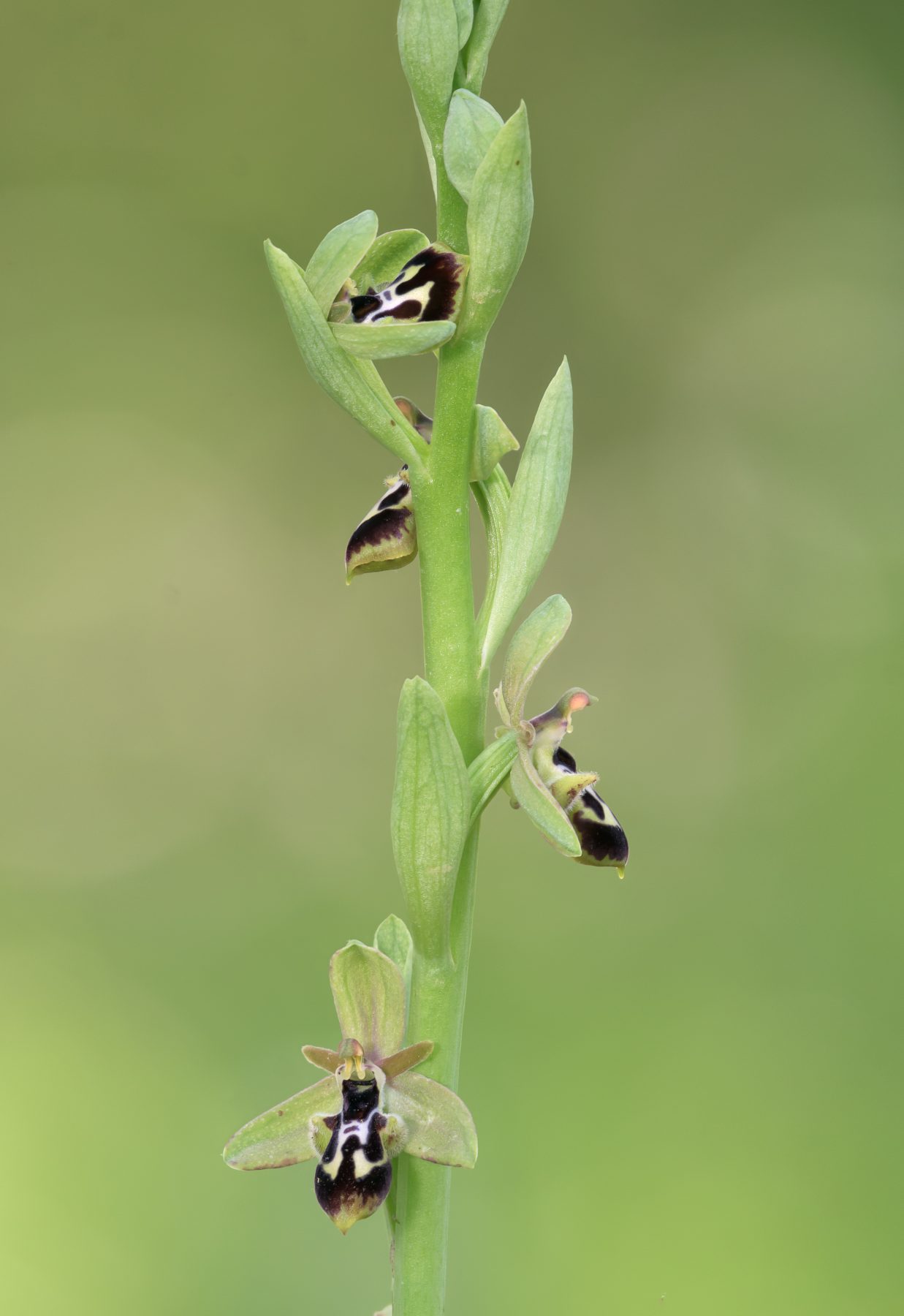
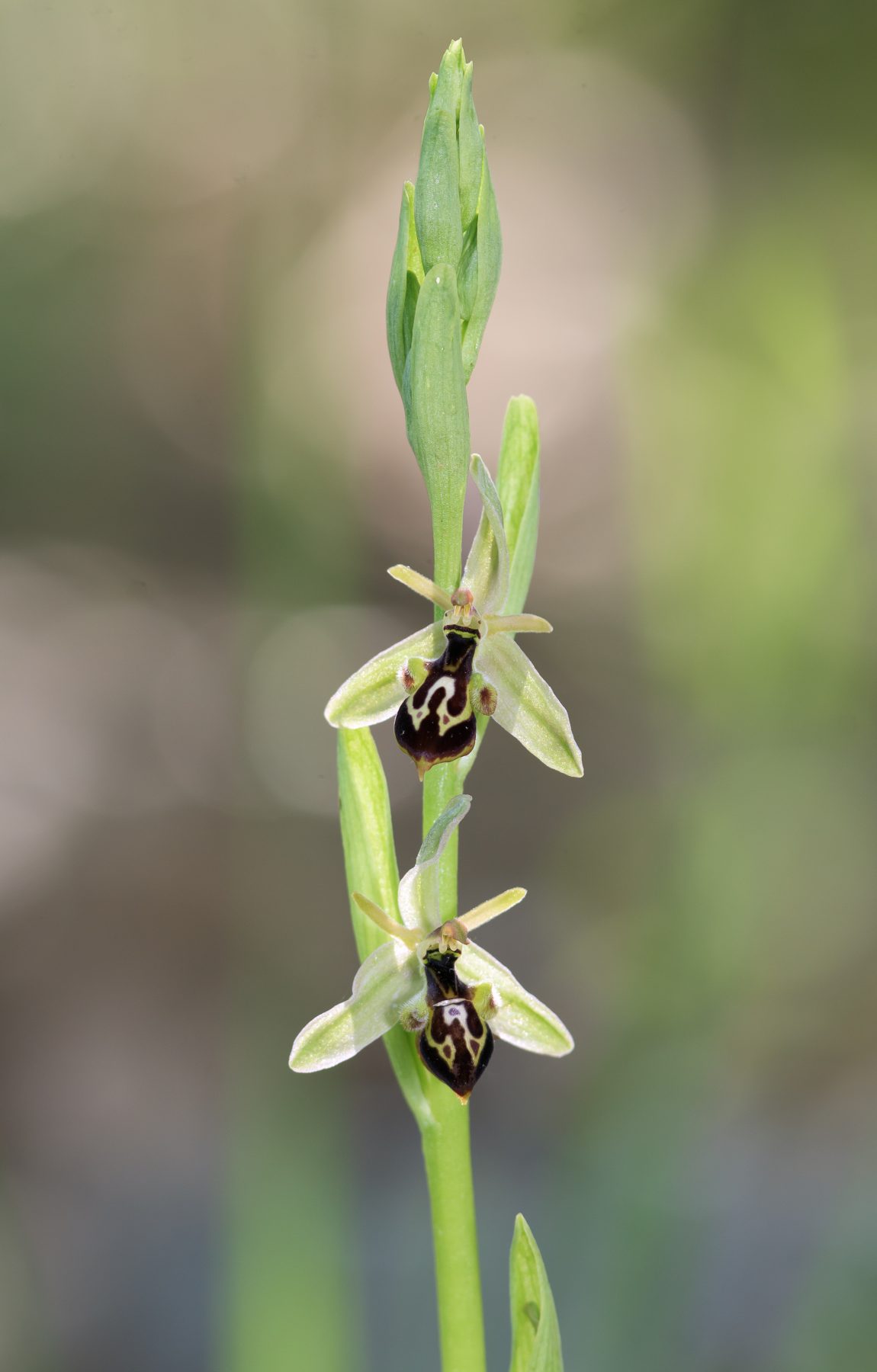

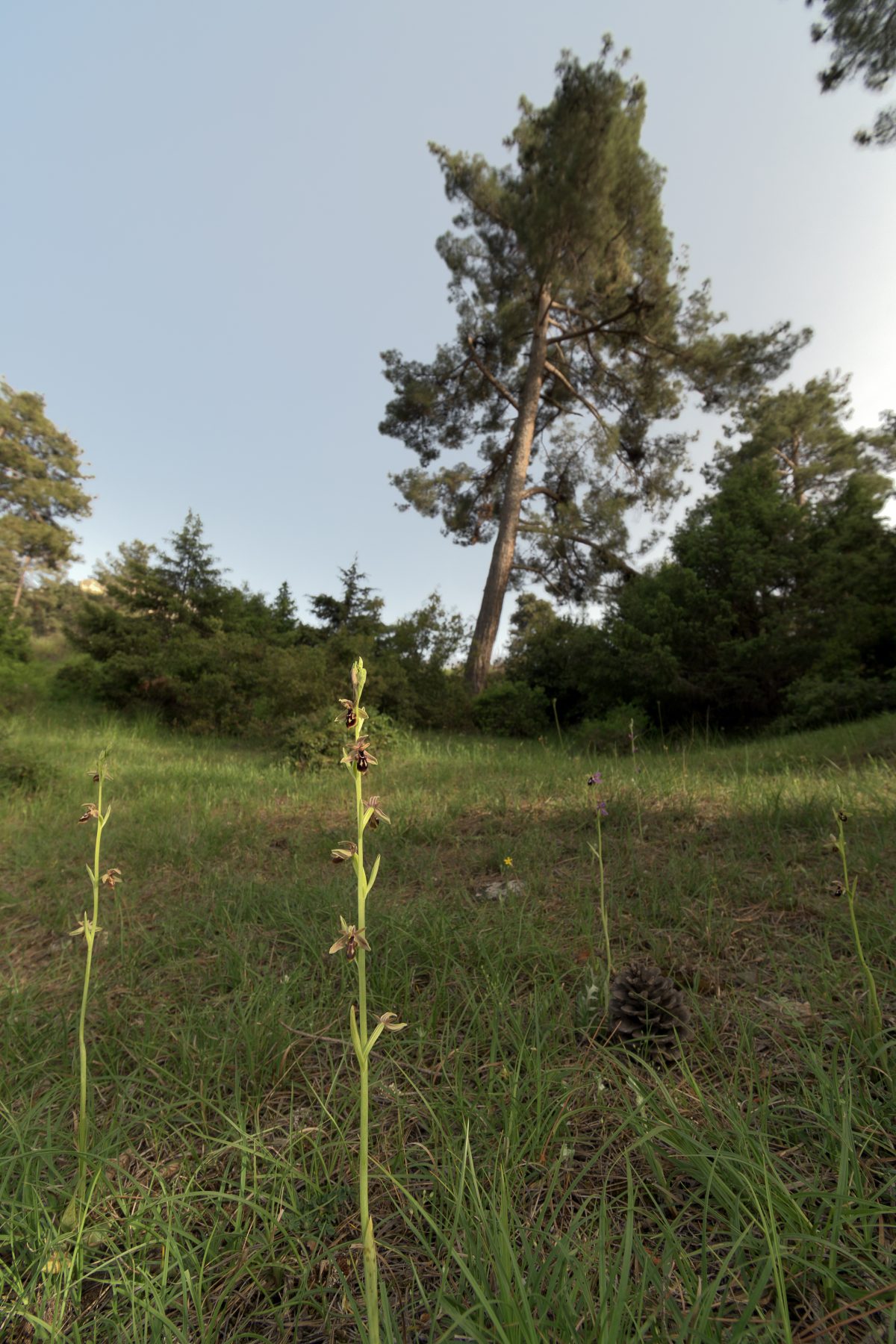
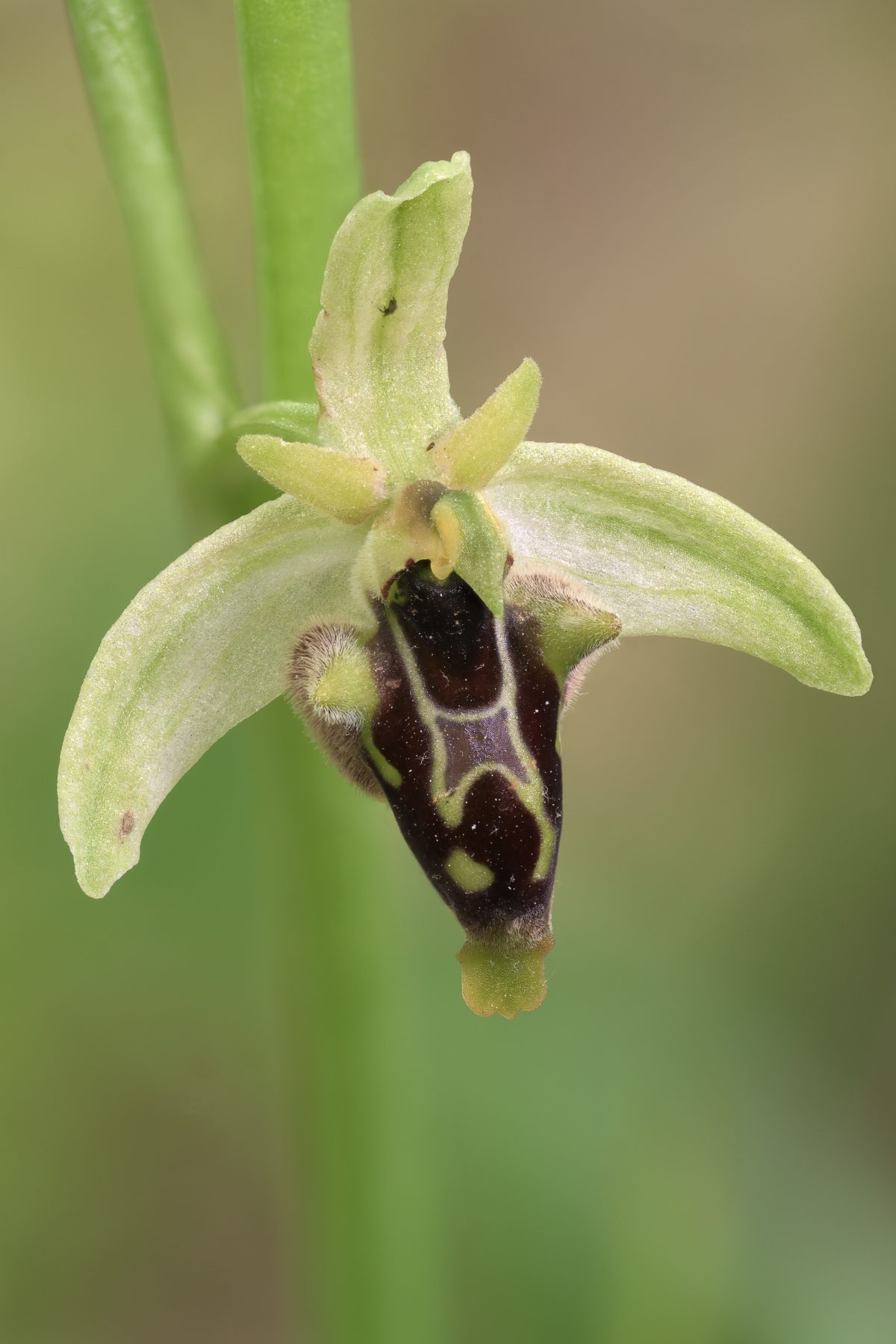


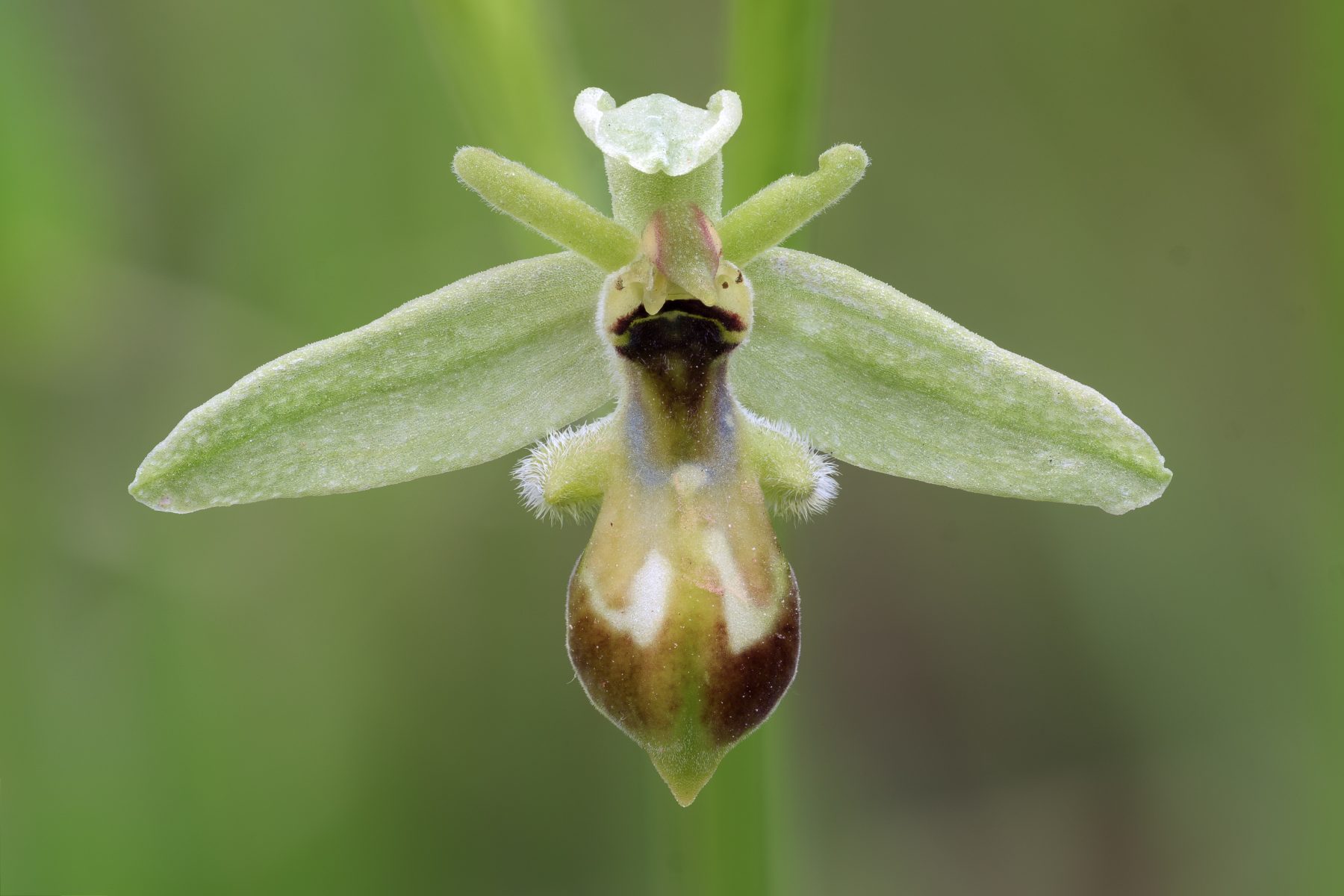

Ophrys cilicica in a clearing of a mountainous open woodland in Antalya, Turkey