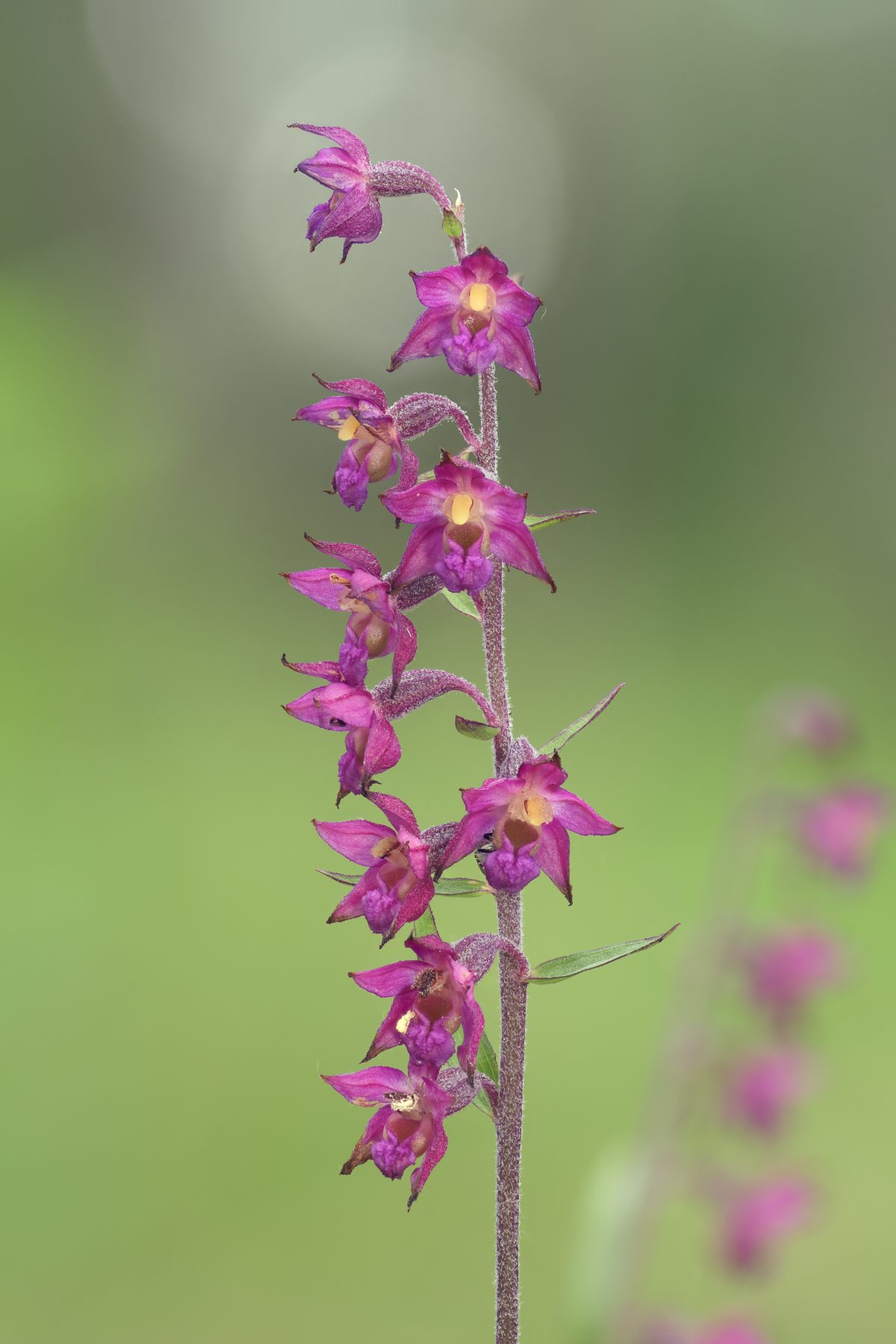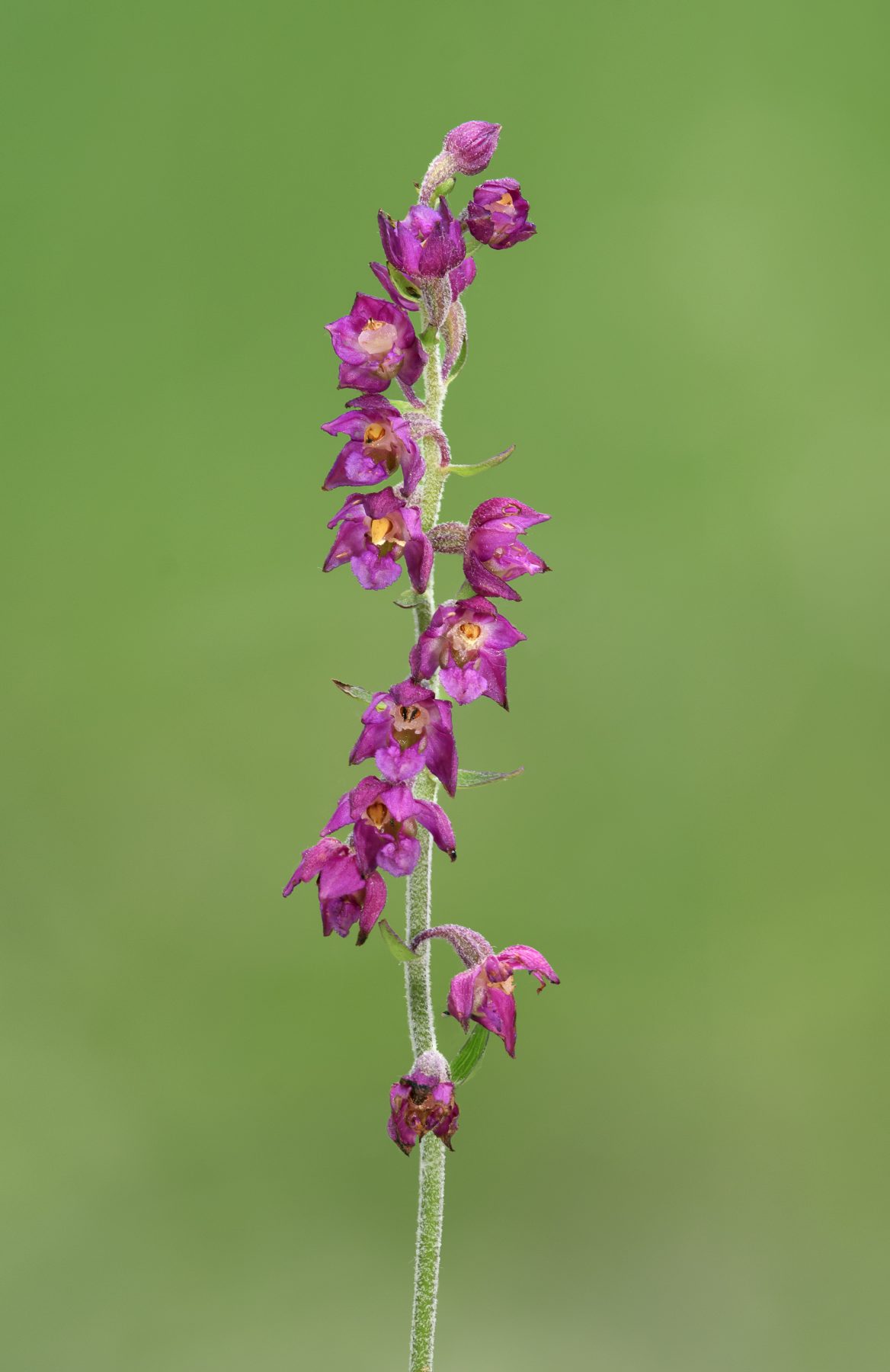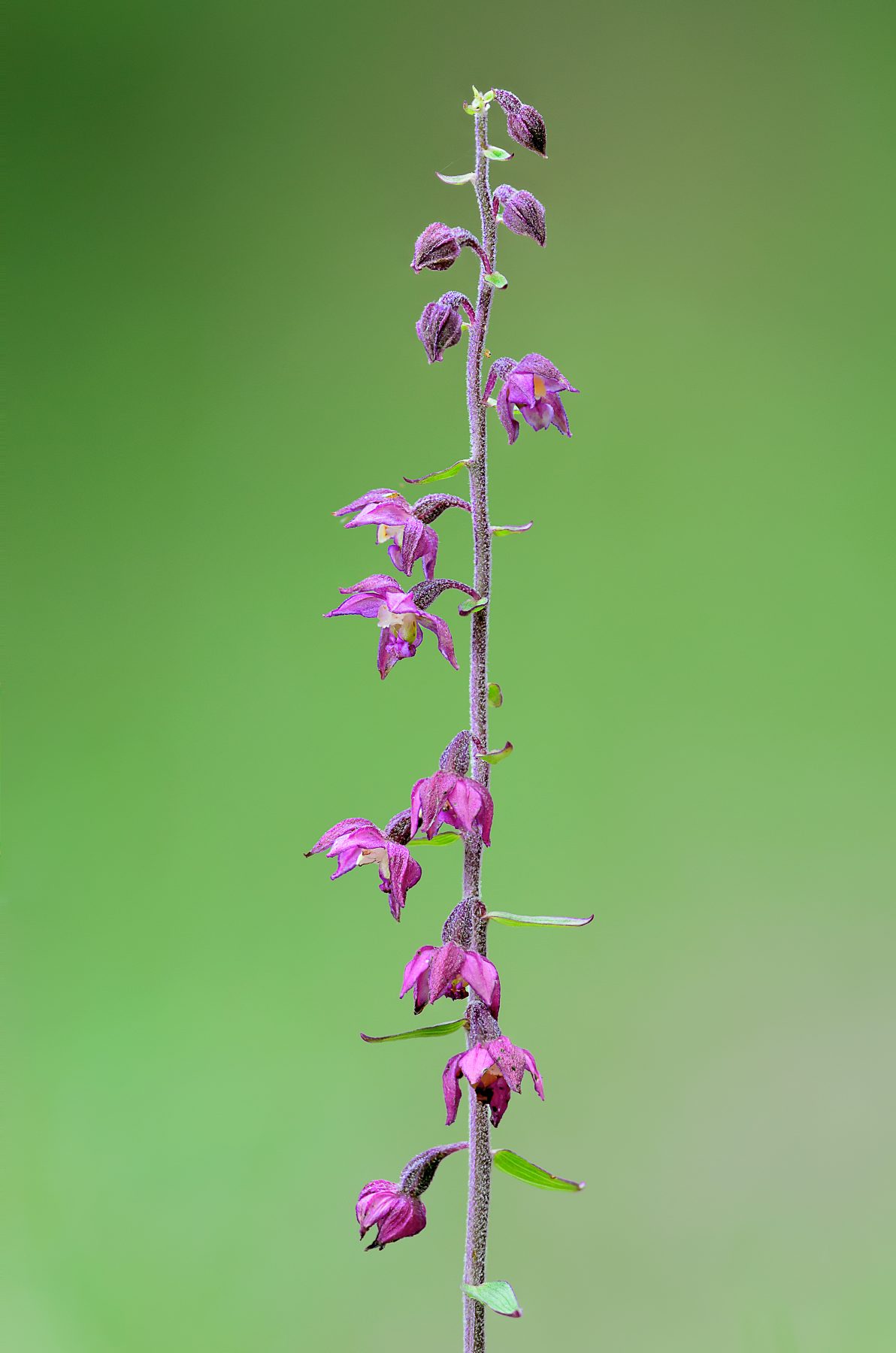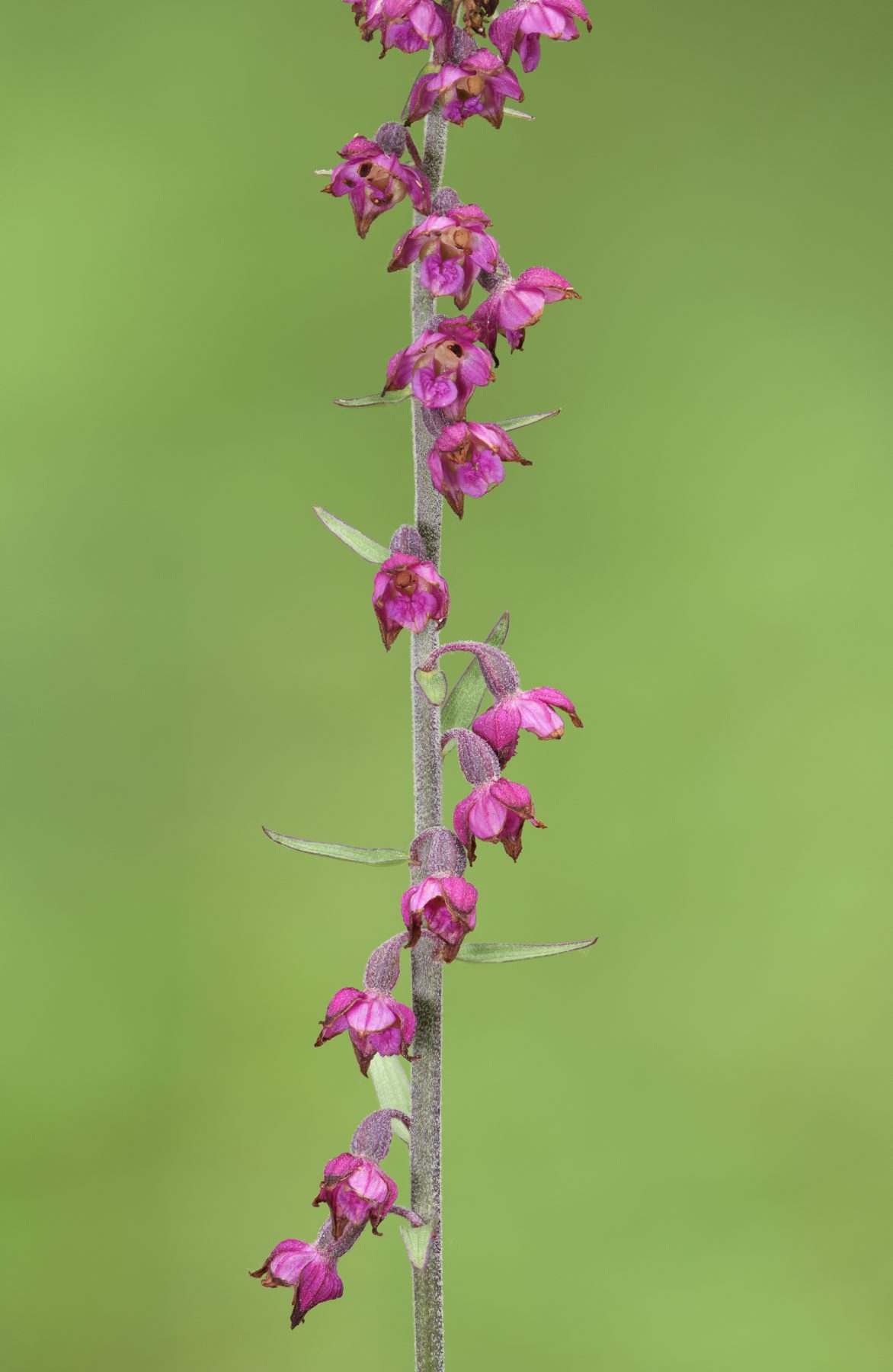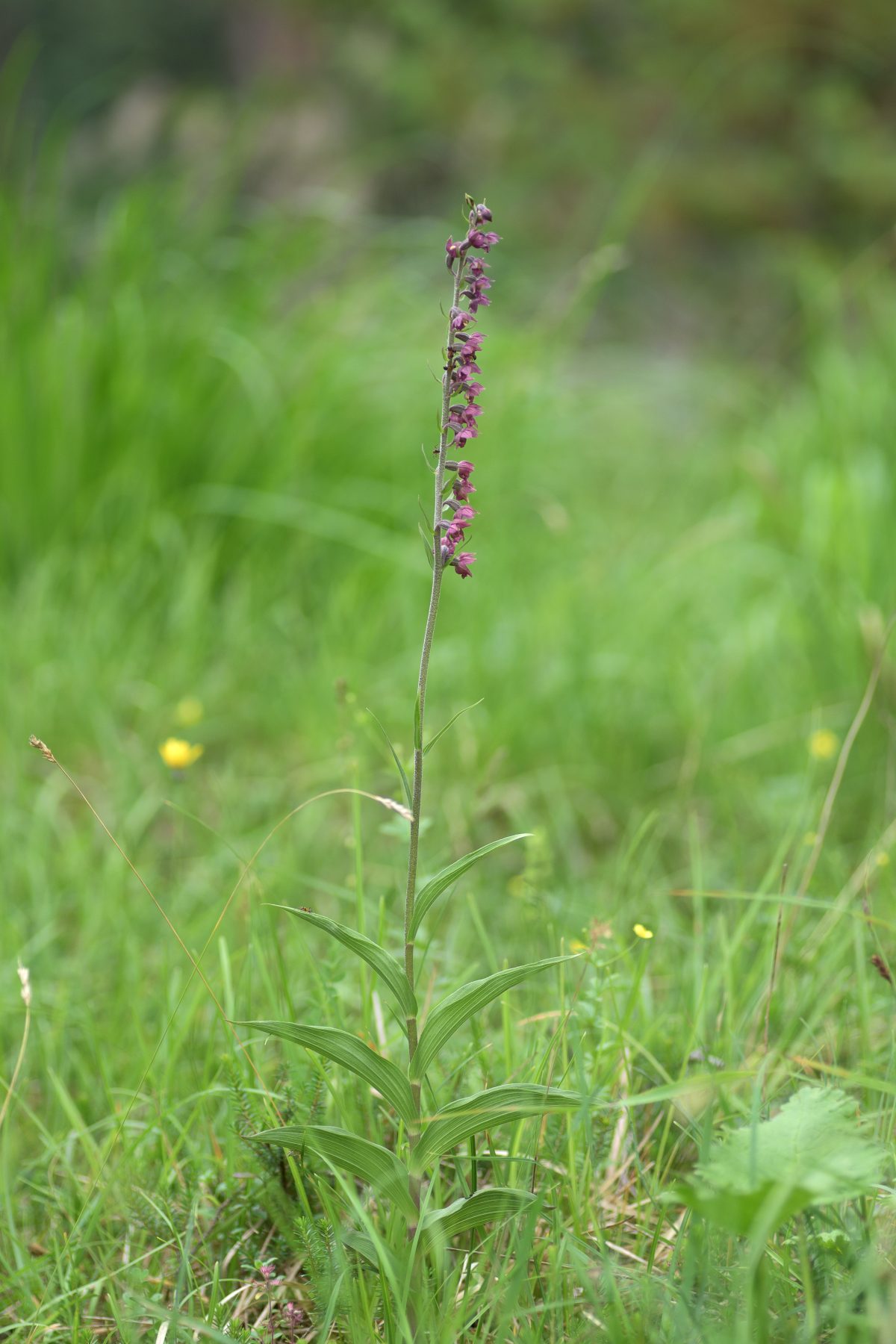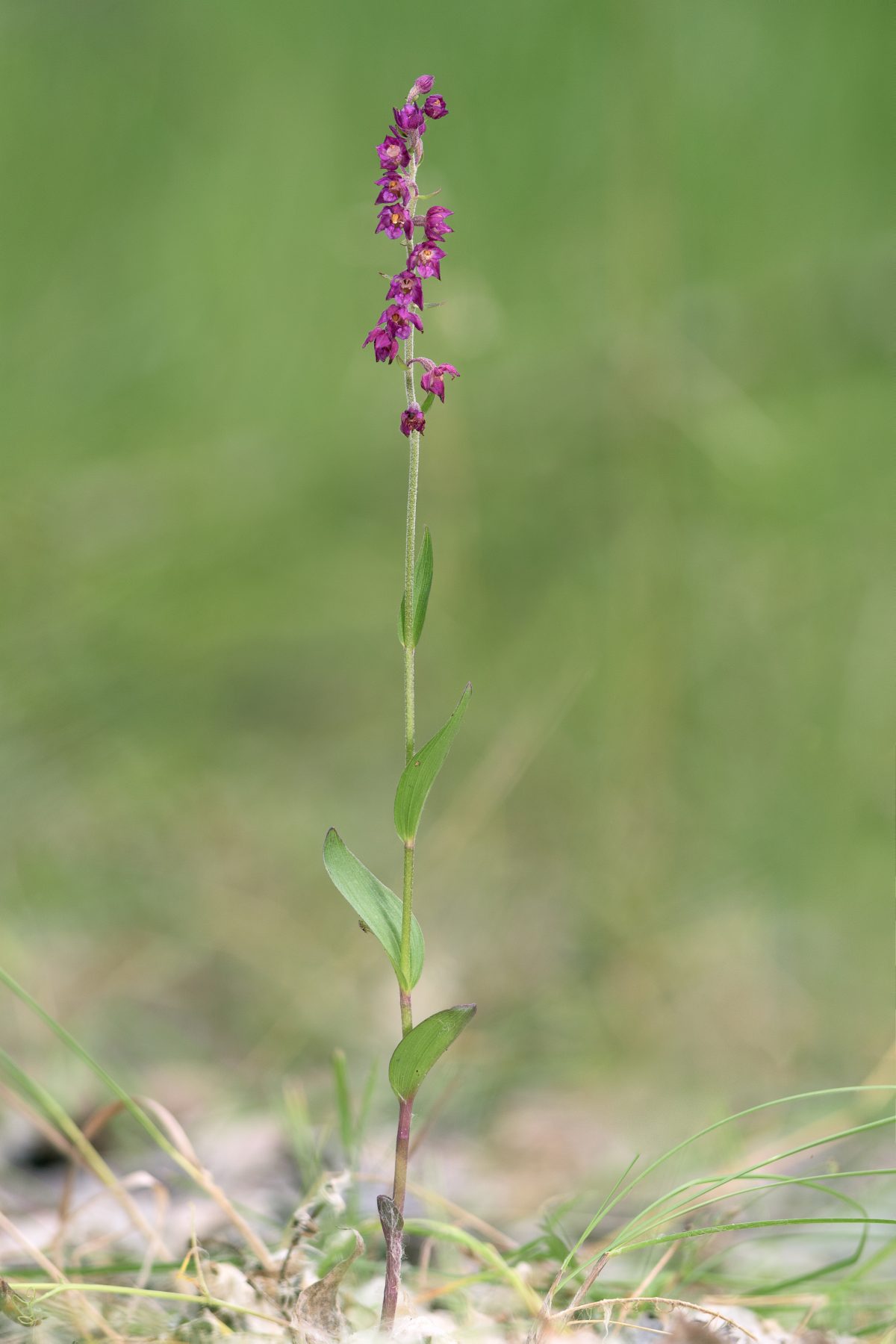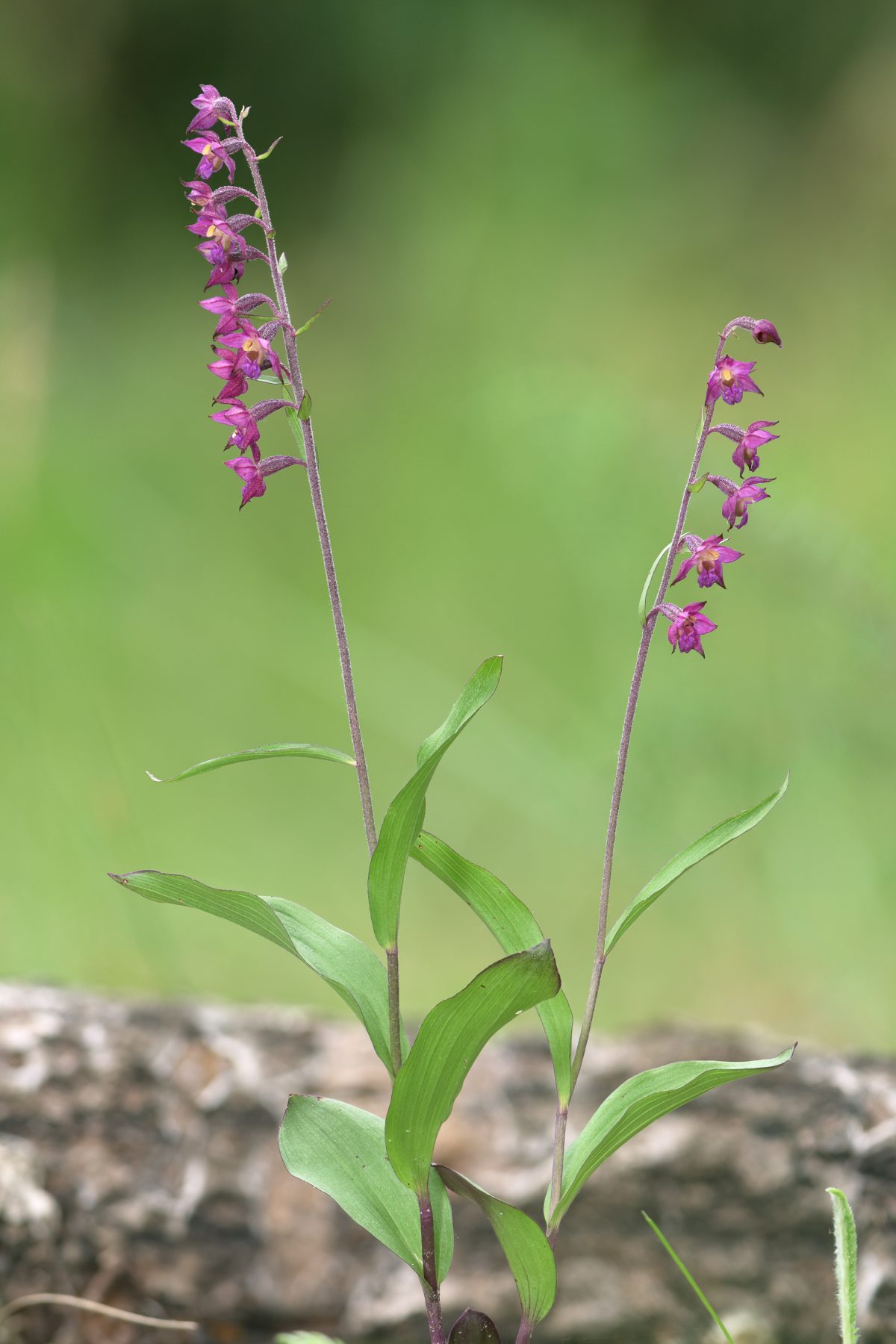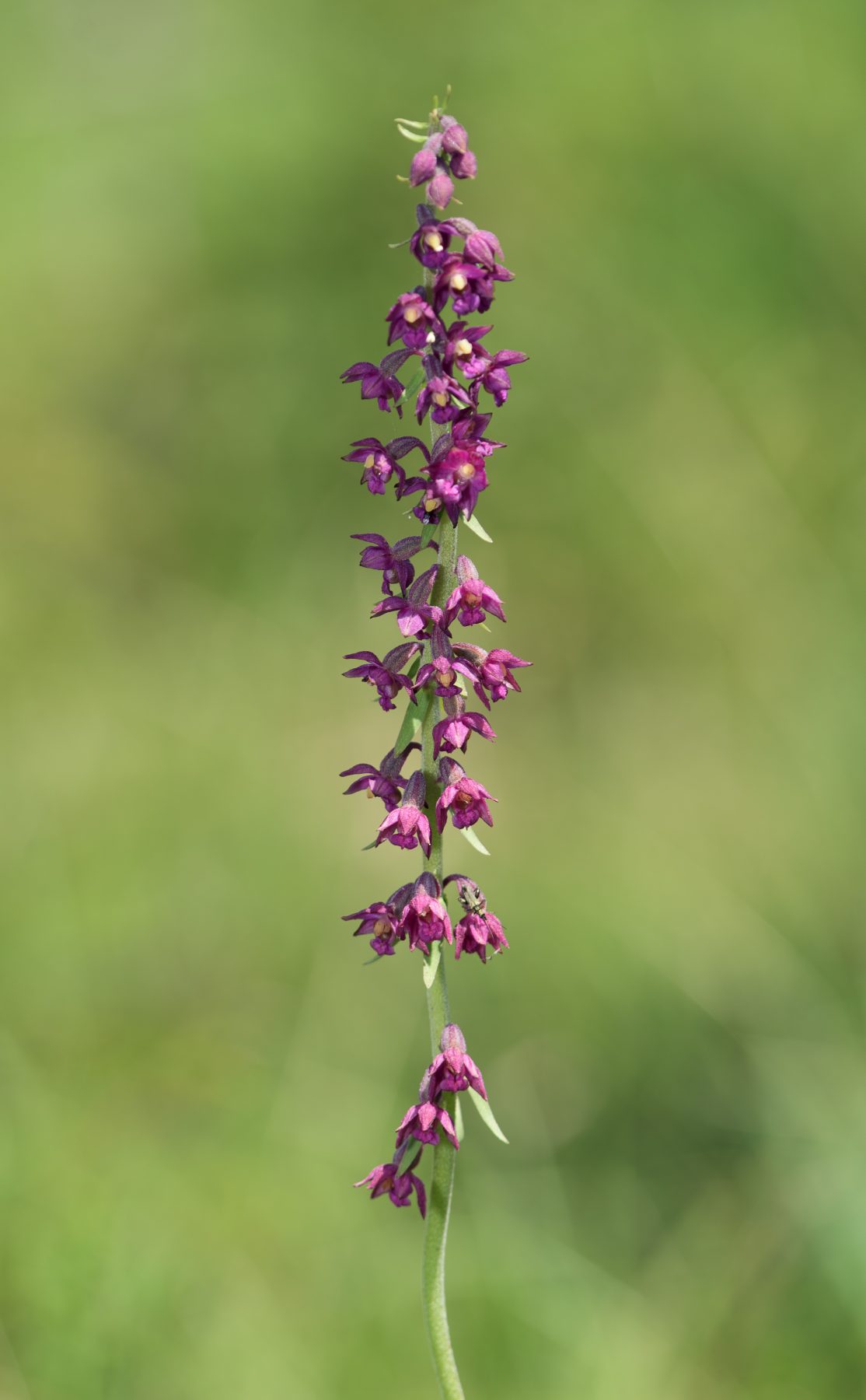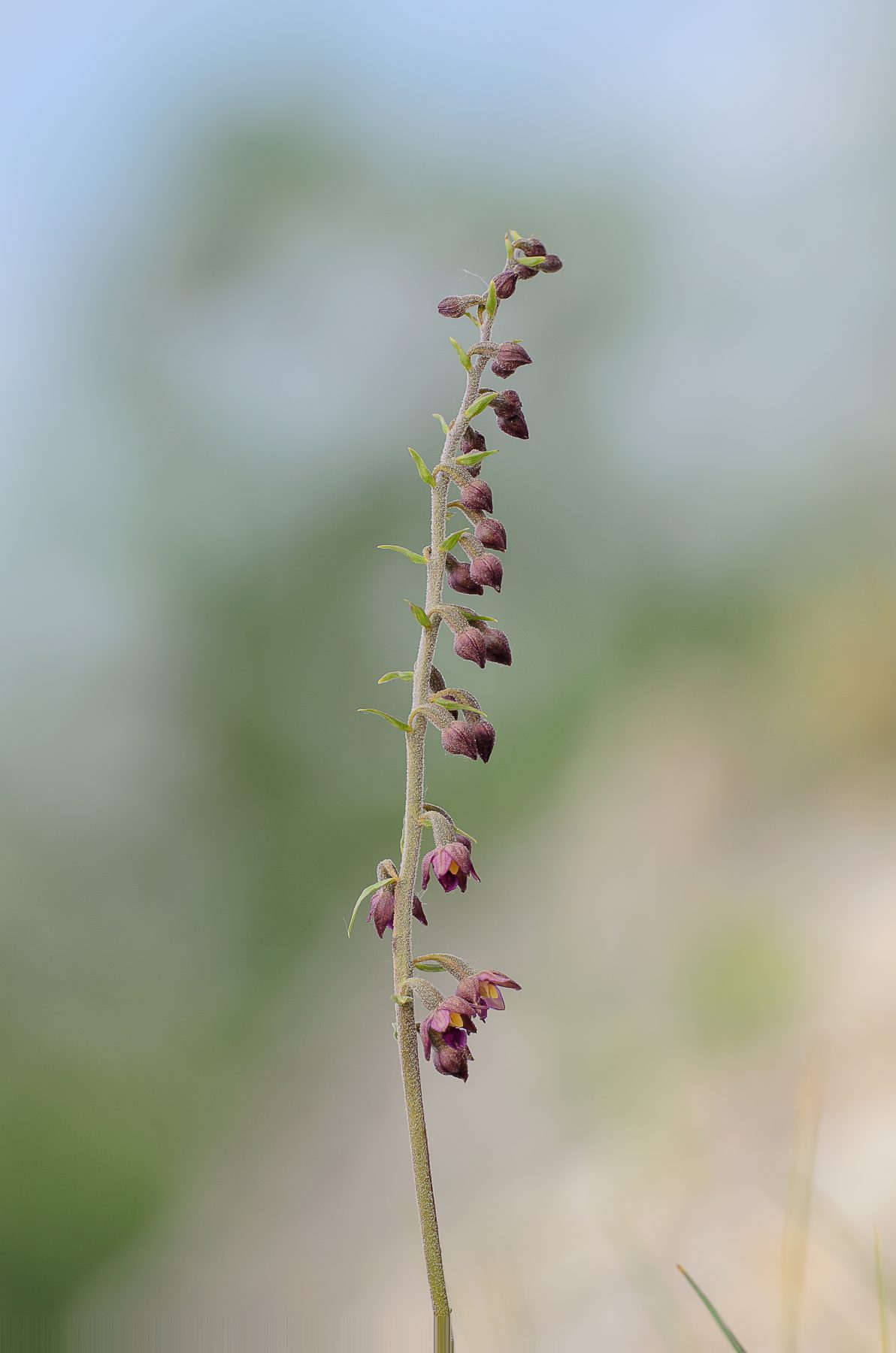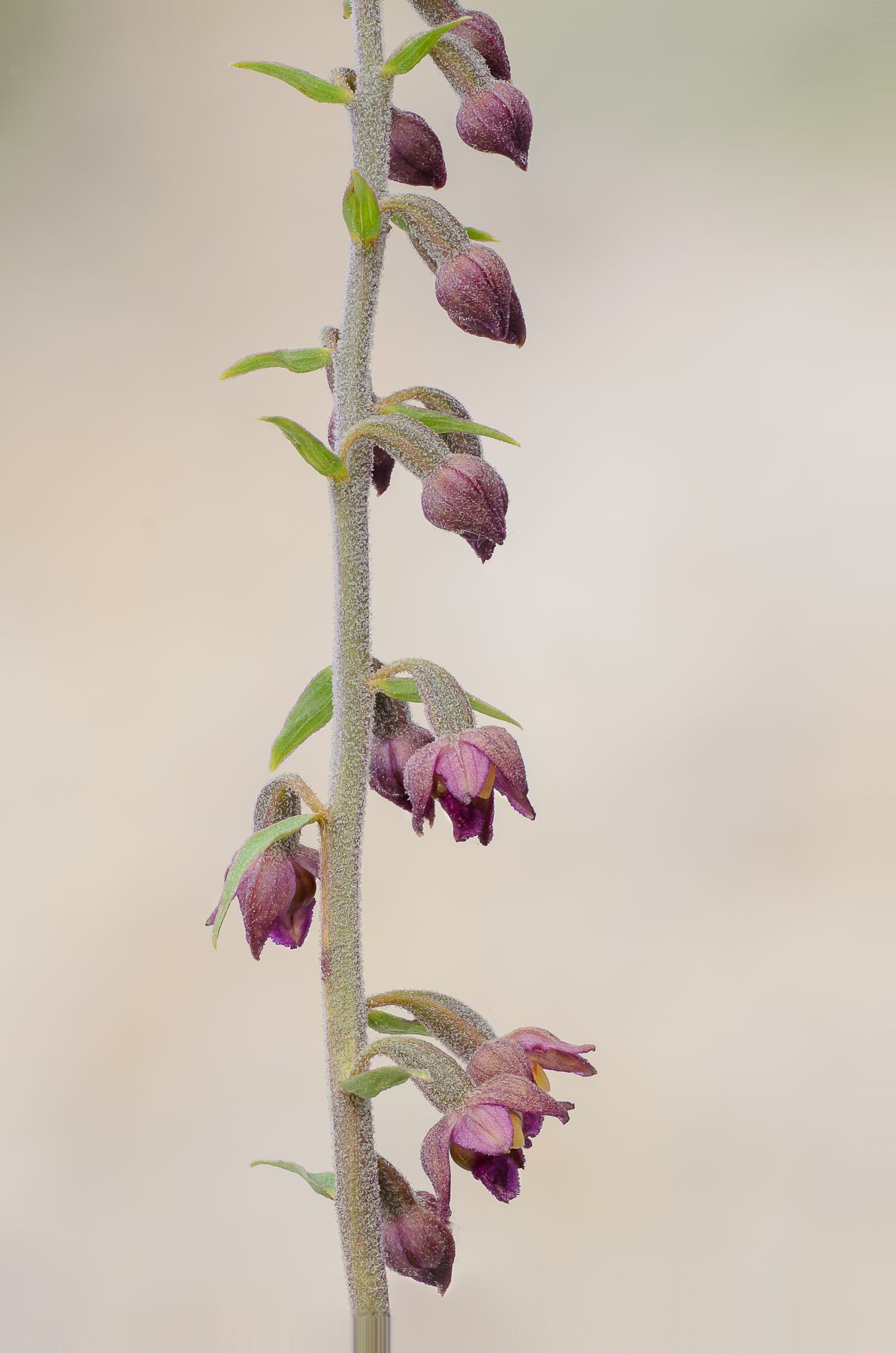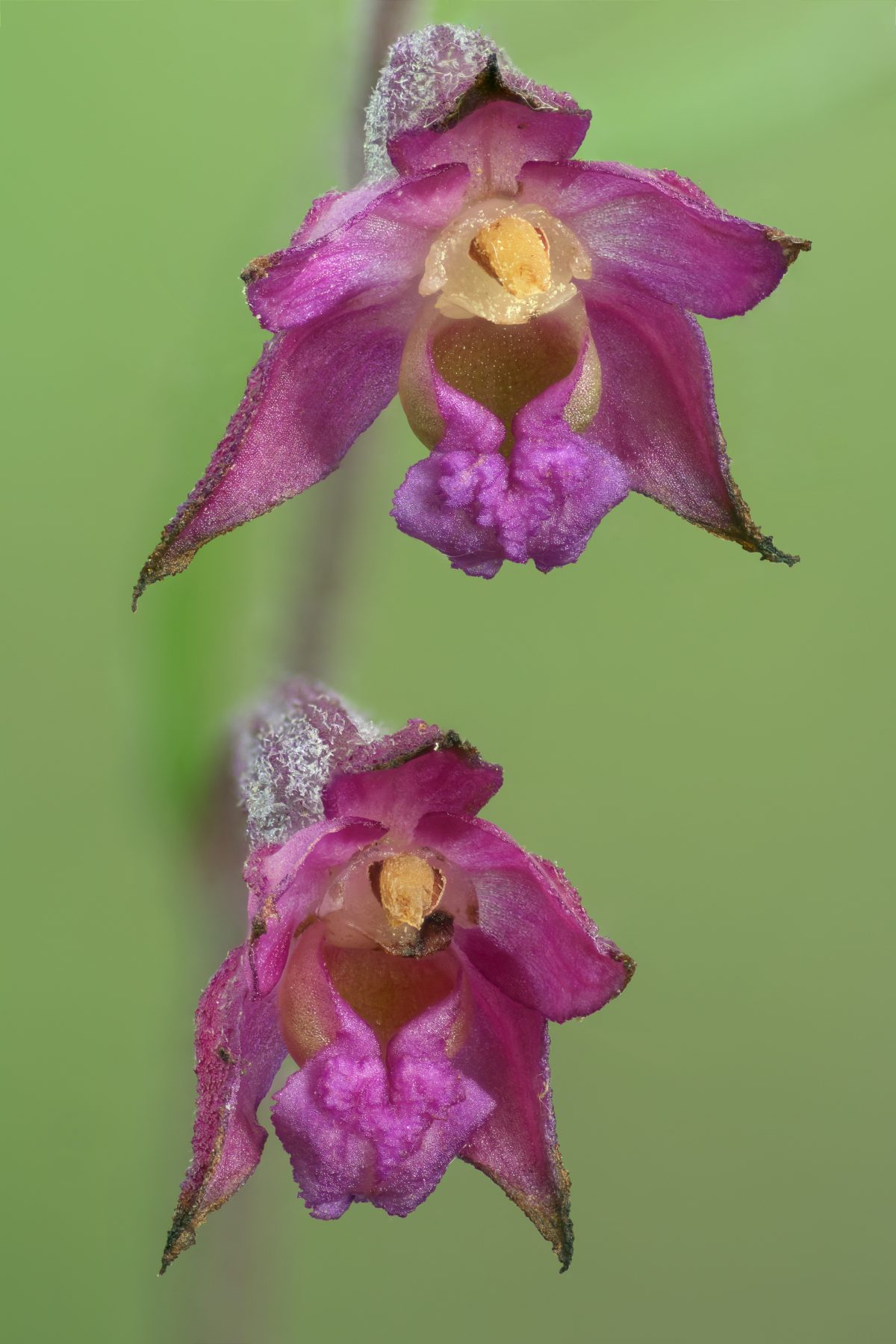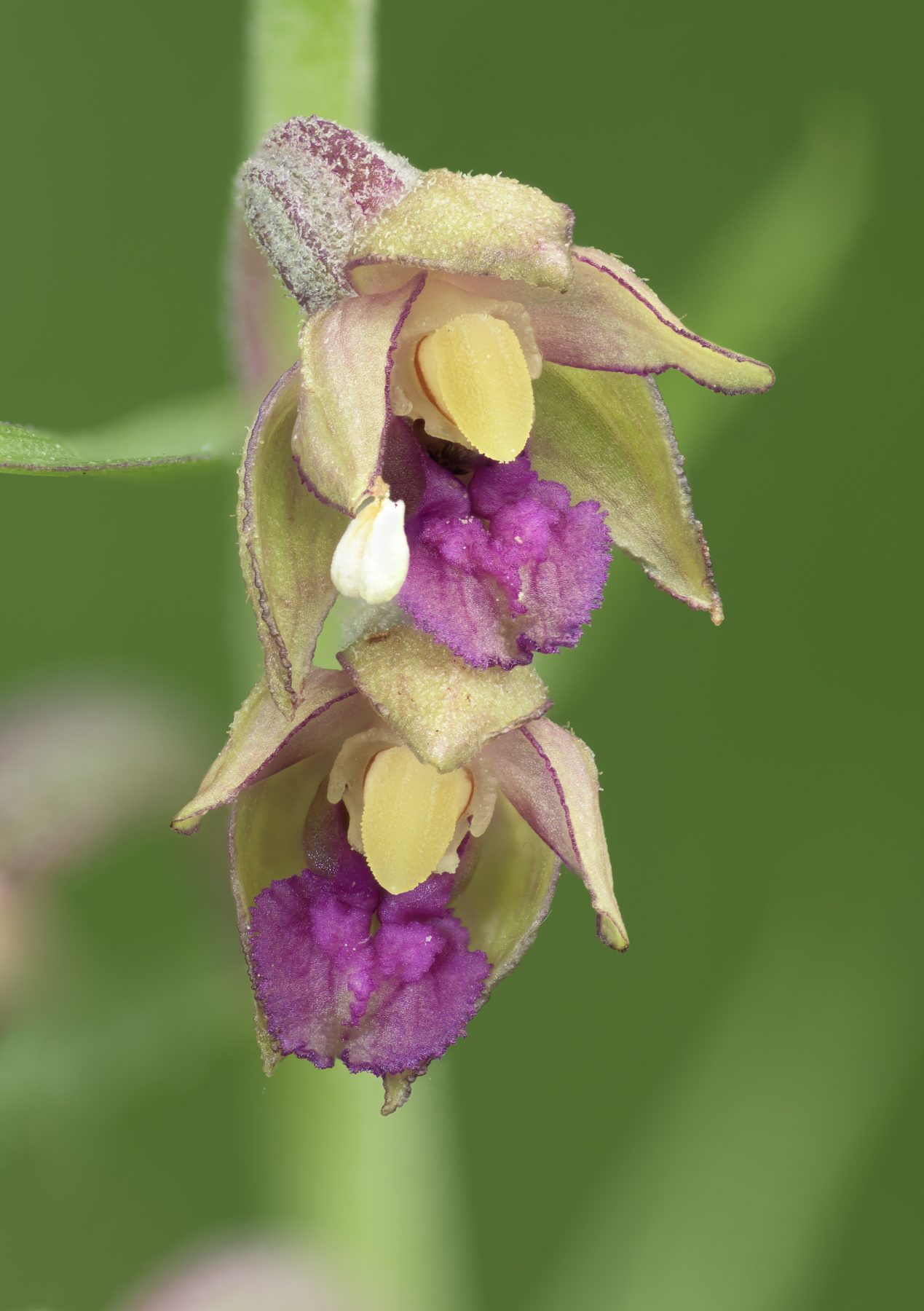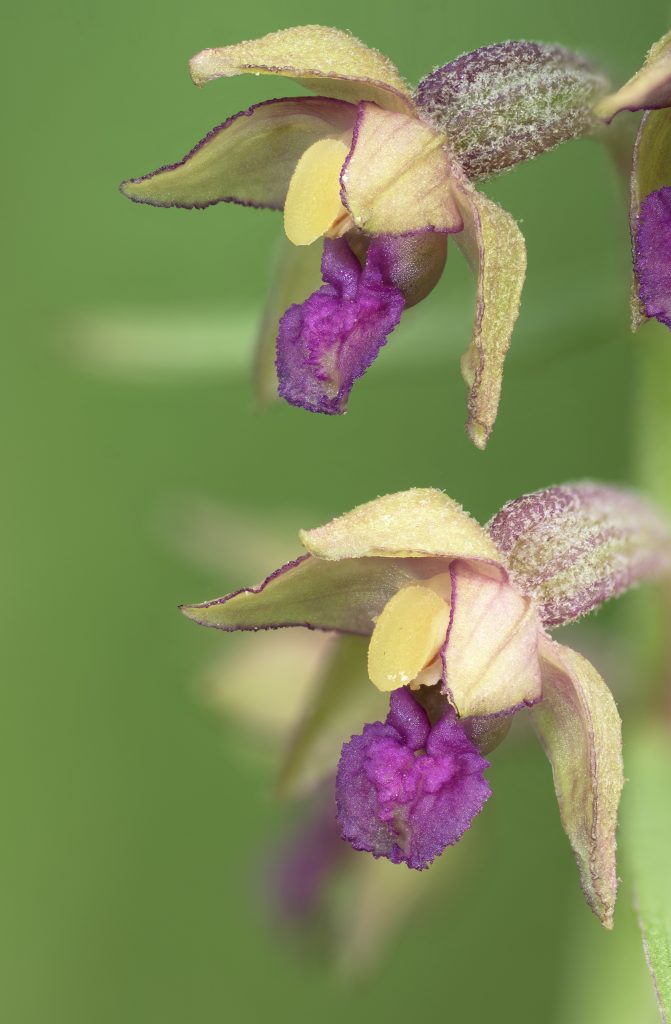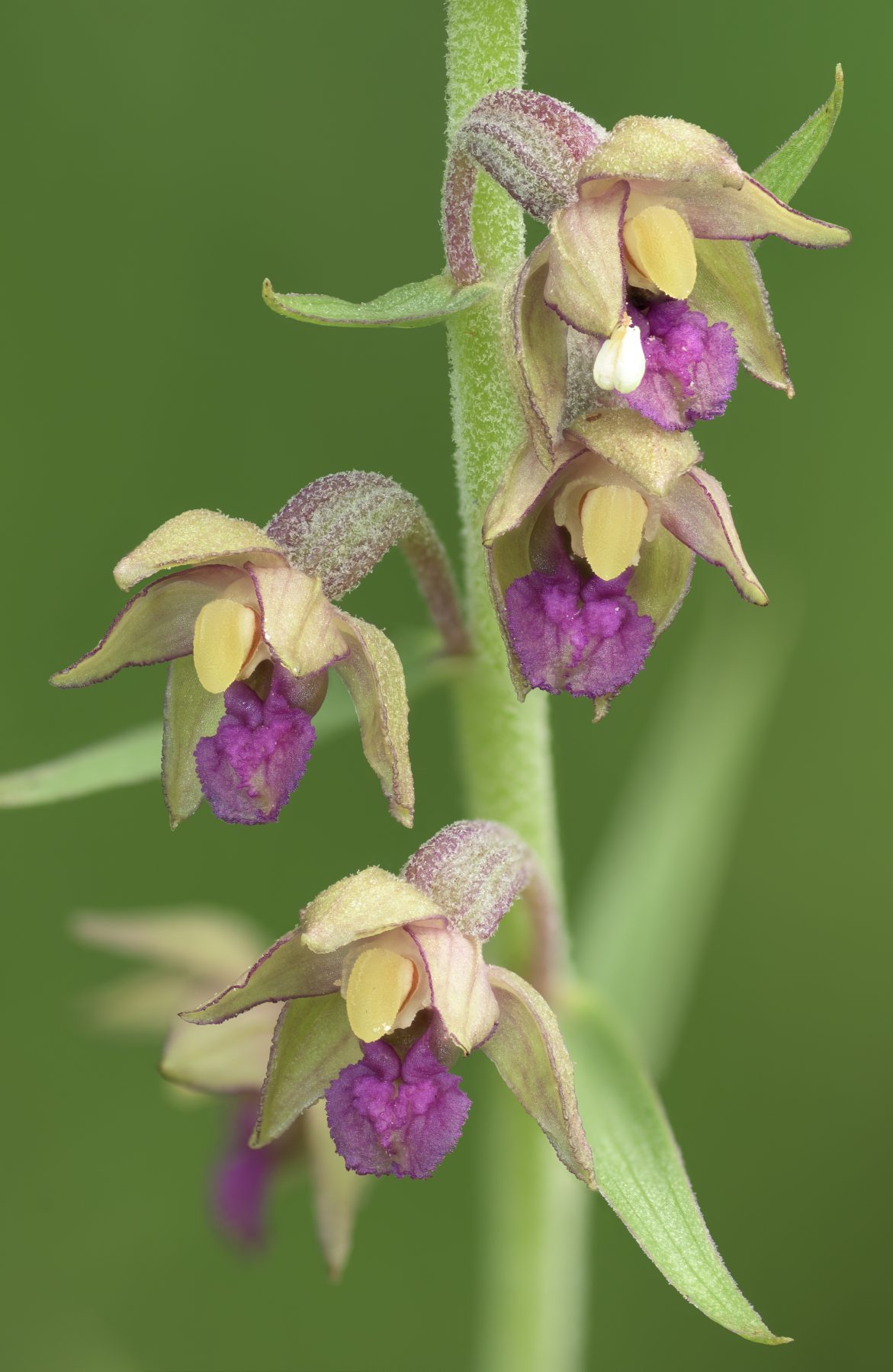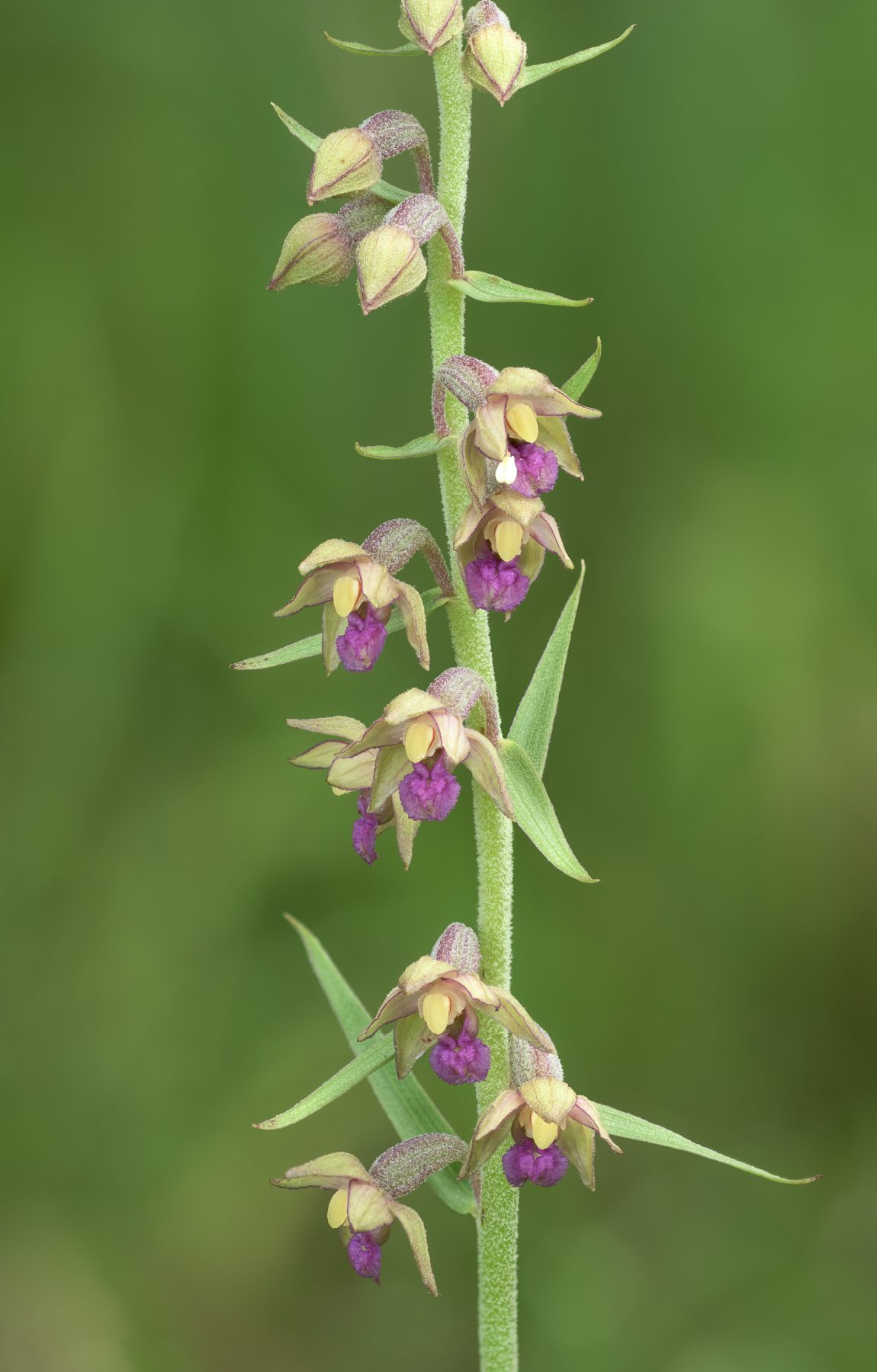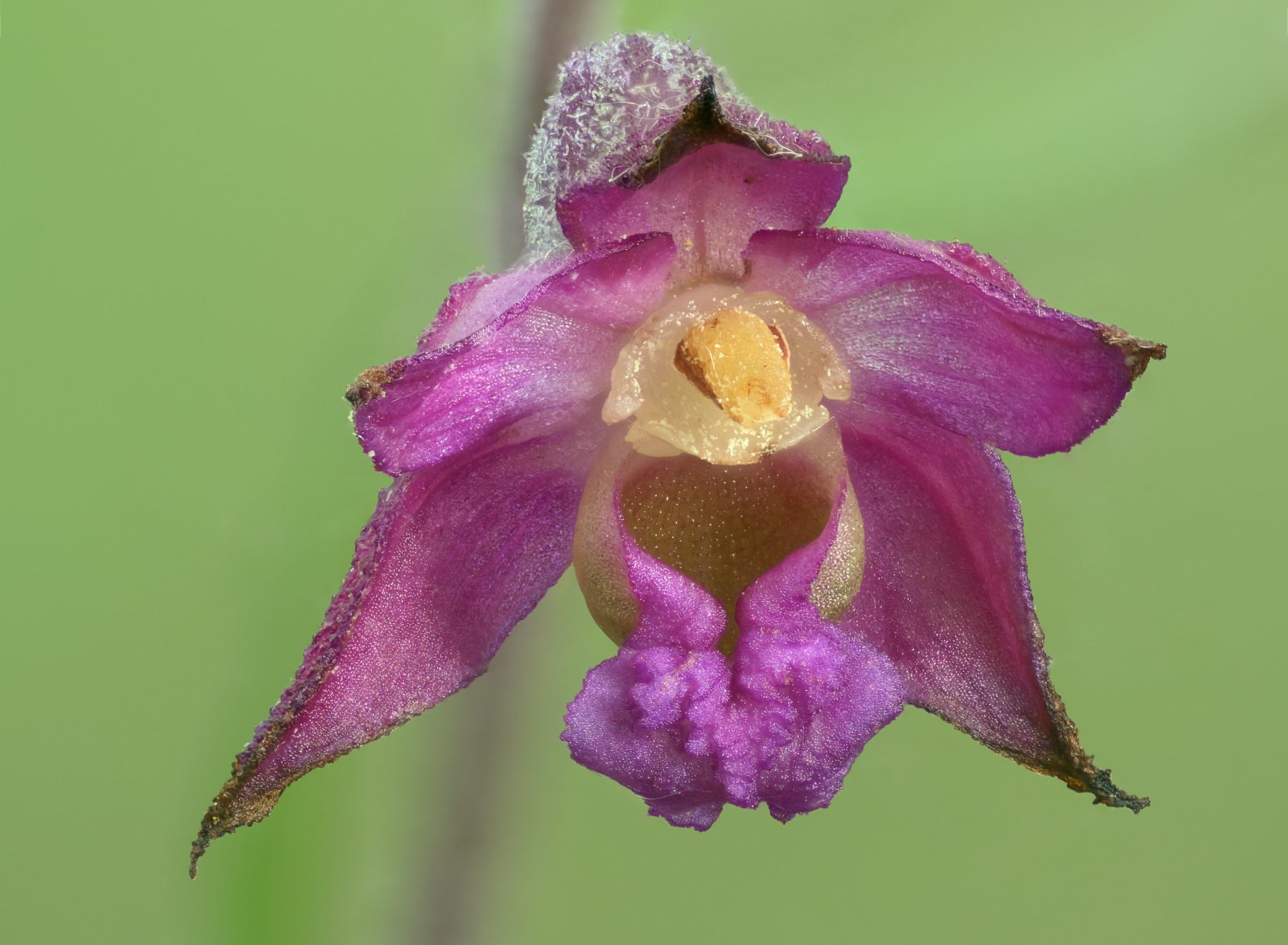
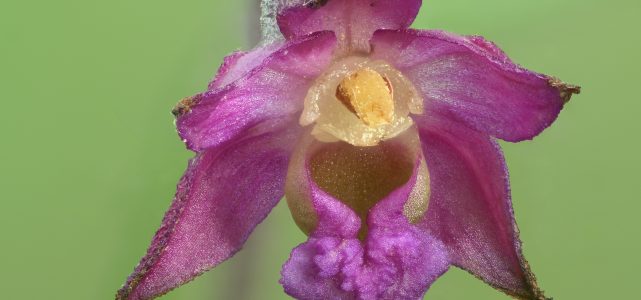
One of the easiest helleborines to identify, not only in Hungary but throughout Europe, is this species. Its distinctive combination of dark red (burgundy), deep purple, and occasionally brownish hues is unlike that of any other European species. In fact, the specific epithet atrorubens literally means “dark red,” which is quite appropriate, as the majority of plants are indeed coloured this way—the Hungarian common name, meaning “reddish-brown,” is therefore somewhat misleading. The only species likely to cause confusion are an unusually ornate Broad-leaved Helleborine (Epipactis helleborine) or, more rarely, Epipactis placentina, although the latter is so scarce that encountering it is highly unlikely. Naturally, colour variants also occur within the species itself, and these are by no means exceptional. I was fortunate enough to come across a stunning bicoloured form (forma bicolor) in Austria (see the lower section of the gallery below).
Before coming to a conclusion that identification is, in fact, not always quite as straightforward as it first appears, it is worth mentioning a number of additional characters that make recognition much more reliable. The stem, often flushed with brownish tones, bears elongated leaves arranged in two ranks (except in var. borbasii—see below). The inflorescence is usually dense and more or less one-sided. On the lip, the hypochile is rounded, the mesochile is narrow, while the epichile is rounded-triangular and bears the characteristic callosities near its base. Admittedly, not everyone will inspect the column with a magnifier lens, but this is an insect-pollinated, i.e. allogamous species. Consequently, both the rostellum and the clinandrium are well developed, and the viscidium is fully functional.
Being allogamous, Epipactis atrorubens is also capable of hybridising whenever it shares its habitat with other species. The most frequent partners are the Small-leaved Helleborine (Epipactis microphylla), the Broad-leaved Helleborine (Epipactis helleborine), and the Marsh Helleborine (Epipactis palustris). Its hybrid with the latter, Epipactis × pupplingensis, is an astonishingly beautiful orchid and one of the rarest hybrids in Europe. We were fortunate enough to see it at its Bavarian locus typicus in 2026. The hybrid with E. microphylla (Epipactis × graberi) has already been recorded in Hungary, in the Bükk Mountains, whereas neither E. × pupplingensis nor Epipactis × schmalhausenii (E. atrorubens × helleborine) has so far been found in the country.
The species is distributed throughout almost the whole of Europe, ranging from Spain to the Caucasus, south to Italy and Greece, and north to Scotland and Scandinavia. It also extends into Siberia and reaches the Kola Peninsula. Across Europe it is by no means a rare orchid, being particularly common in mountainous regions, where it grows in woodlands and forest clearings, along roadsides, and in wooded or shrubby alpine grasslands.
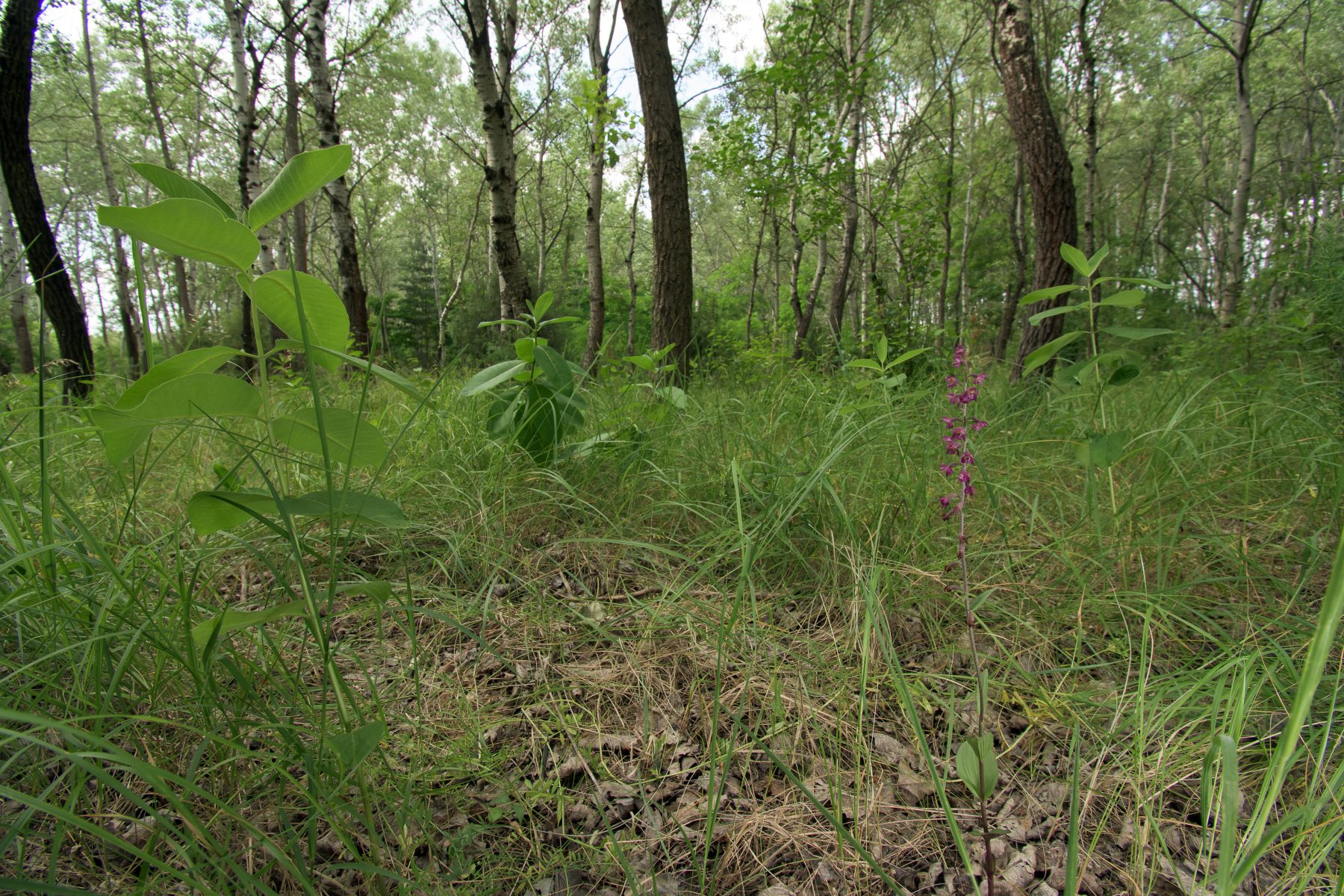
In Hungary, however, most populations occur in the lowlands, especially in poplar plantations established on the sandy ridges of the Danube–Tisza Interfluve. It is also found in natural juniper scrub and poplar woods, often growing alongside the Bugac Helleborine (Epipactis bugacensis) and the Red Helleborine (Cephalanthera rubra). This region is also the exclusive home of a distinct variety, var. borbasii, characterised by shorter, more rounded leaves that barely exceed the length of the internodes. Elsewhere in the country, the species occurs mainly in oak forests, karst woodlands, karst scrub, rocky grasslands, scree slopes, and occasionally even in abandoned quarries, although never in large numbers. Interestingly, the only known locality in the Buda Hills is an old quarry, where some plants display distinctly brownish flowers—perfectly matching the Hungarian common name.
In Hungary, flowering usually begins in late May and continues until approximately the end of June. In recent years, however, the flowering season has shifted noticeably earlier as a consequence of increasingly mild late winters and warmer springs. Since the species prefers dry habitats, it is probably less affected by the worsening summer droughts than many other orchids. Nevertheless, it cannot survive the clear-felling of poplar plantations, and the increasingly frequent wildfires affecting the country’s juniper woodlands are likewise detrimental to its populations. In Hungary, Epipactis atrorubens is a legally protected species with a conservation value of HUF 10,000.