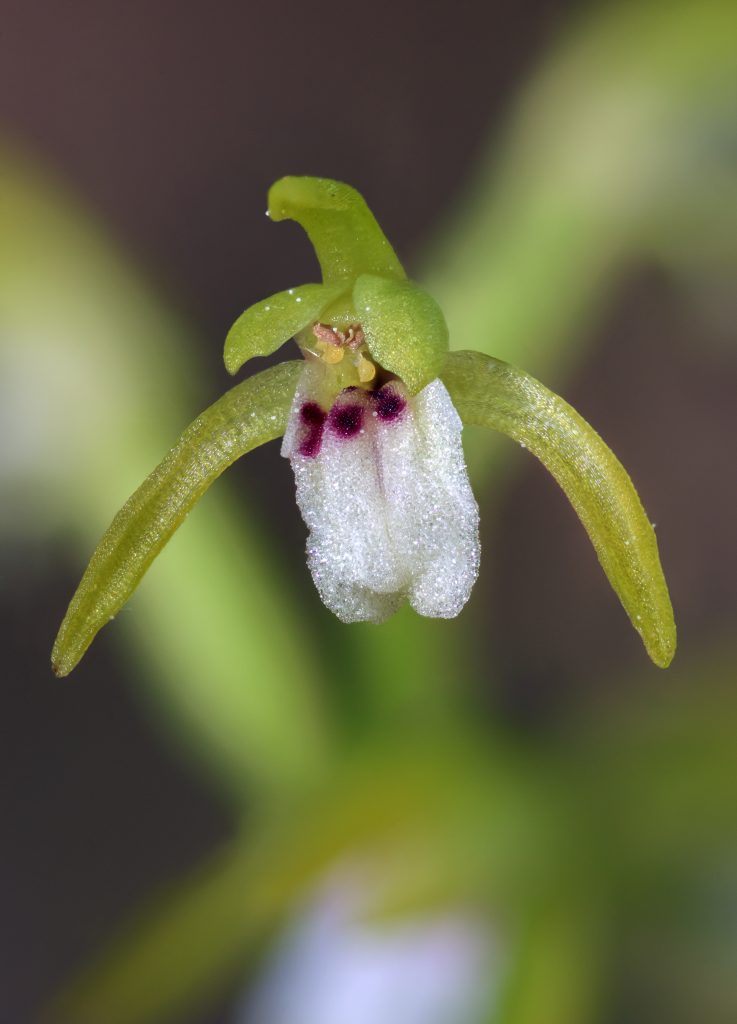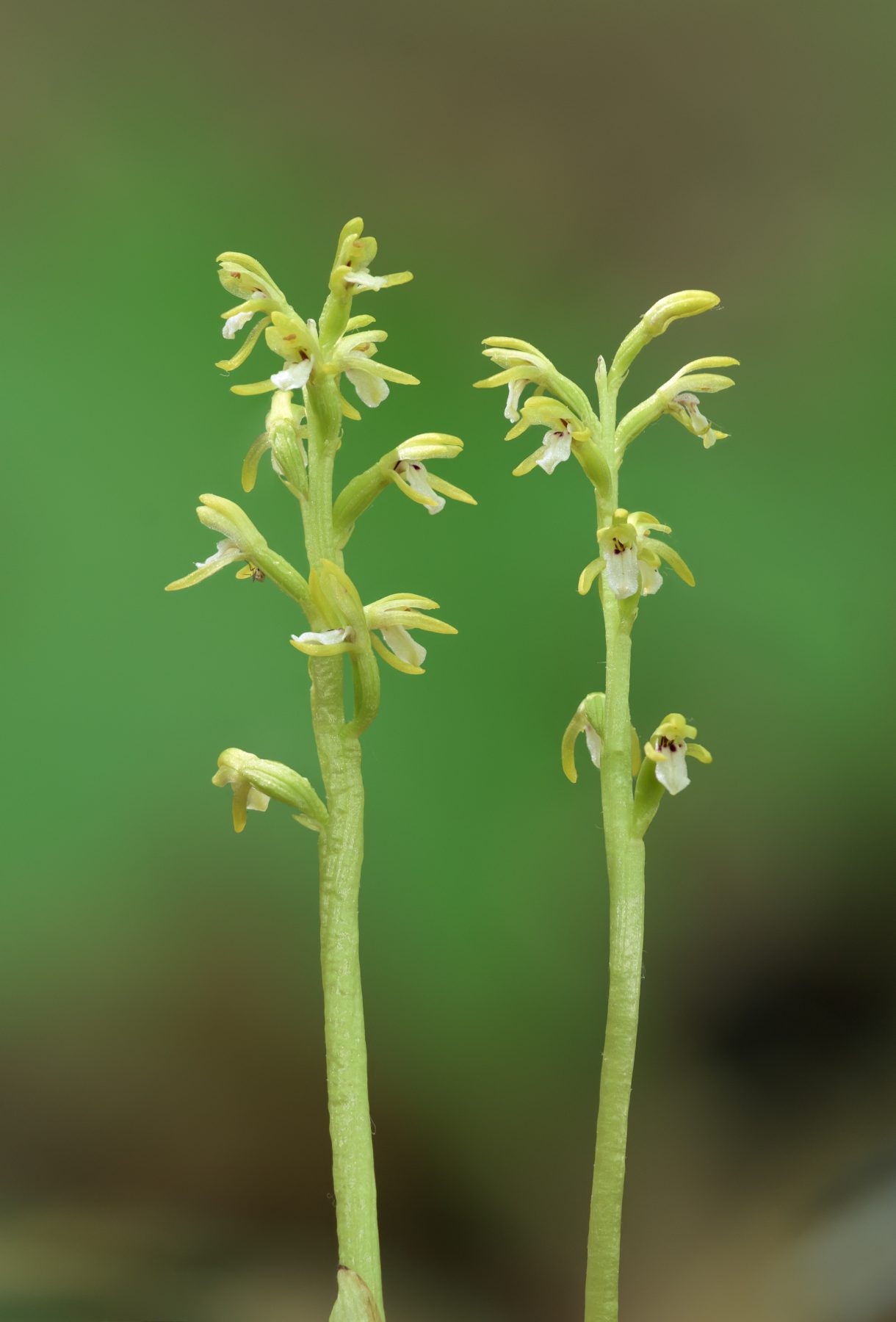
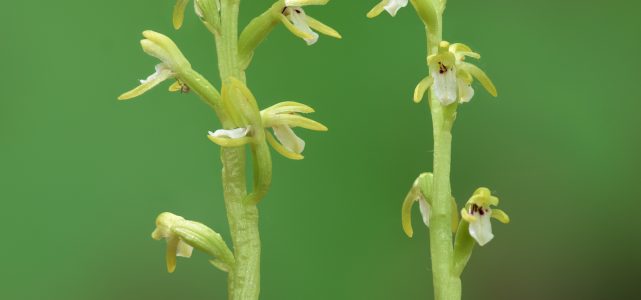
The genus has only a single species native to Eurasia, the coralroot orchid (Corallorhiza trifida), and is not a particularly species-rich genus worldwide either. The “remaining” 14 species are native to North and Central America. All its representatives are characterized by a coral-like, rhizomatous root—so it is not difficult to deduce the origin of the genus name from this feature—from which several thin-stemmed, generally small stems may develop, occasionally giving the plants a somewhat colonial appearance. The leaves on the stems are rather reduced or short, as photosynthesis is of secondary importance here: a considerable proportion of their nutrients is obtained from other plants via fungal hyphae, and in this respect they may be regarded as parasitic. The inflorescence is usually loose, with few, though sometimes many, flowers. The lateral sepals are linear to lanceolate, while the ovate dorsal sepal and the petals often form a helmet-like hood. Their colour may range from greenish to reddish. The lip is three-lobed, white and tongue-shaped, with a few reddish spots.
Their flowers are generally facultatively self-pollinating, although small insects may also play a role in their reproduction. They primarily favour acidic soils and shady or semi-shady forests (beech woods, coniferous forests and birch woods), especially their montane and alpine forms. In the far north, in the boreal zone and tundra, they also thrive in the shade of dwarf willows, crowberries and other shrubs. The species is widespread throughout Europe, but in most places it is rare and has a rather threatened conservation status.