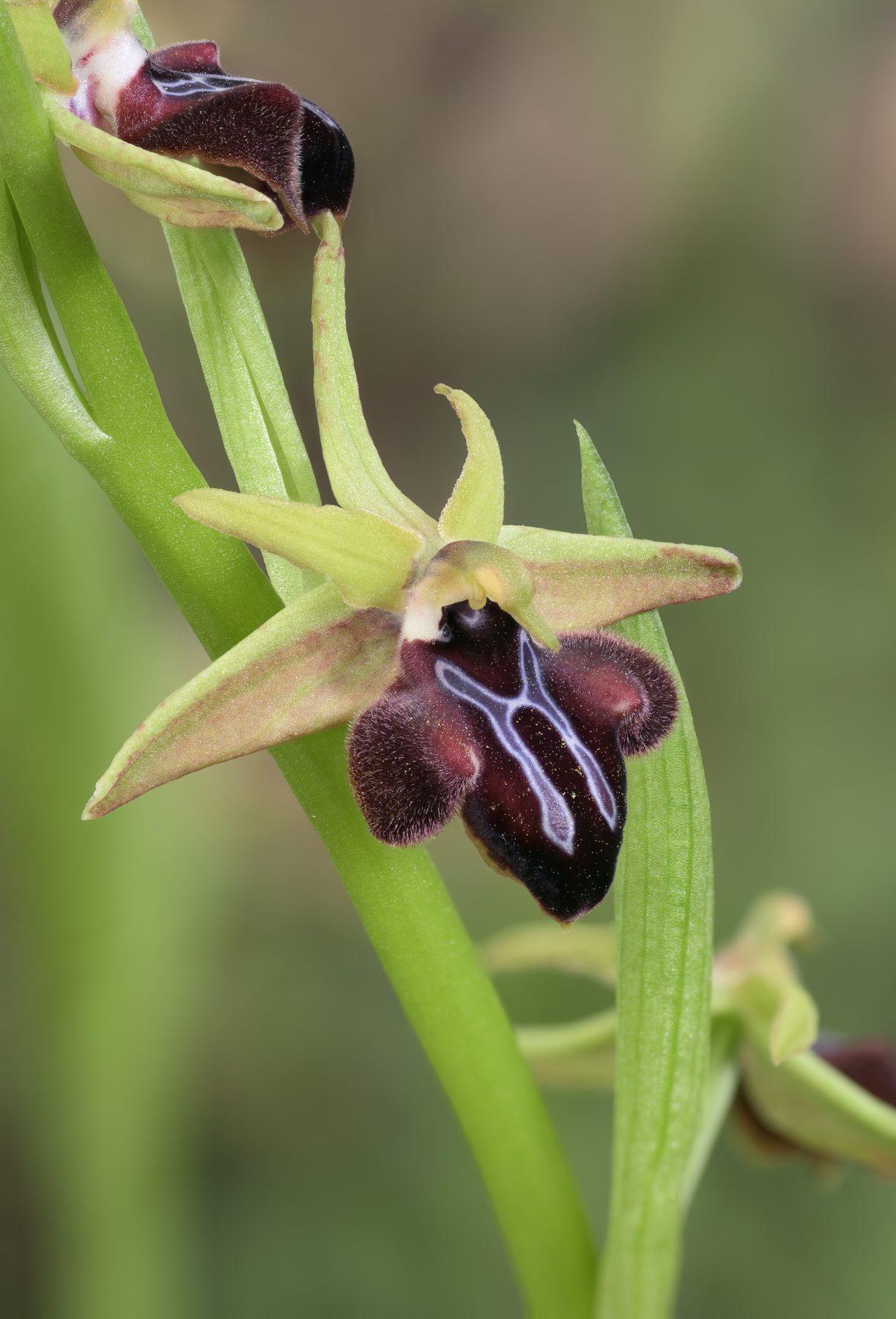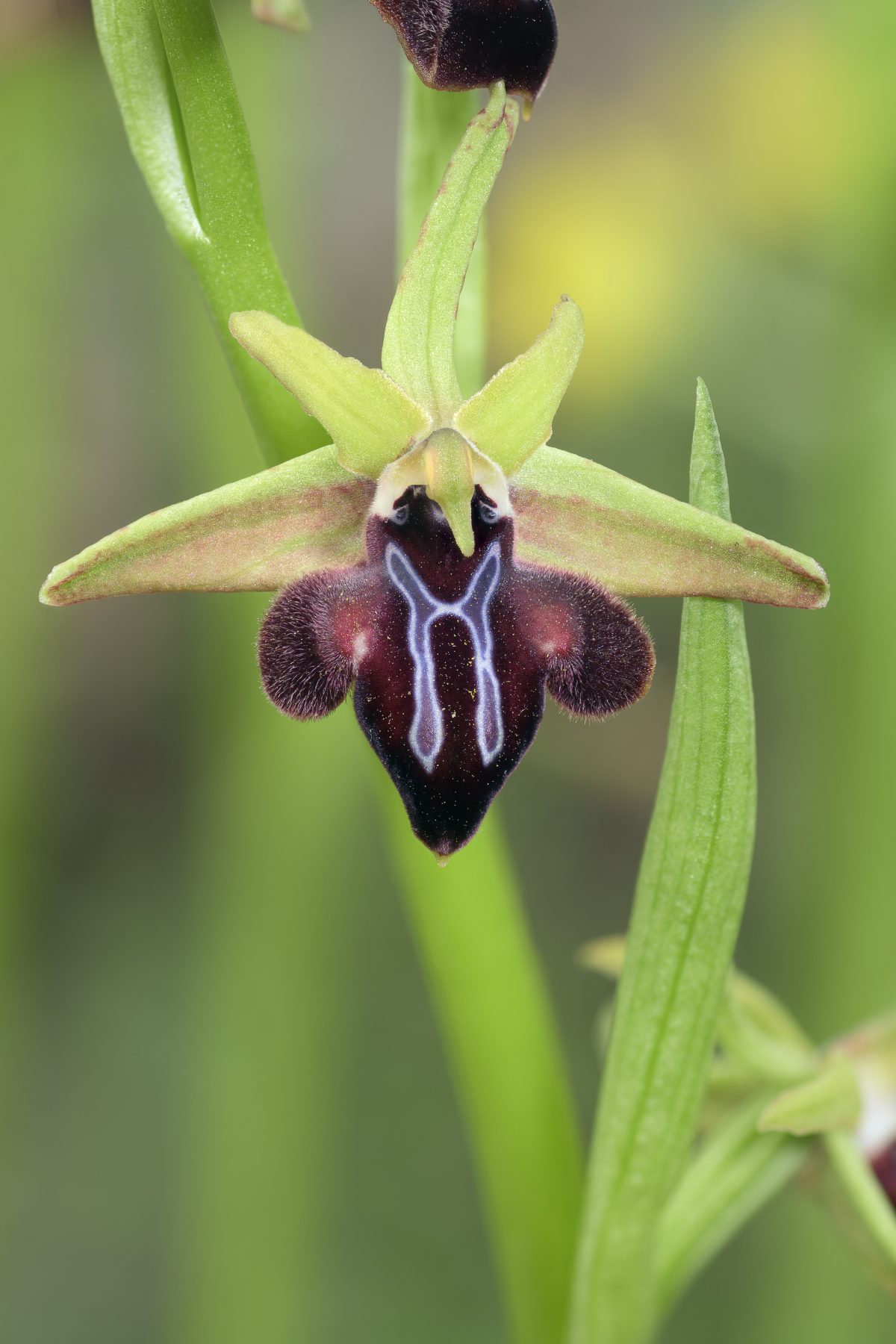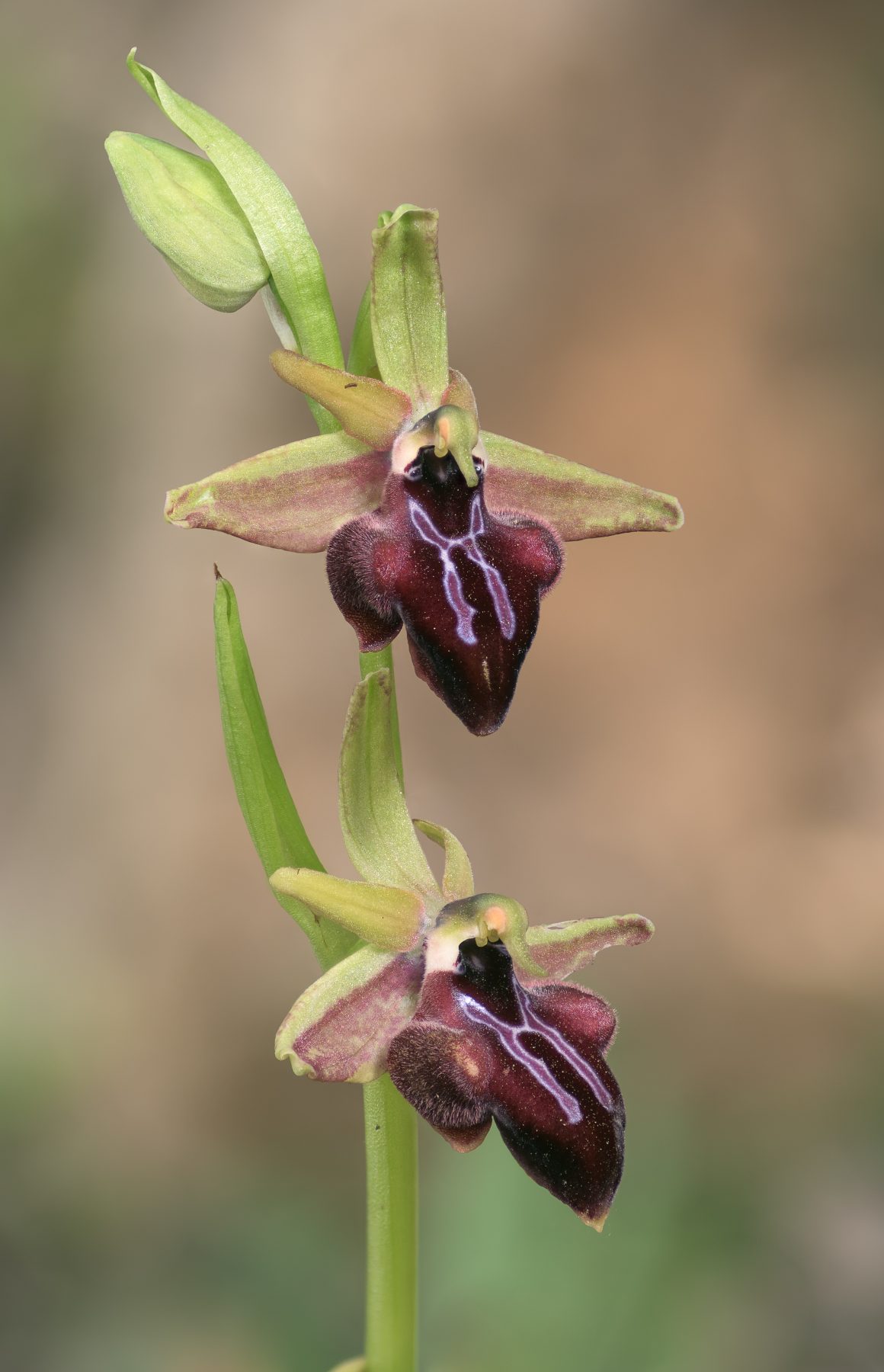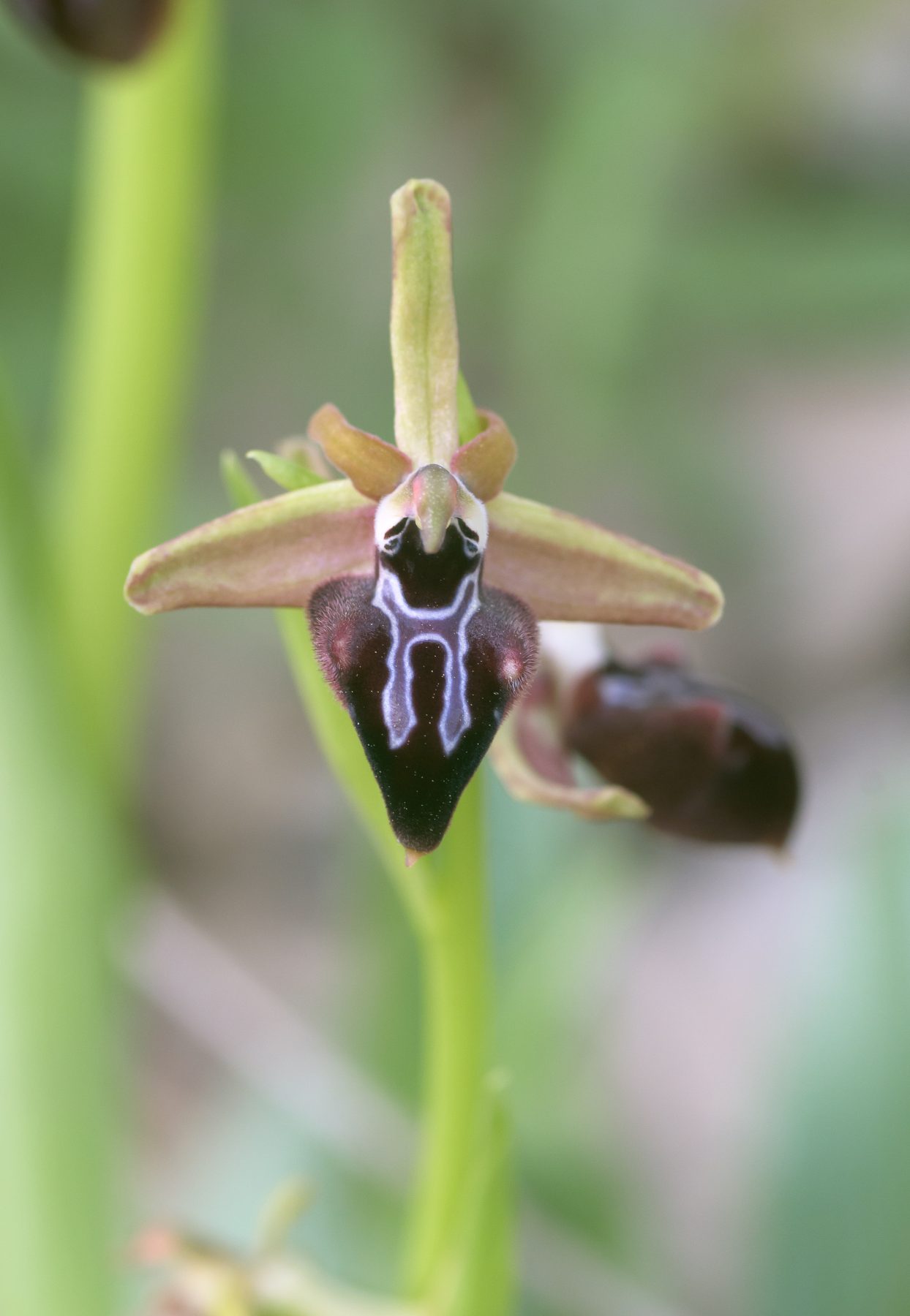
| Etymology: | Amanus Mountains (today Nur Mountains) in Turkey where the species was described |
| Distribution: | Little Asia, Syria |
| Flowering time: | mid-V. to mid-VI. |
| Taxnonomy: | O. transhyrcana group |
| Similar species: | O. antalyensis, O. iceliensis |
The discovery of Ophrys amanensis was something we genuinely did not expect during our May 2026 expedition to Asia Minor. The species has a very restricted distribution, occurring only in a few southern Turkish provinces—Mersin, Osmaniye, Hatay, and Adana—as well as in Syria. Moreover, it has virtually disappeared from its Turkish range in recent decades. For years, no one managed to relocate it until, in 2023, the Belgian orchid enthusiast Marc Verbeeck rediscovered a tiny population of barely ten plants near the city of Mersin.
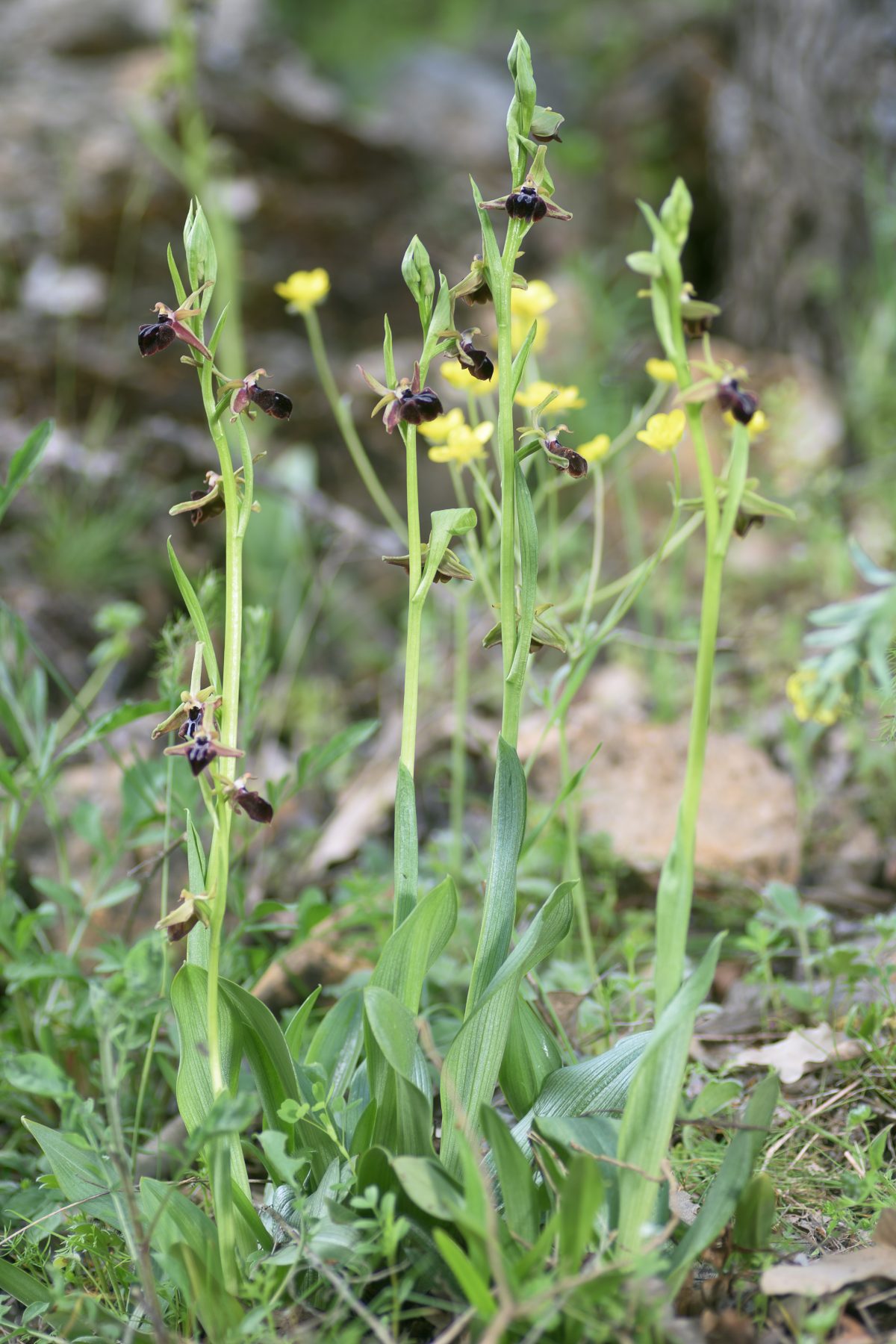
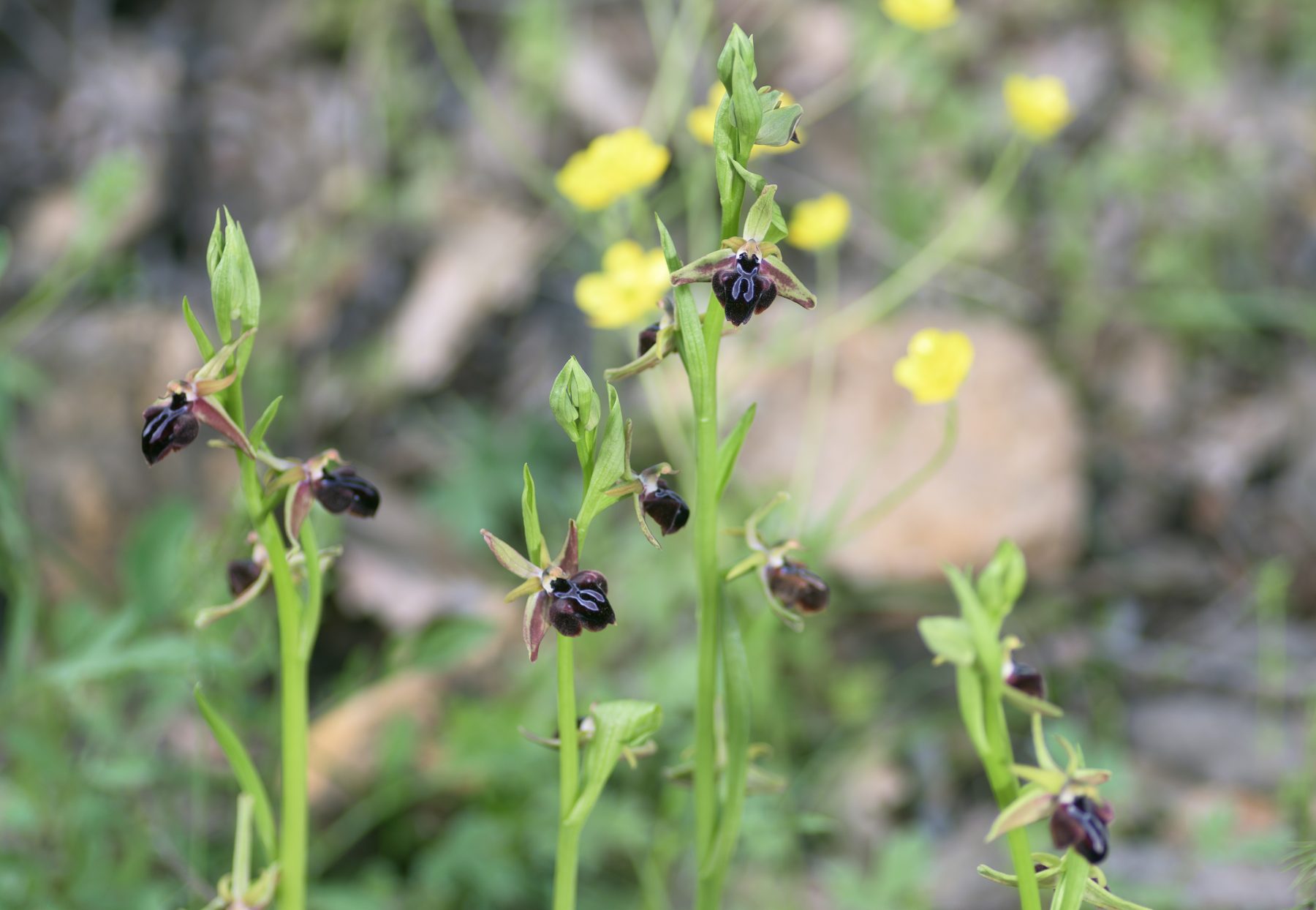
Naturally, we were not looking for anything like this in 2026, since we were several hundred kilometres away even from the nearest historical locality in Osmaniye. While travelling from Trabzon to Diyarbakır, however, we stopped in a stream valley in Tunceli Province at an elevation of around 1,000 metres above sea level. Our friend Norbi wanted to search for salamanders, and along the stream, beneath a few small trees, we noticed several large, mammosa-type bee orchids. Of course, I immediately shifted my focus onto them and managed to photograph quite a few of the plants—there were probably no more than a dozen in total—as far as the wind and our tight schedule allowed.
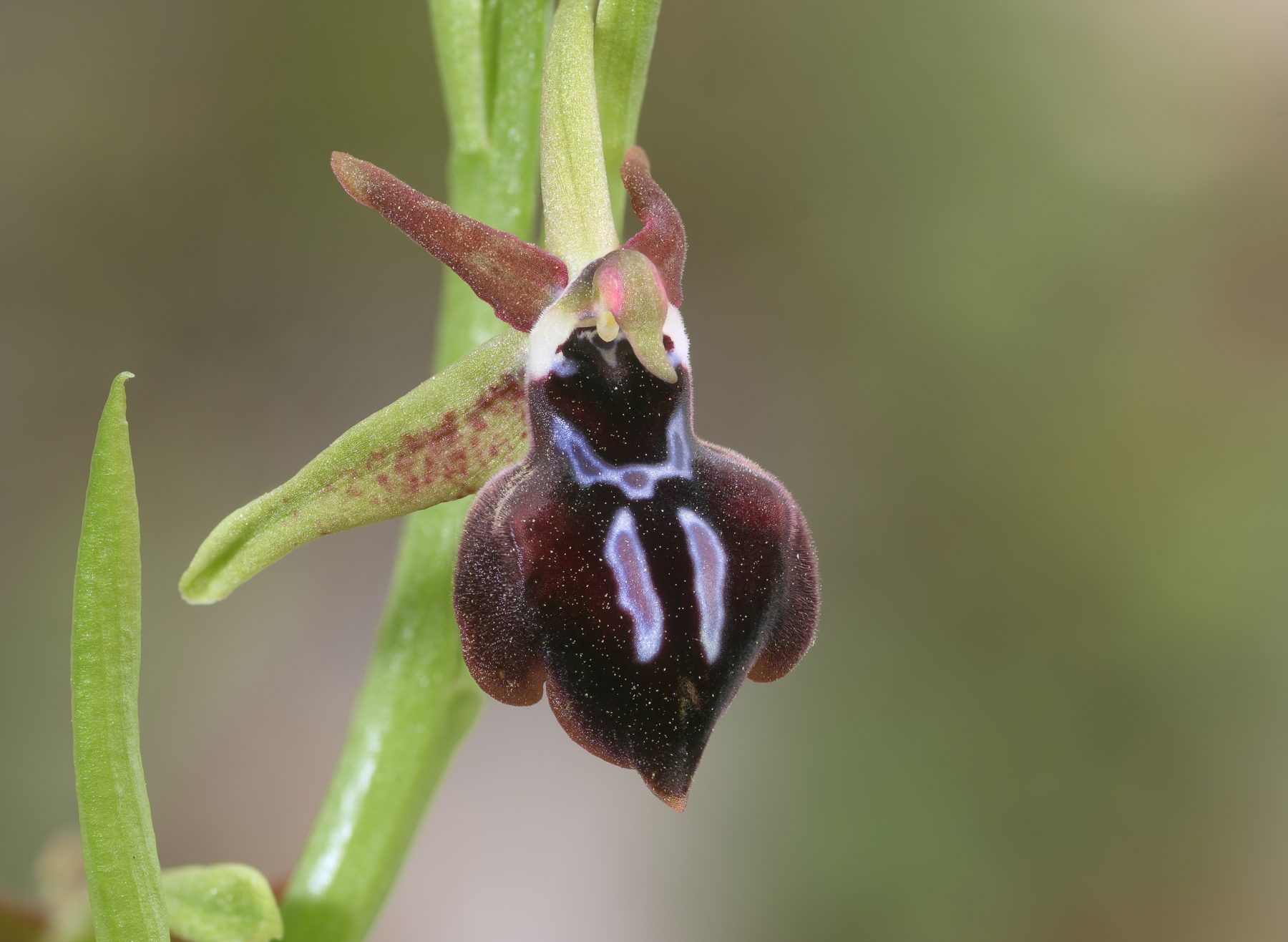
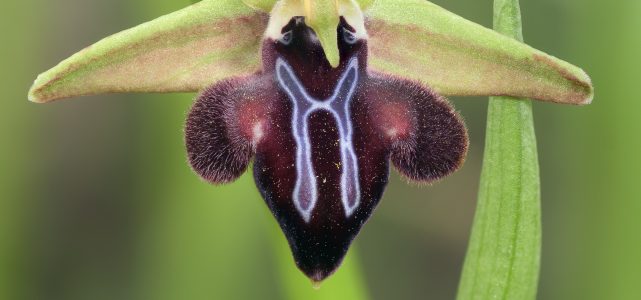
Even in the field it was obvious that these were certainly not Ophrys mammosa. The characteristic “breast-like” swellings on either side of the labellum were either reduced or entirely absent, while the lateral lobes were strongly developed and the beak of the gynostemium was conspicuously long. I had seen this combination of characters only in Ophrys amanensis—although only in photographs from Turkey. The problem was that O. amanensis is generally described as always having pinkish sepals. Because of this discrepancy and the larges distance from its distribution area, I decided not to jump to conclusions and planned to have a look at Kreutz’s 2024 monograph on the orchids of Europe, the Middle East, and North Africa once I got home, thinking I might have overlooked another possibility.
Unfortunately, going through the book did not provide a satisfactory answer either, so I contacted Kreutz himself and asked for his opinion. His response was remarkably straightforward: these plants are indeed Ophrys amanensis, even if their sepals happen to be green. And in fact, if I simply imagine the sepals as pink instead of green, the match is virtually perfect. That said, I would cautiously add that some influence from Ophrys iceliensis, a species restricted to the Mersin region, cannot be ruled out entirely. In my view, O. iceliensis can almost be regarded as a green-sepalled form of O. amanensis, differing mainly in its somewhat smaller, less reddish-purple labellum and its shorter gynostemium beak.
Whichever interpretation proves correct, our discovery is undoubtedly a botanical curiosity. Until now, both taxa have been regarded as highly localized endemics, yet we encountered these plants several hundred kilometres from their previously known range, deep in the interior of Turkey. It is entirely possible that a more thorough survey of the surrounding area would reveal additional populations.
From a taxonomic perspective, the species belongs to the transhyrcana group, although it is also frequently included among the mammosa complex. Some classifications even treat Ophrys amanensis as the name-bearing species of its own group, together with the closely related Turkish endemic Ophrys antalyensis and O. iceliensis, all representing a single evolutionary lineage. The species was named after the Amanus Mountains—today known as the Nur Mountains—which extend across the provinces of Hatay and Osmaniye, where it was first described in 1952.
Still, I am not quite ready to abandon the dream that the plants shown below might, after all, belong to a completely new taxon…