
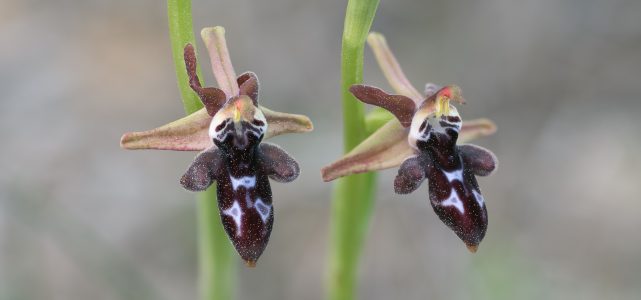
| Etymology: | After the island of Crete where it was discovered |
| Distribution: | Greek endemism: Crete, Cyclades, Peloponnese |
| Flowering time: | late-III. to late-IV. |
| Taxnonomy: | O. reinholdii group |
| Similar species: | O. ariadnae, O. cretica subsp. beloniae, O. kotschyi |
In Crete, there are four orchid species that bear the island’s name, the most prominent of which is perhaps Ophrys cretica (the other three being O. creticola, cretensis, and cressa). Compared to its close relative, Ophrys ariadnae, it is less common and its distribution is more strongly concentrated in the eastern part of the island.
And since we have already mentioned O. ariadnae, let us address the classic question of what distinguishes O. cretica from it. In cretica, the lip is more strongly three-lobed, with narrower, more elongated lateral lobes (indeed, the central lobe is more slender as well), while the pattern on the lip is simpler and more reduced. But the main—and for many people the most headache-inducing—diagnostic feature is the shape of the stigma cavity. In cretica, the stigma cavity is narrow and considerably wider than high (i. e. constricted at its base), whereas in ariadnae it is exactly the opposite: the cavity is taller than it is wide. As I like to put it, ariadnae is a tall-foreheaded grown man, whereas cretica is a small child with a broad head that has been squashed down at the top.
It is also worth noting that cretica flowers later, by one to two weeks, only beginning to bloom at the end of March or the beginning of April, by which time ariadnae has already passed its peak. There is, however, an overlap in their flowering periods, so where the two species occur together, they also mingle quite freely—and you will be easily messed up if you want to disentangle these two rather similar creatures properly. We, too, came across individuals where it was not at all obvious which species they actually belonged to.
In eastern Crete, there is also a subspecies of cretica, subsp. bicornuta, which—as its name suggests—has characteristically long, pointed lateral lobes that project forwards and downwards, and it perhaps flowers a little earlier than the typical form. We also found this taxon in a rather desolate, stony and rugged phrygana in eastern Crete, a place where one would hardly expect such beauties to be able to survive, let alone thrive. But that is the life of a pioneer for you…!
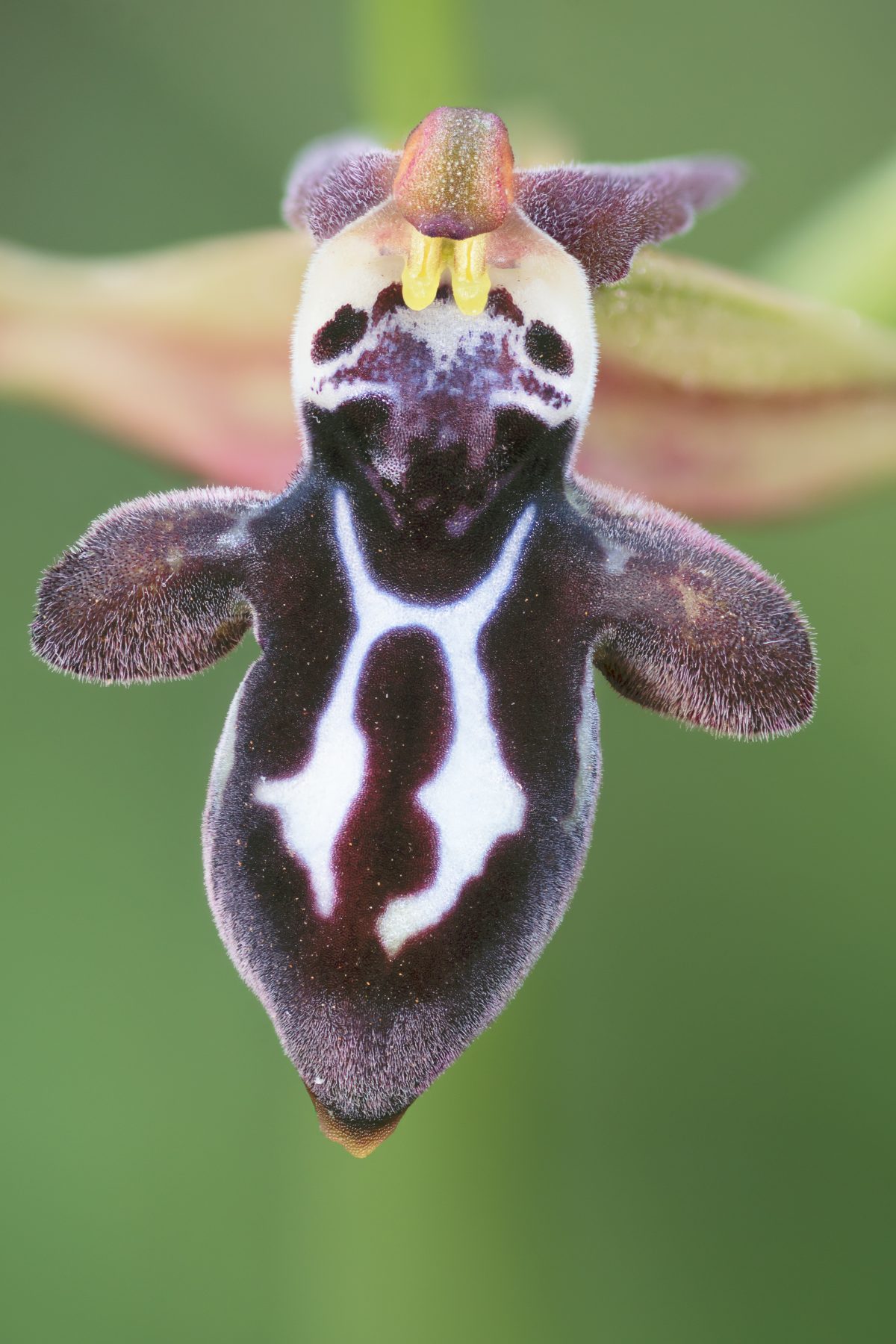
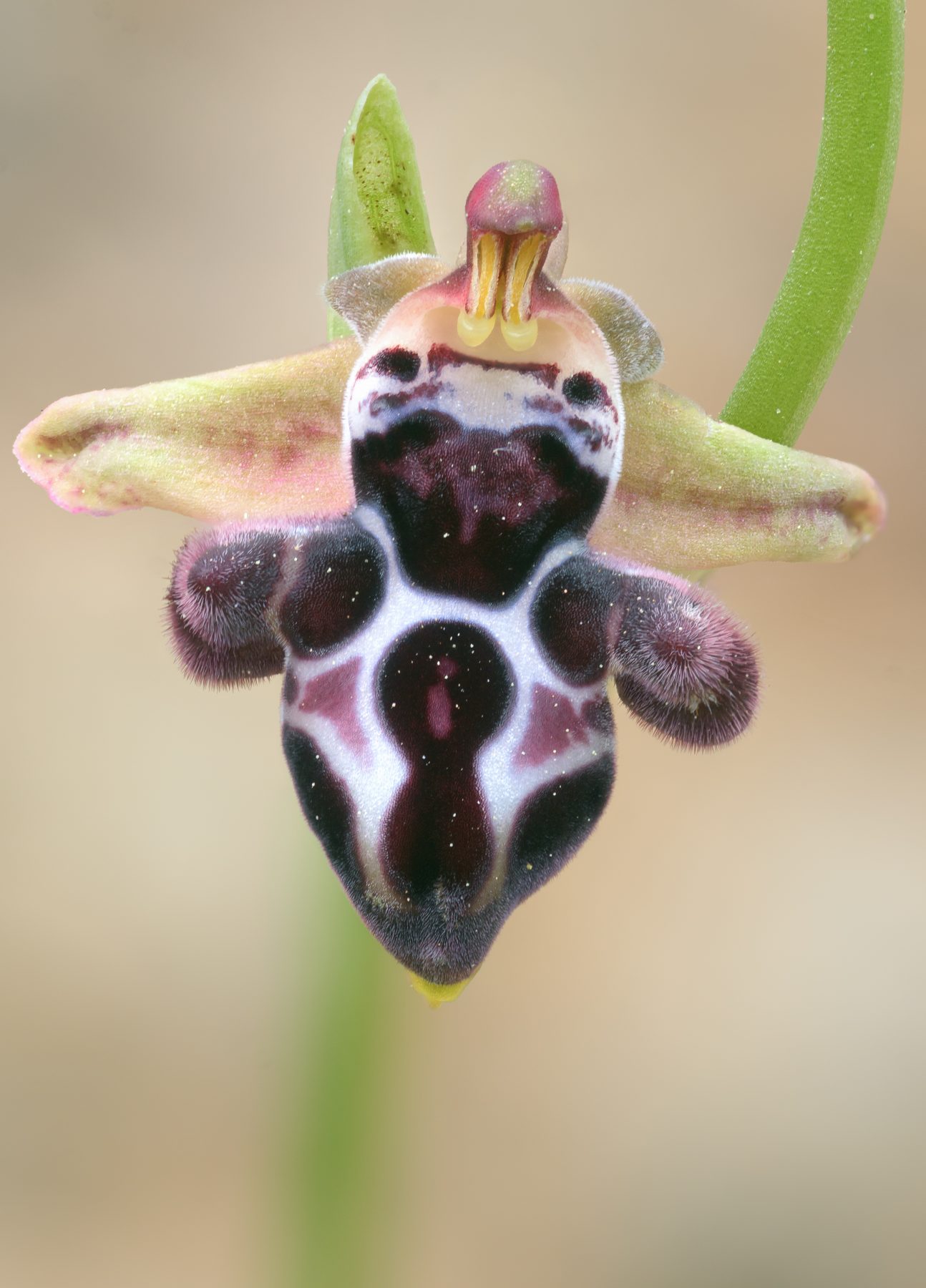
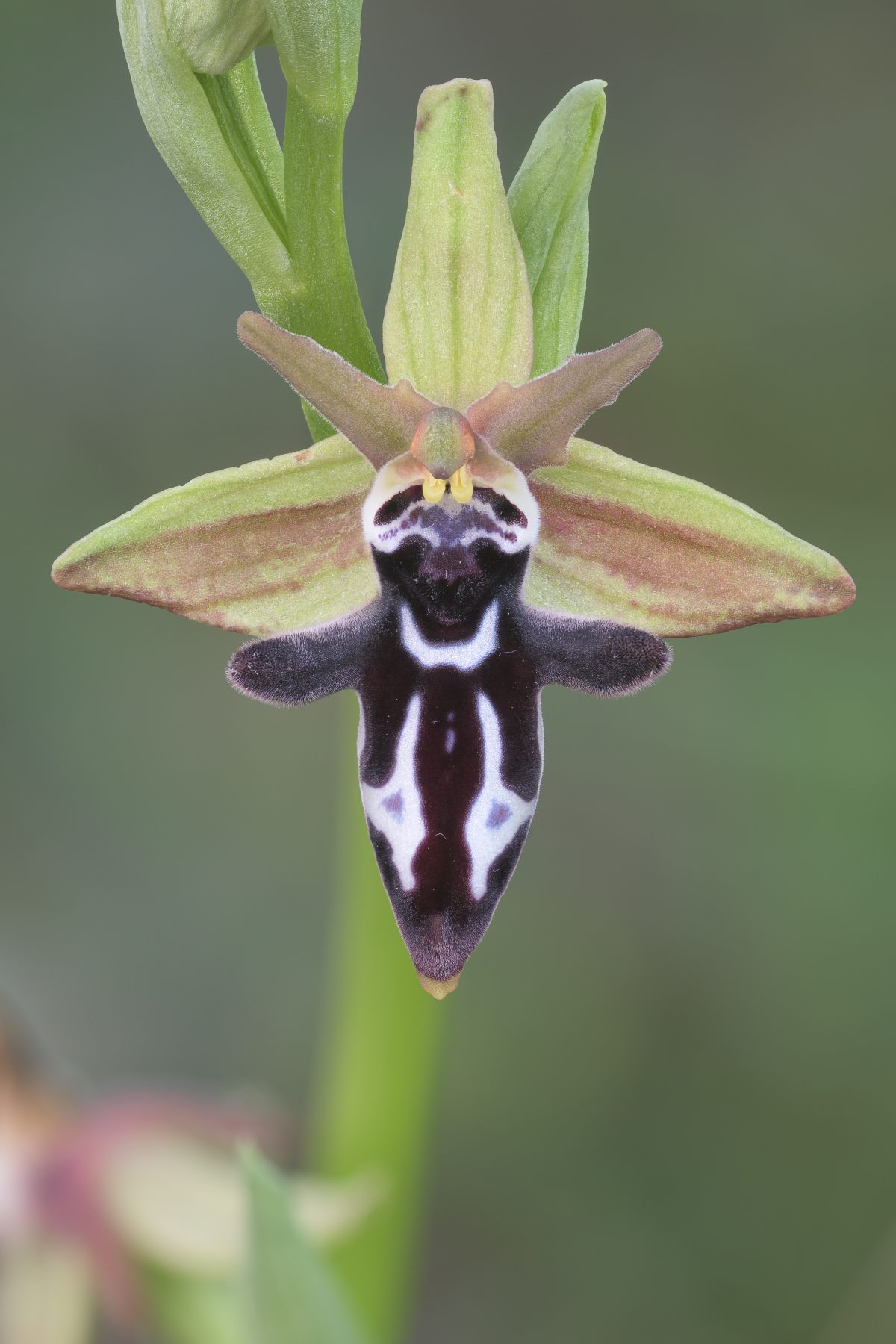
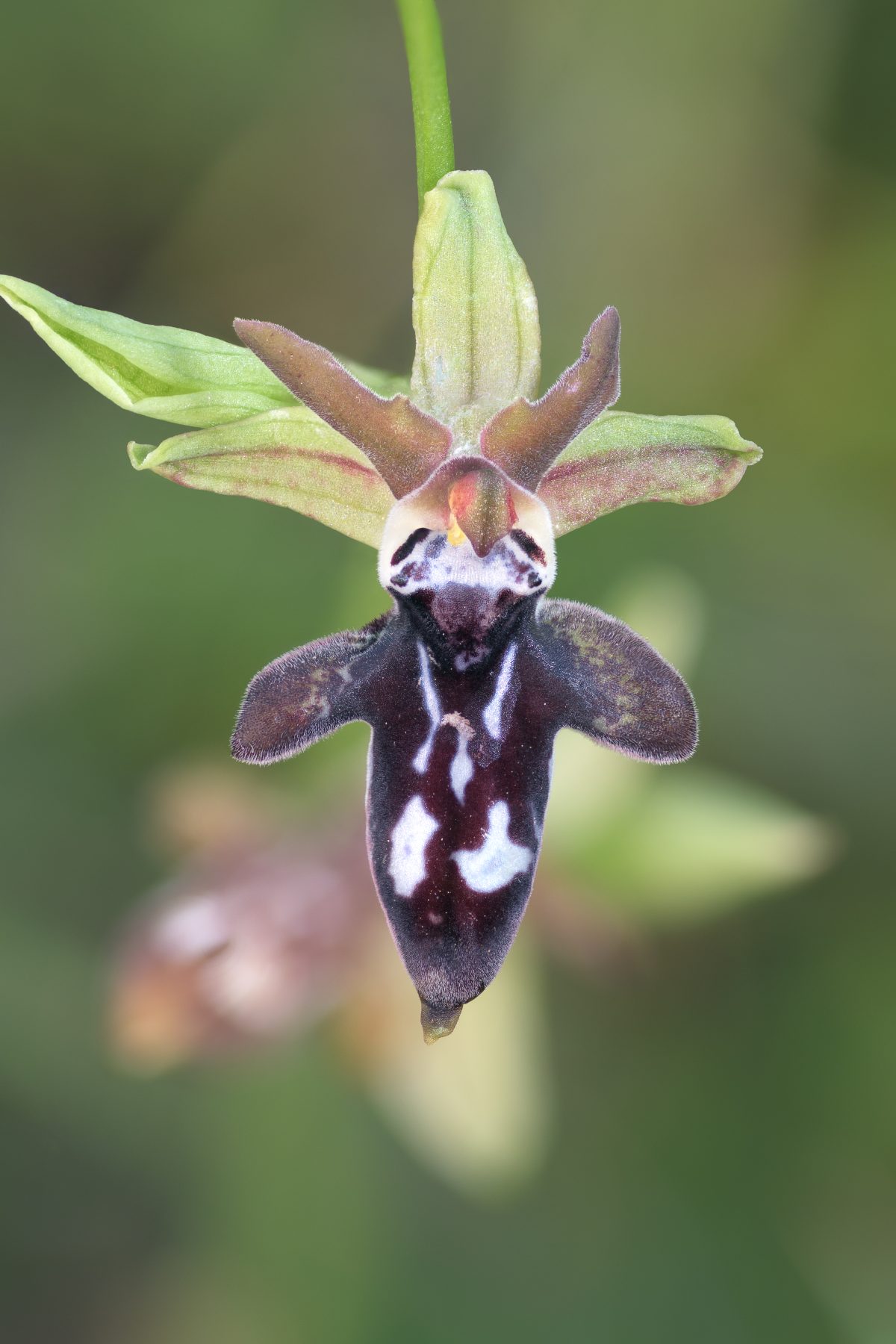
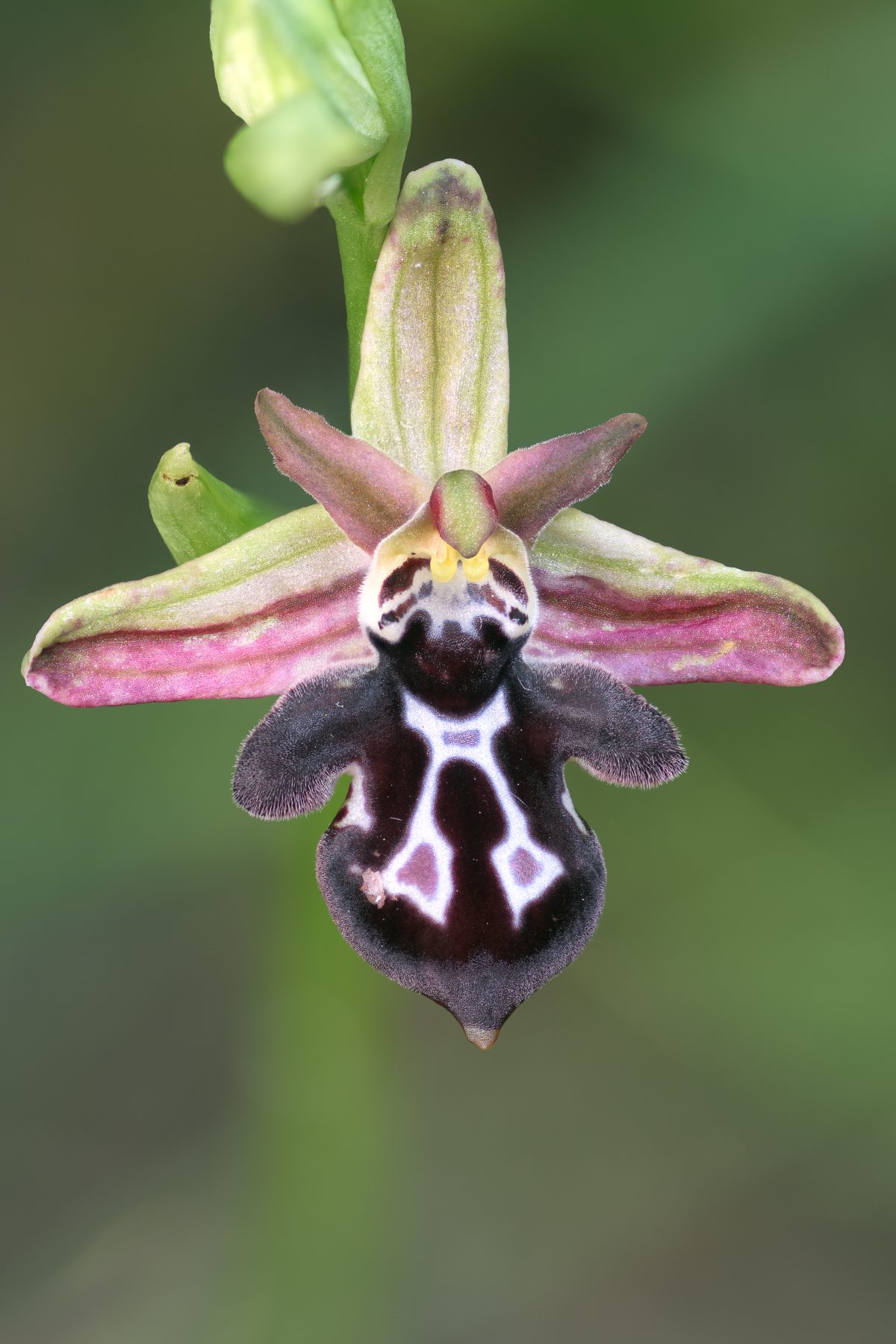
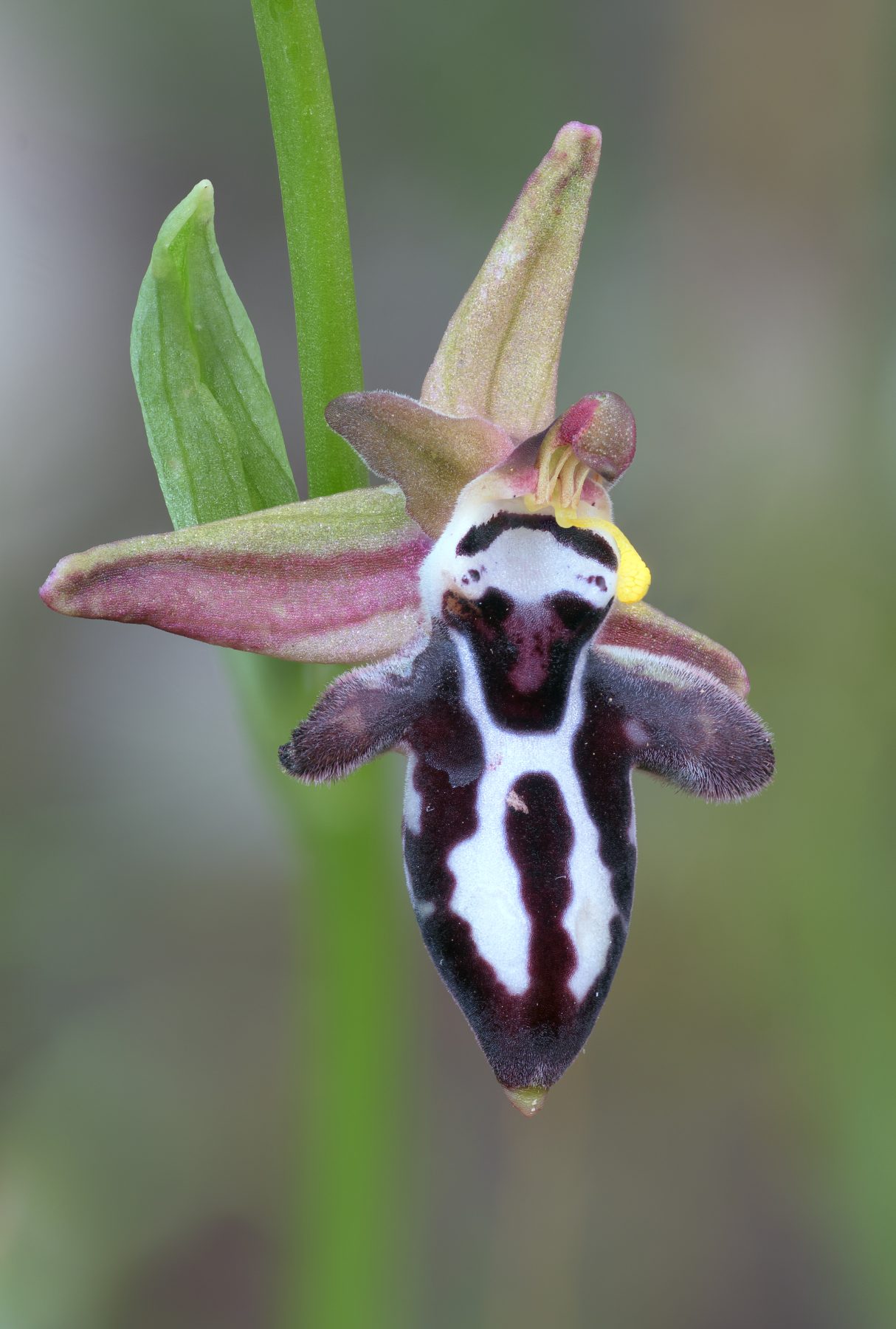
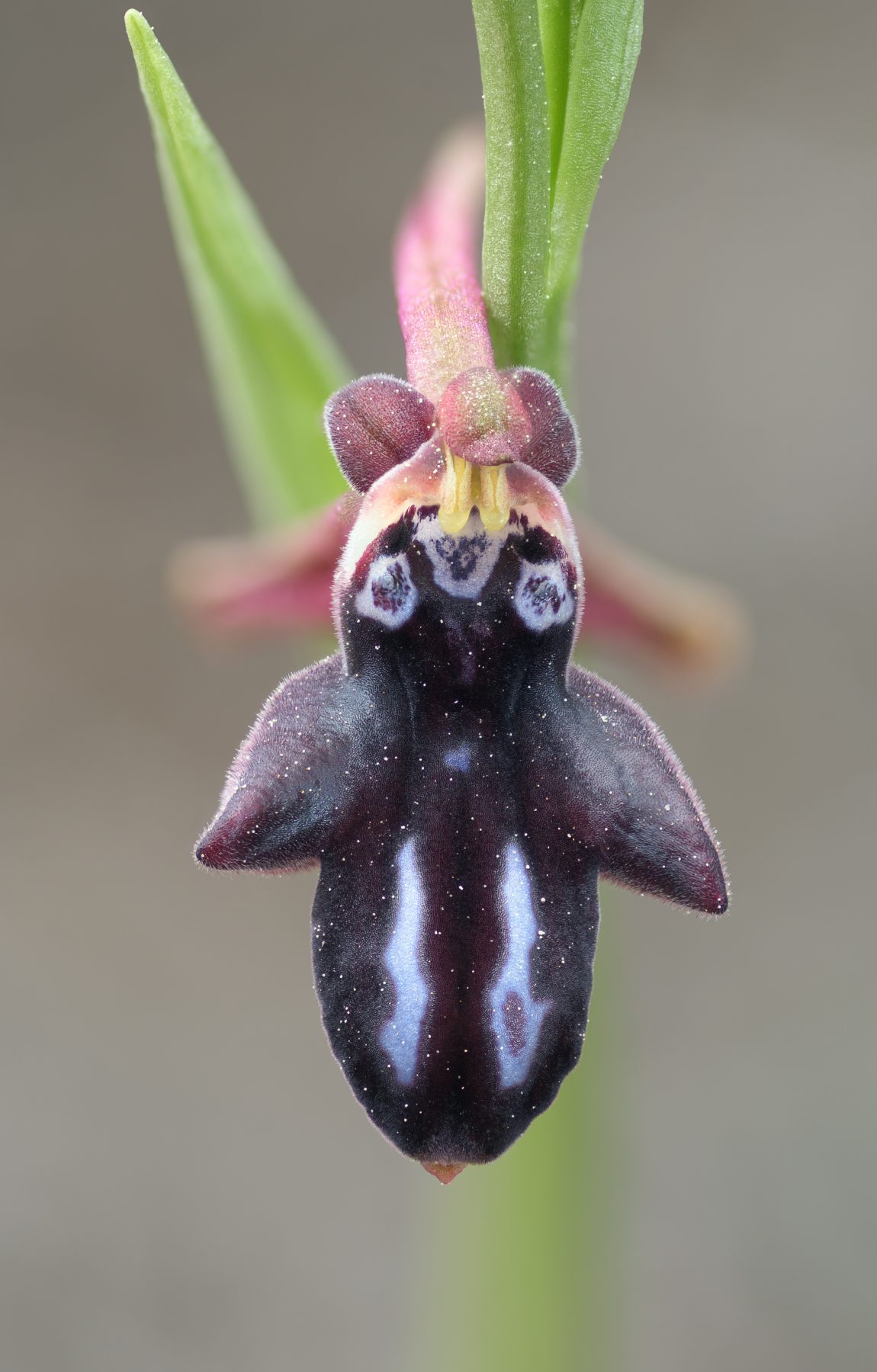
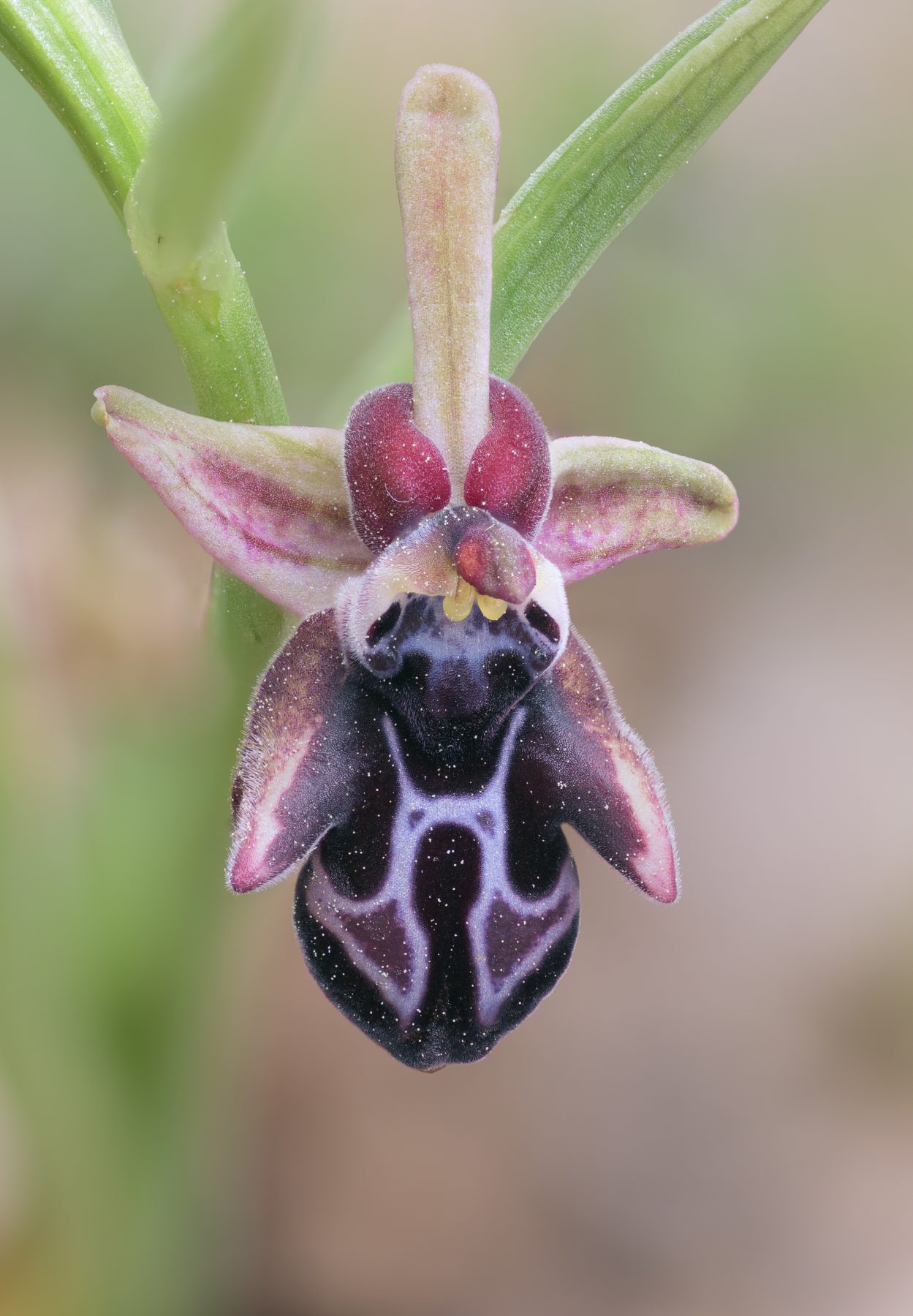
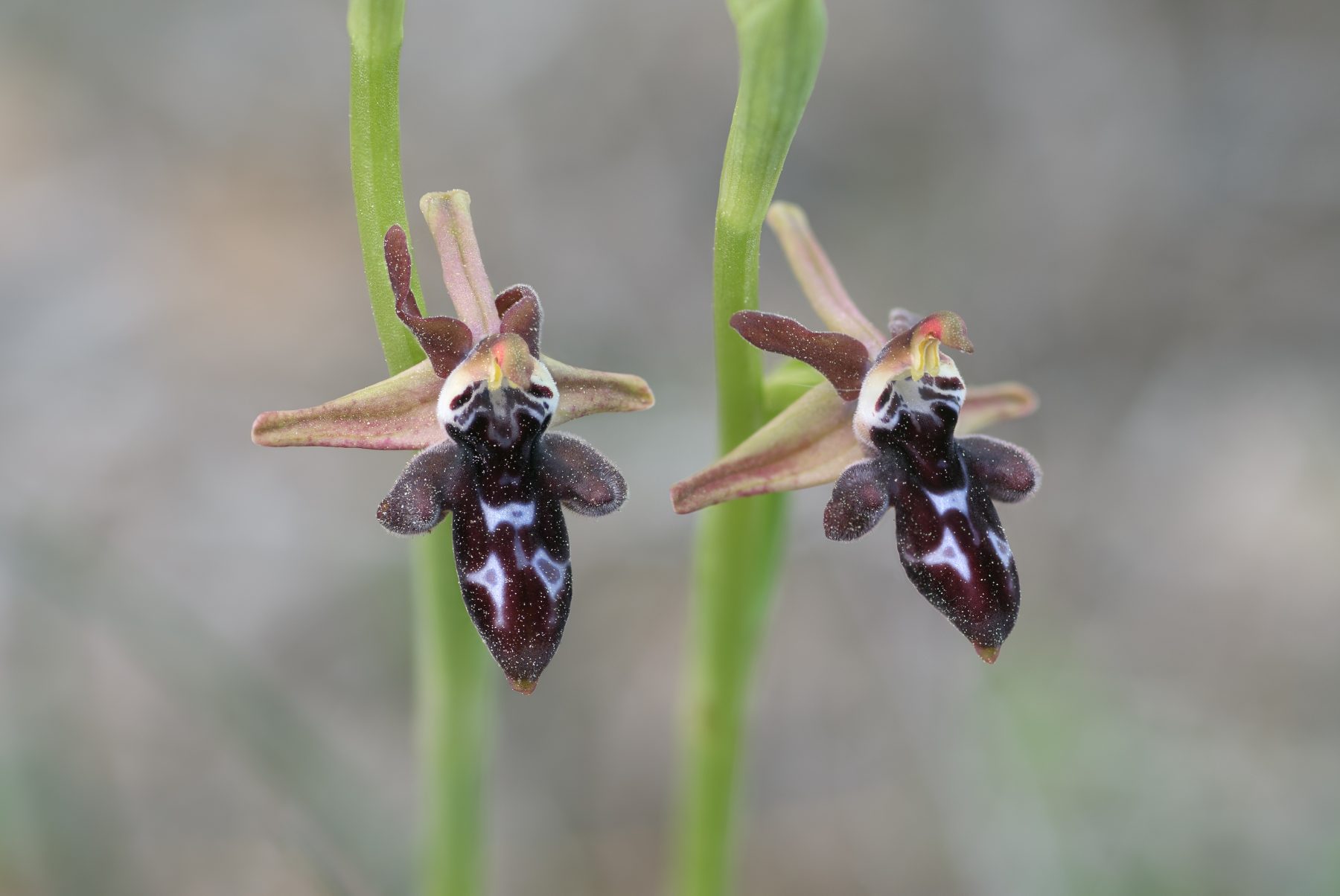
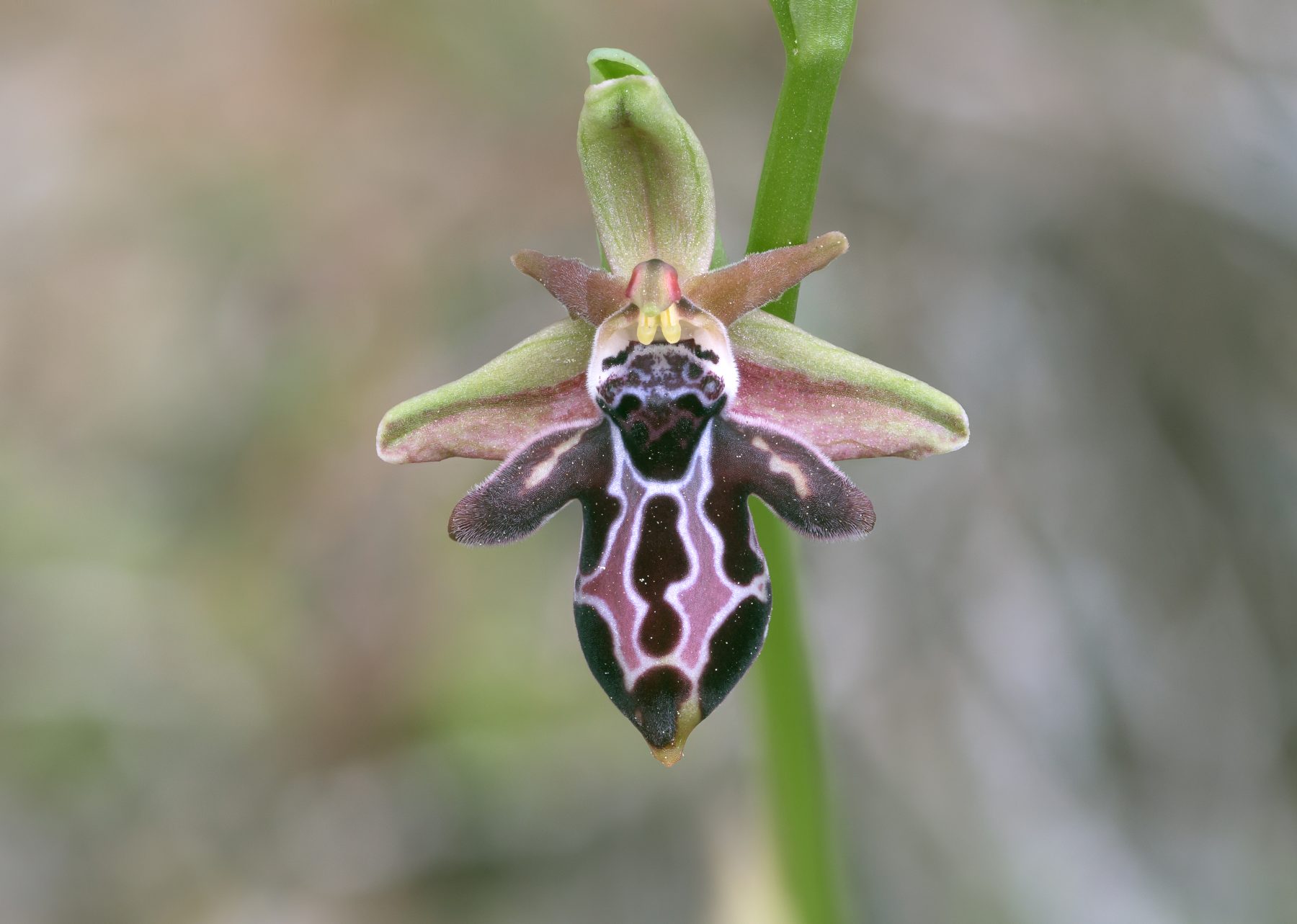
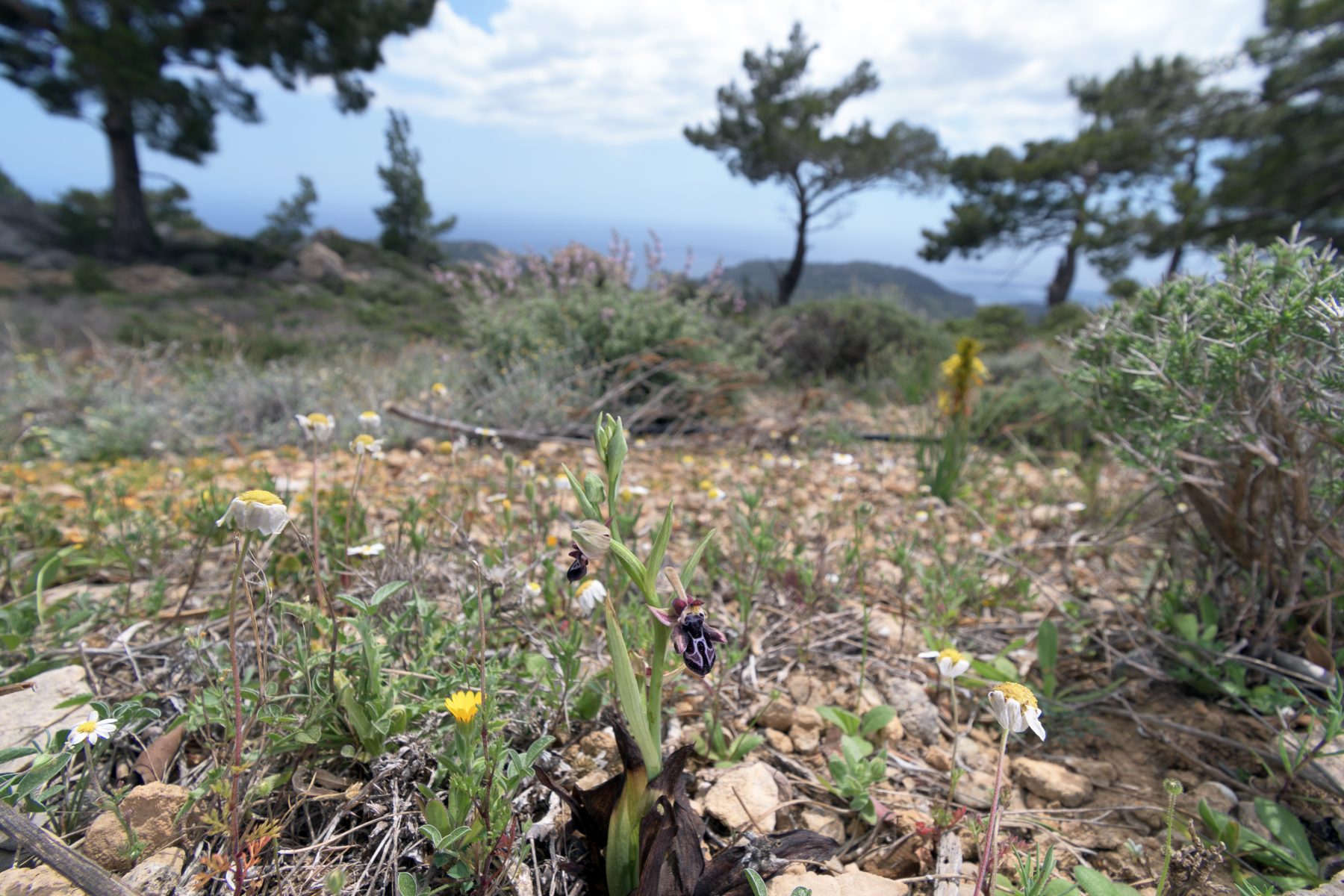

Ophrys cretica subsp. bicornuta in the rugged phrygana of Eastern Crete