


My friend Győző and I decided to take a little trip to Austria as mid-July approached, hoping to immerse ourselves in the “Nigritella Sea” for a few days. Unfortunately, this year’s drought has also taken its toll on our western neighbour, especially in southern Austria, in Carinthia and East Tyrol. In the former, the Nigritella lithopolitanica had already completely finished flowering (which we had expected), but the extremely rare hybrid Dactylitella × alto-ovirensis (Dactylorhiza fuchsii × Nigritella lithopolitanica) failed to appear as well—according to some, it may already have become extinct. East Tyrol brought an even greater disappointment. Although Nigritella rhellicani was flowering in good numbers beneath the mountain arnica (Arnica montana), the equally ultra-rare Dactylitella × berniaensis (Dactylorhiza majalis subsp. alpestris × Nigritella rhellicani) was already nearing the end of its flowering period, while Dactylitella × tourensis (Dactylorhiza fuchsii × Nigritella rhellicani) did not show up at all. The same was true for Pseuditella × micrantha (the hybrid between Pseudorchis albida and Nigritella rhellicani), even though as many as a dozen plants can occur at that particular site. Still, we did manage to find a few beautiful Gymnigritella × suaveolens (Gymnadenia conopsea × Nigritella rhellicani), even if nowhere near the hundred-plus specimens that, according to previous reports, can be seen there in a good year.
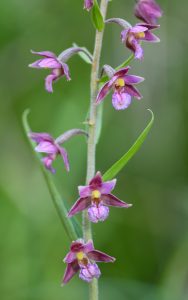
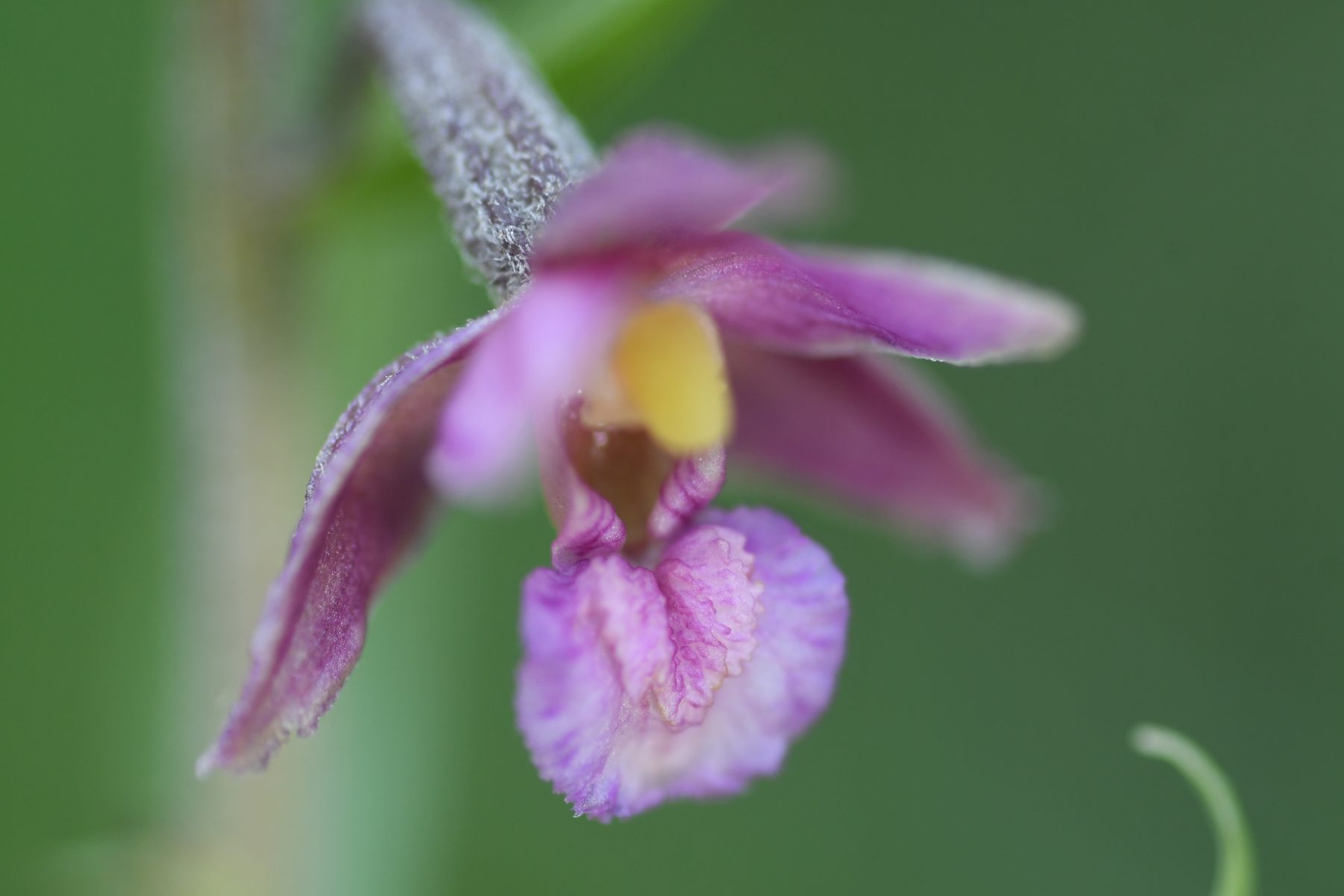
So, the anticipated hybrid extravaganza never quite materialised. As compensation, however, we encountered the magnificent Epipactis × pupplingensis in Bavaria—the hybrid between the dark-red helleborine (Epipactis atrorubens) and the marsh helleborine (Epipactis palustris). Its appearance was something of a minor miracle. Bavaria is suffering from the same severe drought, and both parent species were clearly struggling, many plants already scorched by the heat. Yet this single magnificent specimen stood there in full bloom as if tomorrow would never come. Then again, perhaps tomorrow won’t come for it. For several years now, only a single flowering plant has been recorded at the site (although vegetative shoots can be seen nearby), so who knows how much longer this extraordinary hybrid will remain at this sacred place—which also happens to be its locus classicus.
And with that, my 2026 orchid season has more or less come to an end by mid-July—which feels rather unusual, considering that the he